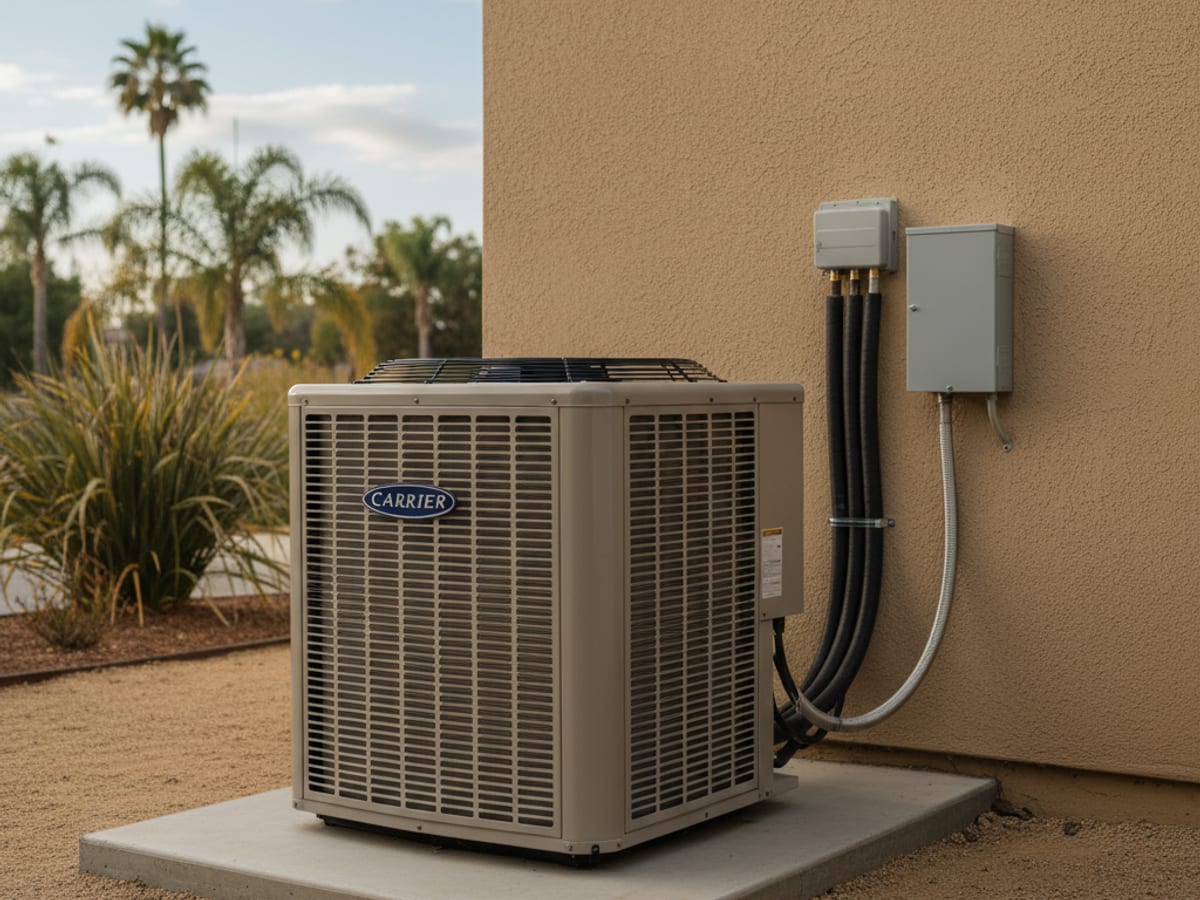
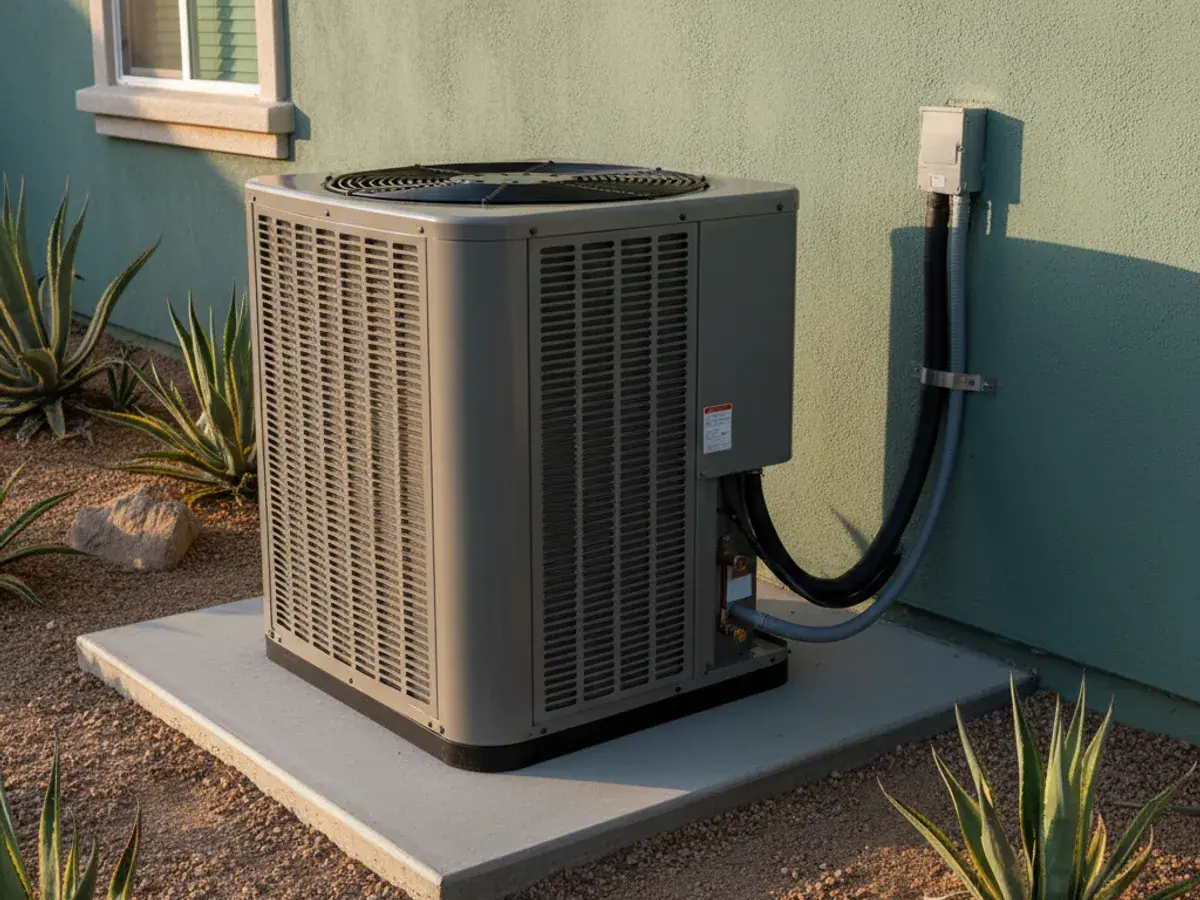
When it's time for a new system, the size matters more than the brand. The matched company runs a full Manual J load calculation, gives an in-home estimate, and quotes the job before any work starts.
Climate Pros SD matches Vista homeowners with a licensed HVAC company for AC installation. That company quotes after an in-home estimate. Timing and price are theirs. This brand does not install equipment.
Vista sits inland on the North County side, a few miles back from the coast and across a ridge from the marine layer. That puts the city in a hot-summer climate. July and August afternoons regularly run well above the coastal normals, the humidity is low, and the cooling load is heavy and sustained. The heat is hard on an undersized or aging system, which is the reason proper sizing and solid attic insulation matter so much here.
Climate Pros SD matches homeowners with licensed HVAC companies across the city. That covers the older bungalows and ranch homes around Vista Village and the historic downtown, the postwar tracts in the Townsite and Buena areas, the 1980s and 1990s subdivisions in Shadowridge and the eastern hills, and the larger semi-rural and custom homes spread across Vista's avocado-country edges. Each of those areas has its own housing pattern, and the matched company sizes the job for the house, not a template.
What's included in a Vista AC installation
Ask the matched company what their install includes. A complete central system job typically covers the items below.
Manual J load calculation to size the system to your actual home, not a rule of thumb
Removal and haul-away of the old condenser, coil, and furnace, with proper refrigerant reclamation
New outdoor condenser set on a level pad or coastal-rated stand
Matched indoor air handler or evaporator coil, paired to the outdoor unit for rated efficiency
New refrigerant line set, or a flush and pressure test of the existing line set when reuse is sound
Electrical work, including disconnect, whip, and a panel check for older Vista homes with smaller service
Smart thermostat install and app commissioning
City of Vista mechanical permit pulled and the final inspection scheduled
Startup and commissioning, with refrigerant charge verified by superheat and subcooling
AC installation cost in Vista
The matched company quotes the install in writing after an in-home estimate. You see equipment, labor, materials, and permit broken out before you decide. These are the cost factors that shape a typical Vista install in 2026. The exact figure depends on system size, efficiency tier, and the condition of your ducts and electrical panel.
Repair
Typical range
Notes
In-home installation estimate
Quoted in writing
A real measured quote, not a phone guess
Manual J load calculation
Ask whether it is included
Ask the matched company to size the house, not guess from square footage
Standard central AC system, installed
Priced by system size and efficiency tier
14.3 SEER2 single-stage, typical Vista home
High-efficiency system, installed
Priced higher for two-stage or variable-speed equipment
Two-stage or variable-speed, 16-20+ SEER2
Heat pump conversion, installed
Priced by system size and equipment tier
Replaces AC and furnace, qualifies for the largest rebates
Large or two-story home system
Priced by tonnage and system design
Bigger tonnage or a zoned two-system design
Refrigerant line set replacement
Priced by line length and access
When the old set cannot be safely reused
Electrical panel or circuit upgrade
Priced by panel size and scope of work
Common on older Townsite and Vista Village homes
City of Vista mechanical permit
Set by the City of Vista
Pulled by the matched company if they include permitting
Duct sealing or partial duct replacement
Priced by linear footage of duct work
Quoted only if the duct inspection finds real loss
Pricing is set by the company you are matched with, not by this brand. Ask that company for a written quote for the house. An open SDG&E offer, where one applies, can lower the heat pump numbers above, and the matched company tells you what your home actually qualifies for.
Should you repair or replace your AC?
Before you commit to a new system, it is worth being honest about whether you need one. A new install is the right call when the unit is old, uses R-22 refrigerant, or faces a major repair. It is the wrong call when a small fix would buy you several more good years. Two simple rules help you decide.
The 50% rule
If a repair costs more than 50% of the price of a new system, replacement is the better money. A major component like an evaporator coil on a 14-year-old unit points clearly to replacement. A minor part like a capacitor on a 7-year-old unit does not. Spending big on an old system rarely pays back.
The age-times-repair rule
Weigh the age of the system against the size of the repair. An older unit facing a major repair points clearly to a new system. The same repair on a newer unit points to fixing it instead.
Age and refrigerant matter on their own. Many Vista homes still run systems built before 2010 that use R-22, a refrigerant that is no longer produced and has become expensive to source. Once an R-22 system needs a recharge, replacement usually wins. Newer equipment also runs at far higher efficiency, and a heat pump system may qualify for an open SDG&E offer that closes part of the gap on the upfront cost. The pro gives you the repair number, the replacement number, and an honest read. The choice stays yours.
Local angle
AC installation built for Vista homes
Why Vista heat changes the install
Vista sits inland and back across a ridge from the coast, so the marine layer rarely reaches it. That puts the city in a hot, dry summer climate. July and August afternoons regularly run well above the coastal normals, and the cooling load runs heavy for hours at a stretch. A system here has to carry the house through real heat, not just take the edge off a mild afternoon. That changes how the matched company sizes and spec the equipment.
Sizing is where most inland failures start. An undersized condenser cannot keep up when a heat wave settles in, and an oversized one short-cycles and wears itself out. The matched company runs a full Manual J load calculation that accounts for square footage, insulation, window type and orientation, and ceiling height. Attic insulation matters more in Vista than on the coast, and if yours is thin, the matched company should flag it because it changes both the sizing and your summer bills.
The housing stock the matched company installs for
Vista covers a wide range of housing eras. Vista Village and the historic downtown hold older bungalows and small ranch homes, many built before central air was standard. AC was often added decades later, sometimes with undersized ducts squeezed into tight attic runs and electrical panels that were never sized for a modern condenser. The matched company checks both the ducts and the panel as part of the estimate on those homes.
The postwar tracts in the Townsite and Buena areas are often on their second or third system. The 1980s and 1990s subdivisions in Shadowridge and the eastern hills tend to have better duct layouts and two-story plans where the upstairs runs hot in the afternoon. Vista's avocado-country edges add larger semi-rural and custom homes on bigger lots, which often need more tonnage or a zoned two-system design. The matched company sizes for the real floor plan, not a square-footage shortcut.
Permits and rebates in Vista
Replacing a central AC system in the City of Vista normally needs a mechanical permit. The matched company confirms the current requirement. The matched company pulls that permit through the city as part of the job, and the work is inspected and put on record. A permitted install is on record at resale. Check your equipment certificate for what the manufacturer warranty requires.
If you move to a heat pump and an SDG&E offer is open, it is typically largest for heat pump systems. The federal 25C tax credit ended for systems installed after December 31, 2025, so it does not apply to a 2026 install. The matched company can handle the SDG&E paperwork Check sdge.com/rebates for any offer that is currently open. 25C does not apply to a 2026 install. Ask the matched company for the actual rebate amount your home qualifies for.
How fast installation happens
Ask the matched company how long a standard changeout takes. Installs that need new ductwork, a panel upgrade, or a multi-zone design run two to three days, and the matched company confirms that schedule before they book. The in-home estimate happens before anything is booked. This brand does not install equipment.
What else is ac installation in Vista called?
Homeowners search for this a few different ways. In Vista it also goes by air conditioning installation in Vista , AC install in Vista , and AC replacement in Vista . They all reach the same licensed local pros, and the operator who answers will
sort out which one your job actually is.
Vista ac installation questions
How much does AC installation cost in Vista?
A complete central AC system is priced by size and efficiency tier for a typical Vista home. High-efficiency two-stage and variable-speed systems cost more than a standard single-stage system. The in-home estimate is free, and you get a line-itemed quote covering equipment, labor, materials, and the permit before you decide anything.
How fast can you install a new AC in Vista?
Ask the matched company how long a standard changeout takes. Jobs that need new ductwork, an electrical panel upgrade, or a zoned design take two to three days. The matched company confirms the schedule before they book and should call before arriving.
What size AC do I need for my Vista home?
It depends on the house, not a rule of thumb. Vista's inland heat means the sizing has to carry the home through peak-summer afternoons. The matched company runs a Manual J load calculation that accounts for square footage, insulation, window type and orientation, and ceiling height. An undersized system fails in July, and an oversized one short-cycles. The matched company sizes to the real load.
Why does sizing matter so much for a Vista AC?
Because Vista summers run hot and long, and the marine layer rarely reaches the city. An undersized condenser cannot keep up when a heat wave hits, which is a common reason inland systems get called out for failure. An oversized one short-cycles and wears out early. A Manual J calculation lands the tonnage on the actual load.
Does my attic insulation affect the new AC?
Yes, more in Vista than on the coast. Thin attic insulation lets heat pour into the house all afternoon, which forces a larger system and drives up your summer bills. The matched company checks the insulation during the on-site estimate. If it is thin, the matched company tells you, because it changes both the right system size and how the system performs.
Do I need a permit to replace my AC in Vista?
Yes. The City of Vista normally requires a mechanical permit for an AC system changeout. Ask whether the matched company pulls that permit as part of the job, and the work is inspected and recorded. A permitted install protects you at resale and keeps your manufacturer warranty valid.
Should I install a heat pump instead of an AC in Vista?
Often, yes. Vista's mild winters and steady cooling needs are a strong fit for heat pumps. One outdoor unit handles both heating and cooling, the running costs are lower, and heat pump systems tend to qualify for the largest offer when one is open. The matched company runs the numbers during the estimate so you can compare.
Are there rebates for a new AC or heat pump in Vista?
Yes. Where an SDG&E offer is open, it is typically largest for qualifying heat pump systems. The federal 25C tax credit ended for systems installed after December 31, 2025, so it does not apply to a 2026 install. The matched company can handle the SDG&E paperwork Check sdge.com/rebates for any offer that is currently open. 25C does not apply to a 2026 install. Ask for the actual rebate amount your home qualifies for.
My older Townsite home has a small electrical panel. Is that a problem?
It can be. Many older homes around the Townsite and Vista Village have panels that were never sized for a modern condenser. The matched company checks the panel during the on-site estimate. If a circuit or panel upgrade is needed, it shows up as a line item in the quote, so nothing lands on the final bill unannounced.
Can you reuse my existing ductwork?
Often, yes, but the matched company inspects it first. Many older Vista homes had AC added years after they were built, sometimes with undersized or leaky ducts that lose cooling into a hot attic. The matched company checks the duct runs during the estimate. If the ducts are sound, the matched company can reuse them. If they are losing real airflow, sealing or partial replacement is quoted so the new system can actually perform.
Do you charge extra to install in Shadowridge or the eastern hills?
Climate Pros SD does not set a citywide price. The matched company quotes that address.
How long does a new AC system last in Vista?
Service life for a central AC system in Vista depends on runtime, exposure, and maintenance more than on any published average. Inland heat works a system harder than the coastal climate does, so the long summers tend to shorten the service life. Right-sizing, annual maintenance, and clean filters make the biggest difference in how long a new system lasts.
Service area
Where we serve Vista
We cover Vista and the surrounding North County Inland communities, and we match you with a licensed local pro for ac installation.
Serving Vista
Need ac installation in Vista?
We match you with a licensed local HVAC pro for your repair or replacement.