When your air conditioner dies on a hot East County afternoon, the goal is simple: get cool air back, fast. But in La Mesa, the fix isn’t always straightforward. The city’s beautiful rolling hills and stock of mid-century homes create unique challenges that can turn a standard repair into something more complex.
Climate Pros SD matches you with licensed HVAC companies. We do not publish a La Mesa parts menu.
Why La Mesa’s hillside homes pose unique HVAC challenges
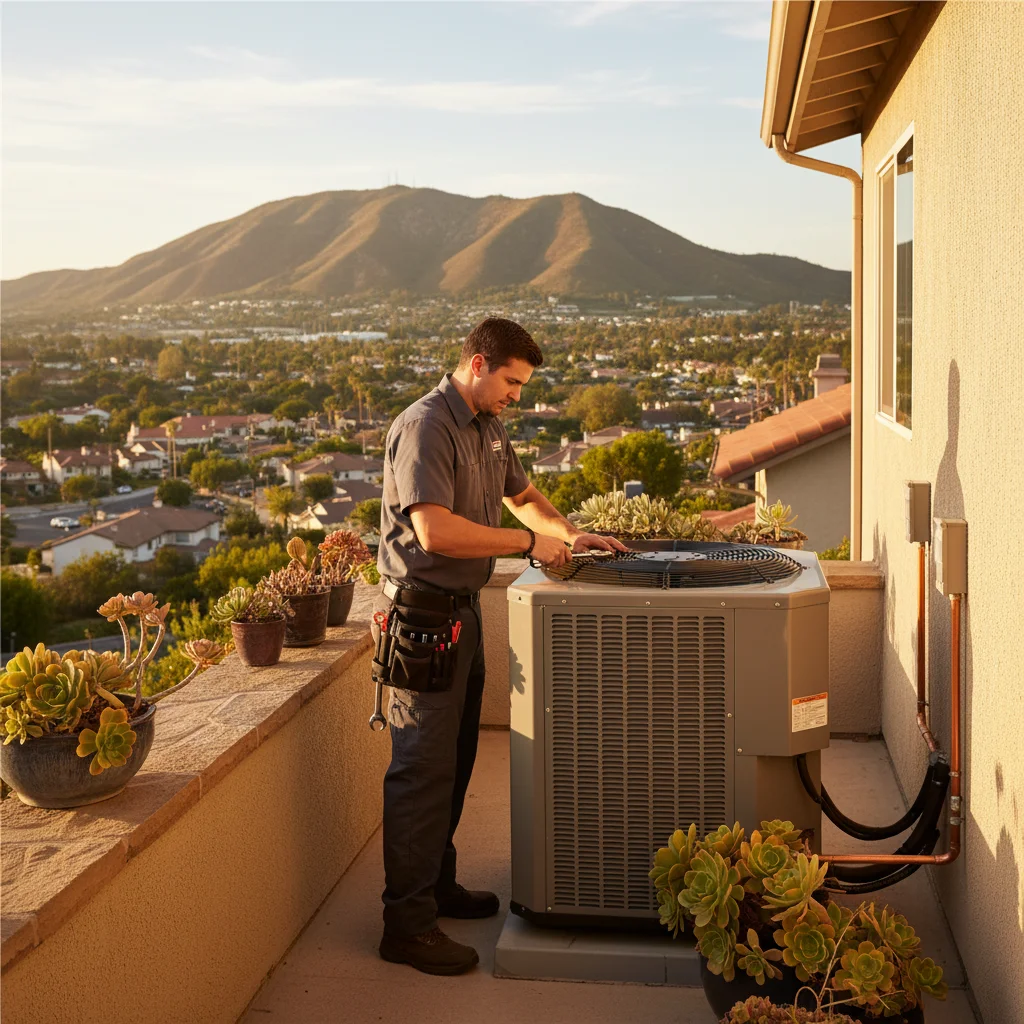
Many homes in La Mesa, especially around Mt. Helix and Fletcher Hills, are built on slopes. This often means the outdoor condenser unit sits significantly higher or lower than the indoor air handler. This elevation difference, combined with long refrigerant lines snaking around the property, puts unique stresses on an AC system that a flat-lot home in another part of San Diego never experiences.
Here’s the technical breakdown:
- Oil Return: Your AC compressor needs oil to stay lubricated, just like a car engine. This oil circulates with the refrigerant. On a long vertical run, gravity works against the system, making it harder for the oil to return to the compressor. Without proper oil return, the compressor can seize up, leading to a catastrophic failure. Experienced technicians know how to install oil traps in the line set to prevent this, but it’s a detail that’s often missed in older installations.
- Refrigerant Charge: A system with a long line set requires a very precise amount of refrigerant, more than a standard system. If it’s undercharged, it won’t cool effectively. If it’s overcharged, it can cause liquid refrigerant to flood back and destroy the compressor. Dialing in the exact charge on a 50- or 75-foot line set requires more time, more skill, and more expensive refrigerant.
- Increased Strain: Pushing refrigerant up a significant grade forces the compressor to work harder on every cycle. This leads to higher energy bills and can shorten the lifespan of the equipment. What might be a minor issue in a standard setup can become a major point of failure in a hillside home.
These factors make diagnostics and repair more complex. A simple pressure reading might not tell the whole story. A technician needs to understand the physics of the entire system, from the condenser on the low side of the yard to the furnace in the attic.
Common La Mesa failures we see in 91941, 91942
While every home is different, HVAC technicians see recurring patterns across La Mesa’s 91941 and 91942 zip codes. The combination of inland heat, older infrastructure, and unique topography leads to a predictable set of problems.
- Capacitor Failure: This is the most common AC repair call in all of San Diego County, and La Mesa is no exception. The start/run capacitor gives the compressor and fan motors the jolt they need to start. East County’s heat cooks these components, causing them to fail. It’s a relatively quick and inexpensive fix, but it will bring your system to a dead stop.
- Refrigerant Leaks: Long line sets mean more copper, more connections, and more potential points of failure. The vibrations from the system running can, over many years, cause tiny cracks to form at the brazed joints. On a steep slope, these lines are also more susceptible to physical damage from landscaping or ground movement.
- Blower Motor Burnout: Many La Mesa homes still have their original furnaces. When central air was added later, it was paired with this older equipment. The blower motor in that furnace is responsible for circulating the cool air. After 40 or 50 years of service, these motors are often on their last legs and fail under the strain of a long summer cooling season.
- Clogged Condensate Drains: From the charming bungalows in the La Mesa Village to the ranch homes near Lake Murray, attic-based systems are common. These systems produce condensation, which drains away through a PVC pipe. If this line gets clogged with algae and dirt, it can back up and trip a safety switch, shutting down your AC. In a worst-case scenario, it can overflow and cause significant water damage to your ceiling.
Mt. Helix and the Village, older systems still running
Driving through La Mesa is like a tour of post-war San Diego architecture. Many homes were built decades ago, and a surprising number still rely on their original or early-generation HVAC components. While it’s a testament to the old-school build quality, it presents real challenges for homeowners today.
The most significant issue is outdated ductwork. Original ducts were often undersized by modern standards. They may be made from materials that are now deteriorating, or they may have developed leaks over the decades. Leaky ducts in an attic or crawlspace can lose up to 30% of your cooled air before it ever reaches your rooms. This forces your AC to run longer and harder, driving up bills and accelerating wear and tear.
We also still find many systems running on R-22 refrigerant (Freon). R-22 was phased out of production in 2020 due to its environmental impact. While it’s not illegal to run an R-22 system, recharging one after a leak is now incredibly expensive as technicians must use reclaimed, recycled refrigerant. A major R-22 leak often signals the end of a system’s life, as the cost of the recharge can be a large down payment on a new, high-efficiency unit.
Deciding whether to repair an old system or invest in a new AC installation is a tough call. Do not use a blog “$5,000 rule.” Compare the repair quote to a replacement quote on the same visit.
What belongs on an East County inner-suburb quote
Providing a flat price for an AC repair is impossible without a proper diagnosis. Climate Pros SD does not publish diagnostic, capacitor, motor, leak, or drain bands.
| Line to insist on | Why it matters |
|---|---|
| Diagnostic fee, in dollars | Most companies apply it toward repair if you approve the work |
| Capacitor size and voltage | Fast repair when the part is on the truck |
| Fan motor type | Standard versus variable-speed |
| Leak search vs recharge | Indoor coil plus dye can mean a second visit |
| Drain clearing | Nitrogen or vacuum plus treatment |
| Line-set length | Hillside runs change leak-search labor |
Always get a firm, written quote before authorizing any work.
When line-set length and elevation change the quote
The unique topography of La Mesa is the single biggest variable that can affect a repair or replacement quote. While our approach to HVAC repair in El Cajon often focuses on combating extreme, direct heat on flat terrain, in La Mesa we must account for the physical landscape.
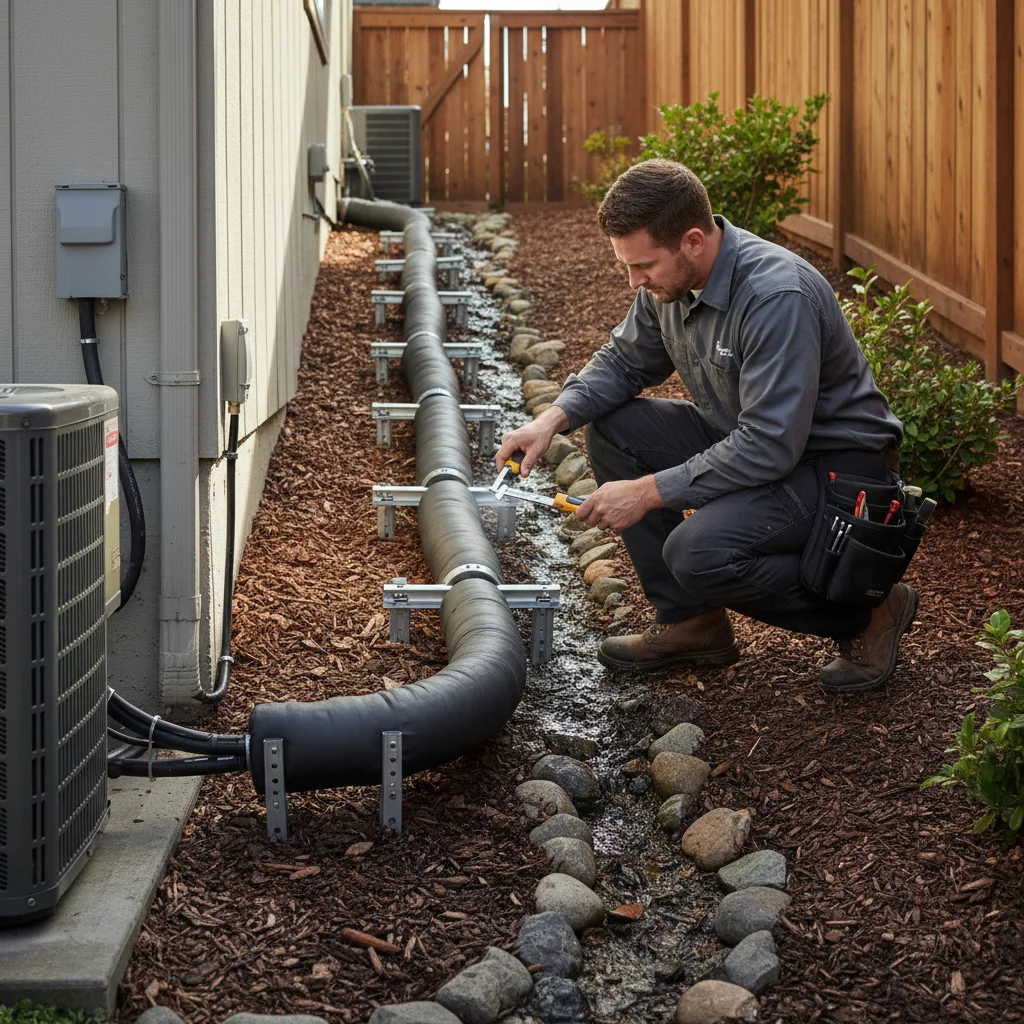
A “standard” installation assumes a line set of about 25 feet on a relatively flat surface. When we encounter a 75-foot run with a 20-foot vertical rise on a Mt. Helix home, several costs are added to the quote:
- Additional Materials: More copper tubing, more insulation, more wiring, and significantly more refrigerant are needed. With refrigerant costs rising, this alone can add several hundred dollars to a job.
- Increased Labor: It simply takes more time to carefully run, secure, and braze a long line set, especially on a steep or difficult-to-access hillside. This can add two to four hours of labor to the project.
- Specialized Components: For significant vertical runs, the manufacturer often requires the installation of a suction line accumulator or an oil trap. These are extra parts that protect the compressor but add to the material cost.
- Complex Charging & Commissioning: The final step of any installation, charging the system, becomes a much more delicate and time-consuming process. The technician can’t just rely on a standard chart; they must use superheat and subcooling measurements to slowly dial in the perfect charge, which is critical for the system’s efficiency and longevity.
These factors are why a quote for what seems like the same 3-ton system can be significantly different for a hillside home compared to a tract home on a slab foundation. It’s not about the neighborhood; it’s about the engineering required to make the system work correctly and reliably in a challenging environment.
When to call us
Troubleshooting an HVAC system in a hillside home is not a DIY project. The high voltages, high-pressure refrigerants, and complex physics of oil return and refrigerant flow require a licensed and experienced professional. If your La Mesa home isn’t cooling properly, don’t risk damaging your equipment further or endangering yourself.
For La Mesa-specific pricing, hillside home HVAC notes, and repair vs. replacement guidance, see our full AC repair in La Mesa service page. Call us at (442) 777-6440.