A Chula Vista AC tune-up should begin with a written scope. It should identify the equipment, planned tests, included cleaning, and how the contractor reports problems. That clarity helps you compare visits without relying on vague promises.
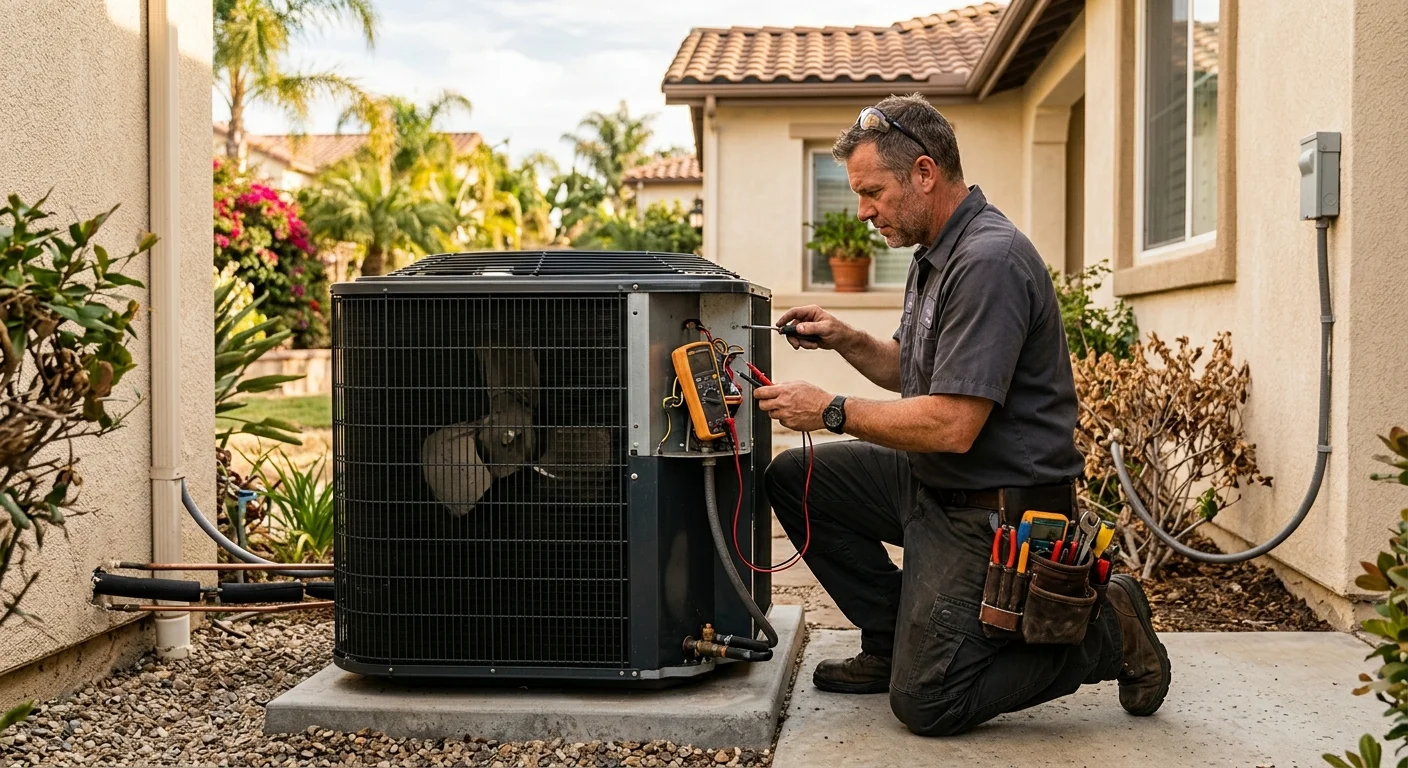
A Chula Vista tune-up is a written scope, not a slogan
Compare visits by equipment named, tests measured, cleaning included, and how repairs get approved. South Bay heat plus occasional marine air means coils and electrical connections both belong on that list. Chula Vista sits between coastal humidity and inland heat. A visit that only rinses a condenser and skips the indoor coil and drain is incomplete for this climate.
Checklist
- Ask which indoor and outdoor units are included.
- Require temperature split or electrical readings in the report.
- Separate inspection from any repair approval.
- Note whether the home is west toward the bay or east toward Otay Ranch heat.
- Use AC tune-up service when you request a match.
Related: Chula Vista HVAC and HVAC maintenance.
What should a written tune-up scope include?
Start with the equipment covered by the visit. The scope should name the outdoor unit, indoor equipment, thermostat, filter, and condensate pathway when applicable. If your home has separate systems or multiple thermostats, confirm which ones are included.
The scope should also separate inspection from cleaning, adjustment, and repair. Those words don’t mean the same thing. Ask the contractor to describe what will be visually inspected, what will be measured, and what routine cleaning is part of the visit. Any possible repair should require a separate explanation and your approval.
A useful written scope addresses areas such as:
- Thermostat operation and settings
- Filter condition and fit
- Indoor and outdoor coil condition
- Blower and outdoor fan operation
- Condensate drainage
- Visible wiring and electrical connections
- Refrigerant-system observations
- Temperature and electrical readings
- Unusual noise, vibration, or odor
- A written summary of findings
This isn’t a universal checklist. Equipment designs and site conditions differ. The contractor should explain which items apply to your system and why.
Ask how the results will be documented. Written readings, clear notes, and photos can make later decisions easier. They also help you distinguish a current problem from an item that simply deserves monitoring.
Our AC tune-up service connects Chula Vista homeowners with independent licensed contractors. Broader HVAC maintenance service can also cover heating and other connected equipment. Climate Pros SD is the referral service, while the homeowner contracts with and pays the professional directly.
Which symptoms should you record before the visit?
Your notes give the pro a better starting point. Write down what the system does, when it happens, and which rooms feel affected. Keep the description simple and observable.
Useful notes include warm airflow, weak airflow, uneven room temperatures, unusual cycling, water near the indoor equipment, or a new sound. Record where you noticed the issue. A noise at the outdoor unit points the conversation in a different direction than one near an indoor return.
Timing matters as context, not as a diagnosis. Note whether the symptom appears during warmer afternoons, after changing thermostat settings, or only after longer operating periods. Tell the pro if the problem disappears before the visit. Intermittent symptoms still deserve a clear description.
Avoid diagnosing the failed part yourself. “The upstairs bedroom stays warmer” is more useful than naming a component without testing. Likewise, “the outdoor unit makes a buzzing sound when cooling starts” gives the contractor a specific event to evaluate.
Photographs can preserve temporary conditions. Capture visible water, thermostat messages, or debris around the equipment without opening panels. The licensed pro can decide what needs closer inspection.
Also gather the equipment information visible from the outside. A model label or past service record may help the contractor understand the setup. If cooling has stopped or the symptoms now point toward a repair, review the Chula Vista AC repair guide before comparing your next options.
How can South Bay conditions shape the inspection?
Chula Vista spans meaningfully different cooling conditions. Coastal areas are generally milder than inland valleys, and verified NOAA normals show that difference within the city.
The NOAA 1991-2020 climate normals list July and August normal highs of 74.6°F and 76.9°F at the Chula Vista station. Brown Field, used for eastern Chula Vista and Otay, lists 78.3°F and 80.6°F for those months. Heat waves can run well above those normals.
Those figures don’t diagnose an AC system. They do show why a west Chula Vista home and an eastern home near Otay shouldn’t receive assumptions based only on the city name. The written scope should reflect the equipment, its setting, and the homeowner’s actual concerns.
Tell the contractor where the outdoor unit sits. Note surrounding walls, landscaping, visible debris, and anything else that may affect access or airflow. Ask the pro to document the actual condition instead of assuming exposure based on the neighborhood.
Indoor conditions deserve the same attention. Explain which rooms run warmer, where the thermostat is located, and whether comfort changes across levels. These observations help the contractor choose relevant measurements during the visit.
Don’t accept a broad claim that every South Bay system needs the same adjustment. Ask what the pro observed at your home. A strong explanation connects each recommendation to a reading, visible condition, or specific symptom.
What should a licensed pro test at both units?
The scope should distinguish the indoor side from the outdoor side. Each has different components to inspect, and the written report should show where each finding came from.
At the indoor equipment, ask whether the pro will evaluate thermostat response, filter condition, airflow-related components, the blower area, coil condition, and condensate drainage when applicable. Ask which operating readings will be taken and how they’ll be recorded.
At the outdoor unit, the scope can address coil condition, fan operation, visible connections, operating sounds, vibration, and relevant electrical measurements. Refrigerant-system evaluation should be described clearly. If additional diagnostic work becomes necessary, the contractor should explain it before proceeding.
The final report should connect observations from both locations. For example, a room-comfort complaint may call for more than a quick look at the outdoor unit. You want the pro to explain which measurements support the finding and whether the concern belongs to maintenance, repair, or a broader system evaluation.
California’s C-20 contractor classification covers maintaining, servicing, and repairing air-conditioning systems and their connected controls and filters. You can verify a contractor’s status and classification through the California Contractors State License Board.
Climate Pros SD matches homeowners with licensed independent HVAC professionals. It doesn’t perform the testing or make the contractor’s findings. Ask the matched pro to walk you through the written results before you approve additional work.
How do you compare scopes without fixed promises?
Compare what each contractor will examine and document. A longer description isn’t automatically better. Clear boundaries matter more than broad language.
Place the written scopes side by side. Check whether they identify your actual equipment and separate included maintenance from possible diagnostic or repair work. Look for specific measurement categories instead of promises about comfort, savings, or future performance.
Ask each contractor the same practical questions:
- Which indoor and outdoor equipment does this visit cover?
- Which operating readings will appear in the report?
- What cleaning or adjustment is included?
- What conditions would lead to additional diagnostic work?
- How will repair findings be explained?
- Will I receive notes or photos afterward?
- What happens if part of the system can’t be tested?
Ask the pro what their diagnostic fee is and whether it applies toward a repair. Each company sets its own policy. Climate Pros SD doesn’t set contractor prices, fees, or warranties. You hear the price before any work starts.
Watch for a scope that blends a tune-up with automatic repair authorization. A maintenance visit can uncover a problem, but you should receive a separate explanation before approving additional work. Ask which finding, measurement, or visible condition supports the recommendation.
Replacement is a separate decision too. If a contractor recommends new equipment, compare that proposal with the existing system’s condition and the documented findings. Our guide to AC installation in Chula Vista explains how to approach that larger conversation.
The best comparison is grounded in your home. Choose the scope that clearly identifies the equipment, planned evaluation, reporting method, and approval process.
When to call us
Call when you need a licensed HVAC pro to evaluate your AC, document its condition, or explain a maintenance concern. Climate Pros SD connects Chula Vista homeowners with independent local professionals. Call us at (442) 777-6440 and we will match you with a licensed local pro.