Nothing’s worse than flipping on your furnace on a chilly San Diego morning, especially with our surprising May grey or June gloom marine layer, only to hear the fan kick on and… nothing else. Your furnace isn’t igniting, and that warm air you’re craving isn’t coming. Before you panic and reach for the phone, there are several common issues you can safely check yourself.
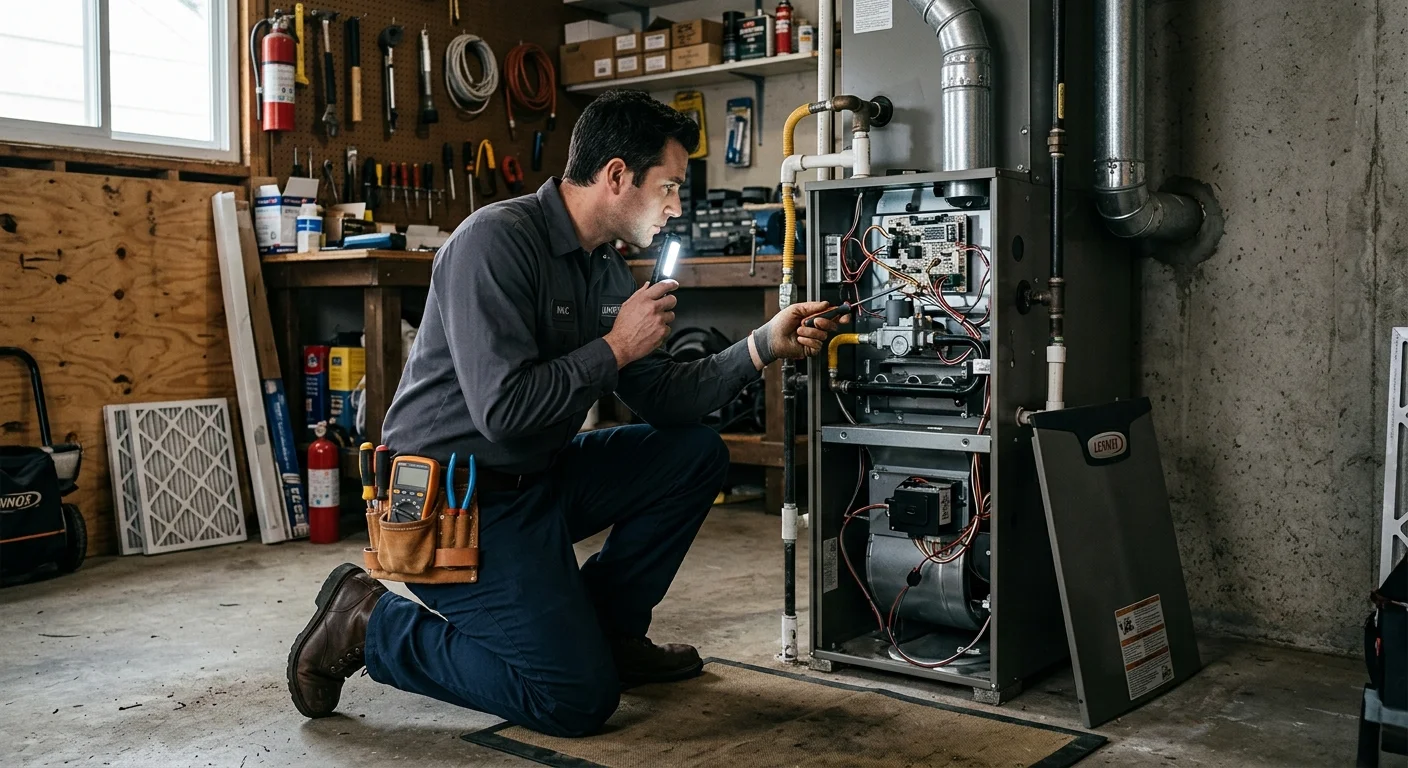
We’re Climate Pros SD, and we’re here to help you understand what might be preventing your furnace from firing up. This guide covers the most frequent culprits behind a non-igniting furnace, empowering you to perform basic troubleshooting. Remember, safety always comes first, especially when dealing with gas appliances.
Thermostat and power: the 60-second checks first
Before you start complex diagnostics, let’s start with the basics. Many furnace ignition issues stem from simple thermostat or power problems. These are quick checks anyone can do, and they often resolve the issue without needing a technician.
First, confirm your thermostat is set correctly. It should be in “Heat” mode, and the temperature setting needs to be several degrees higher than the current room temperature. If it’s already set high, try raising it by another 5 degrees to ensure it’s actively calling for heat. Next, check the thermostat’s batteries, if it uses them. Dead batteries can prevent the thermostat from communicating with your furnace.
Power to the furnace itself is another common culprit. Head to your electrical panel and locate the circuit breaker labeled for your furnace. It might be labeled “Furnace,” “HVAC,” or “Heater.” If it’s tripped (usually positioned between “On” and “Off”), switch it completely off, then firmly back to “On.” If it trips again immediately, you’ve got a bigger electrical problem, and it’s time to call a pro. Also, many furnaces have a separate light switch-style power switch located near the furnace, often on a wall or mounted directly to the unit. Make sure this switch is in the “On” position. Sometimes these get accidentally flipped off, especially if they’re near a utility light switch.
Finally, take a quick look at your furnace filter. While a clogged filter won’t directly stop ignition, it restricts airflow and can lead to overheating or other issues that prevent the furnace from starting its heating cycle. A severely clogged filter is a problem that should always be addressed.
Pilot light vs hot surface igniter, which one you have
Furnaces ignite gas in one of two primary ways: with a pilot light or a hot surface igniter (HSI). Knowing which type your furnace uses helps you understand where to look for the ignition problem.
Older furnaces, typically those 15 years or older, often use a pilot light. This is a small, continuous flame that ignites the main burners when the thermostat calls for heat. If your furnace has a pilot light and it’s out, the main burners won’t ignite. You might be able to relight it following instructions usually found on a label inside your furnace’s access panel. This process typically involves turning off the gas, waiting a few minutes, then turning it back on while holding down a pilot button and igniting with a match or piezo igniter. Crucially, if you smell gas, do not attempt to relight the pilot. Shut off the gas to the furnace and call for professional help immediately.
Most modern furnaces, including many in San Diego homes, use a hot surface igniter (HSI). This is a ceramic or silicon carbide rod that glows bright orange when electricity flows through it, much like the heating element in a toaster. When your thermostat calls for heat, the HSI heats up for about 10-20 seconds, then the gas valve opens, and the main burners ignite. If the HSI is cracked, broken, or simply too old and weak to get hot enough, it won’t ignite the gas. You can often see the HSI through a small viewing window or by carefully removing an access panel. If it’s not glowing when it should, or if you can see visible damage, that’s likely your problem. Replacing an HSI can be a DIY task if you’re comfortable with basic electrical work, but it involves handling a fragile component and dealing with gas, so many San Diegans prefer to call an expert.
Flame sensor problems and the dirty-sensor fix
After ignition, your furnace needs to confirm that the flame is actually present and burning safely. That’s the job of the flame sensor. This small metal rod, usually located in the path of the flame, uses a process called flame rectification to send a signal back to the furnace’s control board. If the control board doesn’t detect a flame within a few seconds of the gas valve opening, it assumes there’s an issue and shuts off the gas for safety. This is called a “lockout” and it prevents raw gas from accumulating in your home.
The most common problem with a flame sensor is simply that it gets dirty. Over time, a thin layer of carbon buildup forms on the sensor rod. This carbon acts as an insulator, preventing the sensor from accurately detecting the flame. The good news is that a dirty flame sensor is often an easy and inexpensive fix you can do yourself.
Here’s how to clean it safely:
- Turn off power: Absolutely essential. Go to your thermostat and set it to “Off.” Then, turn off the furnace’s power switch (the one near the unit) and, for extra safety, flip the circuit breaker at your electrical panel.
- Locate the flame sensor: It’s usually a single rod, about 2-3 inches long, with a single wire connected to it. It sits directly in the path of the burner flames.
- Carefully remove it: Unscrew the single screw holding it in place and gently pull the sensor out. Avoid pulling on the wire.
- Clean the rod: Use a fine-grit emery cloth or fine-grain sandpaper (200-grit or higher) to gently polish the metal rod. You’re not trying to remove metal, just the carbon buildup. A clean dollar bill or steel wool can also work in a pinch. Don’t use harsh chemicals or abrasive cleaners.
- Reinstall and test: Carefully put the flame sensor back in its exact position, making sure the wire is securely reconnected. Restore power to the furnace and try to start a heating cycle. With a clean sensor, your furnace should ignite properly.
Gas valve and pressure switch failures
While cleaning a flame sensor is a manageable DIY task, problems with the gas valve or pressure switch typically require the expertise of a professional. These components are critical for safe and efficient furnace operation, and missteps can lead to serious hazards.
The gas valve controls the flow of natural gas to your furnace’s burners. When your thermostat calls for heat and the igniter is hot (or the pilot is lit), the control board sends a signal to open the gas valve. If the valve fails to open, gas won’t reach the burners, and ignition can’t occur. You might hear a clicking sound indicating the valve is trying to open, but no gas flows, resulting in no flame. A faulty gas valve could be due to electrical issues, mechanical failure within the valve itself, or even a problem with the furnace’s control board. Because this directly impacts the supply of natural gas, any suspected gas valve issue demands immediate professional attention from a licensed furnace repair technician. Never try to force open or manually adjust a gas valve.
The pressure switch is another vital safety device, especially in modern high-efficiency furnaces. Its job is to ensure that the furnace’s exhaust (venting) system is clear and that proper airflow is maintained before the burner ignites. The switch monitors the pressure created by the furnace’s inducer motor, which pulls combustion gases out of your home. If there’s a blockage in the vent pipe (like debris or even a bird’s nest), a clog in the condensate drain line (for high-efficiency units), or a problem with the inducer motor itself, the pressure switch won’t close. When the switch doesn’t close, it tells the control board that it’s unsafe to ignite, and the furnace won’t proceed with the heating cycle. Troubleshooting a pressure switch involves checking for blockages, testing the switch’s functionality, and potentially diagnosing motor issues, which are all tasks best left to a trained HVAC professional.
When it’s safe to keep trying and when to stop
Knowing when to confidently troubleshoot and when to call in the pros is key to staying safe and preventing further damage to your furnace. It’s generally safe to perform the initial checks we discussed:
- Verifying your thermostat settings and batteries.
- Checking your circuit breaker and the furnace’s power switch.
- Inspecting and replacing a dirty air filter.
- Carefully cleaning a flame sensor, provided you’re comfortable with the steps and have completely disconnected power.
- Relighting a pilot light only if you’re following manufacturer instructions precisely and there is no smell of gas.
However, there are clear signs that you need to stop troubleshooting and call in a professional, the kind of vetted pro a network like Climate Pros SD connects you with. Stop immediately if:
- You smell gas. This is paramount. If you detect any odor of natural gas, shut off the gas supply to your furnace if you know how, leave your home, and then call SDG&E’s emergency line and Climate Pros SD for emergency HVAC service. Do not use any electrical switches or phones inside the house if you smell gas.
- The circuit breaker trips repeatedly. This indicates an electrical fault that needs expert diagnosis.
- You hear unusual noises like grinding, scraping, or banging coming from the furnace. These could signal a failing motor or other critical component.
- You see visible damage to electrical wiring, gas lines, or crucial furnace components.
- You’re unsure or uncomfortable with any step of the troubleshooting process. It’s always better to be safe than sorry, especially with an appliance involving gas and electricity.
Attempting repairs beyond simple maintenance can void warranties, create safety hazards, and potentially lead to more expensive repairs down the line. If your furnace is frequently failing to ignite, it might also be showing signs your furnace is going out, making professional assessment even more crucial.
Related service: AC repair. Local coverage: all 67 cities we cover in San Diego County.
Not sure this is your symptom? Our HVAC symptom finder matches what the system is actually doing to the likely cause.
When to call us
If your furnace still won’t ignite after these basic checks, or if you encounter any of the “stop immediately” scenarios, it’s time to bring in a licensed C-20 contractor. The companies we match you with diagnose ignition problems. Call us at (442) 777-6440. Climate Pros SD does not quote a repair menu.