The sound your AC makes tells you the cause. Banging means a loose or broken part, often the compressor. Buzzing is electrical, usually a failing capacitor. Screeching is a worn motor bearing. Hissing is a refrigerant leak. Rattling is loose hardware or debris. Banging, screeching, and hissing mean shut it off now. Buzzing and rattling can wait a day or two.
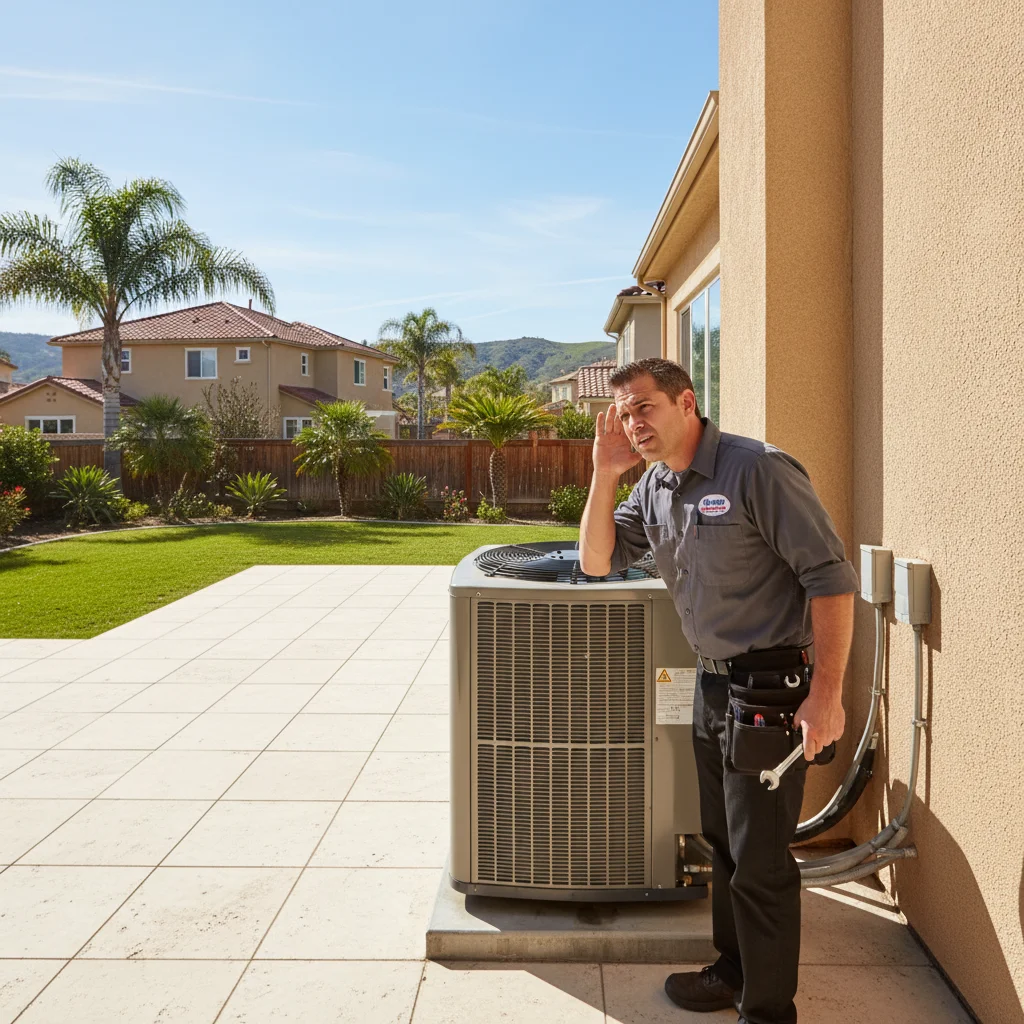
Different noises point to different problems, from a simple twig in the fan to a dead compressor. Here’s a sound-by-sound guide to decoding what your AC is saying, plus a quick-reference table and the answer to the question we get most in San Diego: what it means when your AC is loud and not cooling.
Quick reference: AC noise to cause
Use this table to match the sound to the most likely cause and what to do. Then read the section below for the full picture.
| Noise | Most likely cause | Where it comes from | What to do |
|---|---|---|---|
| Loud buzzing or humming | Failing capacitor, pitted contactor, or loose wiring | Outdoor condenser | Schedule service within a day or two |
| Screeching or squealing | Worn motor bearings or a failing blower belt | Either unit | Shut off and call a technician |
| Banging or clanking | Loose or broken fan blade, debris, or failing compressor | Either unit | Shut off at thermostat and breaker now |
| Hissing or bubbling | Refrigerant leak in the copper lines | Either unit | Shut off and call a technician |
| Rattling | Loose panel screw, bolt, or yard debris | Either unit | Inspect with power off, then call if unclear |
| Clicking (repeating) | Failing thermostat, control board, or fan obstruction | Either unit | Clear debris, then have controls checked |
San Diego adds two wrinkles to this list. Coastal homes from La Jolla to Encinitas get salt-air corrosion that pits contactors and seizes fan bearings faster, so buzzing and screeching show up earlier here than inland. Inland valleys like El Cajon and Santee run their units harder through summer, which wears compressors and capacitors faster. Match that to the table and you’ll usually know which way your repair is headed before a tech arrives.
Buzzing or humming: usually electrical
A low, steady hum from your outdoor condenser unit is perfectly normal. That’s just the sound of the compressor and fan motor doing their jobs. What you need to listen for is a change in that sound, specifically, a loud, angry buzz or a struggling hum. This almost always points to an electrical problem.
Here are the most common culprits:
- Failing Capacitor: The run capacitor is a small, can-shaped component that gives the motors the jolt they need to start and run. When it fails, the motor may struggle to turn on, creating a loud humming or buzzing sound. This is one of the most frequent repair calls we get in San Diego County. If you suspect this is the problem, you can learn more about what’s involved in an AC capacitor replacement.
- Contactor Issues: The contactor is a switch that controls the flow of high voltage to the compressor and condenser fan motor. Over time, its surface can become pitted or “welded” shut, causing a constant buzzing noise even when the unit isn’t running a full cycle.
- Loose Wiring: Vibrations can cause electrical connections inside the unit to loosen over time. This can lead to arcing and a distinct electrical buzz.
An unusually loud humming noise is a clear warning sign. While the unit may continue to run for a short time, the failing component is putting a strain on other, more expensive parts like the compressor. It’s best to get it looked at before a small electrical issue turns into a major one.
Screeching or squealing: belts and motors
A high-pitched squeal or a metallic screeching sound is impossible to ignore. This isn’t a subtle warning; it’s a mechanical scream for help. This noise usually comes from one of two sources: worn-out motor bearings or, in much older systems, a failing belt.
- Failing Motor Bearings: Your AC system has two key motors: the condenser fan motor in the outdoor unit and the blower motor in the indoor unit (often part of the furnace). Both of these motors have internal bearings that allow them to spin smoothly and quietly. When these bearings wear out from age and use, they lose their lubrication. The resulting metal-on-metal friction creates a piercing squeal.
- Blower Belt (Older Systems): If you have an older HVAC system, the indoor blower might be driven by a belt. Just like the belt in a car, it can wear out, slip, or break, producing a loud squealing noise.
Ignoring a screeching sound is a fast track to a much bigger problem. The noise indicates a critical component is about to fail completely. If a motor seizes, you’ll lose all cooling, and the repair will be significantly more expensive than just replacing the worn bearings. If you hear this sound, shut your system off to prevent further damage and call a technician.
Banging or clanking: loose parts and compressor trouble
Of all the sounds an AC can make, a loud banging or clanking is one of the most jarring. This isn’t a sound you should ever ignore. It indicates that something has come loose or broken inside the system, and it’s being thrown around violently.
Possible causes for banging include:
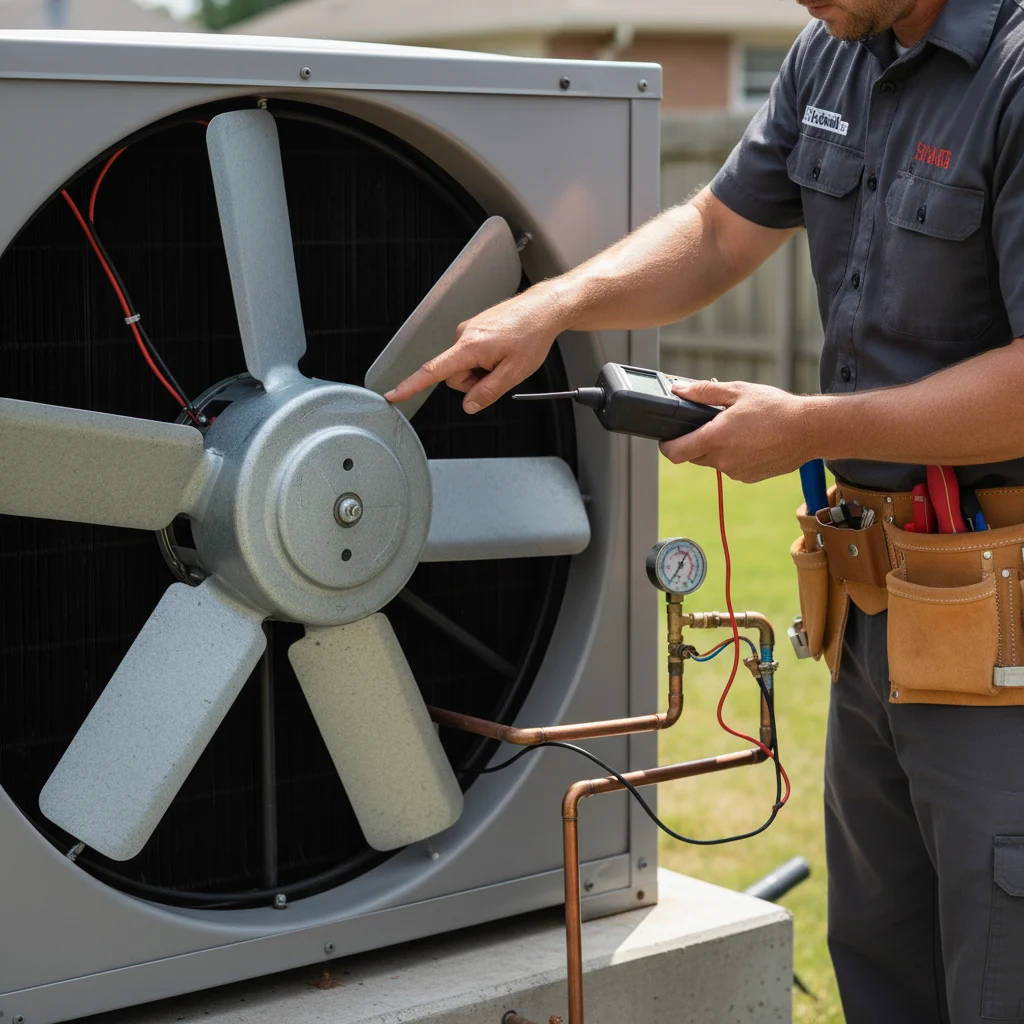
- Loose or Broken Fan Blade: A fan blade in either the indoor or outdoor unit can become bent or break off. As it spins, the unbalanced or broken piece will repeatedly strike the protective casing, creating a rhythmic clanking noise.
- Debris in the Condenser: Sometimes a stick, a rock, or another piece of yard debris can fall into the outdoor unit and get caught in the fan blades.
- Failing Compressor: This is the most serious cause. The compressor is the heart of your air conditioner. Internally, it has pistons, valves, and other moving parts. If one of these components breaks, it will create a terrible banging or clattering sound as it gets thrown around inside the compressor’s housing.
A banging noise demands immediate action. Turn off your air conditioner at the thermostat and at the circuit breaker. Running a unit with a broken part can cause a catastrophic chain reaction of damage. A failing compressor, in particular, can contaminate the entire refrigerant system, turning a major repair into a full system replacement.
Hissing: refrigerant leak warning signs
A hissing sound coming from your AC unit might be harder to notice than a loud bang, but it’s just as serious. In most cases, hissing points directly to a refrigerant leak.
Refrigerant, often known by brand names like Freon, is a chemical that circulates through your AC system to absorb heat from inside your home and release it outside. It’s under high pressure, so if a crack or hole develops in the copper refrigerant lines, the escaping gas will produce a hissing or bubbling sound.
You may notice other signs along with the noise:
- Your AC is running but not blowing cold air.
- Ice is forming on the copper lines or coils.
- Your electricity bills are suddenly higher.
Running an AC with low refrigerant is incredibly damaging. The compressor needs the proper amount of refrigerant to operate safely. Without it, the compressor can overheat and burn out. Because refrigerant is a regulated substance, fixing a leak is not a DIY job. It requires a certified technician to locate the leak, repair it, and safely recharge the system. If you hear a hissing noise, it’s time to schedule a professional AC repair.
When it’s safe to keep running and when to shut it off
Knowing which noises demand an immediate shutdown can save you from a much more expensive repair bill. Here’s a quick guide.
Shut your AC off IMMEDIATELY if you hear:
- Banging or Clanking: Indicates a broken or loose part that can cause severe damage.
- Screeching or Squealing: A sign of imminent motor failure.
- Hissing: A refrigerant leak that can destroy your compressor.
If you experience any of these sounds, turn the system off at the thermostat and the breaker. When your home is getting hot and you can’t wait, Climate Pros SD matches you for emergency HVAC service to diagnose the problem quickly.
Schedule a service call soon if you hear:
- Loud Buzzing or Humming: This is typically an electrical part starting to fail. The system isn’t in immediate danger of destroying itself, but it will stop working soon. Don’t ignore it for more than a day or two.
- Rattling: This could just be a loose panel screw or a small twig in the outdoor unit. You can perform a quick visual inspection (with the power off). If you can’t easily find the source, it’s best to have a pro take a look.
Loud noise and not cooling at the same time
When a loud noise shows up with weak or warm air, the noise usually points straight to why you’ve lost cooling. Three pairings cover most San Diego calls.
- Hissing plus warm air: This is the classic refrigerant-leak signature. The hiss is gas escaping a cracked copper line, and the lost refrigerant is why the system can’t pull heat out of your home. You may also see ice on the lines or coils. Shut it off so the compressor doesn’t run dry and burn out.
- Loud buzzing plus the fan not spinning: A failed capacitor or contactor often leaves the compressor or condenser fan stuck. The unit hums or buzzes trying to start a motor that won’t turn, and with the fan down it can’t reject heat outside, so the air inside stays warm.
- Banging or grinding plus no cold air: This is the worst pairing. A failing compressor makes a violent banging sound and stops pumping refrigerant, which kills cooling entirely. Running it longer risks contaminating the whole refrigerant loop and turning a repair into a full replacement.
In all three cases, turn the system off at the thermostat and the breaker. The fix needs a refrigerant gauge set or electrical testing, neither of which is a DIY job. If your home is heating up on an inland summer afternoon in places like Santee or Poway, that’s when emergency HVAC service earns its keep.
Frequently asked questions
Why is my AC making a loud noise and not cooling? The noise usually explains the lost cooling. Hissing with warm air points to a refrigerant leak. Loud buzzing with a stalled fan points to a failed capacitor or contactor. Banging with no cold air points to a failing compressor. Shut the system off and call a technician in all three cases.
What does it mean when my AC is making a loud banging noise? Usually a loose or broken fan blade, debris in the outdoor unit, or a failing compressor. The compressor is the most serious cause. Turn the unit off at the thermostat and the breaker right away.
Why is my AC buzzing or humming loudly? A loud buzz from the outdoor unit almost always means an electrical problem, most often a failing run capacitor, then a pitted contactor or loose wiring. Schedule service within a day or two before it fails completely.
Is it safe to keep running my AC when it makes noise? Shut it off immediately for banging, screeching, or hissing. A loud buzz means an electrical part is failing, so run it only briefly and book service soon. A light rattle may just be a loose screw or twig you can find with the power off.
Does San Diego’s coastal climate make AC noises more common? Yes. Coastal salt air corrodes electrical contacts and seizes bearings faster, so buzzing and screeching show up earlier near the coast. Inland valleys run units harder, which wears compressors and capacitors.
How much does it cost to fix a noisy AC in San Diego? Ask the matched licensed contractor. Climate Pros SD does not publish capacitor, contactor, fan-motor, leak, or compressor bands. Those are different tickets.
Related service: AC installation.
Not sure this is your symptom? Our HVAC symptom finder matches what the system is actually doing to the likely cause.
When to call us
While identifying a noise is the first step, performing the actual repair is a job for a professional. Air conditioners are complex machines with high-voltage electrical components and pressurized refrigerant. For your safety and to ensure the repair is done correctly, always rely on a licensed and insured HVAC contractor. You can verify a contractor’s license on the California Contractors State License Board website.
If your AC is making any of these strange noises, don’t wait for it to fail completely. Call us at (442) 777-6440 for an estimate.