A gas water heater aging out is a real decision, not a rebate flyer. A heat pump water heater (HPWH) moves heat from the surrounding air into the tank instead of burning gas or running a full-time resistance element. Whether it fits your garage, panel, and hot-water use is a site visit. This page will not invent your monthly bill or a rebate total.
Climate Pros SD matches HVAC work with licensed companies. A tank swap is often plumber scope plus electrical. We do not install water heaters or set prices.
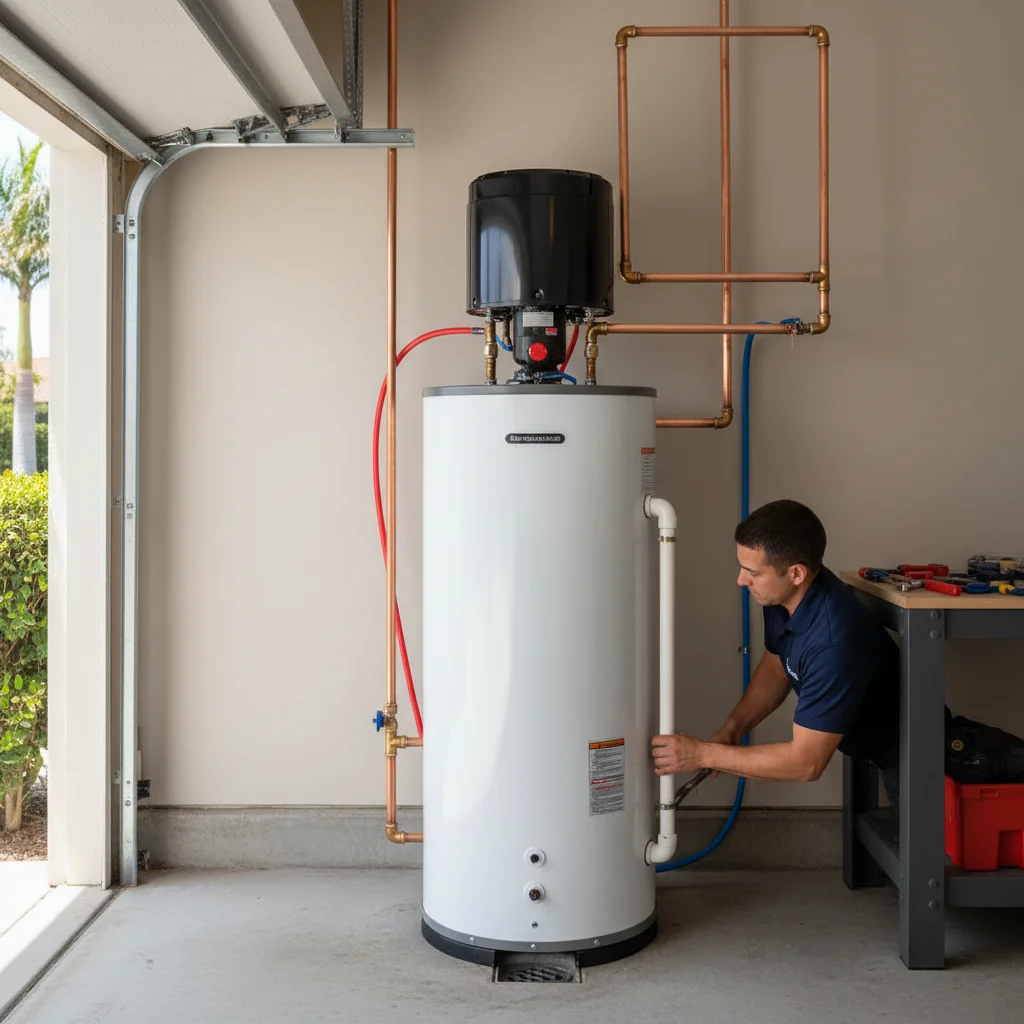
How does a heat pump water heater work?
It pulls heat from the air around the unit and dumps that heat into the stored water, the same family of physics as a heat pump HVAC system. A resistance-only electric tank turns nearly all of its electricity into heat in the water. An HPWH can deliver more heat to the water than the electrical energy it uses while it stays in heat-pump mode. Manufacturer COP ratings are model-specific. Read the yellow Energy Guide and the spec sheet. Do not treat a blog COP as your house.
San Diego’s mild air helps the unit stay in heat-pump mode more of the year than a cold-climate garage. NWS San Diego describes ocean moderation near the coast and warmer summer days in nearby valleys. That is qualitative, not a garage temperature log.
The trade-off: the unit cools and dries the room it sits in. Fine in a two-car garage. Tight in a small indoor closet unless you add a duct kit or louvered doors that the installer sizes.
How do operating costs compare to gas on SDG&E rates?
This site does not publish cents per kWh, dollars per therm, or a monthly hot-water total. SDG&E residential plans can price electricity by time of use. Current listed residential TOU plans have a 4-9 p.m. on-peak period. CCA customers pay delivery plus their CCA’s generation price. Displayed energy prices exclude the monthly residential Base Services Charge. See SDG&E pricing plans.
What to compare on your own bills:
- Therms for water heating if you can separate them, or total gas versus a like household
- Whether an HPWH would run much of its recovery in the 4-9 p.m. window
- Whether rooftop solar changes the daytime kWh you actually pay for (NEM terms are account-specific)
A licensed plumber or HVAC-plus-plumbing team should size storage to occupancy, not a “four-person, 60 gallons” default from a blog.
Where does an HPWH fit in San Diego homes?
Air volume. Installers typically want a large surrounding air volume or a ducted kit. A two-car garage usually qualifies. A tiny closet often does not.
Noise. The compressor and fan are not silent. If the garage shares a wall with a bedroom, listen to a running unit before you commit.
Height. Taller tanks need headroom for the fan and condensate. Low-ceiling garages in older neighborhoods can rule out some models.
Electrical. Most HPWHs need a dedicated 240-volt circuit. A house wired only for gas water heating may need that circuit or a panel upgrade. Price it as a line item. If you are already looking at heat pump HVAC, ask whether the same electrical visit can include the water-heater circuit.
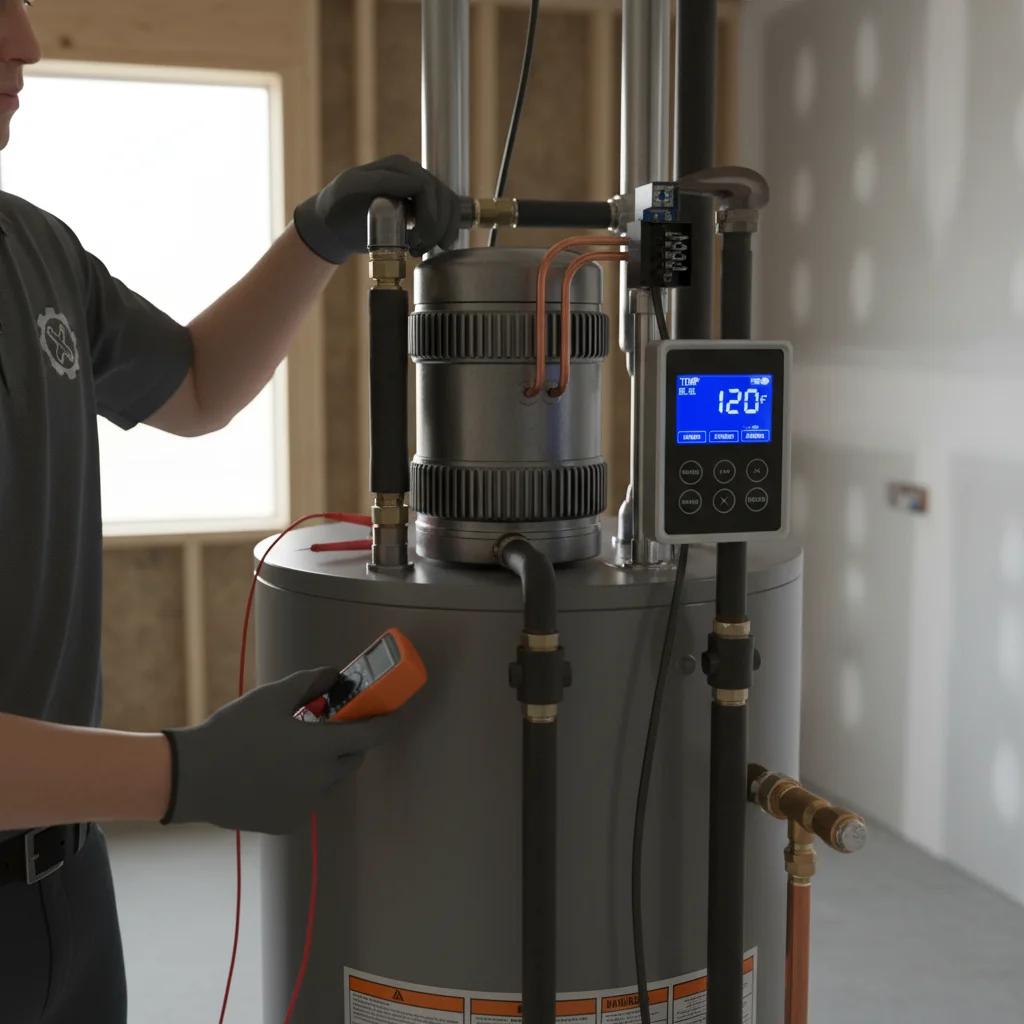
What is the 2026 rebate picture?
Do not stack expired or closed programs into a “thousands off” pitch.
Section 25C. Qualifying 2025 installations may fall within the credit period; property placed in service after December 31, 2025 does not. The IRS says the annual limit for qualified heat pumps and heat pump water heaters was $2,000 and the credit is nonrefundable. For a 2025 install you may still have a tax-return question. A 2026 install does not get this credit. Direct tax questions to a tax professional. IRS Energy Efficient Home Improvement Credit.
TECH Clean California. Single-family heat pump HVAC and heat pump water heater incentives were fully reserved and stopped accepting new reservations on November 14, 2025. Availability, enrollment, product eligibility, reservation, approval, and payment are separate conditions. TECH incentives.
HEEHRA. Single-family rebates were fully reserved statewide as of February 24, 2026. Existing approved reservations may continue. Do not describe a waitlist as approved money. CEC IRA residential rebates.
SDG&E. Golden State Rebates retail offerings have ended. Do not generalize that to every SDG&E program. SDG&E rebates.
More on this site: SDG&E heat pump rebates, heat pump rebate stack. Statewide context: California Energy Commission.
What does a quality install include?
Condensate. The unit makes water as it dehumidifies. It needs a drain or a pump. Drip-on-the-floor is not an install.
Seismic strapping. California requires water heaters to be strapped. An inspector will look.
Expansion tank. Closed water systems need a place for thermal expansion. A house that had tankless gas may not have one.
Clearance and air volume verified before the tank is ordered.
Permit and inspection. The licensed contractor pulls it. Unpermitted water-heater work is an insurance and disclosure problem. Verify the contractor at CSLB.
The water side is typically plumber scope. Plumbing Pro SD water heaters is the sister plumbing brand if you need that trade. If you are replacing gas, the gas line must be capped by a licensed contractor.
Related: AC repair, AC installation, San Diego County locations.
FAQs
Is a heat pump water heater worth it in San Diego?
It can be if the garage or room has air volume, the panel can take 240 volts, and you are not counting on a closed 2026 incentive to make the math work. Run your SDG&E plan and a plumber’s size, not a blog monthly cost.
Can I put one in a small closet?
Often not without a duct kit or more air. The installer should measure, not guess.
Do I get a federal tax credit if I install in 2026?
Not under Section 25C for property placed in service after December 31, 2025.
When to call us
Call (442) 777-6440 if the project includes HVAC heat-pump work or you need a licensed HVAC match. For tank-only work, use a licensed plumber. Ask for electrical, condensate, strapping, and permit as written line items. We do not quote HPWH installed prices.