TL;DR
- This page does not publish 2026 San Diego job counts, failure percentages, or repair-price tables. Those figures are not in our verified claims ledger.
- Licensed techs still see the same qualitative patterns: refrigerant leaks, electrical parts (capacitors and contactors), dirty coils, drain clogs, and controls.
- Coastal salt air and inland heat waves are different stresses. NWS describes ocean moderation near San Diego and warmer summer days in nearby valleys.
- Ask the matched company what failed, what it costs on their quote, and whether repair or replace is the honest path.
Every summer, San Diego homeowners get blindsided by an AC breakdown during the first real heat stretch of the season. It feels random. It usually isn’t. Failures follow recognizable patterns, and many of them are preventable with routine service. This post describes those patterns. It does not invent a 2026 county dataset.
Climate Pros SD is a referral service. We match you with licensed, independent HVAC professionals. They diagnose your unit. We do not.
What causes most AC failures?
Licensed techs in this market keep seeing the same buckets:
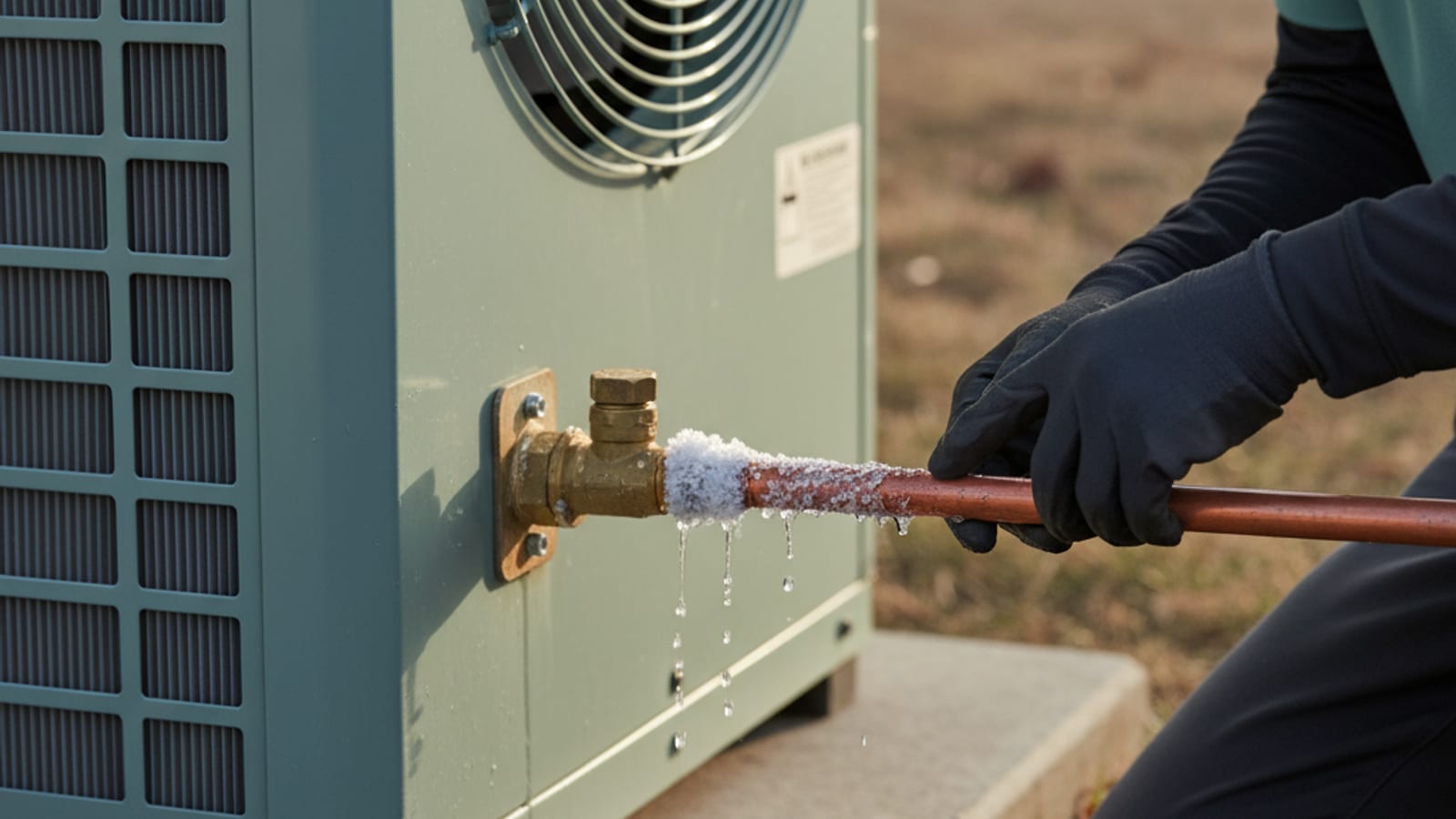
- Refrigerant leaks or low charge. A slow leak can still cool for a while. Left alone, low charge can overheat a compressor.
- Electrical component failures (capacitors, contactors, disconnect fuses).
- Dirty or blocked evaporator or condenser coils.
- Drainage system clogs, especially where the marine layer keeps indoor humidity high.
- Thermostat and control board faults.
Compressor, fan motor, and “everything else” still happen. They are usually the expensive end of the conversation, not the first thing a tech looks for.
National contractor surveys and manufacturer service notes have ranked those buckets for years. They are not a measured 2026 San Diego call mix, and this site will not dress them up as one. If someone quotes you “30% of San Diego calls are refrigerant,” ask for their own shop records. Ours are not published here.
Annual maintenance is still the practical link: a tech who sees a weak capacitor or a dirty coil in March is cheaper than a no-cool call in a heat wave. Ask the matched company what they include in a spring AC tune-up and what they charge.
How much does AC repair cost in San Diego?
Climate Pros SD does not set repair prices and does not publish a parts menu.
Ask the matched AC repair company for a written finding and a price before work starts. Ask whether the diagnostic fee applies toward the repair. Each company sets its own policy.
A useful way to compare quotes is by failure type, not by a website table:
- Refrigerant leak search, then repair or recharge
- Capacitor or contactor
- Coil cleaning versus coil replacement
- Drain flush
- Controls
- Compressor or blower, which often restarts the replace conversation
Catching a leak at maintenance is almost always cheaper than running a compressor on low charge until it fails. That is a mechanical fact, not a published ROI formula.
Why does San Diego have specific AC failure risk factors?
NWS describes ocean moderation near San Diego and warmer summer days in nearby valleys. Hot easterly winds can bring heat to coastal areas. That is a qualitative regional distinction. Historical tables do not establish how many days a year your house needs AC.
Salt-air coil corrosion. Homes near the coast (Ocean Beach through La Jolla, Encinitas, Oceanside) deal with salt-laden air on outdoor aluminum and copper. Coils and electrical contacts can degrade faster than the same equipment inland. Ask about coil coatings if you are replacing a coastal condenser.
Marine layer humidity and drainage. June Gloom and shoulder-season humidity mean more condensate for the same runtime. Clogged drain lines, tripped float switches, and indoor-unit leaks show up more often in those months than in a dry inland climate.
Inland heat events. East County cities (El Cajon, Santee, Lakeside, Ramona) see hotter summer afternoons than the immediate coast. Systems there run more hours. Capacitors and contactors wear with starts and long runtimes. Do not treat “routinely 100 to 110” as a published normal. Heat waves run well above normals. Use NWS for the day’s forecast.
Aging housing stock. Census housing-age mix varies by city. Older systems can still be on original capacitors, degraded coils, and a slow leak that nobody measured. Age is a reason to inspect, not a published failure multiplier.
R-22 production and import were banned in the United States as of January 1, 2020. Existing systems may still be serviced with recycled or previously produced refrigerant. A leaking R-22 system is often a replace conversation, not a cheap recharge. Ask the matched company.
What do manufacturer documents say about maintenance?
Most major manufacturers specify maintenance by a qualified professional in their warranty booklets. Read the certificate for your model. This site does not invent a biannual coastal requirement.
EPA says duct cleaning has never been shown to prevent health problems, and little evidence exists that cleaning ducts alone improves efficiency. Cleaning addresses contamination when conditions justify it. Sealing addresses leakage. Neither supports a guaranteed bill, energy, health, or comfort outcome.
ENERGY STAR’s typical-house duct-leakage statement (about 20% to 30% of the air moving through ducts) is national context. It is not your home’s test result.
What does skipping maintenance actually cost?
There is no honest 20-year spreadsheet on this page. We do not have a verified annual maintenance price, emergency-call rate, or blended repair cost for San Diego.
What you can do:
- Ask the matched company for last year’s findings if they already service the house.
- Compare a quoted tune-up against a quoted emergency repair for the same unit.
- Use the DOE-style 5,000 rule as a heuristic: multiply the repair quote by the unit’s age in years. If the product exceeds 5,000, replacement is commonly discussed. It is not a brand guarantee.
SDG&E residential time-of-use plans currently list a 4 p.m. to 9 p.m. on-peak period. Confirm your plan and current rates. This site does not publish cents per kWh or a wasted-energy dollar figure.
When should you repair versus replace an AC?
Start with the 5,000-rule arithmetic and the refrigerant type. If the system is R-22 and leaking, replacement is usually the adult conversation. If the system is newer and the failed part is a capacitor, repair is usually the adult conversation.
Ask for both numbers on the same visit. Climate Pros SD does not run free assessments and does not promise an outcome.
Frequently asked questions
How often should AC systems be serviced in San Diego?
Annually is a common manufacturer and warranty baseline, often in spring before cooling season. Coastal homes may want a visual coil and drain check again after marine-layer months. The matched company confirms what your warranty actually requires.
What’s the most common reason AC units fail in San Diego?
Licensed techs talk about refrigerant leaks, capacitors, dirty coils, and drains first. This site will not rank them with invented 2026 percentages. Ask the company that opens your unit.
Is it worth repairing a 15-year-old AC in San Diego?
Depends on the repair quote, refrigerant, and coil condition. Use the 5,000 rule as a starting heuristic. At that age, also ask about replacement efficiency and current rebate status. Section 25C does not apply to property placed in service after December 31, 2025.
Do coastal San Diego homes really fail faster than inland homes?
Salt air is a real outdoor-coil stress. Inland heat is a real runtime stress. Neither is a published years-of-life table on this site. Imperial Beach and other coastal pads should ask about coatings. Inland homes should ask about sizing and runtime.
Which AC parts fail most often in San Diego?
Run capacitors, contactors, evaporator leaks, and fan motors come up constantly in service work. Ask for the failed-part name on your invoice. Do not budget from a website parts menu.
Are extended HVAC warranties worth buying in San Diego?
Included product warranties and separately purchased service contracts are different. Compare overlapping coverage, price, deductibles, exclusions, and who actually does the repair. The FTC explains that comparison. There is no universal buy-or-skip answer here.
Have an aging system or a repair quote that doesn’t feel right? Climate Pros SD matches San Diego County homeowners with licensed HVAC pros. See AC repair or call (442) 777-6440. Ask whether a tech is available. The matched company confirms timing.