A real duct cleaning is quoted after an inspection of your Santee home, not a flat price off a flyer that turns into an upsell. Ask whether the matched company uses a negative-pressure method and follows NADCA ACR, cleans every supply and return, and shows you before and after photos so you see what came out.
Duct cleaning in Santee is priced after an on-site estimate, not off a flat number. The price moves with the size of the house, the number of HVAC systems, and whether you add duct sealing. The job is quoted in writing before anyone runs a hose into your ceiling.
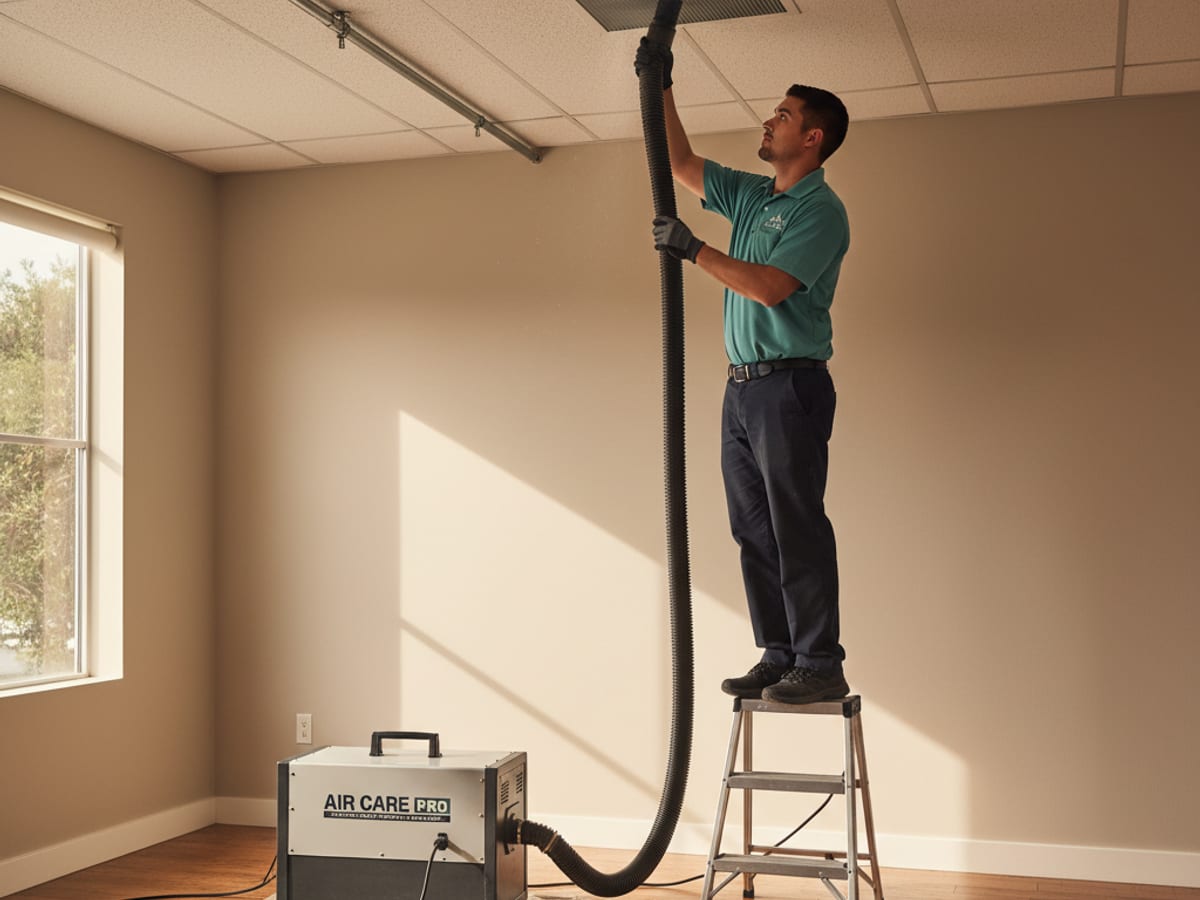
Most of the duct cleaning advertised in East County is a marketing trick. A too-good-to-be-true special buys ten minutes with a shop vac and a hard upsell on a new system. That is not duct cleaning. The real version uses a truck-mounted or portable negative-pressure vacuum, agitation brushes through every branch, and a camera so you can see the before and after. That is the work involved, and it is why the quote is honest about what the job actually takes.
The matched licensed company cleans ducts across every part of Santee. That includes the 1960s and 1970s tract homes in Carlton Hills and Carlton Oaks, the original homes near the old town center off Mission Gorge Road, the newer hillside subdivisions in Sky Ranch and West Hills, and the homes along the San Diego River corridor. Pricing is set by the company you are matched with, not by neighborhood.
What's included in a Santee duct cleaning
A full duct cleaning is a system job, not a register job. Here is what the matched licensed company does on a standard Santee home, start to finish.
Negative-pressure HEPA vacuum on the whole duct system, not a shop vac at one vent
Agitation brush and compressed-air whip run through every supply and return branch
Supply plenum and return plenum cleaning, where most of the heavy debris collects
Blower wheel and blower compartment cleaning, often the dirtiest part of the system
Evaporator coil surface cleaning when access allows
Every supply register and return grille pulled, washed, and reset
Source removal of construction dust, drywall debris, and settled attic dust
Sanitizing fog through the system when there is mold or odor, on request
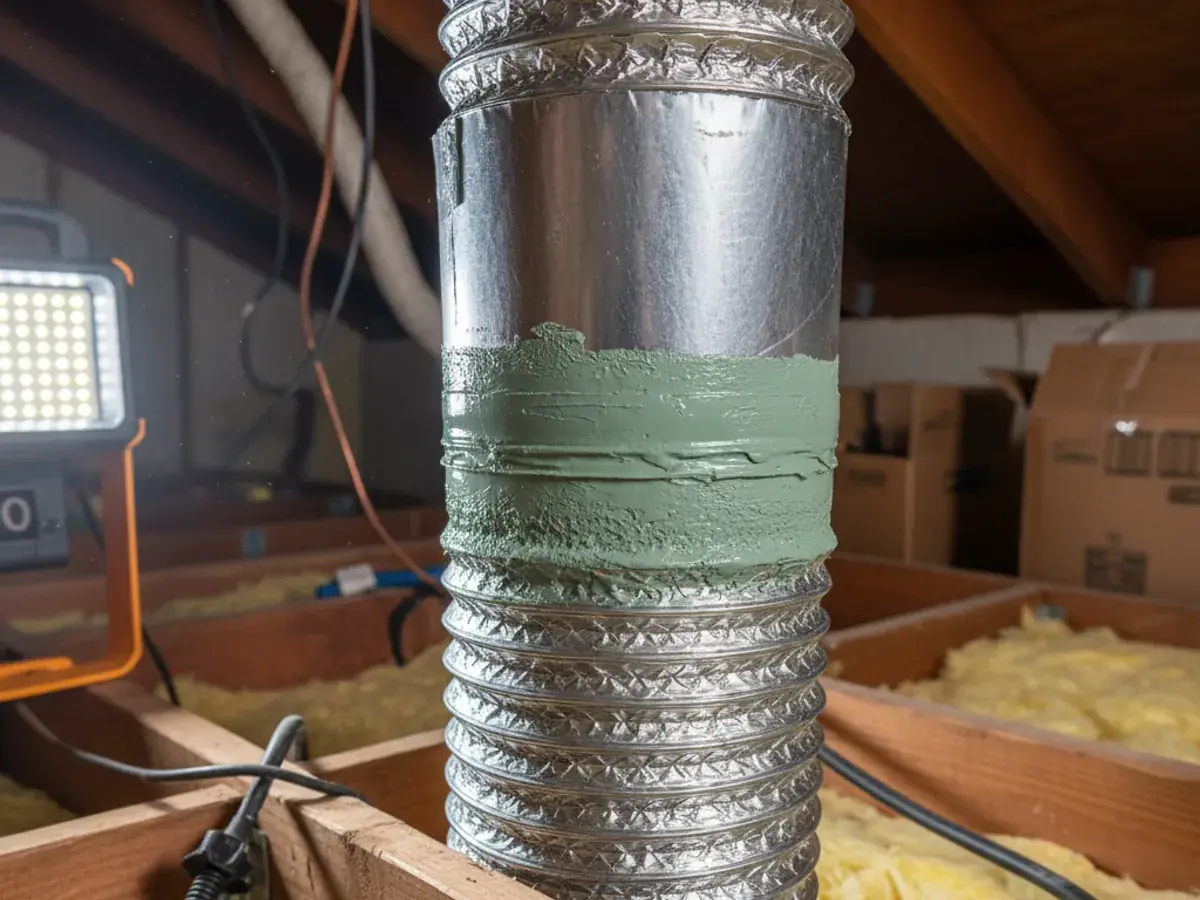
A leak and sealing inspection of accessible duct joints in the attic
A before and after photo report, if the company provides one
Duct cleaning cost in Santee
Every duct cleaning is quoted in writing before any work starts. Here is what typically drives the price for Santee homeowners. The exact number depends on home size, system count, and any sealing you add.
Repair
Typical range
Notes
In-home estimate
Quoted in writing
The matched licensed company inspects the system and quotes the job before any work
Condo or small home, one system
Lower cost for a smaller footprint
Under about 1,200 square feet, single HVAC system
Standard single-family home
Mid-range for a typical 3-bed
The typical Carlton Hills or Carlton Oaks 3-bed
Large home, one system
Higher cost for bigger homes with longer runs
Over about 2,500 square feet, long duct runs
Second HVAC system
Added on top of the base price
Sky Ranch and West Hills homes often have an upstairs and downstairs system
Blower wheel deep clean
Priced by how much buildup is on the wheel
Heavy buildup pulled and brushed off the wheel
Evaporator coil cleaning
Priced by coil condition
When the coil is fouled enough to choke airflow
Sanitizing fog treatment
Priced per treatment
For mold odor or after pest activity
Accessible duct sealing add-on
Priced by how much duct is accessible
Mastic on reachable attic joints, higher value than cleaning alone
Dryer vent cleaning add-on
Priced as a bundle add-on
Worth bundling while the crew is already on site
The matched company quotes that house. Climate Pros SD does not publish a countywide price list. Ask the matched company to tell you plainly if the inspection shows you do not need a cleaning. Ask what the inspection visit costs when you book.
Do you actually need duct cleaning?
Duct cleaning is worth the money when there is a real reason for it. It is a waste of money when there is not. Ask on the phone whether the job is worth booking at all. Here is the honest version.
When duct cleaning genuinely helps
Clean the ducts when there is visible mold inside the ducts or on the coil, when rodents or insects have been in the attic ductwork, when the home was recently remodeled and drywall dust got into the system, or when you just bought the house and have no idea how long it has been since the last cleaning. Heavy visible dust at the registers and a dusty smell when the system starts are also fair reasons.
When it does not help
EPA recommends deciding whether to clean ducts based on conditions rather than a routine fixed schedule. Consider an inspection when there is substantial visible mold, vermin, excessive dust or debris, or particles releasing from supply registers. Renovation debris or unknown system history can also justify inspection, but the observed condition should drive the decision. Cleaning is not a scheduled health or efficiency guarantee.
Duct sealing is often the better spend
ENERGY STAR says a typical forced-air house can lose about 20 to 30 percent of the air moving through its duct system through leaks, holes, and poor connections. That is a national reference, not a measured result for this home or city. Leakage must be tested. Sealing addresses air leakage; cleaning removes contamination inside ducts, and neither service guarantees a particular bill or comfort change.
When the matched company is already inside the ducts for a cleaning, sealing the accessible joints is a high-value add-on. If your real complaint is high bills or rooms that never cool, the matched company will tell you sealing matters more than cleaning. The choice stays yours.
Local angle
Duct cleaning built for Santee homes
Why Santee ductwork gets dirty
Santee sits inland in East County, in a valley along the San Diego River. The marine layer rarely reaches this far, so summers run well above the coastal normals with dry, low-humidity air. Systems run long, hard hours from June into October, and every long run hour pulls more dust into the supply and return runs.
The dry East County air carries a heavy dust load. Grit off the surrounding hills, dry-season haze, and the dust that kicks up on a Santa Ana wind all settle into ductwork that breathes attic air all year. Homes near the river corridor and the open land at the city's edges see even more. That slow buildup is the duct cleaning Santee homeowners actually have a reason to book.
The local housing stock
Carlton Hills, Carlton Oaks, and the tracts near the old town center are largely 1960s and 1970s homes. The original ductwork runs through a vented attic, and a lot of it has never been cleaned once. Those are the homes where decades of East County dust have built up in the runs.
Sky Ranch and West Hills are newer hillside subdivisions, mostly 1990s through 2000s construction, with two-story floor plans and longer duct runs. The upstairs system in those homes collects more debris than the owner expects. Homes along the San Diego River corridor sometimes sit closer to open land, where the dust load runs higher and pests find their way into attic ductwork more often.
Permits and what to expect
Duct cleaning does not require a permit in the City of Santee. It is maintenance, not construction. If the inspection turns up ductwork that is collapsed, disconnected, or beyond sealing, that is a duct replacement, and a duct replacement does need a mechanical permit. The pro tells you which category your system is in before any work starts.
A standard Santee duct cleaning takes three to five hours. The matched licensed company protects floors and furniture, runs the equipment from a parked truck or a portable unit, and leaves you with photos of the result. Ask the matched company how they protect the work area and whether the quote is all-in.
How duct cleaning gets scheduled
Duct cleaning is scheduled work, not an emergency. If the call is actually a no-cool or no-heat problem, say so, because that is not a routine duct job. The pro calls before heading out and walks the job with you at that same visit.
What else is duct cleaning in Santee called?
Homeowners search for this a few different ways. In Santee it also goes by HVAC cleaning in Santee , air duct cleaning in Santee , clean ductwork in Santee , and duct sealing in Santee . They all reach the same licensed local pros, and the operator who answers will
sort out which one your job actually is.
Santee duct cleaning questions
How much does duct cleaning cost in Santee?
Duct cleaning in Santee is priced by home size, not a flat number. A condo or small home costs less than a standard single-family house, and a second HVAC system adds to the price. Add duct sealing if your home needs it. The job is quoted in writing before any work begins.
Is duct cleaning worth it for my Santee home?
EPA recommends deciding whether to clean ducts based on conditions rather than a routine fixed schedule. Consider an inspection when there is substantial visible mold, vermin, excessive dust or debris, or particles releasing from supply registers. Renovation debris or unknown system history can also justify inspection, but the observed condition should drive the decision. Cleaning is not a scheduled health or efficiency guarantee.
Does the East County heat in Santee affect my ducts?
It does. The marine layer rarely reaches Santee, so summers run well above the coastal normals with dry air. Systems run long, hard hours from June into October. More run time pulls more air, and more air means more dust settling into the duct runs every cooling season.
How do I know a duct cleaner is actually cleaning?
Ask for negative-pressure HEPA equipment, agitation brushes run through every branch, and before and after photos. A too-good-to-be-true special does not carry enough equipment to do the job. The matched licensed company shows up with the real tools and leaves you with photos of what came out.
Why is there so much dust in my Carlton Hills or Carlton Oaks home?
Those 1960s and 1970s tract homes route ductwork through a vented attic that breathes outside air all year. Decades of East County dust, insulation fiber, and Santa Ana grit settle into the runs. If the ducts have never been cleaned, that buildup ends up back in your living space every time the system runs.
Should I seal my ducts instead of cleaning them?
ENERGY STAR says a typical forced-air house can lose about 20 to 30 percent of the air moving through its duct system through leaks, holes, and poor connections. That is a national reference, not a measured result for this home or city. Leakage must be tested. Sealing addresses air leakage; cleaning removes contamination inside ducts, and neither service guarantees a particular bill or comfort change.
How long does a duct cleaning take?
Three to five hours for most single-family Santee homes. A larger Sky Ranch or West Hills home with two HVAC systems can run most of a day. The matched licensed company protects floors and furniture, works from a parked truck or portable unit, and cleans up fully before they leave.
Does living near the San Diego River corridor affect my ducts?
It can. Homes near the river and the open land at the city edge sit closer to dust and to wildlife, so attic ductwork picks up more grit and sees pests more often. If you have heard activity in the attic, that is a fair reason to have the ducts inspected and cleaned.
Do I need duct cleaning after a remodel?
Usually yes. Drywall dust is fine and it gets everywhere, including deep into supply and return ducts. A cleaning after a Santee remodel pulls that construction debris out before it circulates for years. It is one of the few times cleaning is recommended without hesitation.
Do you charge extra to come to Sky Ranch or West Hills?
Climate Pros SD does not set or add a fee. The matched company quotes that address.
How often should I clean my ducts?
There is no fixed interval to put on the calendar. EPA's guidance is to decide from the condition of the system rather than a schedule, so the trigger is what you can see: substantial visible mold, vermin, heavy dust or debris, or particles blowing out of the supply registers. Renovation debris or an unknown service history is a reason to have it looked at. Cleaning on a timer is not a health or efficiency guarantee.
Will duct cleaning lower my energy bill?
Not reliably, and it is the wrong lever to pull for that. Cleaning removes contamination from inside the ducts; it does not close the leaks that cost you money. ENERGY STAR's national reference is that a typical forced-air house can lose roughly 20 to 30 percent of the air moving through the duct system to leaks, holes and poor connections, but that is a national figure and not a measurement of your home. If the bill is the problem, ask for a leakage test first.
Do you need a permit for duct cleaning in Santee?
No. Duct cleaning is maintenance and needs no permit in the City of Santee. If the inspection finds ductwork that is collapsed or disconnected, that is a duct replacement, and replacement does need a mechanical permit. The pro tells you which category your system falls into before any work starts.
Service area
Where we serve Santee
We cover Santee and the surrounding East County communities, and we match you with a licensed local pro for duct cleaning.
Serving Santee
Need duct cleaning in Santee?
We match you with a licensed local HVAC pro for your repair or replacement.