Chula Vista splits into two distinct climates: western neighborhoods with coastal moderation and eastern Eastlake and Otay Ranch areas that push 75 to 77 degrees in summer. A pre-season tune-up covers both sides, whether you're maintaining newer master-plan construction or older 1960s-80s residential stock near Third Avenue.
Climate Pros SD matches Chula Vista homeowners with a licensed HVAC company. That company quotes in writing whether they offer a single visit or a maintenance plan, what they inspect, and any fees before work starts. Typical industry tune-ups look at capacitors, coils, and refrigerant charge. Ask the matched company which of those they include. Appointment length is set by that company.
Chula Vista is a city with two distinct HVAC environments. Western Chula Vista: the neighborhoods near Third Avenue Village, the bay, and Lincoln Military Housing: gets meaningful marine influence and runs 10 to 15 degrees cooler in summer than the eastern sections. The cooling load here is moderate and systems don't run as hard. Eastern Chula Vista: Eastlake and Otay Ranch: sits further inland with less marine moderation and afternoon temperatures that regularly reach 75 to 77 degrees from late June through September.
We match homeowners with pros across all of Chula Vista: western neighborhoods, Third Avenue Village historic core, Eastlake, Otay Ranch, and the communities along Olympic Parkway. Each company quotes its own fees. Ask for those in writing for your address.
What to ask a matched company to inspect in Chula Vista
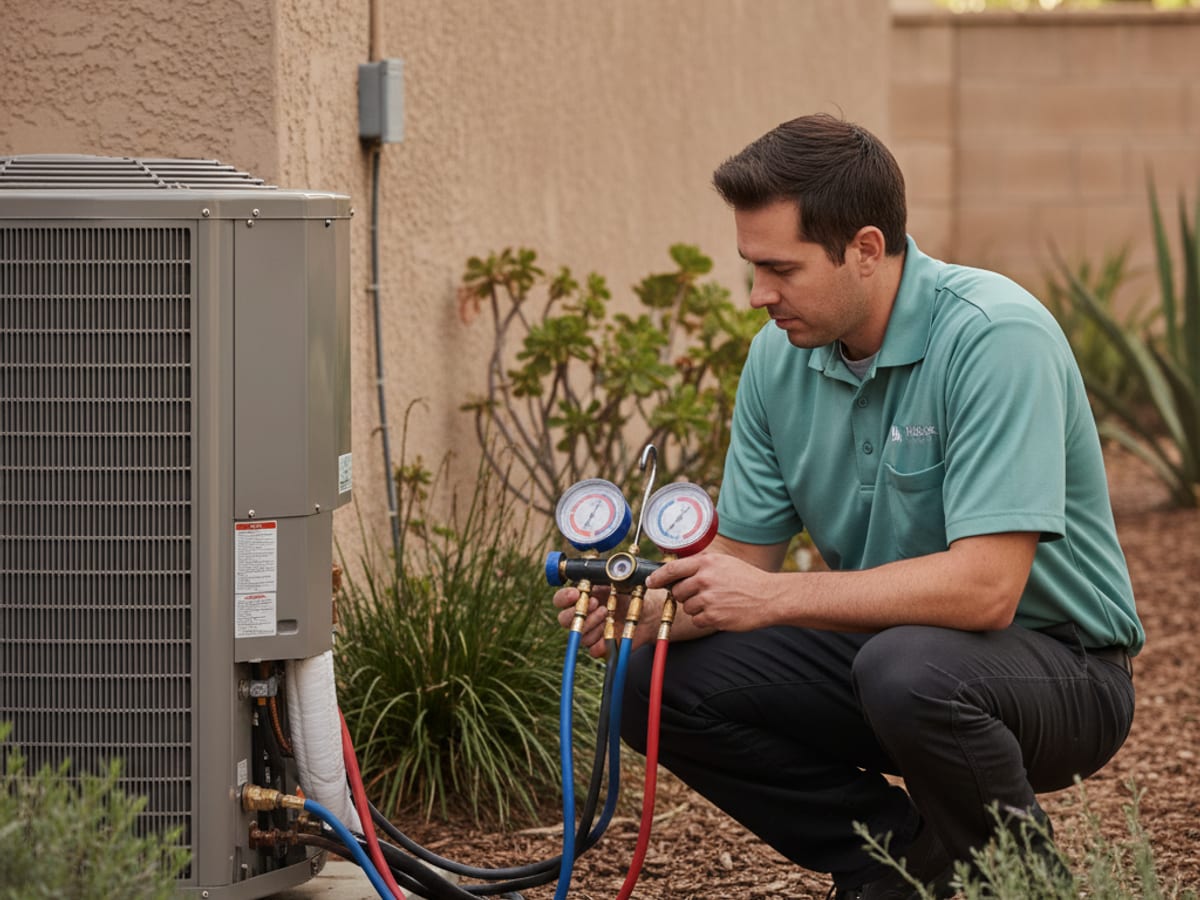
Ask the matched company what they inspect. Typical industry tune-ups look at capacitors, coils, and refrigerant charge. Get that list in writing.
Refrigerant level check with gauges: slow leaks found in spring, not during an August heat stretch
Capacitor microfarad test: the most common failure point on older western Chula Vista stock and high-run-hours Eastlake systems
Compressor and fan motor amp draw: high amps flag systems working harder than they should
Condenser coil cleaning: inland dust loads in Eastlake and Otay Ranch, salt air film in western neighborhoods
Evaporator coil inspection for buildup or early freeze indicators from restricted airflow
Static pressure check to catch duct leaks common in 1960s-80s western Chula Vista retrofits
Condensate drain flush and float switch test: high priority during the humid summer months
Contactor and electrical connection inspection
Thermostat calibration and cycle timing check
Temperature split measured across the air handler
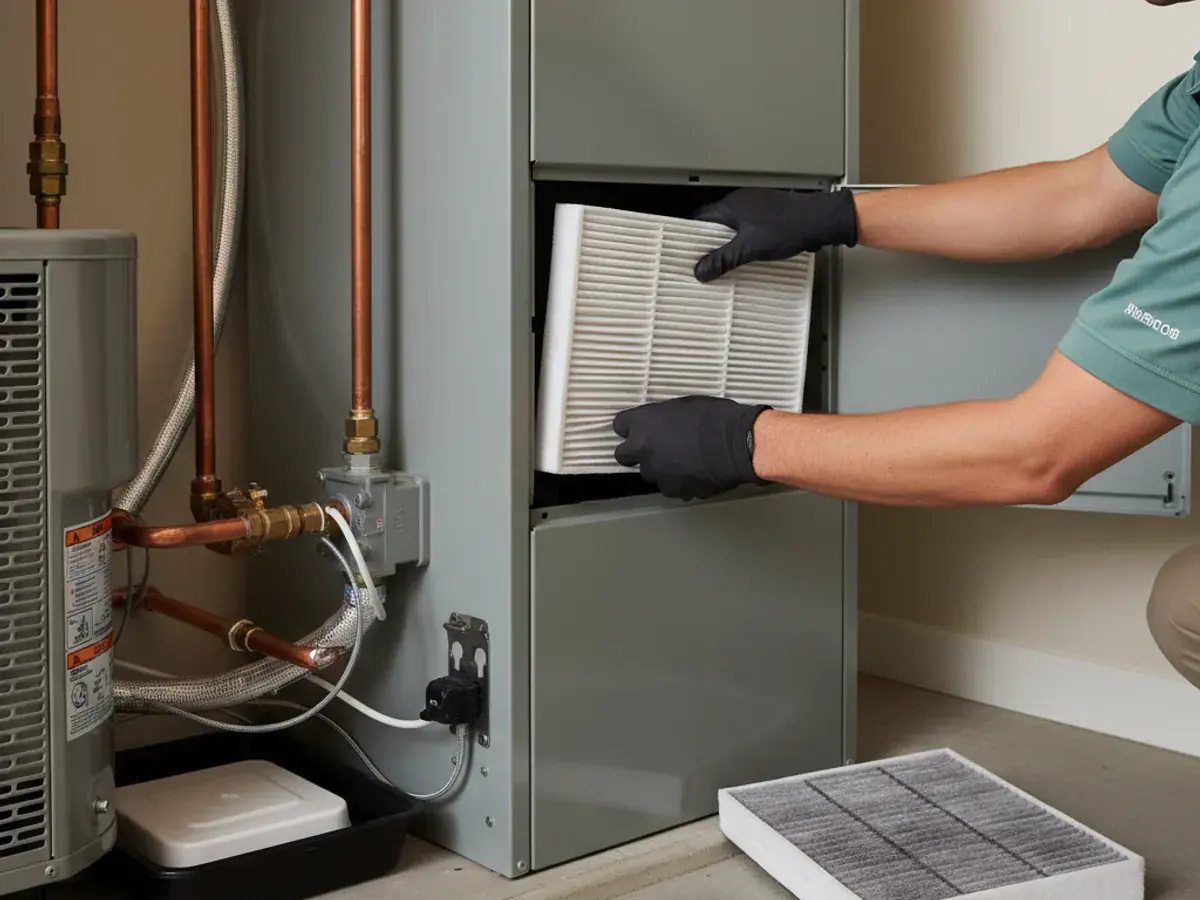
Filter condition check and replacement if needed (filter priced separately)
Blower wheel inspection for dirt buildup
Salt air corrosion check on outdoor coil fins for bay-adjacent western properties
Newer Eastlake and Otay Ranch equipment warranty compliance verification
Full written summary with findings and recommended action items
HVAC maintenance cost in Chula Vista
The company you are matched with quotes the visit in writing before starting. Ask whether they offer a single appointment or a plan, what they inspect, and which fees are extra.
Repair
Typical range
Notes
Single tune-up visit
Quoted by the matched company
Ask what they inspect and whether coil cleaning is included
Annual maintenance plan, if the company offers one
Quoted by the matched company
Ask how many visits they include and what each visit covers
Filter replacement
Priced by filter type and MERV rating
Depends on filter type and MERV rating
Salt air coil treatment (western Chula Vista)
Quoted after inspection
Coil fin coatings and rinse for bay-adjacent properties with visible corrosion
Refrigerant top-off (R-410A)
Priced by how much charge is needed
If low charge is found during inspection; quoted separately before adding
Refrigerant top-off (R-22)
Priced by supply availability and charge needed
R-22 supply is limited; persistent leaks on older western stock point toward replacement
Capacitor replacement
Priced by part and labor
If the microfarad test fails during the tune-up
Condensate drain line clear (severe blockage)
Priced by severity of the blockage
If fully blocked and requires more than a basic flush
Pricing is set by the company you are matched with, not by neighborhood. Salt air treatment is priced by actual coil condition, not by address. If the inspection turns up something that warrants a repair, that gets quoted separately and you decide whether to proceed.
What maintenance prevents in Chula Vista
A yearly tune-up is mostly about catching small problems before they become expensive ones. In Chula Vista, the specifics depend heavily on which part of the city your home is in. Eastern Chula Vista systems run harder in summer and accumulate wear faster. Western systems face different stresses from salt air and the older housing stock near Third Avenue. Both benefit from annual service, for different reasons.
Eastlake and Otay Ranch: high run hours on newer equipment
Eastlake and Otay Ranch are master-planned communities with homes primarily from the late 1990s through the 2010s. The equipment is newer than western Chula Vista stock, but these neighborhoods sit far enough inland to see 75 to 77 degree peaks through a long summer. Systems here run more hours than their western counterparts, and mid-life equipment in the 10- to 15-year range is entering the window where annual maintenance pays off most clearly.
Capacitor degradation is the most common finding on Eastlake and Otay Ranch systems. These units run at or near capacity for six to eight weeks of genuine heat each summer, and that sustained load degrades capacitors faster than the calendar suggests. A weak one caught in April is a scheduled part-and-labor cost. The same failure on a peak-summer Friday afternoon comes with an emergency call premium and a wait.
Western Chula Vista: salt air and older system age
Western Chula Vista: the neighborhoods between Third Avenue and the bay: is in the salt air zone. The marine environment that keeps temperatures moderate in summer also deposits salt aerosol on outdoor condenser coils and fin surfaces over time. Salt air accelerates coil corrosion and gradually reduces heat transfer efficiency. The process is slow and invisible until the efficiency drop is significant.
Coil fin condition gets inspected on every western Chula Vista visit. Early-stage corrosion can be slowed with rinse treatment and protective coatings. Advanced corrosion on old coils is the beginning of a replacement conversation. Knowing which stage you are at requires someone to actually look at the coil.
Older western housing stock: duct leaks and aging components
Western Chula Vista between Third Avenue and the bay has housing from the 1960s through the 1980s: an era when HVAC was often retrofitted into homes not originally designed for central air. Ductwork in these properties runs through crawl spaces, soffits, and attic spaces with connections that may have loosened over decades. A duct leak in this housing stock is common and often goes undetected until static pressure measurements surface it.
Equipment in this age range is also at the point where component reliability varies considerably by maintenance history. Systems that have been serviced annually are often surprisingly sound. Systems that have gone four or five years between service visits accumulate multiple small issues that show up together on the first inspection.
Lincoln Military Housing and tenant turnover patterns
The western Chula Vista neighborhoods near Naval Base San Diego and the Lincoln Military Housing properties experience higher-than-average tenant turnover. HVAC maintenance frequency is inconsistent across lease cycles, and units can accumulate problems across the gap between tenants that nobody catches until the next occupant complains about inadequate cooling.
For property managers and landlords in this area, an annual tune-up schedule is the most cost-effective way to avoid emergency repair calls between tenants. A yearly inspection scheduled at the start of each cooling season catches deferred issues before they turn into expensive repair calls or tenant complaints in July.
Local angle
HVAC maintenance built for Chula Vista homes
The east-west climate split in Chula Vista
Chula Vista covers about 50 square miles of south San Diego County, from the bay to the Otay Hills. The western edge of the city sits close enough to the bay to benefit from the marine layer: summer temperatures here are moderated by onshore flow that keeps afternoon highs in the upper 70s to low 80s most days. The cooling load in western Chula Vista is real but modest.
Eastlake and Otay Ranch, by contrast, sit 10 to 15 miles inland and behind a ridge that blocks most marine influence. Afternoon temperatures in these communities during June through September regularly reach 75 to 77 degrees. The cooling load on eastern Chula Vista systems is significantly higher, the cooling season is longer, and equipment wears at a different rate than the same model year in western neighborhoods.
Eastlake and Otay Ranch: master-plan construction specifics
Eastlake was developed starting in the late 1980s and expanded through the early 2000s. Otay Ranch is a more recent master plan with homes from the late 1990s through the 2010s. Both communities have newer equipment than western Chula Vista, but 15- to 25-year-old systems are now the norm in Eastlake, and mid-life systems in Otay Ranch are entering their peak maintenance window.
Many Eastlake and Otay Ranch systems are still under partial manufacturer extended warranty. Most extended warranties require annual professional service records to stay valid: a tune-up is part of what keeps those warranties in force. A written inspection report follows every visit, and that document is your service record if a warranty question ever comes up.
Third Avenue Village and historic western Chula Vista
Third Avenue Village is the historic commercial and residential core of Chula Vista, with housing from the 1920s through the 1960s on both sides of Third Avenue. HVAC in this housing is a mix of original systems from the 1970s and 1980s and more recent replacements installed when earlier equipment finally gave out.
The homes closest to the bay benefit from the most marine moderation and have lower cooling loads, but the salt air environment accelerates coil corrosion at a rate that interior homes don't experience. Coil condition gets inspected on every western Chula Vista visit because the salt air effect is real and catching it early matters.
Summer condensate and humidity management
Chula Vista's proximity to the bay and the Otay River basin creates more humidity in summer than you might expect for a Southern California city. The condensate drain on an air handler working hard on a humid August afternoon can produce significant moisture. A clogged condensate drain causes water to back up into the drain pan, overflow, and damage ceilings or flooring below the air handler.
Ask whether they flush the condensate drain and test the float switch. A float switch that works properly shuts the system down before water damage occurs. One that has corroded or stuck does not. In Chula Vista, condensate management is more relevant than in drier East County cities, and it gets treated as a priority item rather than a secondary check.
What else is hvac maintenance in Chula Vista called?
Homeowners search for this a few different ways. In Chula Vista it also goes by HVAC tune-up in Chula Vista , seasonal HVAC tune-up in Chula Vista , preventive HVAC maintenance in Chula Vista , HVAC inspection in Chula Vista , furnace maintenance in Chula Vista , and AC maintenance in Chula Vista . They all reach the same licensed local pros, and the operator who answers will
sort out which one your job actually is.
Chula Vista maintenance questions
How much does HVAC maintenance cost in Chula Vista?
The company you are matched with quotes the visit in writing. Ask whether they offer a single appointment or a plan, what they inspect, and which fees are extra. Climate Pros SD does not sell a branded maintenance plan or inspection protocol. Filter replacement is priced separately by type, and that is separate from the tune-up cost. Ask whether coil cleaning is included; western Chula Vista properties with salt air corrosion may have an additional coil treatment charge quoted after inspection.
How does the east-west climate difference in Chula Vista affect HVAC maintenance?
Eastern Chula Vista (Eastlake, Otay Ranch) runs 75 to 77 degrees in summer and has a higher cooling load and more heat-related wear on equipment. Western Chula Vista near Third Avenue and the bay is moderated by the marine layer: cooler summers, lower cooling load, but salt air that slowly corrodes outdoor coil fins. The inspection process covers both, but the specific findings and focus areas differ by location.
I live in Eastlake. My system is 15 years old. What should I expect?
A 15-year-old system in Eastlake is mid-life to late mid-life given the cooling hours it accumulates in that climate. It is running and probably cooling adequately, but this is exactly the age range where capacitor testing, refrigerant level documentation, and coil condition matter most. A tune-up at this stage often adds 3 to 5 years of reliable life to a system that might otherwise fail earlier than necessary.
Does salt air really affect my HVAC in western Chula Vista?
Yes. Salt aerosol from the bay and marine layer deposits on outdoor condenser coils and fin surfaces over time. The salt gradually corrodes aluminum fins and reduces heat transfer efficiency. The process takes years, not months, but by the time it is obvious from performance degradation it is already advanced. Coil fin condition gets checked on every western Chula Vista visit. Early-stage corrosion can be managed with rinse treatment. Advanced corrosion on old coils means a replacement conversation.
What should I ask the matched company to inspect?
Refrigerant level check with gauges, capacitor microfarad test, compressor and motor amp draw, condenser coil cleaning, evaporator coil inspection, static pressure measurement, condensate drain flush and float switch test, contactor and electrical connection check, thermostat calibration and cycle timing, temperature split measurement, filter condition check, and blower wheel inspection. Every visit ends with a written summary of all findings.
How often should I service my HVAC in Chula Vista?
Once a year is the minimum. Twice a year is better for Eastlake and Otay Ranch homes with higher cooling loads, and for older western Chula Vista properties where the combination of age and salt air makes more frequent checks worthwhile. Some companies offer a two-visit yearly schedule. Ask the matched company whether they do, what each visit covers, and how they bill it.
I manage a rental property in western Chula Vista. How should I think about HVAC maintenance?
Tenant turnover in western Chula Vista is higher than in owner-occupied areas. HVAC maintenance tends to slip between lease cycles, and deferred issues compound. An annual tune-up scheduled at the start of each cooling season catches problems before tenants complain and before emergency repair calls happen in July. A scheduled inspection is significantly cheaper than an emergency after-hours repair and the goodwill cost of a tenant without working AC in summer.
Should I get my HVAC serviced before summer in Chula Vista?
Yes. March or April is the right window for eastern Chula Vista. By May the schedule starts filling. Western Chula Vista's milder climate gives you a little more flexibility, but a spring tune-up before the first significant heat stretch is still the right call. The inspection takes 60 to 90 minutes and gives you a clear picture before you need the system to perform.
Does my Otay Ranch home's manufacturer warranty require annual service?
Most manufacturer extended warranties require annual professional service records to remain valid. If your Otay Ranch home has a system installed within the last 10 to 15 years and you purchased an extended warranty, check the terms: the annual service requirement is standard. A written inspection report follows every visit, and that document is what you need if a warranty claim ever comes up.
What is the condensate drain and why does it matter in Chula Vista?
The condensate drain carries moisture removed from the air by the evaporator coil to a drain outside the home. Chula Vista's proximity to the bay creates enough summer humidity that a system working hard in August can generate significant condensate. A clogged drain causes water to back up into the drain pan, overflow, and damage ceilings or walls below the air handler. Ask whether they flush the drain and test the float switch. A working float switch shuts the system down before water damage happens.
Do you service homes near Lincoln Military Housing in western Chula Vista?
Yes. Pros in our network cover all of western Chula Vista including the neighborhoods near the naval base and Lincoln Military Housing properties. For property managers handling military housing, they're familiar with the maintenance patterns that come with higher turnover: and an annual tune-up schedule is the most reliable way to keep systems in shape across lease transitions.
Can HVAC maintenance extend the life of my Chula Vista system?
Yes. Annual coil cleaning, capacitor testing, and refrigerant monitoring reduce compressor stress and keep equipment running within its design parameters. Systems in Eastlake and Otay Ranch that get consistent service regularly reach 18 to 22 years. Systems in western Chula Vista that receive salt air management along with the standard tune-up avoid the premature coil failure that cuts lifespan short. The maintenance cost is a fraction of the replacement cost.