How much does HVAC maintenance cost in Escondido?
The company you are matched with quotes the visit in writing. Ask whether they offer a single appointment or a plan, what they inspect, and which fees are extra. Climate Pros SD does not sell a branded maintenance plan or inspection protocol. Filter replacement is priced separately by filter type, and that is separate from the tune-up cost. Ask whether coil cleaning is included; properties near San Pasqual Valley may have an additional heavy-cleaning charge quoted after inspection when agricultural buildup requires more than the standard rinse.
How often should I service my HVAC in Escondido's climate?
Twice a year. Most of San Diego can get by with one tune-up annually, but Escondido runs a nine-to-ten-month cooling season with peak-summer-degree peaks, agricultural dust from San Pasqual, and wildfire smoke in fall. That combination is hard on equipment. A pre-summer visit in March or April and a fall visit in October or November is the right schedule for this climate.
What should I ask the matched company to inspect?
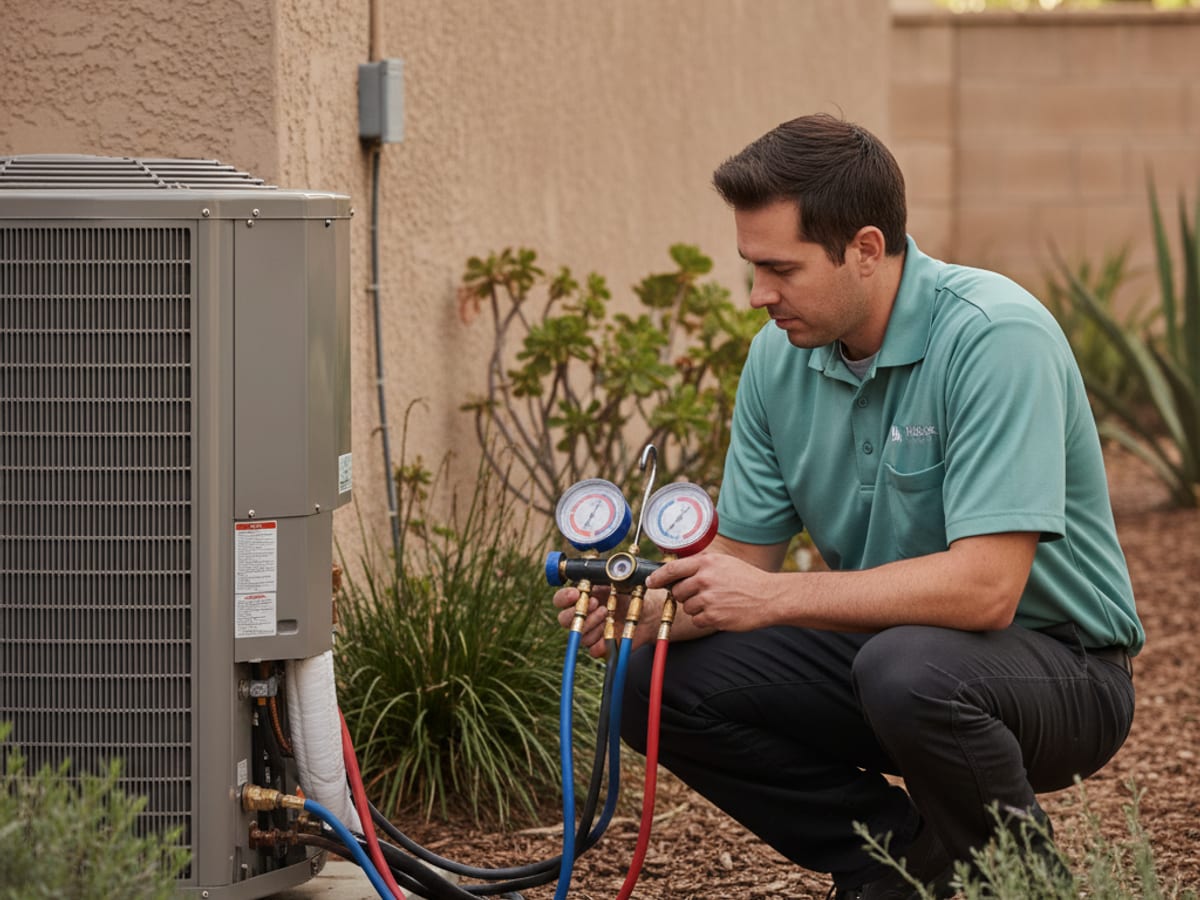
Refrigerant level check with gauges, capacitor microfarad test, compressor and motor amp draw, condenser coil cleaning, evaporator coil inspection, static pressure measurement, condensate drain flush and float switch test, contactor and electrical connection check, thermostat calibration and cycle timing, temperature split measurement, filter condition check, and blower wheel inspection. Every visit ends with a written summary of everything found.
Should I get my HVAC serviced before summer in Escondido?
Yes, and sooner than you think. March or April is the right window. By May the schedule starts filling. By June it is full. A tune-up that catches a failing capacitor or a low refrigerant charge in April is a scheduled repair. The same issue found on the first peak-summer day in July is an emergency repair with a wait. Escondido's summer heat arrives fast and stays long.
How does wildfire smoke affect my HVAC system?
Smoke loads the air filter fast: days instead of months during a smoke event. A clogged filter chokes airflow, which causes the evaporator coil to ice over and forces the compressor to run at high amp draw trying to move air through the restriction. Over a prolonged smoke event, that stress accelerates wear on the compressor. Change the filter every one to two weeks during smoke season. Rinse the outdoor condenser fins with a garden hose after the air clears. Both of those habits matter in Escondido's fall fire season.
Do I need to change my filter more often in Escondido?
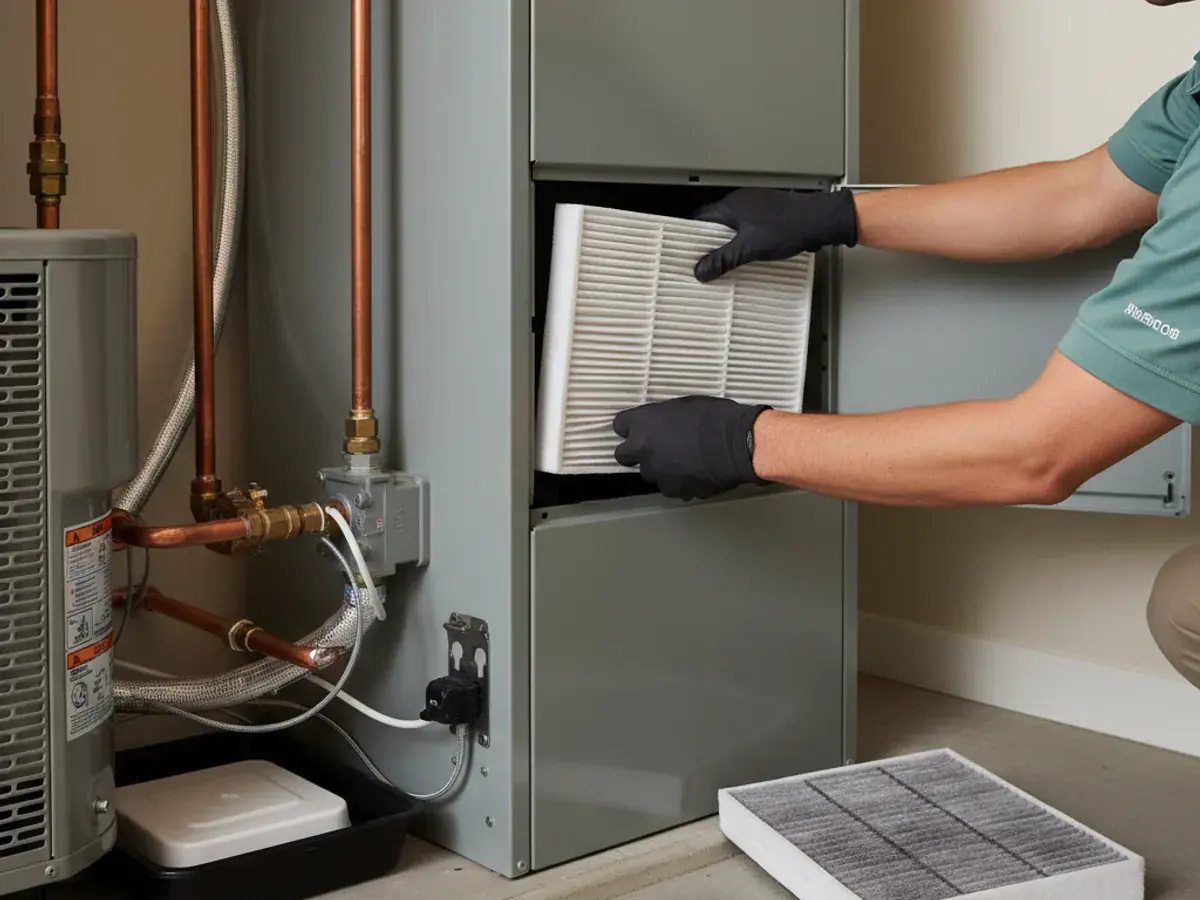
Yes. The standard recommendation of every two to three months assumes normal air quality. Escondido has agricultural dust from San Pasqual Valley and wildfire smoke from late summer through October. During smoke events, check the filter every two weeks. During the rest of the year, monthly checks make sense for homes close to agricultural land or the eastern hills. A loaded filter is a common avoidable cause of HVAC failure seen in Escondido.
What is a run capacitor and why does it fail?
A run capacitor is an electrical component that stores charge and helps the compressor and fan motors start and maintain speed. Over time, and especially under repeated heat stress, capacitors lose their ability to hold their rated microfarads. When they drift low enough, the motor they support can't start under load, which produces a humming outdoor unit with a fan that won't spin. Escondido's long, hot summers accelerate this degradation faster than in coastal cities. That catches a weak one early, when replacing it is a scheduled cost. Missing it until July means an emergency call premium and a wait.
Does HVAC maintenance help me qualify for SDG&E rebates?
Not directly: SDG&E rebates are tied to equipment replacement, not maintenance. But maintenance documentation keeps manufacturer extended warranties valid (most require annual professional service records), and it gives you a clear baseline if you're planning a heat pump replacement in the next few years. When you do replace, the rebate conversation is cleaner when there's a service history showing the old system was maintained, not neglected.
I have a 1985 system: is maintenance still worth it?
That depends on what the inspection shows. A 40-year-old system that has been maintained, has tight electrical connections, a compressor running within amp spec, and no refrigerant leaks has more life than the calendar suggests. The inspection gives an honest assessment of what's found. If the system looks sound, that gets reported and you keep running it. If there's a compressor running hot, connections showing heat damage, and a refrigerant charge that keeps needing attention, that gets reported too. There's no push toward a replacement sale. A modest inspection that tells you the system is done is worth it compared to a surprise compressor failure in August.
What is the PSPS risk and how does it affect my HVAC?
SDG&E uses Public Safety Power Shutoffs in high fire risk conditions. The eastern hills of Escondido: Hidden Meadows, upper Eureka Springs: are affected several times per year. When power is restored after a shutoff, the AC compressor does a hard start: full voltage applied to a hot, pressurized system. Hard starts stress both the capacitor and the compressor. A weak capacitor is most likely to fail right at restoration. The tune-up includes capacitor testing, and a hard-start kit can be installed during the visit that reduces the startup amp surge. That kit is worth it for any home in PSPS territory.
Why does my Escondido AC coil get dirty so fast?
Two reasons. First, the San Pasqual Valley sits to the east and generates fine agricultural dust that the inland winds carry west across the city. Second, the dry inland conditions mean there is less humidity to keep dust particles airborne: they settle into the condenser coil fins instead. On a coastal property the coils might need cleaning every year or two. On an Escondido property near agricultural land, they may need it every six to twelve months. Ask whether coil cleaning is included or billed separately.
Can maintenance extend the life of an older system?
Yes, meaningfully. A system that gets annual coil cleaning, capacitor checks, and refrigerant monitoring runs cooler, starts easier, and operates within its design amp draw. All of that reduces wear on the compressor, which is the most expensive part to replace. Escondido systems regularly hit 18 to 22 years with consistent maintenance. Systems that never get serviced rarely make it past 12 to 15 years in this climate. The math is straightforward.
What happens if I skip the annual tune-up in Escondido's climate?
The condenser coil packs with agricultural dust and grit, which forces the compressor to work harder. Refrigerant levels drift low without anyone catching it until the system can't cool the house. A capacitor that should have been caught at 60% capacity drifts to zero and fails on a peak-summer afternoon. Filters load with smoke in September and nobody changes them, causing an evaporator freeze. Any one of these is a repair call. All of them together is a system that dies five years earlier than it should have.
Do you service Hidden Meadows and San Pasqual Valley properties?
Yes. Pros in our network cover all of Escondido including Hidden Meadows, Eureka Springs, and properties bordering the San Pasqual Valley. Ask the matched company how they price hill or eastern addresses, and whether heavy agricultural coil cleaning is extra. Get that in writing.
How long does an HVAC tune-up take?
Most appointments run 60 to 90 minutes. A straightforward tune-up on a single-system home takes about an hour. Larger homes with two systems, or older units that need more attention on the coil cleaning or electrical connections, run closer to 90 minutes.
Is there a difference between HVAC maintenance and an AC tune-up?
The terms are used interchangeably. What gets called a tune-up or maintenance visit covers the full HVAC system: the air conditioner, the furnace or air handler, and the ductwork connections. Both the cooling and heating sides get checked in one visit. In Escondido the cooling system gets most of the attention because it runs almost year-round, but ask whether a fall visit includes the furnace heat exchanger and heating controls.