Last updated: May 26, 2026

HVAC Maintenance · San Marcos, CA

HVAC maintenance in San Marcos, CA

San Marcos sits in an inland valley with summer peaks that regularly hit 100 degrees and a cooling season that runs nine months out of twelve. HVAC equipment here works harder than coastal cities, and the systems that hold up are the ones that get a proper pre-season tune-up.

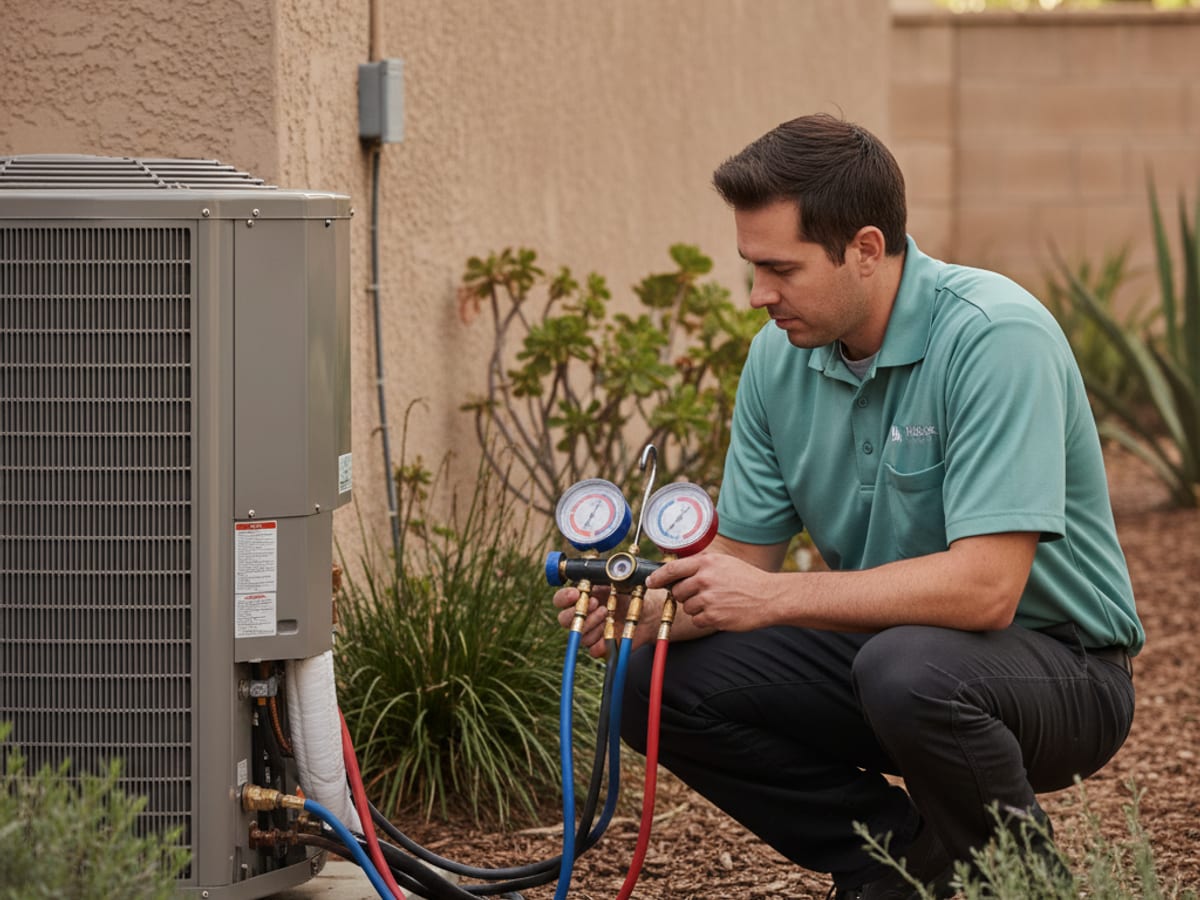
Climate Pros SD technician performing maintenance in San Marcos, CA

HVAC maintenance in San Marcos costs $149 for a single tune-up or $189 per year on the annual plan, which covers two visits. The 21-point inspection includes refrigerant level check, capacitor microfarad test, compressor and motor amp draw, condenser coil cleaning, and temperature split measurement. Most appointments run about 90 minutes.

San Marcos is inland enough that it gets almost no help from the marine layer during peak summer heat. Valley temperatures regularly reach 95 to 105 degrees, and the cooling system runs from April through November. That is a nine-month season on a compressor. Dry inland terrain generates dust that packs condenser coils, and filters here load faster than coastal cities. The combination of high heat, long runtime, and dusty conditions creates a specific maintenance profile.

We service all of San Marcos: San Elijo Hills, Lake San Marcos, the Cal State SM area, Discovery Hills, and Twin Oaks Valley. Same flat pricing at every address. No surcharge for hillside properties or homes on private roads.

What our San Marcos tune-up covers

A nine-month cooling season in an inland valley means specific failure points that a coastal tune-up checklist does not fully address. We run all 21 points with San Marcos conditions in mind.

  • Refrigerant level check with gauges: slow leaks surface early here before summer demand reveals them
  • Capacitor microfarad test: heat cycle degradation is faster with 100-plus-degree summers and long runtime
  • Compressor and fan motor amp draw: elevated amps from dirty coils or low refrigerant caught before failure
  • Condenser coil cleaning: removes dry inland dust and grit that packs fins faster than coastal environments
  • Evaporator coil inspection for freeze indicators from restricted airflow or low refrigerant
  • Static pressure check to identify duct leaks that increase system load
  • Condensate drain flush and float switch test
  • Contactor and electrical connection inspection
  • Thermostat calibration and cycle timing check
  • Temperature split measurement across the air handler: should read 16-22 degrees F
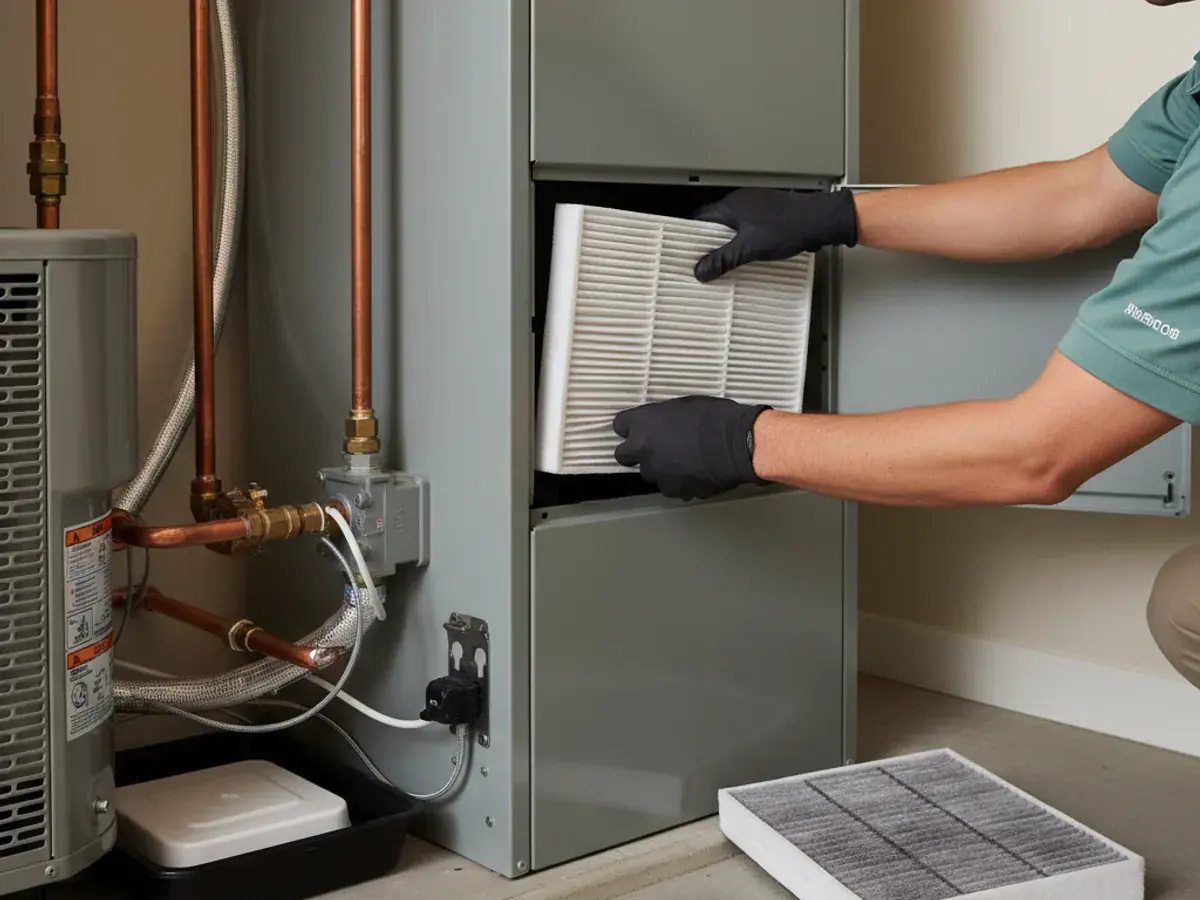
  • Filter condition check and replacement if needed (filter cost separate)
  • Blower wheel inspection for dust buildup from dry inland air
  • Belt and bearing check on older direct-drive systems at Lake San Marcos and Twin Oaks Valley
  • Heat exchanger visual inspection on fall visits
  • Full written summary with findings and recommended action items
Maintenance detail work by a Climate Pros SD technician in San Marcos, CA

HVAC maintenance cost in San Marcos

These are the flat rates for San Marcos in 2026. Every visit is quoted before we start, and there's no upsell pressure at the end of the appointment.

Repair Typical range Notes
Single tune-up visit $149 flat Full 21-point inspection, coil cleaning included
Annual maintenance plan (2 visits) $189/year Spring pre-summer + fall pre-winter, same 21-point process each
Filter replacement $25 - $65 Depends on filter type and MERV rating
Refrigerant top-off (R-410A) $150 - $350 If low charge is found during inspection; quoted separately before adding
Refrigerant top-off (R-22) $200 - $500 R-22 supply is limited; persistent leaks on older systems point toward replacement
Capacitor replacement $150 - $350 If the microfarad test fails during the tune-up
Condensate drain line clear (severe blockage) $75 - $150 If the drain is fully blocked and requires more than a basic flush
Hard-start kit installation $100 - $175 Reduces startup amp surge on older compressors logging heavy summer hours

Pricing is the same across all San Marcos neighborhoods. There is no mileage surcharge for San Elijo Hills, Twin Oaks Valley, or hillside properties. If we find something during the inspection that warrants a repair, we quote it separately and you decide whether to proceed.

What maintenance prevents in San Marcos

San Marcos systems run longer hours per year than coastal cities, and the inland heat loads are harder on components. The most common failures we see in San Marcos are predictable, and most of them show warning signs during a tune-up before they become a repair or replacement call. These are what a regular tune-up is designed to prevent.

Capacitor failure mid-season from heat cycle stress

Run capacitors wear out faster under sustained high heat loads. San Marcos summers are long and hot, and a system that runs from April through November logs significantly more operating hours than a coastal city system running June through September. A capacitor that reads within spec in March may drift low by August and fail by September. We measure microfarads on every tune-up. A drifting capacitor replaced in spring costs $150 to $350. Caught at failure on a 100-degree afternoon, it carries an emergency call premium and typically a wait.

Dirty coil from dry inland dust

San Marcos does not have the agricultural dust of Escondido's San Pasqual Valley, but it has plenty of dry terrain. Graded slopes in Twin Oaks Valley and the hillsides above San Elijo Hills generate fine grit that the hot afternoon winds carry into condenser coil fins. The coil does not pack as fast as in heavy agricultural areas, but it packs faster than coastal cities where marine moisture keeps particulates airborne longer.

A clean coil transfers heat efficiently. A packed coil makes the compressor work harder to reject heat, which drives amp draw up and compressor life down. We clean the coil on every visit. It is not optional and it is not an upsell. A $149 tune-up that includes a clean coil is worth more than a $149 tune-up that doesn't.

Filter overload and coil freezing

Dry inland air in San Marcos carries more particulate matter than coastal air. Filters here load faster. A homeowner on a standard every-three-months filter schedule may find that schedule works fine in spring and fall, then find the filter is clogged after six weeks in July when dust levels peak. A clogged filter chokes airflow. Restricted airflow causes the evaporator coil to freeze, which stops cooling and forces the compressor to run against a blocked system.

The fall tune-up includes filter condition assessment and a conversation about the right change frequency for the property. The answer in most San Marcos homes is more frequent than the package instructions suggest.

Refrigerant leaks growing undetected through the off-season

A slow refrigerant leak in a San Marcos system can go unnoticed through the mild months of December through March. The system sees minimal load, cools adequately, and the low charge is never stressed enough to show. Then summer arrives and the system is asked to hold 75 degrees indoors when it is 102 outside. At that load level, the low charge becomes a no-cooling event. We check refrigerant on every visit, in every season, for exactly this reason.

Local angle

HVAC maintenance built for San Marcos homes

San Elijo Hills versus Lake San Marcos: different maintenance profiles

San Elijo Hills is a master-planned community built mostly in the 2000s and later on the ridgeline above the city. The housing stock is relatively new, and the systems reflect that. We see fewer age-related failures here and more maintenance-catch items: coils that have not been cleaned in several years, filters that have been neglected, and refrigerant that has been slowly declining since the last tenant. The hillside location means these homes get some afternoon wind, which accelerates how fast coils accumulate dry inland dust.

Lake San Marcos is the opposite end of the age spectrum. The community around the lake was developed in the 1960s and 1970s, and much of the original HVAC infrastructure has been updated over decades, but not always in a coordinated way. We see systems that have had multiple components replaced by different technicians over the years, which sometimes produces a mismatch between the outdoor condensing unit and the indoor air handler. Systems like this benefit from a thorough tune-up that documents the current state clearly.

Cal State SM and Discovery Hills tract stock

The neighborhoods around Cal State San Marcos and Discovery Hills include a mix of 1990s and early 2000s tract homes that are entering the back half of their system lifespan. Systems from this era that have had consistent maintenance often have another five to eight years of useful life. Systems that have not been serviced regularly are frequently at or near the end. The tune-up is the checkpoint that tells you which situation you are in.

Discovery Hills in particular has a lot of two-story homes with upstairs air handlers. These systems work against gravity to move cooled air down to living spaces, which means static pressure and airflow balance matter more here. We check duct pressure on every visit and flag any imbalance that is costing the system extra runtime.

Why San Marcos benefits from two tune-ups per year

The nine-month cooling season in San Marcos is the main argument for two visits instead of one. A pre-summer visit in March or April catches capacitors, refrigerant levels, and dirty coils before the first heat wave. A fall visit in October or November handles the furnace transition and catches anything the long summer season stressed. Winter nights in San Marcos can drop to the mid-30s, which means the furnace heat exchanger is not a trivial item in the fall inspection.

The annual plan at $189 covers both visits. For any San Marcos home running a system older than eight years in an inland valley climate that runs ten months out of twelve, the two-visit schedule is the right call.

San Marcos maintenance questions

How much does HVAC maintenance cost in San Marcos?

A single tune-up is $149. The annual plan covers two visits for $189 per year, which works out to less than $95 per appointment. Filter replacement runs $25 to $65 depending on filter type and is separate from the tune-up cost. Coil cleaning is included in every visit. If a refrigerant top-off or capacitor replacement is needed, we quote those separately before doing anything.

How often should I service my HVAC in San Marcos?

Twice a year. San Marcos has a nine-month cooling season with summer peaks regularly hitting 95 to 105 degrees. The long runtime and inland heat accelerate wear more than a single annual tune-up can adequately address. A spring visit in March or April and a fall visit in October is the right schedule. The annual plan covers both for $189.

Is San Marcos hot enough to need more frequent HVAC service than coastal cities?

Yes. Coastal cities like Carlsbad and Encinitas get marine layer moderation that keeps summer peaks in the mid-80s on most days. San Marcos does not. Inland valley heat means more run hours, more heat cycle stress on capacitors, and faster coil clogging from dry terrain dust. That combination is why the two-visit schedule makes sense here even though it might be optional in a coastal zip code.

What does a 21-point tune-up include?

Refrigerant level check with gauges, capacitor microfarad test, compressor and motor amp draw, condenser coil cleaning, evaporator coil inspection, static pressure measurement, condensate drain flush and float switch test, contactor and electrical connection check, thermostat calibration and cycle timing, temperature split measurement, filter condition check, and blower wheel inspection. We finish with a written summary of everything found.

My home is in San Elijo Hills. When should I schedule service?

March or April is the right window for the pre-summer visit. San Elijo Hills sits on a ridgeline and gets afternoon wind that loads coils with inland dust faster than valley floor properties. The system needs to be clean and fully charged before the first heat wave arrives, which typically starts in late May or June. Book before April if you want morning appointment availability.

I have an older Lake San Marcos home. Is maintenance worth it?

Yes, and the inspection will tell you exactly where the system stands. Lake San Marcos has a lot of older housing stock with systems that have been updated in pieces over the years. A thorough tune-up documents what each component looks like right now, so you are not making decisions without information. If the system is sound, you get another year of service out of it. If we see compressor stress, refrigerant that keeps declining, and electrical connections showing heat damage, we tell you that clearly.

How does inland heat affect capacitor lifespan?

Capacitors lose their rated microfarad capacity faster under sustained high heat loads. A San Marcos system logging nine months of runtime in temperatures that regularly hit 100 degrees ages its capacitors faster than a coastal system running four months at 85. Capacitor failure is the single most common cause of a no-cooling call in any San Diego inland city during summer. We test every capacitor on every visit. A weak one costs $150 to $350 to replace in spring. Caught on the first hot day of summer, it costs the same plus urgency.

How often should I change my air filter in San Marcos?

More often than the package says. Standard guidance is every two to three months, but that assumes normal air quality and moderate use. San Marcos has dry inland terrain that generates dust, and the long cooling season means the blower runs many more hours per year than a coastal home. Check the filter monthly and change it when it is visibly loaded. During periods of reduced air quality, check every two weeks. A clogged filter is the most common avoidable cause of coil freezing and compressor overload.

What is the difference between a single tune-up and the annual plan?

A single tune-up is $149 and covers one visit. The annual plan is $189 and covers two visits, one in spring and one in fall. For a San Marcos home running a nine-month cooling season plus a furnace in winter, two visits per year is the right approach. The fall visit includes furnace heat exchanger inspection and heating controls check, which are not covered in a cooling-only visit. At less than $95 per appointment, the annual plan is the better value.

Do you service Discovery Hills and Twin Oaks Valley?

Yes. We service all San Marcos neighborhoods at the same flat pricing, including Discovery Hills, Twin Oaks Valley, San Elijo Hills, Lake San Marcos, and the areas around Cal State SM. No mileage surcharge for any address. Hillside properties and homes on private roads are served at the same rate.

My upstairs is always hotter than the downstairs. Can maintenance fix that?

Sometimes, yes. Airflow imbalance between floors is often a duct problem rather than an equipment problem, but a tune-up catches several contributing factors. Static pressure measurement identifies duct leaks that are bleeding air before it reaches the upper registers. Dirty evaporator coils reduce total airflow, which shows up first in the hardest-to-reach zones. Thermostat placement also matters. We document what we find and tell you whether the fix is a tune-up item, a duct repair, or a zoning conversation.

Is there a heat pump advantage in San Marcos over a traditional AC?

Heat pumps work well in San Marcos's climate. The winters are mild enough that heat pump heating is efficient well below what Escondido or Julian temperatures would require, and the same unit handles all nine months of cooling. If you are replacing equipment, a heat pump is worth considering. Maintenance needs are similar to a traditional AC, though we also check the reversing valve and defrost controls on the fall visit.

Service area

Where we serve San Marcos

We cover San Marcos and the surrounding North County Inland communities, with same-day service on most maintenance calls.

Serving San Marcos

Need maintenance in San Marcos?

Call for a free quote. Same-day service on most repairs, next-day on most installs.

Call now · (442) 777-6440 Same-day · a real tech answers Quote