Last updated: May 26, 2026

HVAC Maintenance · La Mesa, CA

HVAC maintenance in La Mesa, CA

La Mesa sits 8 to 12 degrees warmer than coastal San Diego most summer days, with hillside neighborhoods and 1950s through 1970s housing stock that presents real HVAC maintenance challenges. A pre-season tune-up keeps older systems running through the heat.

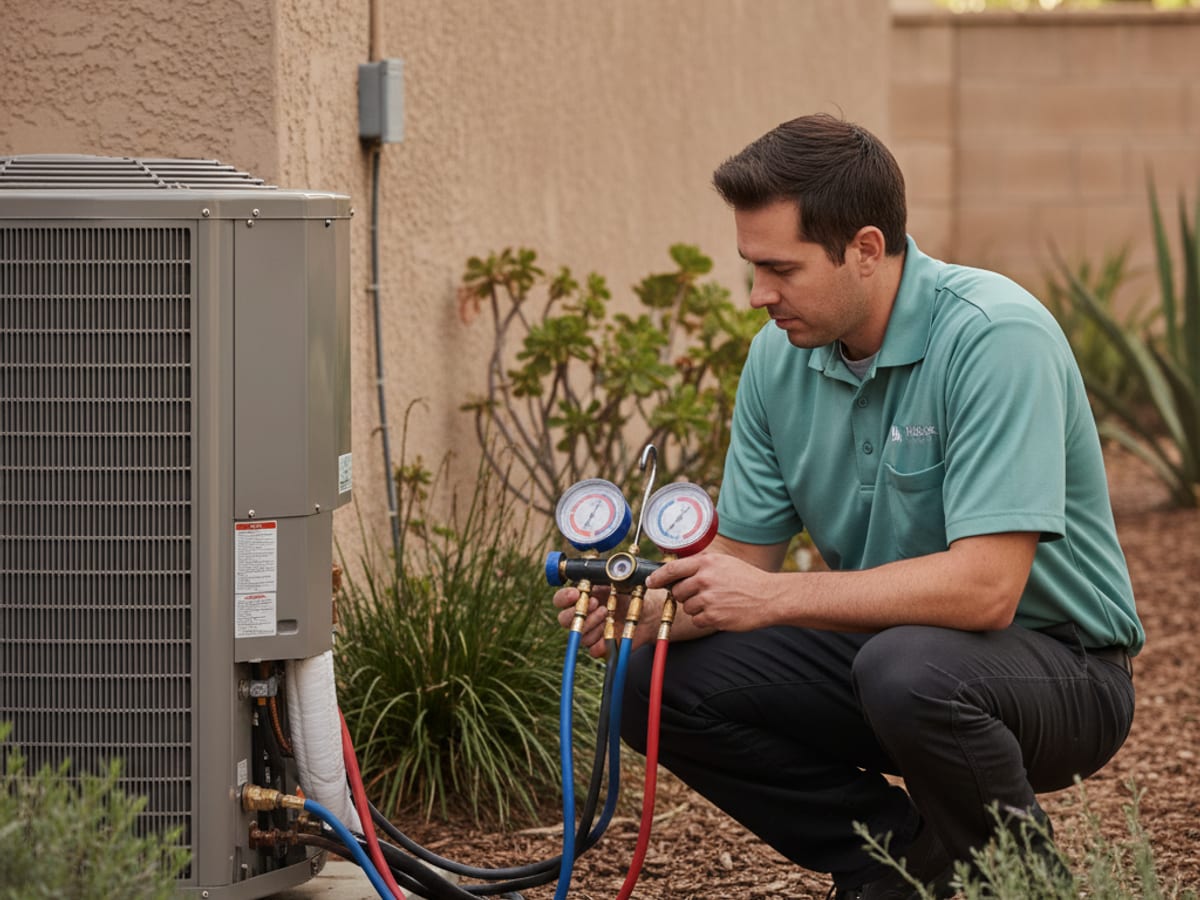
Climate Pros SD technician performing maintenance in La Mesa, CA

HVAC maintenance in La Mesa costs $149 for a single tune-up or $189 per year on the annual plan, which covers two visits. The 21-point inspection includes refrigerant level check, capacitor microfarad test, compressor and motor amp draw, condenser coil cleaning, and temperature split measurement. Most appointments run 60 to 90 minutes.

La Mesa occupies a transitional zone between coastal San Diego and the hotter East County interior. The La Mesa Village historic core and the western neighborhoods near SDSU run 8 to 10 degrees warmer than the coast in summer. Mount Helix estates and the hillside neighborhoods to the east can push 10 to 14 degrees warmer, with some afternoons crossing 95 to 100 degrees while the beach communities sit in the mid-70s. The cooling season runs seven to nine months, shorter than Santee or El Cajon but meaningfully longer than coastal cities.

We service all La Mesa neighborhoods: La Mesa Village, Mount Helix, Fletcher Hills, the Spring Valley edge, and properties along the University Avenue and Spring Street corridors. Flat pricing across the city. No surcharges for hillside addresses or long driveway access.

What our La Mesa tune-up covers

A maintenance visit is not a filter swap and a form. We run a 21-point inspection that finds the issues most likely to cause a summer failure, before they happen.

  • Refrigerant level check with gauges: slow leaks on older systems caught in spring, not mid-summer
  • Capacitor microfarad test: the most common failure point on 1970s and 1980s La Mesa equipment
  • Compressor and fan motor amp draw: high amps flag equipment working beyond its design parameters
  • Condenser coil cleaning: inland dust and dry air pack coils faster than coastal conditions
  • Evaporator coil inspection for buildup or early freeze indicators
  • Static pressure check to catch duct leaks common in 1950s-70s attic ductwork retrofits
  • Condensate drain flush and float switch test
  • Contactor and electrical connection inspection: connection degradation is common on older systems
  • Thermostat calibration and cycle timing check
  • Temperature split measurement: should read 16-22°F across the air handler
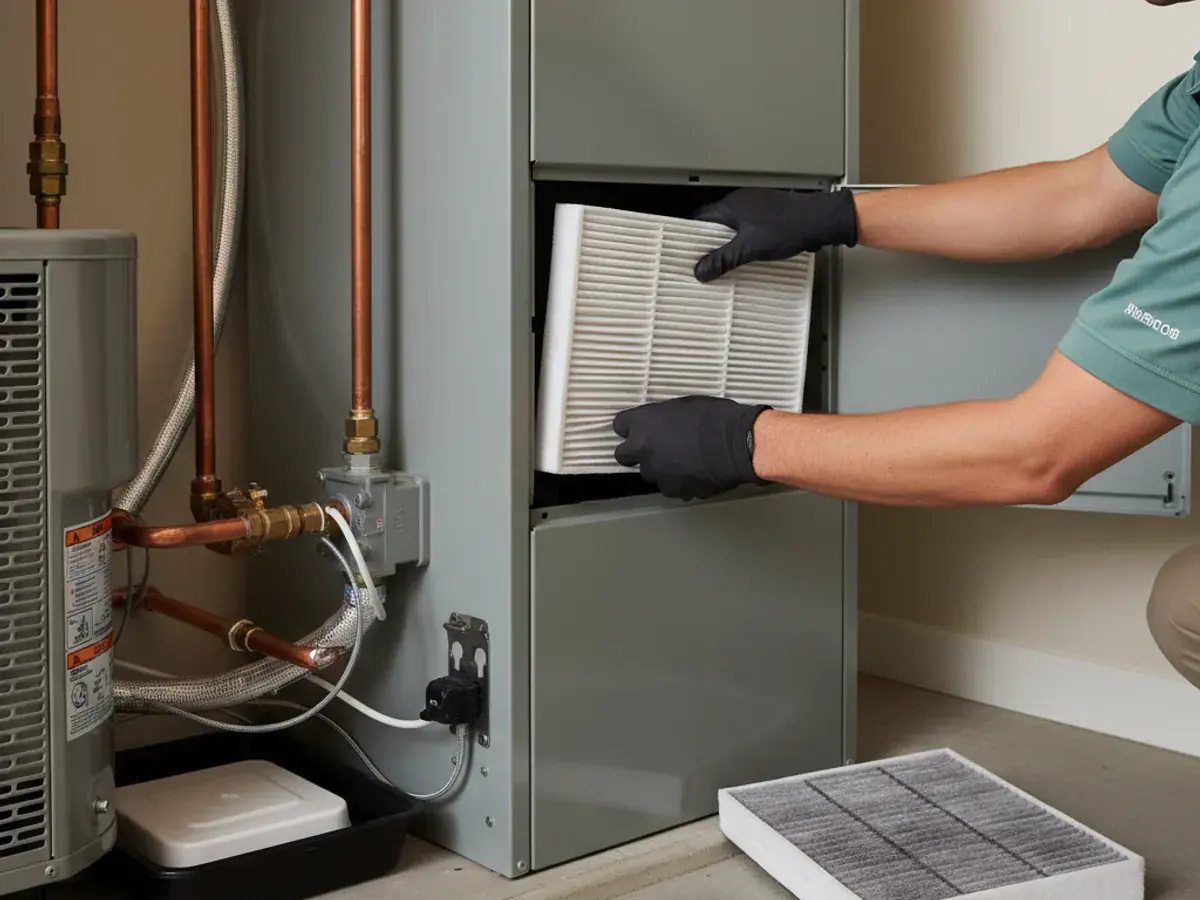
  • Filter condition check and replacement if needed (filter cost separate)
  • Blower wheel inspection for dirt buildup
  • Mount Helix line set length check: longer refrigerant runs on hillside properties need pressure balance confirmation
  • Furnace heat exchanger visual inspection on fall visits
  • Full written summary with findings and recommended action items
Maintenance detail work by a Climate Pros SD technician in La Mesa, CA

HVAC maintenance cost in La Mesa

These are the flat rates for La Mesa in 2026. Every visit is quoted before we start, and there's no upsell pressure at the end of the appointment.

Repair Typical range Notes
Single tune-up visit $149 flat Full 21-point inspection, coil cleaning included
Annual maintenance plan (2 visits) $189/year Spring pre-summer + fall pre-winter, same 21-point process each visit
Filter replacement $25 - $65 Depends on filter type and MERV rating
Heavy dust coil cleaning surcharge $50 - $75 For units with significant buildup from deferred cleaning, especially hillside properties
Refrigerant top-off (R-410A) $150 - $350 If low charge is found during inspection; quoted separately before adding
Refrigerant top-off (R-22) $200 - $500 R-22 supply is limited; persistent leaks on older systems point toward replacement
Capacitor replacement $150 - $350 If the microfarad test fails during the tune-up
Condensate drain line clear (severe blockage) $75 - $150 If fully blocked and requires more than a basic flush

Pricing is consistent across all La Mesa neighborhoods. There is no surcharge for Mount Helix hillside access, Fletcher Hills, or properties near Spring Valley. If we find something during the inspection that warrants a repair, we quote it separately and you decide whether to proceed.

What maintenance prevents in La Mesa

A yearly tune-up is mostly about catching small problems before they become expensive ones. La Mesa's mix of older housing stock, hillside equipment configurations, and an inland heat load that exceeds the coast by 8 to 14 degrees creates a set of maintenance challenges that are different from either the coast or the extreme East County.

Older ductwork and static pressure issues

La Mesa has a large proportion of homes from the 1950s and 1960s that were retrofitted with central HVAC at various points across the decades. The ductwork in these retrofits often runs through cramped crawl spaces, tight attic runs, or original framing that was not designed to accommodate modern duct sizing. Duct leaks in this housing stock are common and frequently go undetected for years.

A duct leak forces the system to move air against higher resistance than it was designed for, which shows up as elevated static pressure, high amp draw on the blower motor, and reduced airflow at supply registers. We check static pressure on every tune-up. A significant duct leak caught here is a repair that costs a fraction of what compressor stress from years of high static pressure costs in the long run.

Mount Helix hillside equipment access and long line sets

Mount Helix is a hillside community with estate-style lots, significant grade changes, and homes where the outdoor condenser and indoor air handler are sometimes separated by longer-than-typical refrigerant line sets. A longer line set running up a grade requires more refrigerant charge to function correctly and is more sensitive to small charge variations than a standard installation on a flat lot.

We check line set length and refrigerant pressure on Mount Helix properties specifically because the configuration matters. A system that reads 'within range' on pressure but is 10% undercharged on a long hillside line set will run harder and cool worse than the numbers suggest. Getting the charge right on a hillside property requires understanding the configuration, not just reading the gauges.

Heat pump conversion opportunities in La Mesa

La Mesa is at an interesting transition point for heat pump adoption. The climate is inland enough to justify air conditioning for seven to nine months a year, but not so extreme that heat pump efficiency drops significantly in winter. Many La Mesa homeowners with aging gas furnaces and separate AC systems are good candidates for a combined heat pump replacement: one system, one energy source, potentially better efficiency than a split gas/electric setup.

We're not a heat pump sales operation: if a system is running well, we say so. But when we see a La Mesa home with a furnace over 20 years old and an AC unit approaching 15, we mention the heat pump option as part of the honest assessment. California's TECH Clean California rebates can significantly offset the replacement cost, and a La Mesa home with 7 to 9 months of cooling load often sees strong economics on heat pump conversion.

Capacitor and refrigerant issues on 1970s-era Village systems

La Mesa Village and the neighborhoods immediately surrounding the historic downtown core have a concentration of homes and small apartment buildings from the 1970s. HVAC equipment in this stock is frequently in the 20- to 30-year range, and the most common findings are degraded capacitors and slow refrigerant leaks on systems that have gone several years between service visits.

Both issues are predictable and catchable on an annual tune-up. A capacitor replaced at 60% capacity prevents the failure that happens at 10%. Refrigerant documented annually and showing gradual decline is a conversation we can have in advance. The same issues found as emergency calls in July are more expensive and more disruptive.

Local angle

HVAC maintenance built for La Mesa homes

La Mesa's climate: between the coast and the interior

La Mesa occupies a transitional position in San Diego's inland geography. The western neighborhoods near SDSU and La Mesa Village get some benefit from cool marine air that sometimes penetrates inland in the late evening, but not enough to keep summer temperatures below the high 80s and low 90s for much of June through September. Mount Helix and the eastern hillside neighborhoods sit further from any marine influence and regularly see afternoon temperatures 10 to 14 degrees above coastal San Diego.

This puts La Mesa homeowners in a middle ground: more cooling load than the coast, less than Santee or El Cajon at the extreme. It also means a longer furnace use season than most East County cities: La Mesa gets meaningful cold overnight temperatures from November through February, and the furnace side of the annual tune-up genuinely matters here.

La Mesa Village and historic core housing

La Mesa Village is one of the few historic commercial and residential cores in the eastern San Diego region that has retained much of its original character. The residential blocks around the Village include homes from the 1920s through the 1950s that were retrofitted with central HVAC at various points. Systems in this housing are often 20 to 30 years old, installed in attics or crawl spaces that were never designed for HVAC access.

These configurations require more time on the tune-up than a standard installation. Ductwork connections are harder to reach, air handler access varies by property, and some installations run duct through wall cavities that complicate static pressure readings. We budget the time to do it right. The flat rate applies.

Mount Helix estates: hillside HVAC specifics

Mount Helix is a hillside community with large lots, significant elevation changes, and custom homes where HVAC installations vary considerably from property to property. Equipment is often set on pads at grade or below grade on steeply sloped lots, which affects drainage, airflow around the condenser, and access for service.

The elevation of Mount Helix provides some temperature relief relative to the lower valley floor, but the hillside exposure also means stronger winds that carry dust and debris into condenser coils. Some properties have mature landscaping that has grown over or around outdoor units over the years, restricting airflow and building up organic debris in coil fins. We check clearances and coil condition on every Mount Helix visit.

Fletcher Hills and Spring Valley edge

Fletcher Hills sits on the border between La Mesa and Spring Valley and has housing from the 1960s through the 1980s on hillside lots with valley views. The climate here is consistent with the broader La Mesa inland pattern, and the housing stock is in the age range where annual maintenance matters most for extending equipment life and identifying systems approaching the replacement window.

The Spring Valley edge of La Mesa grades into a denser residential area where older apartment and condominium stock from the 1970s and 1980s is common. Multi-unit properties in this area often have shared duct systems or rooftop package units that require a different inspection approach. We handle both residential and small commercial multi-unit systems at the same flat rate.

La Mesa maintenance questions

How much does HVAC maintenance cost in La Mesa?

A single tune-up is $149. The annual plan covers two visits for $189 per year, which works out to less than $95 per appointment. Filter replacement runs $25 to $65 depending on type, and that is separate from the tune-up cost. Coil cleaning is included in every visit; units with heavy buildup may have a $50 to $75 heavy-cleaning surcharge.

How often should I service my HVAC in La Mesa?

Twice a year for most La Mesa homes. The cooling season runs seven to nine months, and the furnace gets real use from November through February. A spring visit in March or April handles the cooling side. A fall visit in October handles the furnace and heating controls. Mount Helix and eastern hillside properties benefit most from the two-visit schedule because of the more demanding thermal conditions.

What does a 21-point tune-up include?

Refrigerant level check with gauges, capacitor microfarad test, compressor and motor amp draw, condenser coil cleaning, evaporator coil inspection, static pressure measurement, condensate drain flush and float switch test, contactor and electrical connection check, thermostat calibration and cycle timing, temperature split measurement, filter condition check, and blower wheel inspection. We finish with a written summary of all findings.

My La Mesa home is from the 1950s. What should I expect from a tune-up?

Older homes often have retrofitted HVAC with ductwork in crawl spaces or attics that were not designed for it. We budget additional time for these configurations and check duct connections, static pressure, and air handler access as part of the inspection. Systems in 1950s homes are typically 20 to 30 years old. What we find depends on maintenance history and the specific installation: we give you an honest picture of what the system actually shows.

Do you service Mount Helix hillside properties?

Yes. We service all of La Mesa including Mount Helix estates, hillside lots with grade-level condenser pads, and properties with longer refrigerant line sets. There is no surcharge for hillside addresses. We check line set configuration and refrigerant pressure specifically on Mount Helix properties because the hillside installation affects how we interpret the readings.

How does La Mesa heat compare to coastal San Diego?

La Mesa Village and the western neighborhoods run 8 to 10 degrees warmer than the coast in summer. Mount Helix and the eastern hillside areas push 10 to 14 degrees warmer. When Coronado is 72 on a July afternoon, western La Mesa is 80 to 82 and Mount Helix can hit 84 to 86. The cooling season runs about seven to nine months. That is more load than the coast but less than Santee or El Cajon.

What are heat pump conversions and should I consider one in La Mesa?

A heat pump replaces a separate gas furnace and AC unit with a single system that provides both heating and cooling electrically. La Mesa's climate: inland enough to need 7 to 9 months of cooling, but not so extreme that heat pump efficiency drops severely in winter: is actually well suited to the technology. California's TECH Clean California rebates can meaningfully offset the replacement cost. We mention this option when the inspection shows a La Mesa home with aging equipment on both the heating and cooling sides.

Should I get my HVAC serviced before summer in La Mesa?

Yes. March or April is the right window. By May the schedule fills. By June it is full. La Mesa's summer heat arrives faster than the coast, and a problem caught in April is handled on your schedule, not on the hottest day of the year. The tune-up takes 60 to 90 minutes and tells you exactly what shape the system is in before you need it most.

What is static pressure and why does it matter?

Static pressure is the resistance the air handler has to push against to move air through the ductwork. High static pressure usually means duct leaks, undersized ducts, or a dirty filter: all of which force the blower motor and compressor to work harder than they should. La Mesa's older housing stock with retrofitted ductwork has a higher rate of static pressure issues than newer construction. We measure it on every tune-up because it is one of the conditions that silently accelerates equipment wear.

Do you service La Mesa Village apartment buildings?

Yes. We service residential and small commercial multi-unit properties in La Mesa Village and the surrounding area. Older apartment buildings often have shared duct systems or rooftop package units, which we handle as part of the same inspection process. Contact us for a quote on multi-unit properties: the $149 flat rate applies to single-system residential; multi-unit pricing is discussed before the visit.

Can maintenance extend the life of my 1980s La Mesa system?

Yes. A 1980s system is 40-plus years old, but what matters is the actual condition. Annual coil cleaning, capacitor testing, and refrigerant monitoring reduce compressor stress. Systems that get consistent service often run longer than the calendar suggests. Systems that go without maintenance in a climate like La Mesa's tend to fail earlier than they should. If the inspection shows sound mechanicals, we say so. If we see signs that the unit is near the end, we say that too.

How long does an HVAC tune-up take in La Mesa?

Most appointments run 60 to 90 minutes. Older homes with retrofitted ductwork, or properties with two systems, run closer to 90 minutes. Mount Helix hillside properties sometimes take a bit longer depending on equipment access. We do not cut the inspection short to make the next appointment.

Service area

Where we serve La Mesa

We cover La Mesa and the surrounding Central communities, with same-day service on most maintenance calls.

Serving La Mesa

Need maintenance in La Mesa?

Call for a free quote. Same-day service on most repairs, next-day on most installs.

Call now · (442) 777-6440 Same-day · a real tech answers Quote