AC repair in a San Diego condo starts with access, not assumptions. In La Jolla, the contractor may need building approval, roof access, or a clear route through a narrow side yard. Coastal exposure also belongs on the inspection list, but it doesn’t prove what caused the failure.
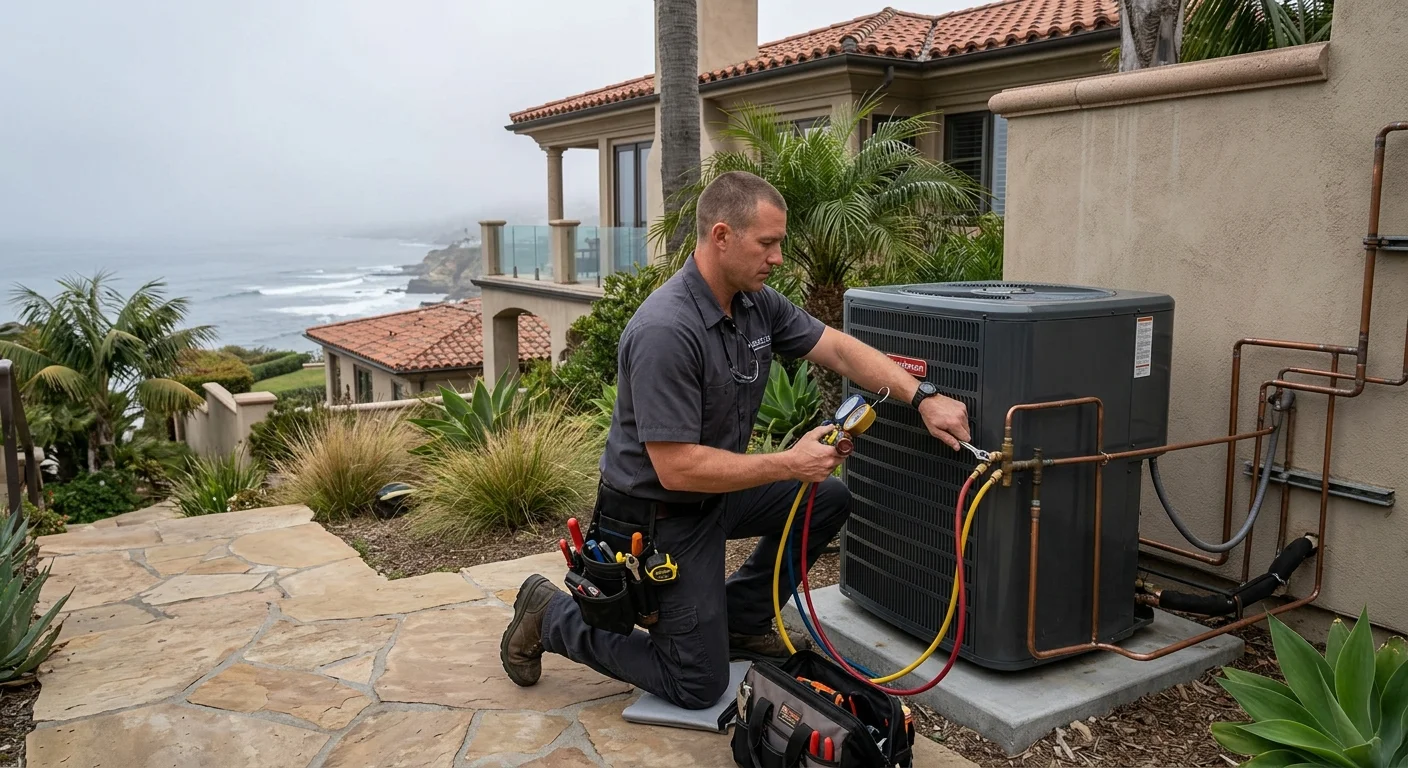
La Jolla condo AC repair starts with access
Get building or HOA approval, roof or side-yard access, and the equipment location in writing before anyone diagnoses a no-cool call. Salt air along the La Jolla coast corrodes outdoor cabinets and disconnects. Access rules, not brand, often decide how long a repair takes.
Checklist
- Ask the association who may work on rooftop equipment.
- Photograph rust at the disconnect and coil fins.
- Note whether the indoor unit is in a closet, attic, or balcony closet.
- Write the unit’s model from the data plate if you can see it without climbing.
- Link the symptom to coastal AC repair in Encinitas if the building sits in marine air.
Related: La Jolla HVAC and AC repair.
How does coastal exposure change AC diagnosis?
A condenser near the coast deserves a close visual inspection. The technician may check exposed metal, coil surfaces, fasteners, electrical connections, and the cabinet. Any visible deterioration still needs to be separated from the problem that triggered your call.
Salt exposure is an inspection factor, not a complete diagnosis. An AC that blows warm air might have an electrical, airflow, thermostat, drainage, or refrigerant issue. Surface wear on the outdoor unit doesn’t automatically identify the failed part.
Share anything you’ve noticed before requesting a match. Useful details include unusual sounds, repeated shutdowns, weak airflow, water near the indoor unit, or a breaker that trips. Explain whether the problem affects every room or only part of the condo.
Location matters too. A unit facing open coastal air may present different inspection concerns than equipment shielded inside a courtyard. A balcony installation also creates different working conditions than a ground-level condenser. The contractor must see the actual placement before deciding what matters.
Avoid cleaning inside panels or disturbing electrical parts before the visit. A clear photo from a safe position can help the pro understand the setup. Our Pacific Beach AC repair guide covers similar coastal planning, while the Coronado coastal AC repair guide discusses another exposed San Diego setting.
What access questions matter in La Jolla condos?
Condo AC repair often involves two properties at once: your private unit and shared building space. The equipment may be inside your condo, above a ceiling, on a balcony, in a locked room, or on a roof. Don’t assume the technician can reach every component from your front door.
Ask the HOA or property manager where the indoor and outdoor equipment sits. Confirm who controls keys, gates, roof hatches, and mechanical rooms. If access requires an appointment, escort, elevator reservation, or proof of contractor documents, get the current instructions directly from building management.
Climate Pros SD can’t confirm a particular association’s rules. Those requirements vary by property and weren’t verified for individual La Jolla buildings. Your HOA, manager, or building engineer is the right authority for that information.
Ownership questions matter as well. Ask management which HVAC components belong to your unit and which are treated as common-area equipment. Don’t authorize work on a shared component until responsibility is clear. If you’re renting, confirm that the owner or manager has approved the service request.
Tell the contractor about stairs, loading restrictions, limited parking, security desks, and quiet-hour rules before the visit. These details help the company decide what access planning is needed. They don’t replace an onsite diagnosis.
For regulated HVAC work, you can verify a contractor through the California Contractors State License Board. Climate Pros SD matches customers with licensed and insured independent local pros.
Why do tight side yards affect service planning?
Older La Jolla Village homes and small condo properties may place equipment behind gates or beside exterior walls. Hillside properties may add stairs, sloped paths, or equipment at a different level from street parking. These conditions don’t determine the repair, but they affect how the pro reaches the unit.
A tight route can limit space for tools, protective coverings, removed panels, and replacement parts. Fences, stored items, planters, hoses, and locked gates may also block the working area. Tell the contractor about them instead of moving heavy equipment yourself.
Measure only what you can reach safely. A photo showing the gate, path, and condenser location may be more helpful than an uncertain estimate. Include the narrowest visible point and any turns along the route. Mention whether access crosses another resident’s patio or a shared walkway.
Don’t promise the contractor that a new unit will fit because the old one did. Replacement equipment can have different dimensions and service-clearance needs. The licensed contractor must inspect the location and confirm an appropriate plan.
If the condenser sits behind a permanent obstruction, the pro may need to discuss options with the owner and building management. Climate Pros SD doesn’t decide where equipment can be placed. For a broader look at repair concerns, see our AC repair service page.
Which details should you share before requesting a match?
Start with the full service address and condo unit number. Say whether you own, rent, or manage the property. Then describe the symptom in plain terms, including what happens when you change the thermostat setting.
Share these details when they’re available:
- Where the thermostat and indoor unit are located
- Where you believe the outdoor unit is located
- Whether equipment access crosses shared property
- Any gate, lobby, roof, or mechanical-room restrictions
- The model and serial label from a safe, visible position
- Photos of the thermostat display and accessible equipment
- Sounds, smells, leaks, or shutdown patterns you’ve noticed
- The HOA or property manager’s contact process
- Any written approval already provided by the owner or HOA
You don’t need to diagnose the system yourself. The goal is to give the matched pro enough context to plan the inspection. Don’t climb onto a roof or open equipment panels to collect information.
If the condo was recently purchased, gather any HVAC records left by the seller. Installation documents, past invoices, equipment manuals, and maintenance notes may help the contractor understand prior work. If no records exist, say that plainly.
Ask the pro what their diagnostic fee is and whether it applies toward the repair. Each company sets its own policy. You should hear the proposed price before authorizing work, and you will contract with and pay the independent professional directly.
For properties under City of San Diego jurisdiction, the city’s mechanical permit guidance says permits apply to covered HVAC installation, alteration, replacement, and repair work. The matched licensed contractor should confirm whether the proposed work needs a no-plan or plan permit and handle any required permit.
When is replacement worth discussing?
Replacement becomes a useful discussion when the diagnosis points beyond a simple, isolated repair. That doesn’t mean every older or weathered unit needs replacement. Ask the contractor to explain the failed component, the rest of the system’s condition, and which problems the proposed repair actually resolves.
A newly purchased condo deserves extra care here. You may not know how the system was maintained or whether earlier work changed only part of it. Request the model information for both indoor and outdoor equipment. Ask whether the components are matched and whether any accessible installation concerns affect the recommendation.
Refrigerant type can also shape the conversation. Production and import of R-22 were banned in the United States starting January 1, 2020. Existing systems can still be serviced with recycled or previously produced refrigerant. An R-22 system isn’t automatically beyond repair, but its refrigerant belongs in the repair-versus-replacement discussion.
Compare written scopes, not just bottom-line totals. Ask what equipment or component is included, what access work is expected, who coordinates with building management, and whether permits apply. Any warranty should be identified as the contractor’s or manufacturer’s warranty, not a Climate Pros SD warranty.
If replacement is being considered, review our AC installation service page. The contractor should inspect the condo, confirm available access, and explain suitable options before you commit.
When to call us
Call when your La Jolla condo’s AC isn’t cooling, keeps shutting down, leaks, or needs a professional replacement assessment. Building access, shared-property questions, and coastal exposure should be discussed before work begins. Call us at (442) 777-6440 and we will match you with a licensed local pro.