When your air conditioner fails in the middle of a Poway heatwave, the problem feels bigger than just a broken machine. It’s about keeping your family comfortable in a climate that regularly pushes AC systems to their absolute limit. The combination of intense inland temperatures and the unique layout of many Poway properties creates a specific set of challenges for your home’s cooling system.
Climate Pros SD matches you with licensed HVAC companies. We do not publish a Poway parts menu.
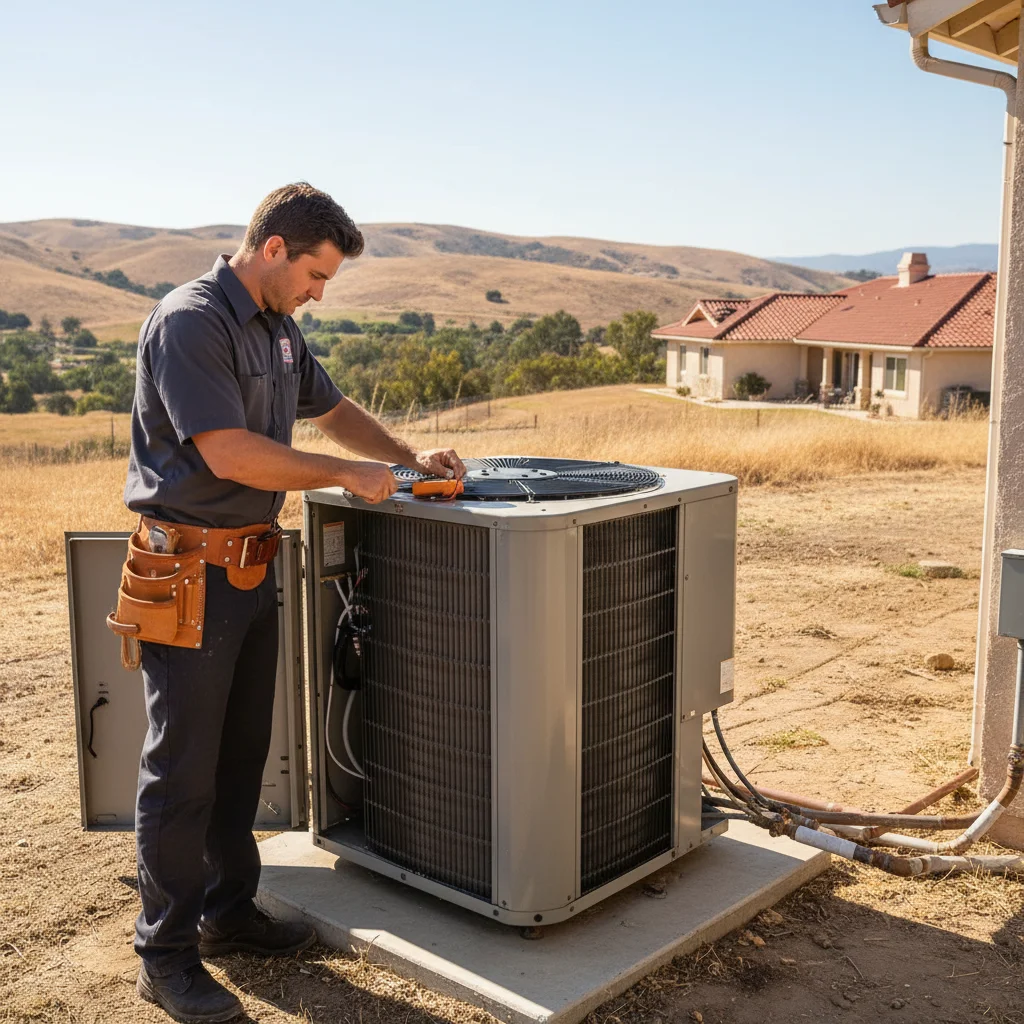
Why Poway summers stress AC systems harder than coastal homes
It’s no secret that Poway gets hot. While coastal San Diego enjoys the moderating effects of the marine layer, homes in 92064 are fully exposed to inland valley heat. It’s common for temperatures in Poway to be 10-20 degrees warmer than in La Jolla or Del Mar on any given summer afternoon. This isn’t just a matter of comfort; it’s a fundamental difference in the workload placed on your air conditioner.
An AC unit in a coastal home might run for a few hours in the late afternoon. In contrast, a system in a Green Valley or Old Poway home might start running mid-morning and not shut off until well after sunset. This dramatic increase in daily “run-hours” accelerates wear and tear on every component.
Here’s what that extra heat and runtime does to your system:
- Higher Operating Pressures: The condenser coil outside has to dump heat into already-hot ambient air. This forces the compressor to work much harder, raising the internal pressure of the refrigerant and straining the entire system.
- Component Fatigue: The compressor, fan motors, and capacitors are all under constant stress. Like any mechanical part, they have a finite lifespan, and the intense Poway heat effectively shortens it.
- Reduced Efficiency: As the outdoor temperature climbs, your AC’s efficiency drops. It has to use more electricity to achieve the same amount of cooling, leading to higher SDGE bills and more strain.
For homeowners in Poway, this means routine maintenance isn’t just a suggestion; it’s essential for survival. It also means that when a breakdown occurs, you need a technician who understands the specific demands of our local climate.
Common Poway failures in 92064
After years connecting Poway homeowners with AC repair pros, the patterns are clear, and they are directly linked to the high-heat, long-runtime environment. While any part of an AC can fail, these are the four most frequent culprits that turn up on calls from Sycamore Creek to the country estates north of town.
1. Failed Capacitors
The run capacitor is a small, can-shaped component that gives the compressor and fan motors the electrical jolt they need to start and run smoothly. Heat is the number one enemy of capacitors. The constant, high-temperature operation in Poway causes them to degrade and fail much faster than in cooler climates. A failed capacitor is a common reason your AC unit might hum but not start. It’s a relatively simple and inexpensive fix, but it will stop your system cold.
2. Burnt-Out Condenser Fan Motors
The fan on your outdoor unit has a critical job: pulling air across the condenser coils to release heat. In Poway’s summer heat, this motor runs for hundreds of hours under heavy load. The bearings wear out, and the motor windings can overheat and short out. When this fan stops, the compressor will quickly overheat and shut down on a safety limit, leaving you without any cooling.
3. Compressor Failure
The compressor is the heart of your air conditioner. It’s also the most expensive component. The extreme heat and high pressures common in Poway put immense strain on it. If a system has other issues, like a refrigerant leak or a failing fan motor, the compressor is the part that suffers the ultimate, catastrophic failure.
4. Refrigerant Leaks
Every air conditioner contains a closed loop of refrigerant. If a leak develops, the system loses its ability to cool effectively. In Poway, leaks often show up at the brazed joints on the copper lines, which can crack and separate due to years of vibration and thermal expansion. As we’ll discuss next, the unique property layouts in Poway can make these leaks more common and harder to diagnose.
Long line-set runs on larger lots and what they cost
One of the defining features of Poway real estate is lot size. Unlike the tightly packed homes in many other San Diego neighborhoods, properties here often have expansive yards. This is great for privacy and lifestyle, but it creates a specific HVAC challenge: long line sets.
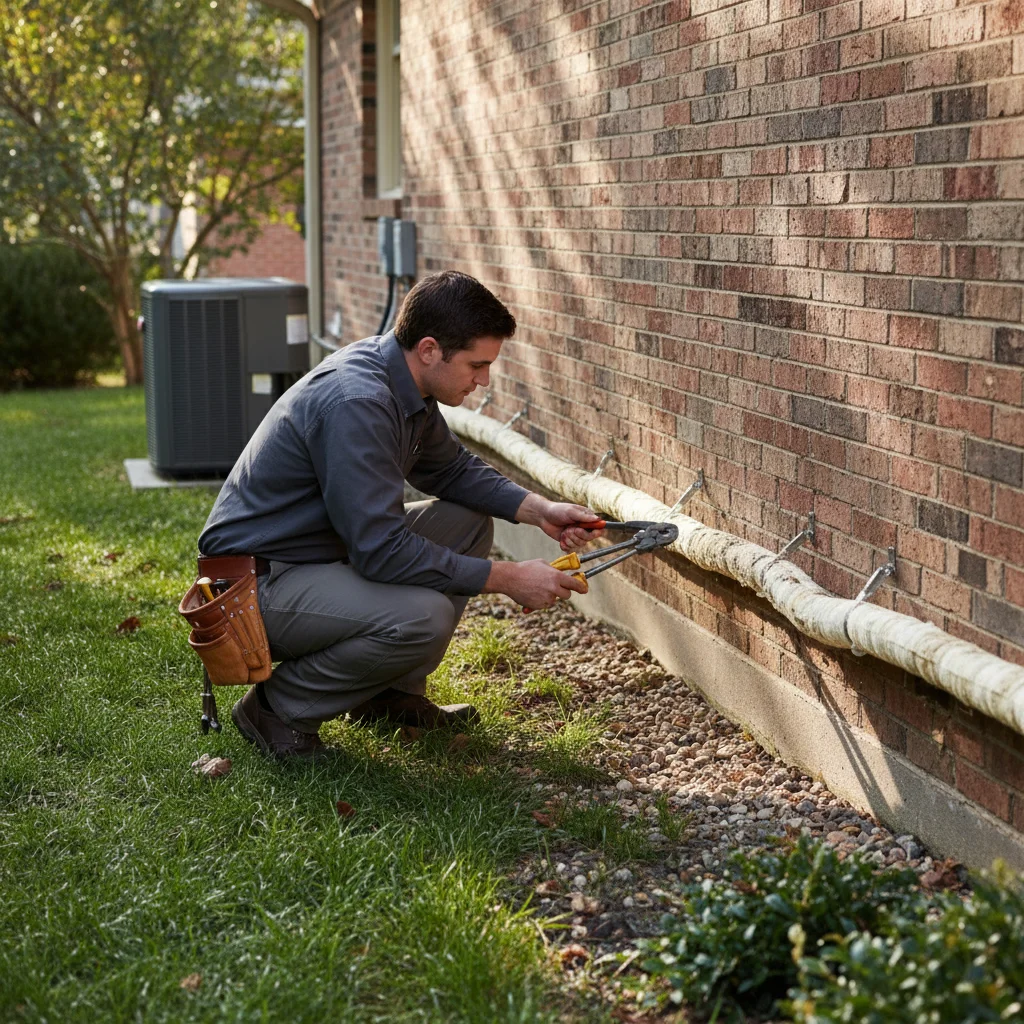
A line set is the pair of insulated copper pipes that carries refrigerant between your indoor air handler (the furnace or fan coil) and the outdoor condenser unit. In a typical tract home, this run might be 15 to 25 feet. On a larger Poway property, it’s not uncommon to find line sets that are 50, 80, or even over 100 feet long to accommodate the distance from the utility pad to the house.
This extra distance has significant implications:
- Precise Refrigerant Charge: Longer lines require more refrigerant. This isn’t just a matter of “topping it off.” The manufacturer specifies an exact amount of extra refrigerant to add per foot of line set over a certain length. Overcharging or undercharging by even a small amount can damage the compressor and drastically reduce efficiency.
- Increased Leak Potential: A longer line set means more material and more brazed joints. Every extra foot of copper and every connection is another potential point of failure where a pinhole leak can develop over time.
- Complex Leak Detection: Finding a tiny refrigerant leak on a 25-foot line set is one thing. Finding it on an 80-foot line that runs under a deck or through an attic is a much more time-consuming and labor-intensive process, which directly impacts the repair cost.
The cost to fix a leak on a long line set can vary dramatically. A simple repair at an accessible joint is a smaller ticket. A difficult-to-find leak requiring extensive searching and a large refrigerant recharge is a larger one. Ask for leak-search labor and recharge as separate lines.
What belongs on a Poway and Rancho Bernardo repair quote
Ask the matched company for line items, not a blog menu. Adjacent Rancho Bernardo follows the same quote rules.
| Line to insist on | Why it matters |
|---|---|
| Diagnostic fee, in dollars | Ask if it applies toward repair |
| Capacitor | Most common high-heat failure |
| Condenser fan motor | Spec (brand, speed, horsepower) |
| Leak search vs recharge | Long line sets change labor |
| Compressor vs replace | Often the replacement conversation |
| Warranty | Part versus labor |
Climate Pros SD does not publish those dollar ranges. Work with a licensed contractor who confirms pricing before work starts. Verify any contractor’s license on the CSLB website. For similar inland heat, see AC repair in Escondido.
Repair vs replace given Poway run-hours
The high number of run-hours that Poway AC systems endure means they often reach the end of their useful life sooner than systems in milder climates. A 12-year-old air conditioner in Poway might have the equivalent wear and tear of a 16-year-old unit in University City. This reality makes the “repair or replace” decision especially critical here.
When a major component like a compressor or condenser coil fails, you’re faced with a significant investment. Here’s how to make the right choice for your home.
Consider replacing your AC if:
- The System is Over 12 Years Old: Even if it’s been well-maintained, a system of this age is approaching the end of its expected lifespan in our climate. Investing thousands in a repair might only buy you another year or two before another major component fails.
- The Repair Cost is High: Compare the repair quote to a replacement quote on the same visit. Do not use a blog 50% rule as a substitute for those two numbers.
- It Uses R-22 Refrigerant: R-22 (Freon) was phased out of production in 2020. The remaining supply is incredibly expensive. A major leak repair on an R-22 system is often prohibitively costly, making replacement the only logical option.
- You’ve Had Multiple Repairs Recently: If you’re calling for service every summer, the costs are adding up. A new, reliable system eliminates those repeat service calls and provides peace of mind.
A new AC installation offers significant benefits beyond just reliability. Modern systems are far more energy-efficient (measured in SEER2 ratings), which can lead to substantial savings on your monthly SDGE bills, a welcome relief during Poway’s long, hot summers.
When to call us
Troubleshooting minor issues can sometimes get your AC running again, but most air conditioning repairs involve high-voltage electricity and pressurized refrigerant. For your safety and to protect your equipment, any work beyond checking the thermostat or changing the filter should be handled by a licensed professional. If your system is blowing warm air, making strange noises, or won’t turn on at all, it’s time to call for an expert diagnosis.
For Poway-specific pricing, Green Valley Trails and Silverset notes, and repair vs. replacement guidance for inland heat country, see our full AC repair in Poway service page. Call us at (442) 777-6440.