That first hot afternoon in Vista when your AC just can’t keep up is a familiar feeling. The thermostat creeps up, the air from the vents feels lukewarm, and you know a long, uncomfortable summer might be ahead.
Climate Pros SD matches you with licensed HVAC companies. We do not publish a Vista repair menu.
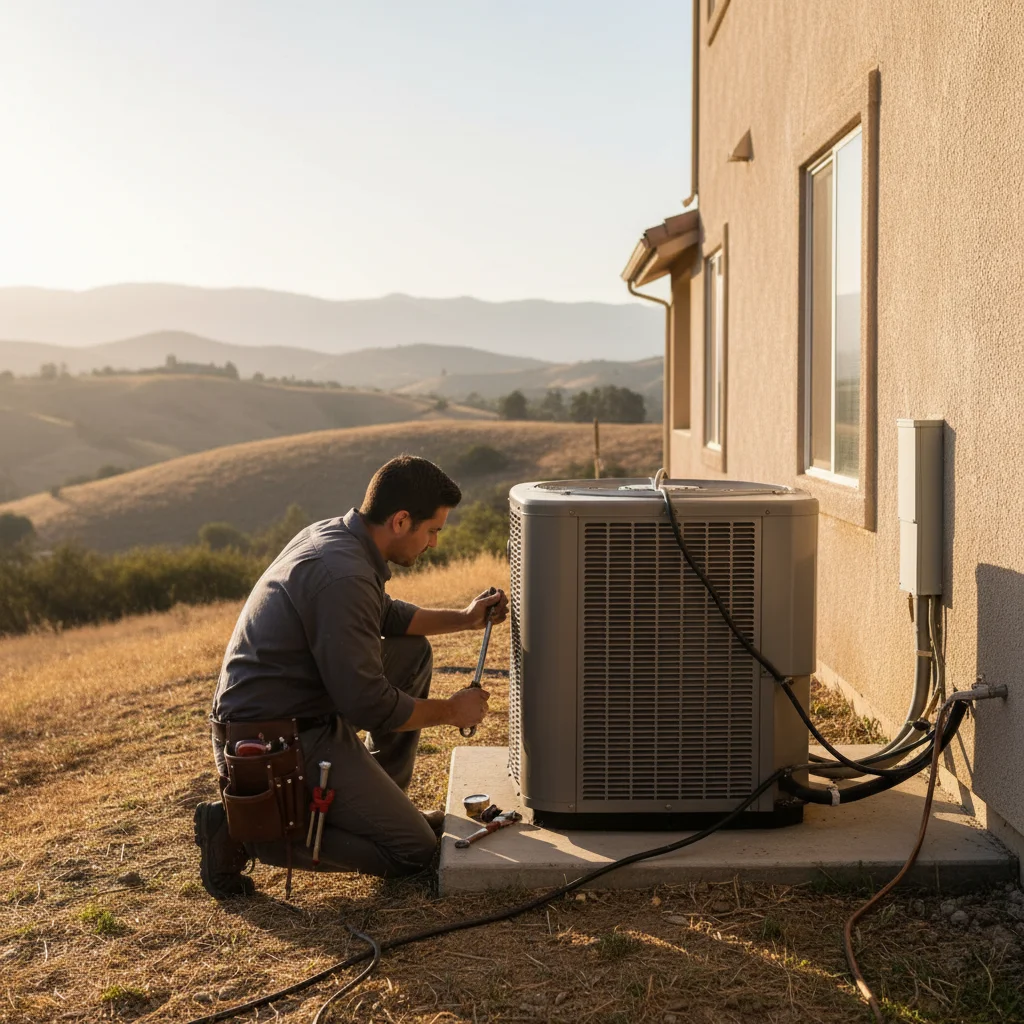
Why Vista’s inland valley heats up faster than the coast
While Vista is only about seven miles from the ocean, its climate feels worlds away from Carlsbad or Oceanside. Vista sits in a series of inland valleys, a geographic pocket that creates a distinct microclimate. This is why you need reliable air conditioning repair in Vista.
In the morning, the marine layer often pushes into areas like the Buena Vista Creek valley, giving a cool, sometimes foggy start to the day. But once the sun climbs, that changes fast. The surrounding hillsides tend to block the steady ocean breezes that cool the coast. The sun’s energy gets trapped, and temperatures can easily be 10-15 degrees warmer than they are just a few miles west.
This “burn-off” effect means your AC system goes from zero to one hundred in a hurry. It doesn’t gradually ramp up; it gets hit with a sudden, intense heat load. This rapid cycling and the sustained high temperatures throughout the afternoon put immense strain on every component of your HVAC system. Unlike coastal homes where the AC might run intermittently, a Vista AC unit often runs continuously from noon until well after sunset during the summer. This increased workload directly leads to more frequent component failures and a shorter overall lifespan for the equipment. It’s a different world from the gentle cooling needs you’d find in a city like Oceanside, which we discuss in our Oceanside AC repair guide.
Common Vista AC failures in 92081, 92083, 92084
With thousands of service calls logged across Vista, the same patterns show up year after year. The intense heat and long running hours cause specific parts to fail more often than others. Here are the most frequent issues that turn up in neighborhoods from Shadowridge to the historic Vista Village.
1. Capacitor failure
The capacitor is like a battery that gives the compressor and fan motors the jolt of energy they need to start up. The extreme heat in a Vista attic or on the sunny side of a house degrades these components over time. When a capacitor fails, you’ll often hear the AC unit hum or buzz, but the fan won’t spin or the compressor won’t kick on. This is by far the most common repair during the first heatwave of the season.
2. Burnt-out fan motors
The outdoor condenser fan motor is responsible for dissipating heat from your home. It runs constantly on hot days, and its bearings can wear out from the combination of heat and non-stop use. A failing fan motor can cause the whole system to overheat and shut down on a safety limit. You might notice the fan blades are spinning slowly, making a grinding noise, or not spinning at all.
3. Refrigerant leaks
Your AC is a closed-loop system, so you should never “run out” of refrigerant. If it’s low, there’s a leak. In Vista’s climate, high operating pressures and temperatures can stress the copper coils and joints, leading to tiny cracks. Signs of a leak include ice forming on the coils, lukewarm air from the vents, and a system that runs constantly but never reaches the set temperature.
These issues are almost always a job for a professional. Working with high-voltage components and refrigerant requires specific tools and a license from the Contractors State License Board (CSLB) to ensure the work is done safely and correctly.
What belongs on an inland North County repair quote
Climate Pros SD does not publish capacitor, fan-motor, leak-repair, or thermostat bands.
| Line to insist on | Why it matters |
|---|---|
| Diagnostic fee, in dollars | Ask if it applies toward repair |
| Capacitor type | Single versus dual-run |
| Fan motor | OEM versus universal, wiring complexity |
| Leak search vs recharge | Top-off without a leak search is a short-term patch |
| Thermostat | Programmable versus smart, C-wire |
| Warranty | Part versus labor |
Always ask for a clear, itemized quote before authorizing any work.
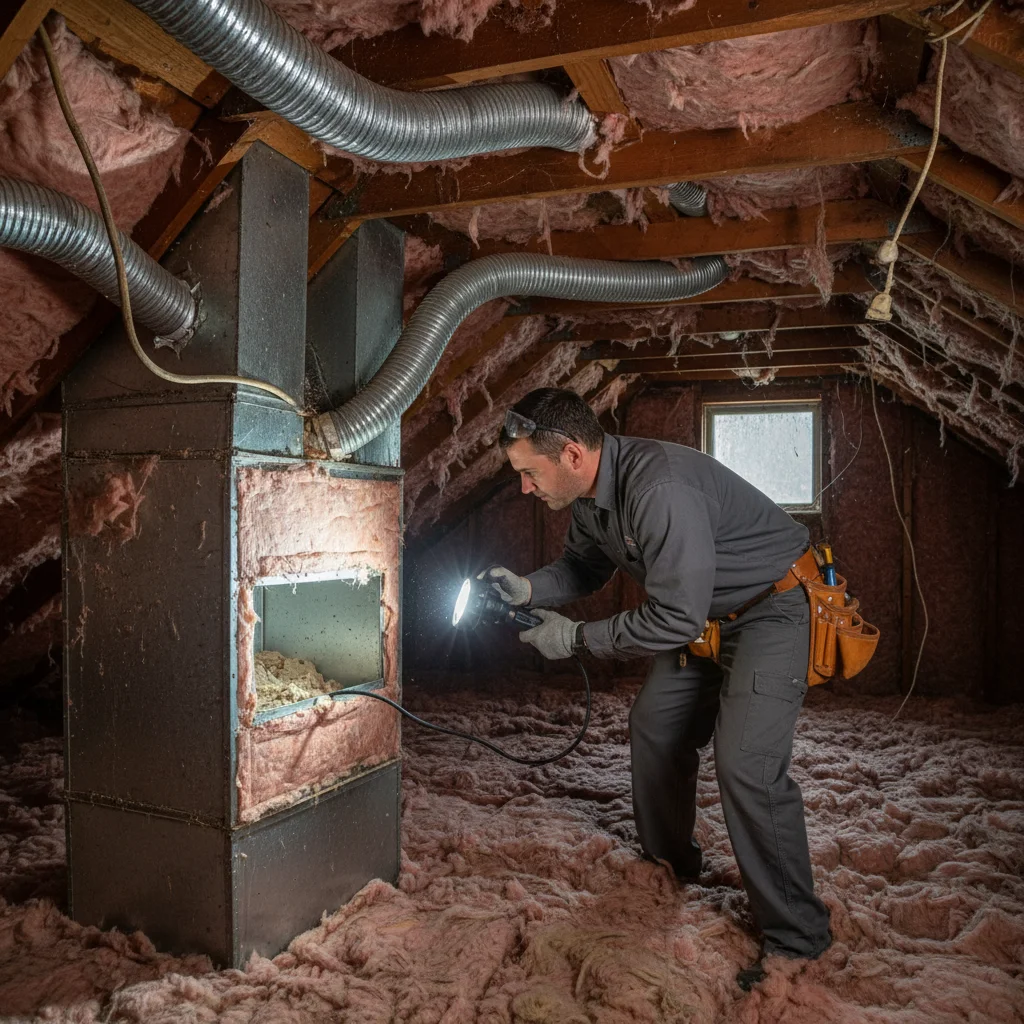
Older Shadowridge and Vista Village homes, duct issues to watch
Many of Vista’s charming and established neighborhoods, like Shadowridge and the areas around Vista Village, feature homes built in the 1970s, 80s, and 90s. While these houses have great character, their original HVAC infrastructure can be a major source of inefficiency and discomfort today. The number one culprit is aging, leaky ductwork.
In a typical Vista attic, temperatures soar far above the outdoor air on a sunny afternoon. The original ducts installed in these homes were often uninsulated or poorly insulated flexible tubes. Over decades, the tape on the seams dries out and cracks, and the ducts themselves can be crushed, torn, or disconnected.
When this happens, you’re paying to air condition your attic. In some homes, over 30% of the cold air leaks out before it ever reaches the vents. This has two major effects. First, your AC has to run much longer to cool the house, dramatically increasing your energy bills. Second, the constant, excessive runtime puts a huge strain on your AC unit, leading to premature failures of the very components we discussed earlier.
Symptoms of leaky ducts include certain rooms being much hotter than others, weak airflow from the vents, and unusually high summer electricity bills. A professional inspection can identify these leaks and seal them, which is often one of the most cost-effective upgrades you can make to improve your home’s comfort and reduce strain on your air conditioner.
Repair vs replace given Vista run-hours
Because air conditioners in Vista work so much harder than their coastal counterparts, they wear out faster. An AC unit that might last 15-20 years in Encinitas may only last 12-15 years here. This reality makes the “repair or replace” decision crucial for Vista homeowners.
When faced with a significant repair bill, here’s a framework to help you decide:
-
Compare two quotes: Take the repair quote and a replacement quote from the same visit. Do not use a blog multiplier or a guessed new-system band. If the repair is a large share of replacement on those numbers, replacement is usually the smarter financial choice.
-
System Age: If your air conditioner is over 12 years old, it’s operating on borrowed time in Vista’s climate. Even if a repair seems manageable now, another component failure could be just around the corner. Investing in a repair for an older system can feel like throwing good money after bad.
-
Energy Efficiency (SEER Rating): An older unit from 15 years ago might have a SEER (Seasonal Energy Efficiency Ratio) rating of 10 or 12. Today’s standard units are a minimum of 14 SEER, and high-efficiency models can be 18 SEER or higher. A new AC installation can cut your summer cooling costs by 20-40%, providing a return on your investment every month.
-
Refrigerant Type: If your system uses R-22 refrigerant (common in units made before 2010), it’s a major red flag. R-22 is being phased out, and its cost has skyrocketed. A major repair involving an R-22 recharge is almost never worth it.
Making the call to replace a system is a big decision, but in a high-demand climate like Vista’s, it’s often the most logical path to long-term comfort and savings.
When to call us
Troubleshooting your thermostat or changing your air filter are great first steps for any homeowner. But when you’re dealing with a system that won’t start, is blowing warm air, or is making strange noises, it’s time for professional help. Working with high-voltage electricity and pressurized refrigerant is dangerous without the right training and tools.
For Vista-specific Shadowridge and Rancho Buena Vista neighborhood notes, and repair vs. replacement guidance, see our full AC repair in Vista service page. Call us at (442) 777-6440.