Climate Pros SD matches you with licensed HVAC companies. We do not repair equipment, install systems, or set prices. The matched company quotes after it tests the system.
Search results still talk about a “$5,000 rule.” That multiplier is a trade shortcut some technicians mention. It is not a DOE statute, not a warranty, and not a Climate Pros SD price. Do not plug a guessed repair into a blog formula. Use written quotes and remaining useful life instead.
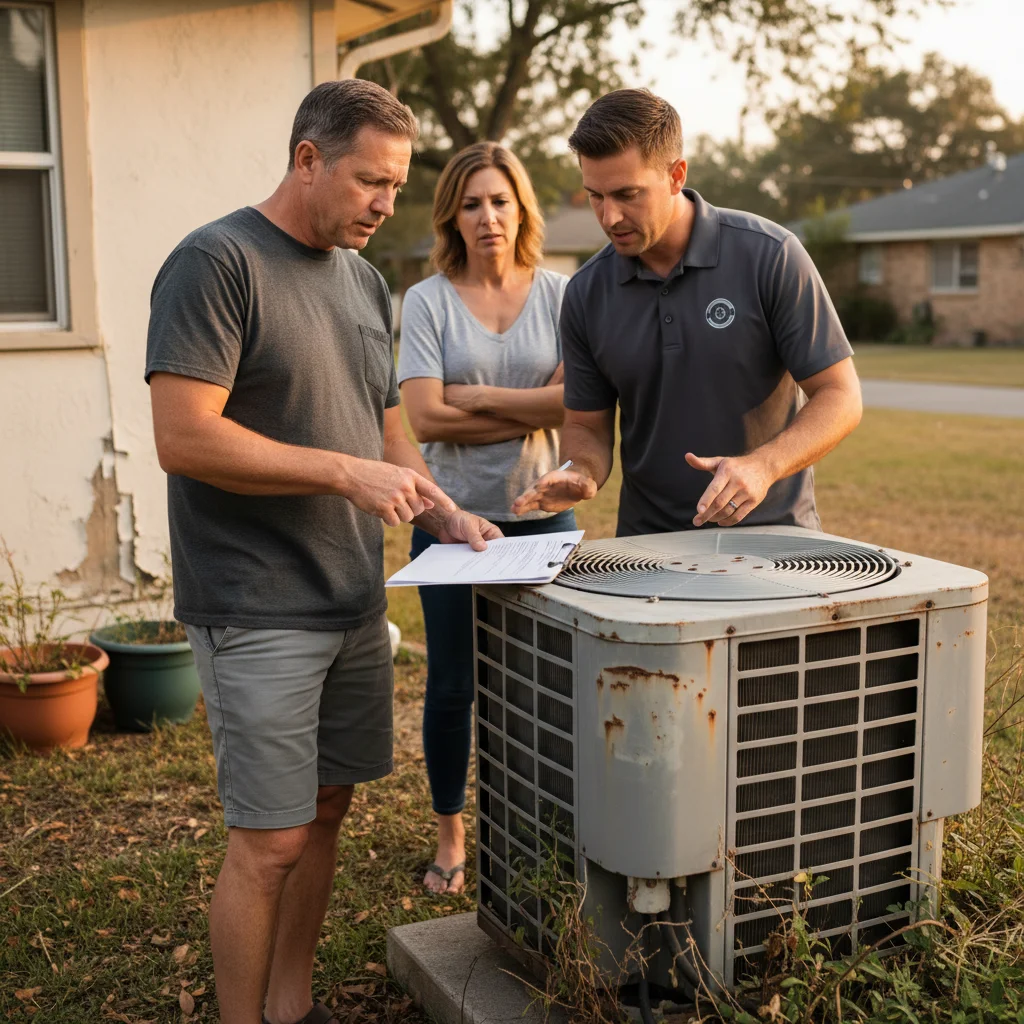
That clipboard moment, quote in hand, is what this post is for. Below is a checklist, plus the R-22, efficiency, and rebate factors that actually move the line in 2026.
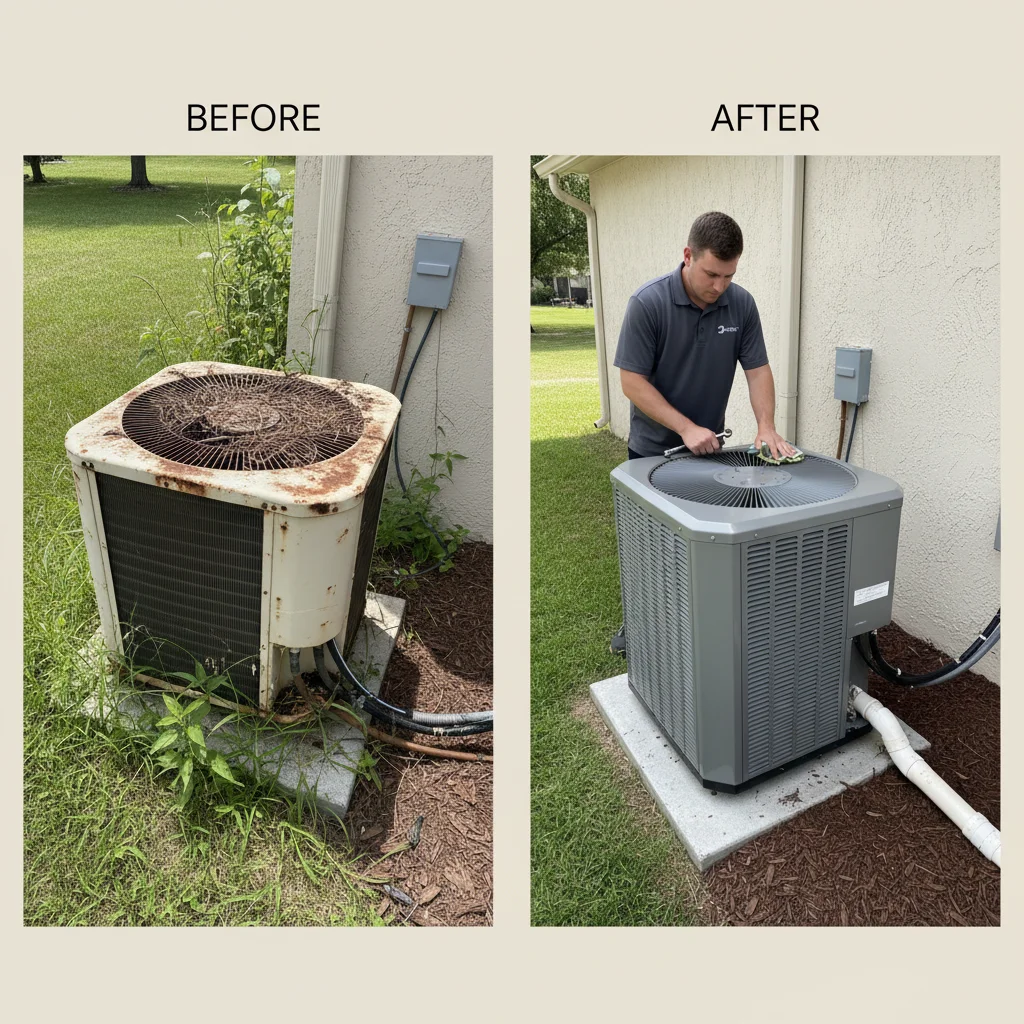
What should you compare instead of the $5,000 rule?
Get two written numbers from the matched licensed contractor, then decide.
- Repair quote, itemized. Failed part, labor scope, refrigerant if any, diagnostic fee, and what is excluded.
- Replacement quote for this house. Equipment, ducts, electrical, and permit pulled by the licensed contractor. Same house assumptions on both paths.
- Remaining useful life. Age is a clue, not a verdict. Inland valleys log more brutal run hours than the coast. NWS describes ocean moderation near San Diego and warmer summer days in nearby valleys.
- Failure pattern. One modest repair is one thing. Repeat similar repairs over a few seasons is a pattern. Use the actual invoices, not a blog estimate.
- Refrigerant and parts risk. R-22 leaks and hard-to-source older platforms change remaining life even when the repair looks small.
- How long you plan to stay. Selling soon is a different goal than staying a decade.
Factors that often tip toward replacement regardless of a shortcut:
- The compressor is failing (often the most expensive single component)
- Efficiency has dropped visibly, your SDG&E bills climbed even though usage did not
- The repair requires parts that are hard to source for an older platform
The matched pro confirms timing. This brand does not promise arrival windows.
When does R-22 refrigerant force the decision?
If your system was installed before 2010, there is a good chance it runs on R-22 refrigerant. The EPA phased out R-22 production and import in the U.S. as of January 1, 2020. Existing systems may still be serviced with recycled or previously produced refrigerant. What is left in circulation is reclaimed stock. This page does not publish a per-pound price.
A refrigerant leak on an older R-22 system is often a replacement conversation because you still have a coil or joint that leaks after a recharge. Patching a leak on a 15-year-old system does not guarantee the refrigerant stays in. Older copper lines, aging Schrader valves, and worn evaporator coils all become leak-prone together.
If a technician diagnoses a refrigerant leak on a pre-2010 system, add the risk of another recharge to the comparison. Ask the pro to log pounds and ounces, not “a top-off.”
The California Energy Commission has tracked the transition away from high-GWP refrigerants. There is no scenario where owning a leaking R-22 system gets cheaper on paper.
For most homeowners with a pre-2010 system that is leaking refrigerant, replacement is not just a cash question. It removes the risk of being stranded mid-summer when service refrigerant is hard to source.
What costs get left out of a one-line repair quote?
The repair quote in front of you covers one thing. It does not cover what comes next.
Older systems fail in clusters. The compressor strains harder when the capacitor is weak. The capacitor fails faster when the refrigerant charge is low. The coil corrodes when the drain pan is not cleaned. These components are not independent. Fixing one under stress does not reset the clock on the others.
Efficiency loss over time. A 13-SEER system from 2008 was code-minimum then. Newer equipment is tested as SEER2. DOE energy-use examples rely on a specified test method and assumed annual operating hours, and DOE states actual savings vary with usage. Do not treat a percent bill cut as a promise. In San Diego, SDG&E residential plans can price electricity by time of use. Current listed plans have a 4 p.m. to 9 p.m. on-peak period. Confirm your exact plan and current rates on sdge.com.
Comfort degradation. Old systems often lose their ability to dehumidify properly as they age. You will notice the house feels clammy even when the temperature is technically right. That is a symptom of a system that can no longer remove latent heat efficiently.
Warranty exposure. Manufacturer warranties on parts and labor expire on the certificate, not on a blog schedule. Once you are outside that window, every repair comes out of pocket at full cost. A new AC installation by the matched licensed contractor resets that clock. Climate Pros SD does not install equipment or honor manufacturer labor.
For what a new-system quote should include, our post on new AC cost in San Diego for 2026 is a decision framework, not a sticker.
What does a replacement actually change in San Diego?
San Diego’s cooling season runs roughly May through October. We do not have Phoenix’s stretch of extreme heat, but inland valleys still run equipment hard. SDG&E’s time-of-use structure means evening kWh can cost more than midday kWh. SDG&E suggests precooling earlier in the day, then setting the thermostat to 78F or higher from 4-9 p.m., health permitting. That is utility conservation guidance, not a medical requirement and not a guaranteed savings figure.
A higher-SEER2 system replacing a tired low-SEER unit can cut cooling energy use. Actual savings depend on the old unit, insulation, usage, and your rate plan. This page does not publish an annual dollar savings.
There is also reliability. An aging system that fails on a heat-wave afternoon in Santee or El Cajon is not just uncomfortable. Emergency service availability is the matched company’s, quoted before they roll. This brand does not guarantee same-day or weekend arrival. Parts for older platforms can mean a second visit.
Resale value is real too. San Diego buyers notice HVAC age. A recent system is a selling point. An old unit that might need replacement is a negotiation liability.
How do rebates change repair versus replace in 2026?
This is where the numbers can shift, and many homeowners do not know what is actually open.
The federal Section 25C Energy Efficient Home Improvement Credit applies to qualifying property placed in service through December 31, 2025. Property placed in service after December 31, 2025 does not. For qualifying 2025 property, the IRS says the annual limit for qualified heat pumps and heat pump water heaters was $2,000 and the credit is nonrefundable. Direct tax questions to a tax professional. Do not budget a current federal credit for a 2026 installation.
What is left in 2026 is limited and condition-heavy:
- SDG&E Golden State Rebates. SDG&E says the Golden State Rebates Program’s retail rebate offerings have ended. Confirm current offerings at sdge.com/rebates. Do not treat a leftover product table as a current offer.
- TECH Clean California single-family heat pump HVAC incentives were fully reserved and stopped accepting new reservations on November 14, 2025. Availability, enrollment, product eligibility, reservation, approval, and payment are separate conditions.
- HEEHRA single-family rebates were fully reserved statewide as of February 24, 2026, and no new single-family income-verification applications were being accepted. Existing approved reservations may continue. Do not treat a waitlist or a submitted request as approved funding. Program design caps (up to $8,000 below 80 percent AMI and up to $4,000 from 80 to 150 percent AMI for qualifying replacement of an existing primary heating source with a heat pump) are caps, not currently available money. Reservations must be approved before installation. HEEHRA is not retroactive.
- As of July 15, 2025, a project cannot receive both a TECH incentive and a HEEHRA rebate. Recheck before advising on any stack.
- PACE financing for spreading the cost, though it attaches a lien to your property, so read the terms.
Do not pre-spend money that is not confirmed. Our heat pump rebate stack in San Diego for 2026 covers which programs are actually open. Ask the installer to show current program status, not last year’s flyer.
If a heat pump is not the right fit, a high-efficiency split system may still be the right equipment. If you are weighing the two, our guide on heat pumps versus furnaces in San Diego walks through climate fit. The key is a proposal built around what you are actually eligible for, not a sticker.
Frequently asked questions
Should I repair or replace a 10-year-old AC?
Repair it if the written quote is modest, the system has been maintained, and remaining life still looks reasonable. San Diego’s milder coastal climate buys some extra life compared with inland heat. A 10-year-old unit facing a compressor or refrigerant-leak repair is a different conversation. Use the actual quotes, not a blog multiplier.
Is it worth replacing just the AC compressor?
Usually not on an older system. The compressor is often a large share of the unit’s remaining value, so on a system past a decade you are spending on the most expensive part while the coil, capacitor, and refrigerant lines keep aging. If the system is under warranty or still young, a compressor swap can make sense. Past that, put the money toward comparing a new-system quote. The matched contractor quotes both paths.
How much does a new AC cost in San Diego?
Climate Pros SD does not publish installed prices. Ask for line items: equipment, labor, duct or electrical extras, permit (pulled by the licensed contractor), and what is excluded. Our AC repair cost guide for San Diego is a quote checklist, not a 2026 price table.
Does my old AC use R-22 refrigerant, and does that change the math?
If it was installed before 2010, it very likely runs on R-22, and yes, that changes everything. R-22 production and import ended in the U.S. in 2020. Existing systems may still be serviced with recycled or previously produced refrigerant. A leak repair that only adds refrigerant leaves the leak in place. On a pre-2010 unit with a refrigerant leak, replacement is almost always the better call.
Will I get a rebate if I replace my AC in San Diego in 2026?
Maybe, but nothing is guaranteed. Do not budget Section 25C for a 2026 install. TECH single-family reservations stopped November 14, 2025. HEEHRA single-family applications were not being accepted as of February 24, 2026. SDG&E Golden State retail rebate offerings have ended. Confirm what is actually open at sdge.com/rebates and with the program administrator before you count any rebate dollars.
Local coverage: HVAC service in El Cajon.
When should you call?
Deciding between repair and replacement benefits from a second opinion, especially when a repair quote is already on the table. A licensed HVAC contractor can assess system condition, refrigerant type, efficiency, and remaining useful life, and give you numbers that are specific to your home. Call (442) 777-6440. Climate Pros SD matches you with a licensed pro. Ask for the diagnostic fee in dollars, what they found, and what the repair includes before you authorize work.