For the full San Diego HVAC picture, see the complete guide to San Diego HVAC in 2026, which covers climate zones, costs, rebates, and contractor vetting in one place. This post is the deep-dive on contractor selection.
The best HVAC company in San Diego is the one that matches your specific job, holds an active C-20 license, gives a written in-home quote, and serves your part of the county. There’s no single winner. Coastal homes need corrosion expertise, inland homes need cooling capacity, and an urgent repair call has different priorities than a full install. Below we compare real options on honest criteria.
Climate Pros SD matches you with licensed HVAC companies. We do not perform the work ourselves, and we do not publish a diagnostic or install price list.
Choosing an HVAC company feels like a high-stakes decision, because it is. Your home’s comfort, air quality, and energy bills for the next 10-15 years often depend on getting this one choice right. It’s about more than just finding a low price. It’s about finding a long-term partner for your home.
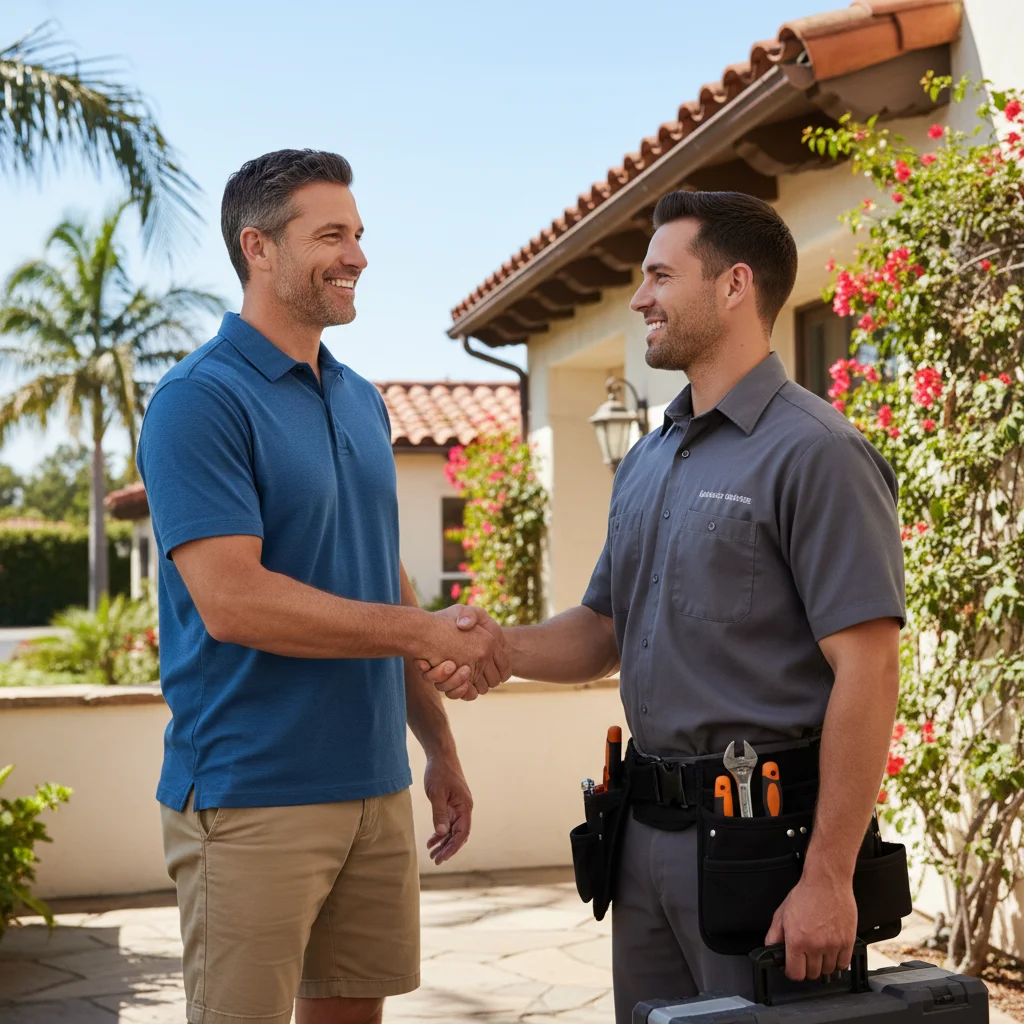
This guide gives you a clear framework for vetting contractors. We’ll show you exactly what to look for, what questions to ask, and which red flags to avoid, so you can hire with confidence. For a step-by-step walkthrough, see how to choose an HVAC contractor in San Diego.
What ‘best’ actually means for a homeowner
The term “best” is subjective. The best company for a quick emergency fix might not be the best one for a complex, high-efficiency system installation. For a San Diego homeowner, “best” is a mix of technical skill, reliability, and local expertise.
First, consider your specific need. Are you looking for an urgent AC repair on a 95-degree day in El Cajon? In that case, “best” means responsive, able to prioritize urgent calls over routine scheduling, and equipped with the parts to fix your specific brand. Or are you planning a full system AC installation for your coastal home in Encinitas? Here, “best” means a company that understands how to size a system for marine air, uses corrosion-resistant materials, and performs a detailed Manual J load calculation.
A truly great HVAC company understands these nuances. They don’t offer one-size-fits-all solutions. They listen to your concerns, assess your home’s unique layout and insulation, and then recommend a solution tailored to you.
“Best” also means trust and transparency. It’s a company that explains why a certain repair is needed, not just what it costs. It’s a technician who takes the time to show you the faulty part and discusses your options without pressure. Ultimately, the best HVAC company isn’t just the one with the flashiest ads or the lowest price; it’s the one that feels like a trusted advisor for your home’s most critical system.
San Diego HVAC companies compared
There’s no neutral list that fits every home. The table below names HVAC companies that show up across San Diego review directories, with what they tend to focus on and where they work. Climate Pros SD is a referral match, not a competing installer on the same row of labor. Always confirm a company’s C-20 license and current reviews yourself before you hire.
| Company | Focus | Service area | Free upfront quote | Notes |
|---|---|---|---|---|
| Climate Pros SD | Referral match to licensed C-20 companies | Full SD County, all 67 cities | Written quote from the matched pro | We do not set the company’s labor rate |
| Stable Temp HVAC | Emergency repair, replacements, efficiency upgrades | Clairemont and central SD | Check directly | High review volume; confirm current ratings |
| Surf Bros HVAC | Central AC, heat pumps, air quality | Kensington and central SD | Check directly | Strong coastal-area presence |
| Blue Diamond Heating and Air | Install, repair, seasonal tune-ups | Pacific Beach and beaches | Check directly | Beach-community focused |
| Paulson | AC service, heat pump install, air quality | Clairemont area | Check directly | Heat-pump leaning |
Ratings and review counts change week to week, so we don’t print fixed numbers here. Pull current Google, Yelp, and BBB data before you decide. What doesn’t change is the vetting math: active C-20 license, real in-home quote, written itemized estimate, and proof of insurance.
How San Diego’s geography changes “best”
Where you live shifts what matters most. A company that’s great inland may not understand marine air, and vice versa.
| Your area | Climate factor | What “best” looks like |
|---|---|---|
| Coastal (La Jolla, Encinitas, Coronado, Pacific Beach) | Salt air corrodes condenser coils fast | Corrosion-resistant coils, marine-rated sizing, heat-pump fluency |
| Inland valleys (El Cajon, Santee, Escondido) | Real summer heat, 95F-plus days | Adequate cooling capacity, quick repair response, attic-duct skill |
| Mountains and east county (Alpine, Ramona) | Cold winters, wider temperature swing | Strong heating and dual-fuel or heat-pump experience |
| Mid-city (Clairemont, La Mesa, Chula Vista) | Mixed mild climate | Balanced systems, efficiency upgrades, SDG&E rebate familiarity |
How to read an HVAC quote without a blog price table
Climate Pros SD does not publish a 2026 diagnostic, repair, AC install, heat pump, or furnace dollar table. Those figures are not a bid from us and they are not a bid from the matched company until they see the house.
Use a written in-home estimate to compare:
- Diagnostic fee, and whether it credits to repair
- Named parts versus a lump-sum repair
- Tonnage, ductwork, and SEER2 on an install
- Permit, disposal, and electrical extras
- Current SDG&E and federal heat-pump incentives as a separate line, confirmed on the program site
San Diego’s high SDG&E electric rates can make heat pumps and high-efficiency systems more attractive here than in much of the country. Ask any company about current SDG&E and federal heat-pump rebates. The IRS residential energy credit still lists a $2,000 annual cap for qualifying heat pumps for tax years that still allow it. Confirm whether your install date still qualifies. For the full breakdown, see our complete guide to San Diego HVAC in 2026 and our AC repair and AC installation pages.
License, insurance, and bond checks that matter
Before you even discuss pricing or equipment, there are three non-negotiable items you must verify: license, insurance, and bonding. In California, these aren’t just nice-to-haves; they are legal requirements designed to protect you, the homeowner.
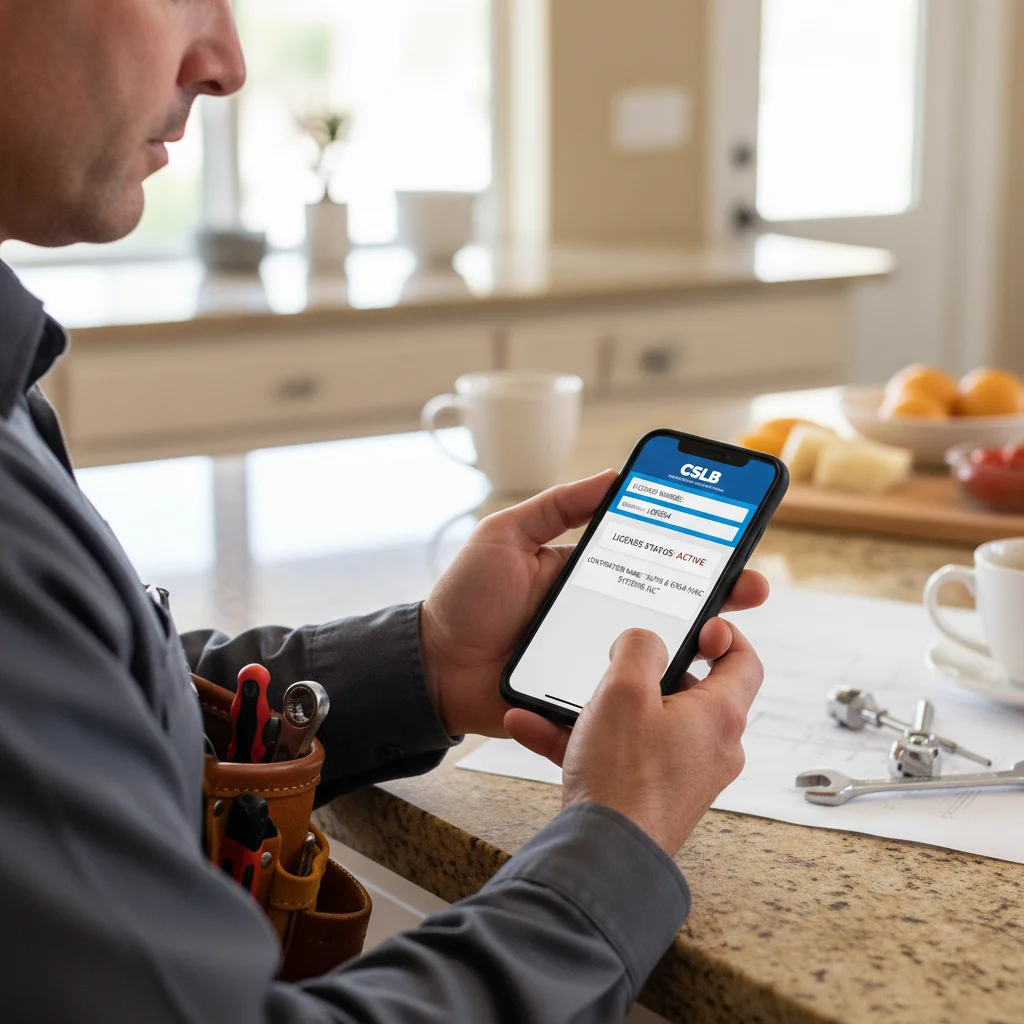
First is the contractor’s license. All HVAC work in California requires a state license from the Contractors State License Board (CSLB). Specifically, you’re looking for a C-20 classification, which covers Warm-Air Heating, Ventilating and Air-Conditioning. A company with only a general contractor or plumbing license is not qualified to install or service your HVAC system.
You can and should verify any company’s license in about 30 seconds. Go to the CSLB’s official license check website and enter the company’s name or license number. The site will tell you if the license is active, if they have the correct C-20 classification, and if they have any disciplinary actions against them. A legitimate contractor will have their license number proudly displayed on their website, trucks, and business cards.
Next are insurance and bonding. Ask for proof of general liability insurance and workers’ compensation. General liability protects your property from damage if something goes wrong during the job. Workers’ compensation protects you from being sued if a technician is injured on your property. A contractor’s bond is a type of surety bond that provides a limited amount of financial protection for consumers if the contractor fails to complete a job or violates license law. Verifying these documents ensures you’re working with a professional who takes their legal and financial responsibilities seriously.
Red flags in pricing and sales tactics
How a company talks about money can tell you everything you need to know about their integrity. The goal of a first visit should be to diagnose a problem or assess a project, not to close a sale at all costs. Watch out for these common pressure tactics and pricing red flags, and read up on the common AC repair scams to avoid in San Diego so you know them on sight.
One of the biggest red flags is a quote given over the phone without a home visit. Sizing an air conditioner or furnace properly requires measuring your home, checking ductwork, assessing insulation, and understanding your family’s needs. A contractor who gives you a firm price based only on square footage is guessing, and their guess will likely be wrong, leading to an inefficient system and higher energy bills.
Be wary of high-pressure sales language. Phrases like “This special price is only good if you sign today” are designed to prevent you from getting other quotes and doing your research. A professional quote should be valid for a reasonable period, typically 15-30 days.
Another warning sign is a demand for a large cash payment upfront. California law has strict rules about down payments for home improvement projects. Business and Professions Code 7159.5 limits a contractor’s down payment to 10% of the contract price or $1,000, whichever is less. That $1,000 figure is the statute, not a Climate Pros SD bid. A company asking for 50% down before any work begins is operating outside the law and should be avoided.
Finally, always insist on a written, itemized estimate. The document should clearly detail the make and model of the equipment being installed, a breakdown of labor costs, warranty information, and the payment schedule. Vague estimates with lump-sum pricing hide what you’re actually paying for and leave you with little recourse if the job isn’t done right.
Questions a quality company will answer before quoting
A reputable HVAC contractor will welcome your questions. They see an informed customer as a good partner. An evasive contractor sees questions as a threat. Before you agree to any work, make sure you get clear, confident answers to the following:
Technical qualifications and process
- Are your technicians NATE-certified? NATE (North American Technician Excellence) is the industry’s leading non-profit certification program. While not legally required, it’s a strong indicator of a company’s commitment to ongoing training and technical excellence.
- For a new installation, will you perform a Manual J load calculation? This is the industry standard for determining the correct size of your new HVAC system. It’s a detailed calculation based on your home’s specific features. The answer should be an immediate “yes.”
- What brands of equipment do you install and service? A good company will be able to service most major brands, even if they specialize in installing a select few. They should be able to explain why they recommend a particular brand for your home.
Warranty and follow-up
- What is the warranty on your labor? The manufacturer provides a warranty on the equipment (parts), but the installation quality is guaranteed by the contractor. A one-year labor warranty is standard, but some top-tier companies offer longer terms.
- What does your installation process look like? Ask who will be on the crew, how they’ll protect your home (like using drop cloths and shoe covers), and what the cleanup process is.
- What is your process if I have a problem after the installation? A great company has a clear procedure for addressing warranty claims and post-installation issues. They should be able to explain their response time and who your point of contact will be.
Getting these answers upfront helps set clear expectations and ensures you’re hiring a professional who stands behind their work.
Where to verify reviews beyond Yelp and Google
Online reviews on sites like Google and Yelp are a useful starting point, but they don’t always tell the whole story. Savvy homeowners look at a wider range of sources to get a more complete picture of a company’s reputation.
The Better Business Bureau (BBB) is an excellent resource. Don’t just look at the letter grade. Click through to read the details of any customer complaints. You’re not looking for a company with zero complaints, even the best have occasional issues. What you’re looking for is a pattern. Does the company repeatedly have complaints about the same issue, like missed appointments or surprise charges? More importantly, does the company respond to and resolve these complaints? A contractor who actively works to fix problems on the BBB platform shows a commitment to customer satisfaction.
Next, ask the contractor for local references. Don’t just ask for a list of happy customers. Ask for the address of a recent installation in your neighborhood, like La Mesa or Chula Vista. This allows you to drive by and see the quality of their exterior work (like the placement of the condenser unit). You can also ask for the phone number of a customer who had a similar system installed.
Finally, while looking for “hvac repair near me san diego” will give you many options, consider checking hyper-local sources like a trusted community Facebook group or Nextdoor. These platforms can provide candid feedback, but be sure to weigh the advice carefully and cross-reference it with more objective sources like the CSLB and BBB.
Frequently asked questions
Who is the best HVAC company in San Diego?
There’s no single best company for every home. The right pick depends on your job and your location. Coastal homes in La Jolla or Encinitas need corrosion-resistant equipment and marine sizing. Inland homes in El Cajon or Santee need real cooling capacity for hot days. Compare a few companies on active C-20 license, in-home written quotes, current reviews, and service area before you decide.
How much does HVAC work cost in San Diego in 2026?
Climate Pros SD does not publish service-call, repair, or install dollar ranges. Final cost depends on tonnage, ductwork, efficiency rating, and what the technician finds on site. Ask the matched licensed contractor for a written itemized estimate.
How do I verify an HVAC contractor is licensed in San Diego?
Use the California CSLB license check website and search the company’s name or license number. Confirm the license is active and carries the C-20 classification for heating and air conditioning. Check for any disciplinary actions, and ask for proof of general liability insurance and workers’ compensation.
Are heat pumps worth it in San Diego?
Often yes. San Diego’s mild climate suits heat pumps well, and SDG&E’s high electric rates plus current state and federal rebates can shorten the payback. They cost more upfront than a standard AC and furnace, but the rebates and lower operating cost can close that gap. Ask any contractor to walk you through current SDG&E and federal incentives.
What questions should I ask before hiring an HVAC company?
Ask if technicians are NATE-certified, whether they perform a Manual J load calculation for installs, what brands they service, their labor warranty length, and their process if a problem comes up after install. A reputable company answers all of these without hesitation.
Does Climate Pros SD serve all of San Diego County?
Yes. We cover all 67 cities in San Diego County, from coastal communities to inland valleys and east county. The pros we match you with give written in-home estimates.
When to call us
Vetting contractors takes time, but it’s work that pays off in home comfort and peace of mind. When you’re ready for an estimate from a qualified, insured, and transparent team that welcomes your questions, we’re here to help.
Call us at (442) 777-6440 to get matched with a vetted pro for an estimate.