Your old air conditioner has given up. A repair will not cut it this time. The furnace still works, so you may only need a new AC, not a full heat-pump changeout. That is a common project for the licensed companies Climate Pros SD matches you with.
Climate Pros SD is a referral service. It does not install equipment or set prices. The matched company gives you the installed price in dollars for your house.
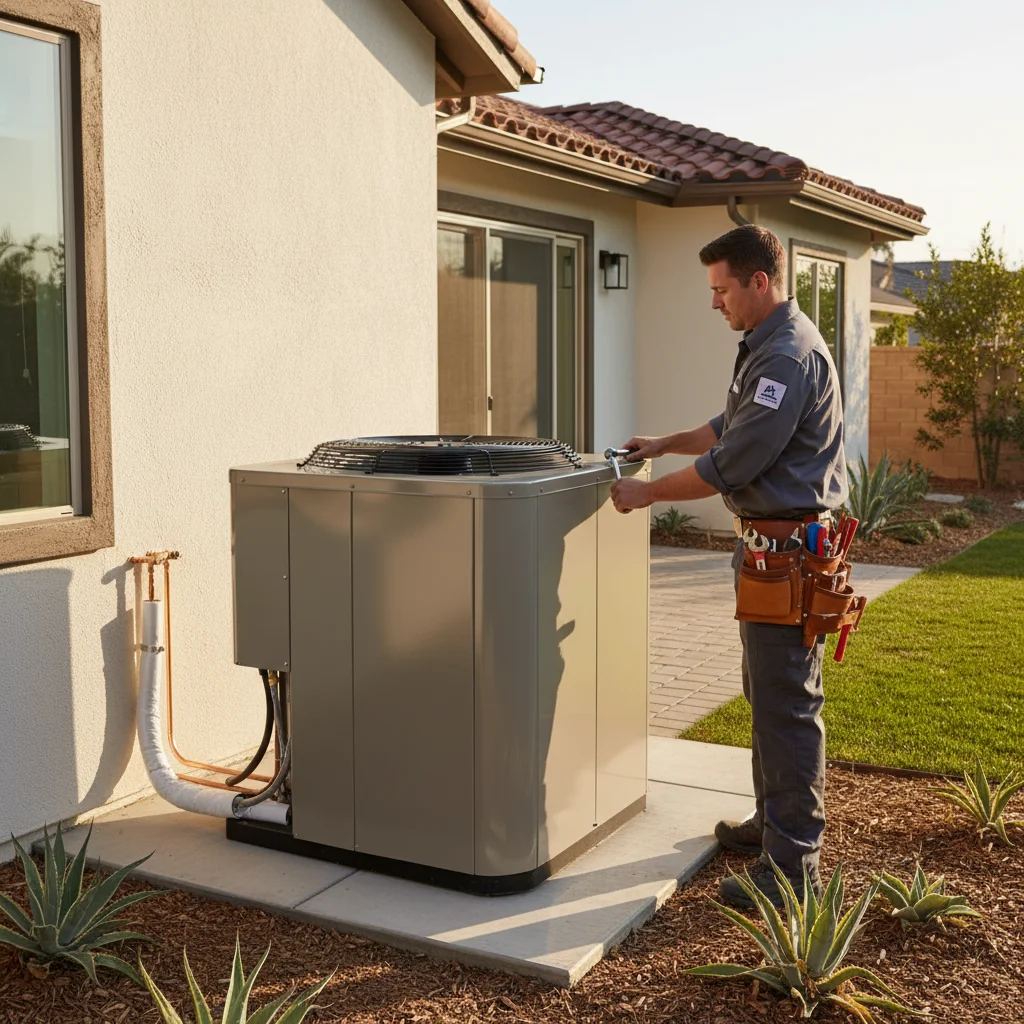
What ‘central AC installation’ actually includes in 2026
A central air conditioner installation quote is more than the outdoor cabinet. A code-compliant changeout typically names:
- Equipment. Outdoor condenser and indoor evaporator coil as a matched set so the rated efficiency can actually be delivered
- Labor and materials. Recovery of the old refrigerant, removal, new pad if needed, disconnect, and line set if the old copper cannot stay
- Line-set flush. Nitrogen flush of existing copper when the lines are reused
- Brazing and pressure testing
- Deep vacuum and charge to the manufacturer’s spec
- Commissioning. Pressures, temperature split, and amp draw written down
That process is the difference between a system that starts correctly and one that is short on charge or full of moisture. Ask to see those readings.
What moves tonnage and SEER2 (without a published band)
Tonnage is cooling capacity. One ton equals 12,000 BTU. A bigger house does not automatically need a bigger AC. The right size comes from a Manual J load calculation that uses square footage, windows, insulation, and sun. Oversizing short-cycles, humidity stays high, and the equipment wears.
SEER2 is a seasonal cooling-efficiency rating in Btu per watt-hour. The Department of Energy says its energy-use examples depend on a stated test method and assumed operating hours. Actual savings vary with usage. Higher SEER2 usually costs more equipment. Whether it pays back depends on run hours, ducts, and your SDG&E plan.
DOE updated test methods and regional minimums effective January 1, 2023. This page does not publish a legal-minimum SEER2 number. ENERGY STAR certified heat pumps are listed at SEER2 15.2 / HSPF2 7.8 on the DOE heat-pump purchasing page. For AC-only equipment, ask the contractor what they are installing and why. See cost of a new AC in San Diego.
Climate Pros SD does not publish 2026 installed ranges by SEER2.
Why the existing ductwork changes the quote
You are keeping the furnace, so you are keeping the ducts, unless they fail inspection.
- Good fit, good condition. The new coil ties in with little plenum work.
- Minor sheet-metal transitions when the new coil is a different height
- Sealing. ENERGY STAR says a typical forced-air house can lose about 20% to 30% of the air moving through ducts because of leaks, holes, and poorly connected ducts. That is a national typical-house statement, not a measured result for your attic. Sealing is not a guaranteed bill cut.
- Undersized or damaged ducts. New equipment on crushed or tiny ducts wastes the install. Repair or replacement should be a separate line.
Permit, Title 24, and field testing
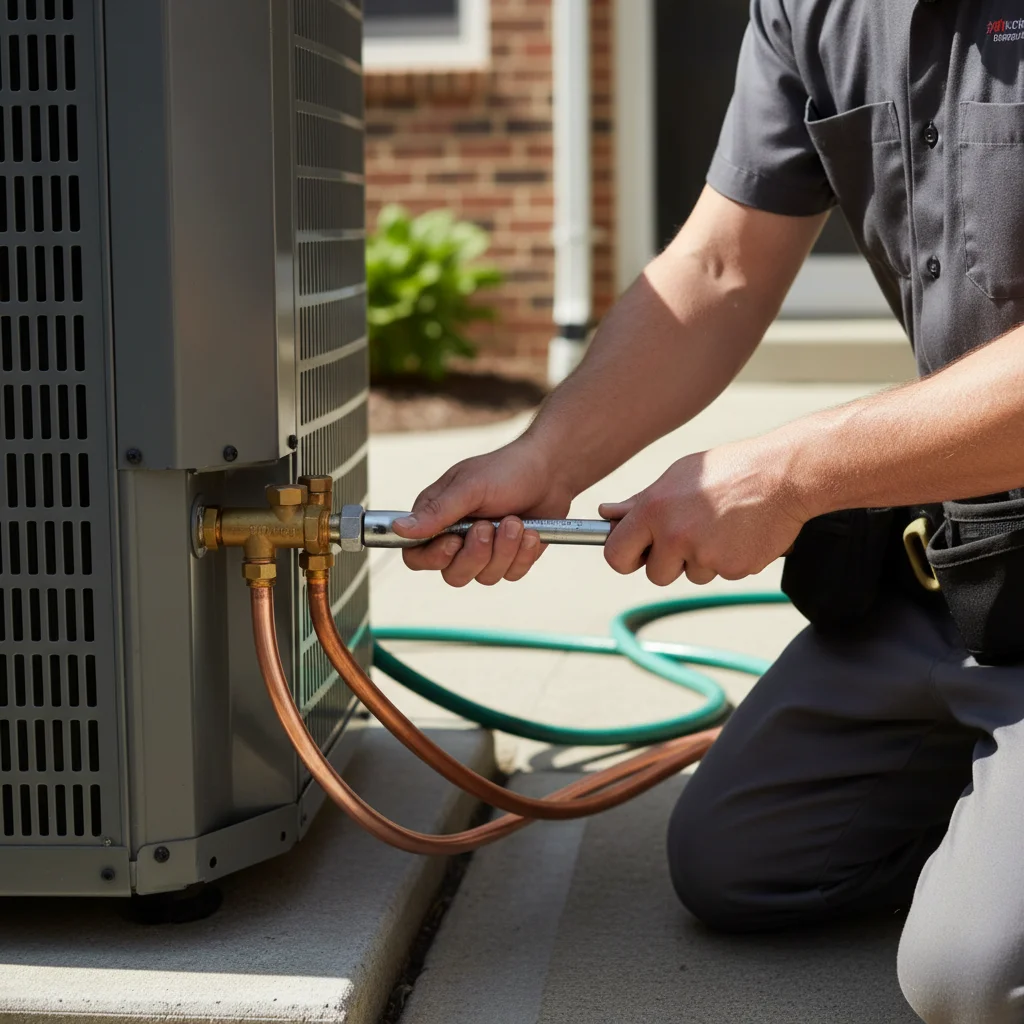
In the City of San Diego, no part of a heating, ventilating, air conditioning, or refrigeration system may be installed, altered, replaced, or repaired unless a mechanical permit has been obtained. Other cities and the county have their own rules. This page does not publish a permit fee table.
California Title 24 requires field verification when HVAC systems are altered or replaced. As of January 1, 2026, that testing scope lives in the Energy Code Compliance (ECC) program, not the old HERS label. A CEC-certified rater performs current tests. Do not treat a blog leakage percentage as the legal threshold.
A company that offers to skip the permit is a red flag. Verify the license at cslb.ca.gov. The California Energy Commission is the state energy-code source.
Rebates and financing
- Manufacturer promotions. Seasonal dealer rebates exist when the manufacturer runs them. Ask for the current flyer, not last year’s.
- SDG&E. SDG&E says the Golden State Rebates Program’s retail rebate offerings have ended. Recheck the live page for your account. Do not treat a leftover product table as a current offer.
- Federal Section 25C. The IRS credit covers improvements made through December 31, 2025. Property placed in service after that date does not qualify. Do not promise a current federal credit for a 2026 AC install. For qualifying 2025 property, report QMID. The IRS annual limit for qualified heat pumps and heat pump water heaters was $2,000. The credit is nonrefundable. Direct tax questions to a tax professional.
- TECH and HEEHRA. Single-family TECH reservations stopped November 14, 2025. HEEHRA single-family applications were not being accepted as of February 24, 2026. Do not subtract those as open cash.
- Financing. Any loan or promotional rate is the contractor’s or lender’s. This brand does not offer 0% financing.
Related services: AC repair and HVAC maintenance. Local coverage: HVAC service in Chula Vista.
Frequently asked questions
How much does it cost to install central AC in San Diego?
Ask the matched company. Climate Pros SD does not publish installed bands.
How much does it cost to replace an AC system in San Diego?
Same answer. Efficiency, ducts, electrical, and jurisdiction change the total. Every professional changeout should include a permit in the City of San Diego.
How much do the permit and field testing add?
Ask the contractor to list permit and ECC/rater fees as lines. This page does not invent those fees. The rater is a third party, not the installer. The licensed contractor pulls the permit.
Does a bigger house need a bigger AC unit?
No. Two homes with the same floor area can need different tonnage. Insist on Manual J.
Why are two AC quotes for the same house different?
Different SEER2, different ducts, skipped load calcs, or missing permit and testing. Compare scopes, not totals.
Does a 2026 AC install still qualify for the federal tax credit?
No for property placed in service after December 31, 2025.
When to call us
If your AC is failing and you want a clear estimate, call (442) 777-6440. Climate Pros SD matches you with a licensed independent HVAC professional. Ask for the estimate fee in dollars and for equipment, labor, permit, and exclusions on separate lines.