Start here
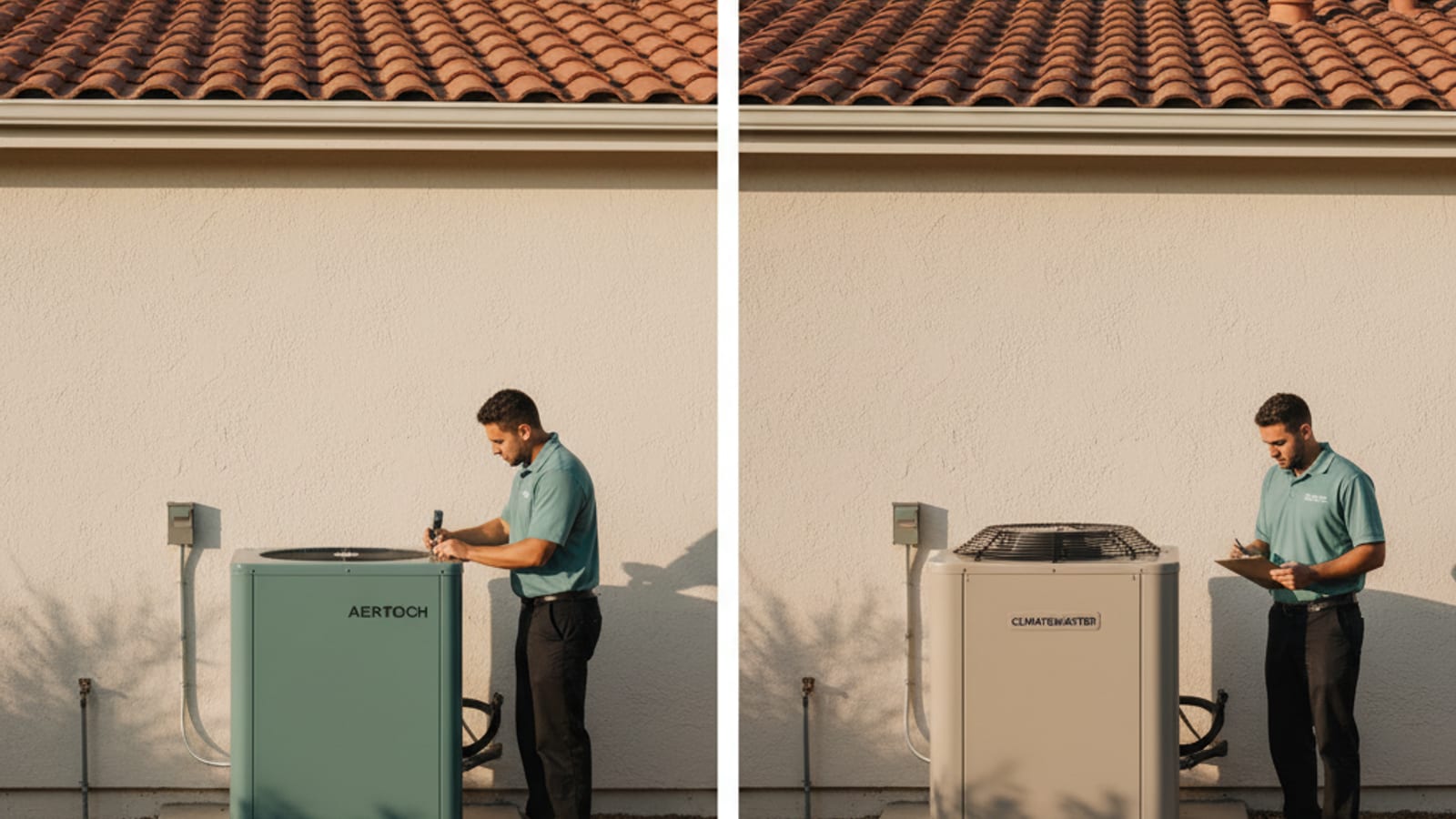
- A heat pump is one outdoor unit and one indoor unit that cools and heats. An AC plus gas furnace is two machines and two fuels.
- Section 25C does not cover property placed in service after December 31, 2025. Ask a tax professional about a qualifying 2025 install.
- TECH Clean California stopped new single-family heat-pump HVAC reservations on November 14, 2025. HEEHRA single-family rebates were fully reserved as of February 24, 2026. Recheck the live program pages before you count money.
- Get two written scopes: heat pump, and AC plus furnace. Include ducts, electrical work, permits, and what is excluded. Climate Pros SD refers the request. The matched company confirms price and timing.
If you are replacing HVAC equipment in San Diego County in 2026, the usual choice is a heat pump or a separate AC plus gas furnace. The better fit depends on your climate pocket, ducts, electrical service, fuel, and which incentives still accept new work. There is no county-wide percentage that settles that.
What is a heat pump and how does it work?
A heat pump is an AC that also runs in reverse. Cooling mode: it moves heat from inside your house to outside (like any AC). Heating mode: it moves heat from outside air to inside. That’s it.
It uses electricity. No gas line, no flame, no combustion. One outdoor unit, one indoor air handler, one refrigerant line set connecting them. Same as an AC, with the reverse-flow capability added.
Modern heat pumps work efficiently down to about 5°F. San Diego County, outside the mountain communities, rarely drops below 35°F. So the “does it work when it’s cold?” question that people ask about heat pumps from old information is essentially moot here.
Heat pump vs. AC + furnace: what actually differs
| Factor | Heat pump | AC + gas furnace |
|---|---|---|
| What it does | Cools and heats with one refrigeration circuit | AC cools; furnace heats with gas |
| Fuel | Electricity | Electricity plus natural gas |
| Combustion indoors | None | Present. A gas odor or carbon-monoxide alarm is 911 or the utility first |
| Equipment count | One outdoor unit and one indoor unit | Two machines to service and replace on different schedules |
| Federal 25C for a 2026 install | Does not apply | Does not apply |
| Current single-family TECH / HEEHRA money | Do not count new reservations as available | Same: do not invent a stack |
| Where the quote can swing | Ducts, electrical service, outdoor placement, controls, permits | Same, plus gas line, venting, and combustion safety |
A gas furnace can only turn fuel into less than 100 percent useful heat. A heat pump moves heat, so its heating output can exceed the electricity it uses when conditions allow. That does not prove your bill will drop. SDG&E and CCA generation prices, your plan, solar, ducts, and how you set the thermostat decide that. Ask for modeled usage against the rates on your actual account.
How should you compare installed cost in 2026?
Climate Pros SD does not publish a county price for a 3-ton changeout. Installed cost moves with tonnage, efficiency tier, duct repairs, electrical work, access, permits, and commissioning. National roundup numbers are not a San Diego bid.
Ask each written quote to separate equipment, labor, ducts, electrical, permits, refrigerant, thermostat, and exclusions. Then check live program rules before you subtract anything:
- IRS Section 25C: not for property placed in service after December 31, 2025.
- TECH Clean California incentives: single-family heat-pump HVAC reservations stopped November 14, 2025.
- CEC HEEHRA status: single-family rebates fully reserved as of February 24, 2026. HEEHRA is not retroactive. Reservations must be approved before installation.
- SDG&E and any CCA: confirm the current rebate page for your account. Do not use an old blog number.
When does an AC plus furnace still make sense?
There is no 15 percent slice of the county that always wins with gas. These are the situations that often keep a furnace in the conversation:
You’re in the mountain communities
Julian, Alpine, Ramona, Pine Valley, anywhere that sees real freezes overnight in January. Heat pumps still work at those temperatures, but efficiency drops and the system works harder. A dual-fuel setup (heat pump paired with a gas furnace for the coldest 5-10% of the year) is often the right answer here. That’s a hybrid of both options, not a pure AC + furnace.
You have cheap natural gas and expensive electricity (and no solar)
If your home has access to cheap gas and you’re on a high-tier SDG&E electrical rate without solar to offset it, the math shifts. Gas heating is sometimes slightly cheaper per BTU than even efficient heat pump operation, but only without solar. With solar (common in San Diego), heat pumps almost always win.
Your home has no electrical capacity
Older homes with 100-amp service sometimes cannot add a heat pump’s electrical load without a panel upgrade. A licensed electrician, not Climate Pros SD, confirms spare capacity. If a panel upgrade is required, it belongs on the written heat-pump quote so you can compare total scope, not equipment price alone.
You hate change
If you’ve had gas heat your whole life and a new-type system with an app feels like too much to learn, that’s a real consideration. A straightforward AC + furnace replacement is still a legitimate choice, you’re just paying a slight premium in both upfront and operating cost for familiarity.
How does California policy show up in a 2026 quote?
Policy can change what is easy to permit and what money still exists. It does not pick your equipment for you.
First, do not treat closed single-family TECH or HEEHRA funds as money you will receive. Recheck TECH and the CEC HEEHRA page before you buy.
Second, Title 24 and local permitting still apply to replacements. The matched company names the permit path for your city.
Third, some California cities limit new gas hookups. San Diego has not enacted a citywide ban. Resale preference for all-electric homes is a market guess, not a guarantee. Keep your existing furnace until it fails if that is the honest choice for the house.
Does a heat pump feel different from a gas furnace?
Pick equipment from load and panel, not from a closed rebate stack
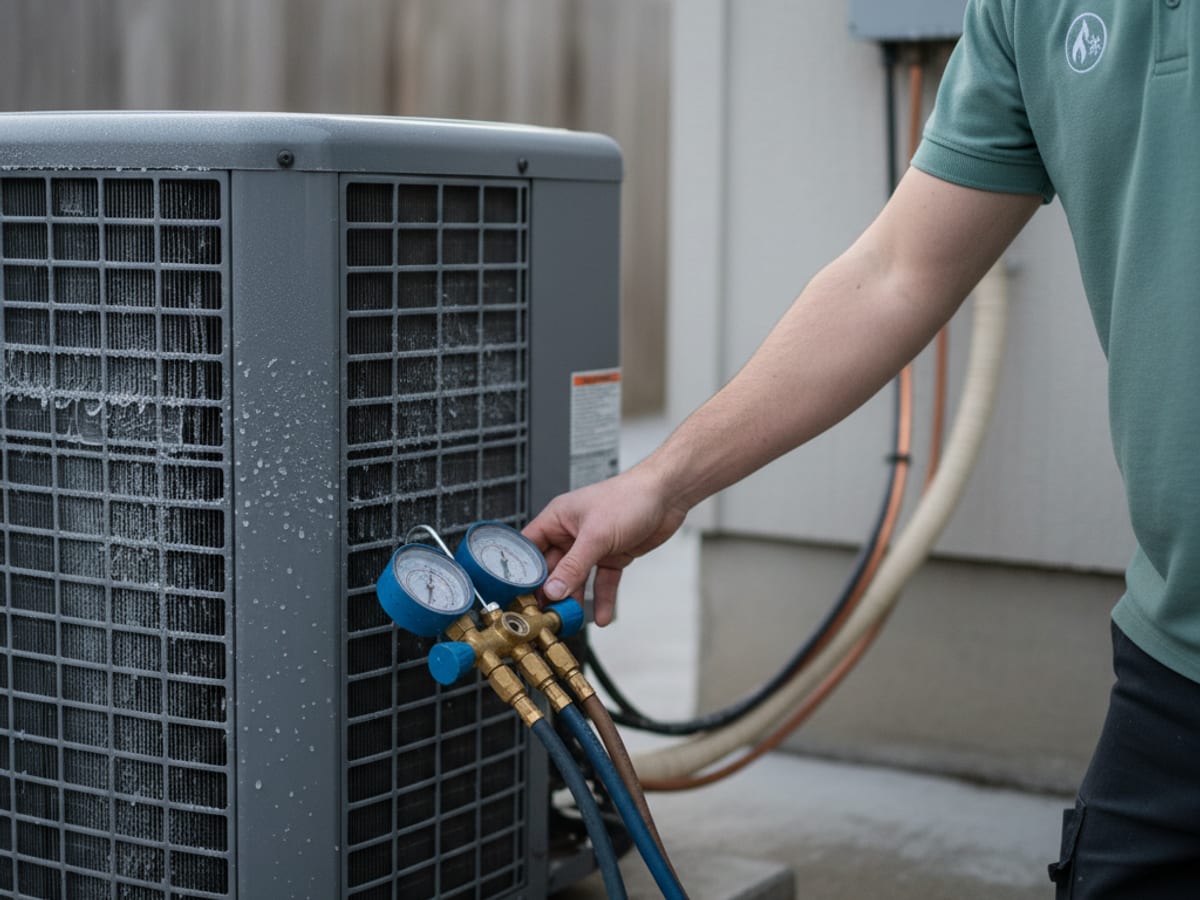
A heat pump is one system that cools and heats. AC plus furnace is two machines. For a 2026 install, do not subtract Section 25C, new TECH single-family reservations, or new HEEHRA single-family applications. Those paths are closed or fully reserved. Mild coastal winters make heat pumps a strong heating fit. Inland peaks still need a real cooling load calculation. Panel capacity can veto a heat pump even when the climate fits.
Checklist
- Get two written scopes: heat pump, and AC plus furnace.
- Ask an electrician about 100-amp panels separately from Climate Pros SD.
- Recheck TECH and IRS 25C the day you bid.
- See California HVAC rebates 2026.
- See heat pump 100 amp panel.
Related: Heat pump service and AC installation.
A gas furnace often delivers hotter supply air in short bursts. A heat pump usually delivers milder air for longer cycles. Comfort is a preference. Neither pattern is a medical claim. If you smell gas or a carbon-monoxide alarm sounds, leave and call 911 or the utility. If the furnace is failing, see furnace warning signs and furnace repair.
How do you decide between a heat pump and AC + furnace?
- Pull a recent SDG&E bill. Check your tier structure and solar offset (if any). Make sure you know your real electric rate after solar, not the rack rate.
- Check your panel capacity. Look at your electrical panel. Is it 200-amp or 100-amp? If 100, budget for possible upgrade.
- Count your cold nights. Coastal and inland homes often need little heat. Mountain addresses should ask about dual-fuel or backup heat. The matched company uses a design temperature, not a round-number hour count.
- Check rebate eligibility on the live program page. The SDG&E rebate article tracks current status. Ask the matched company to name the exact program, reservation step, and whether funds are still open.
- Get two quotes. One heat pump path and one AC plus furnace path. Compare line items and exclusions. Climate Pros SD does not run the load calculation or the install.
Our take
Climate Pros SD is a referral service. We do not install equipment, hold a contractor license for the work, or keep a running count of heat-pump versus furnace jobs. Ask the matched company to price both paths when either is reasonable, and to put ducts, electrical work, and current incentive status in writing.
Frequently asked questions
Is a heat pump better than AC in San Diego?
It depends on the house. Coastal and inland pockets that rarely freeze often do well with a heat pump for both seasons. Mountain freezes, limited electrical service, and cheap gas with no solar can keep a furnace in the comparison. Get two written scopes.
Do heat pumps work in cold weather?
They heat below typical coastal winter nights. Efficiency still drops as outdoor air gets colder. For Julian, Alpine, and Ramona, ask about dual-fuel or backup heat sized to the design temperature.
How much does a heat pump cost in San Diego after rebates?
There is no honest single number. Installed price is quoted after load, ducts, electrical work, access, and equipment. Section 25C does not apply to a 2026 installation. TECH single-family HVAC reservations stopped November 14, 2025. HEEHRA single-family rebates were fully reserved as of February 24, 2026. Recheck those pages and SDG&E before you subtract incentives.
Does a heat pump feel different from a gas furnace?
Often yes. Furnaces usually send hotter air in shorter bursts. Heat pumps usually send milder air for longer cycles.
Will my electrical panel handle a heat pump in an older San Diego home?
A load calculation answers that. Many older homes have 100-amp service. The electrician on the job confirms spare capacity. Do not assume SDG&E will pay for a panel upgrade.
How does a heat pump perform during a Santa Ana heat event?
Capacity falls as outdoor temperature rises, the same physics as conventional AC. Sizing and a sealed envelope matter more than picking AC versus heat pump on a peak-summer afternoon.
Does a heat pump last as long as an AC and furnace?
Outdoor heat-pump and AC condensers often sit in a similar year range. A furnace can outlast the AC it is paired with. Ask for warranty terms on the exact model.
Why does California push heat pumps over gas furnaces?
State and utility programs have funded electrification. That does not mean money is currently open for your project. Read the live TECH, HEEHRA, IRS, and SDG&E pages.
Looking at ductless options instead? Our mini split guide covers when ductless beats central for San Diego homes. For a conversion from evaporative cooling, see swamp cooler vs AC.
Call (442) 777-6440 with address, system type, and whether you want heat-pump and furnace-plus-AC quotes. Climate Pros SD refers the request. The matched company confirms load, panel, permits, and price.
We serve Escondido, Poway, Carlsbad, Chula Vista, El Cajon, and all of San Diego County.
Related service: AC installation.