For climate, contractor vetting, and maintenance, see the complete guide to San Diego HVAC. This post is the install-scope checklist. It is not a county price list.
Climate Pros SD matches homeowners with licensed independent HVAC companies. We do not install systems, set prices, or warrant equipment. Permits and HERS are the matched contractor’s job in the city where the house sits.
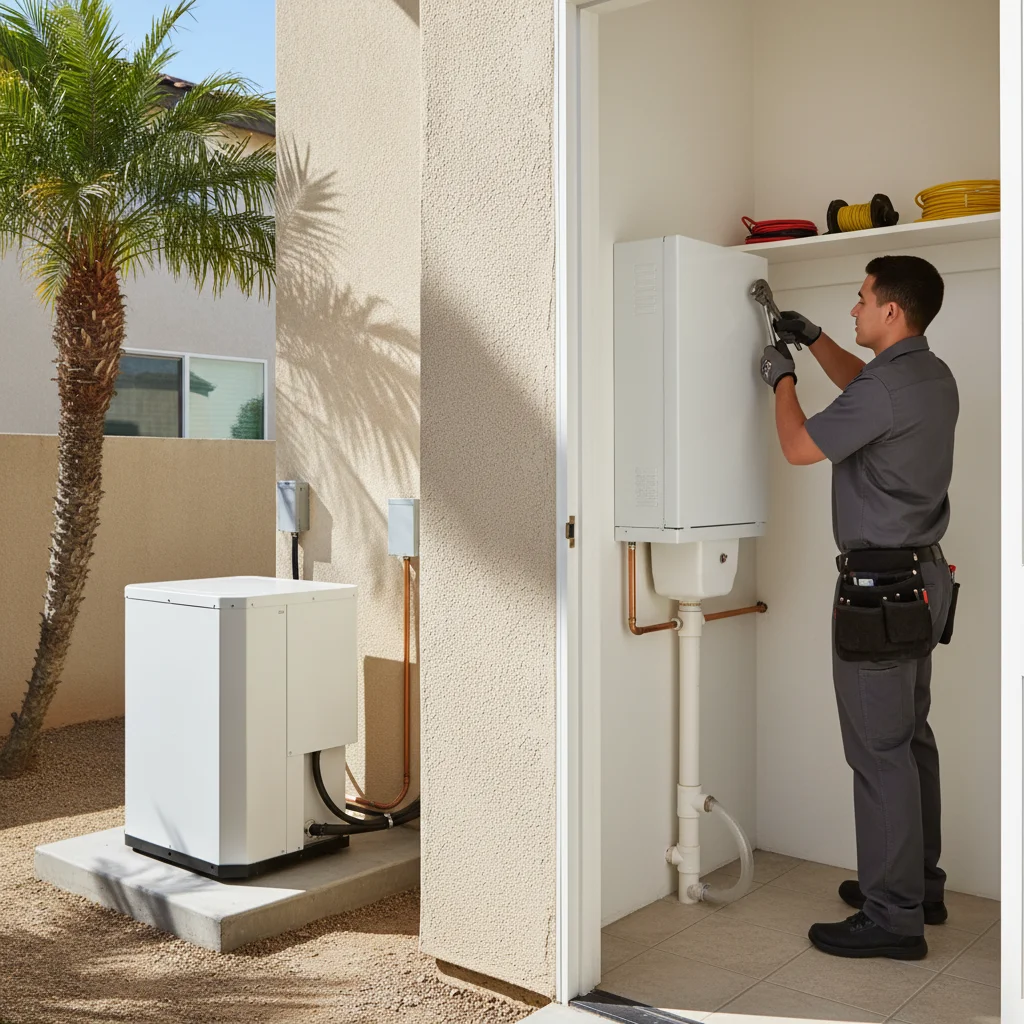
What does a full HVAC system swap include?
A “full replacement” quote should name more than two cabinets.
- Outdoor unit: AC condenser or heat pump.
- Indoor unit: gas furnace or electric air handler, plus blower.
- Evaporator coil: matched to the outdoor unit, or the SEER2 rating on the brochure is fiction.
- Line set: insulated copper between indoor and outdoor.
- Condensate drain and overflow protection.
- Thermostat compatible with staging or heat-pump menus.
- Recovery and disposal of the old refrigerant-bearing equipment.
- Permit, inspection, and HERS when Title 24 requires verification.
This is not an appliance swap. It is a code job.
What should you compare across quotes?
| Line | Why two bids diverge |
|---|---|
| System type | Gas furnace plus AC vs heat pump plus air handler |
| Tonnage and SEER2 / HSPF2 | Sized by Manual J, not a “3-ton for every 2,000 sq ft” rule |
| Duct reuse vs replacement | Leaky or undersized ducts waste a new high-SEER2 unit |
| Electrical | Heat pumps and some high-SEER2 condensers need panel or circuit work |
| Line-set reuse | Length, size, and oil compatibility matter on A2L refrigerants |
| Exclusions | Drywall, asbestos, and unpermitted electrical |
Cooling-only context: new AC cost in San Diego. Installation matching: AC installation.
Standard split (AC plus gas furnace). Common in the county. Reliable when ducts and gas venting are honest. Price moves with tonnage, SEER2, furnace AFUE, and access.
Heat pump plus air handler. One outdoor unit for heat and cool. Better fit for mild winters. See heat pump service. Compare it to furnace plus AC, not to a furnace alone.
Do not subtract “rebates” from either option until the program still accepts that address. Details below.
Why do ductwork and electrical change the job?
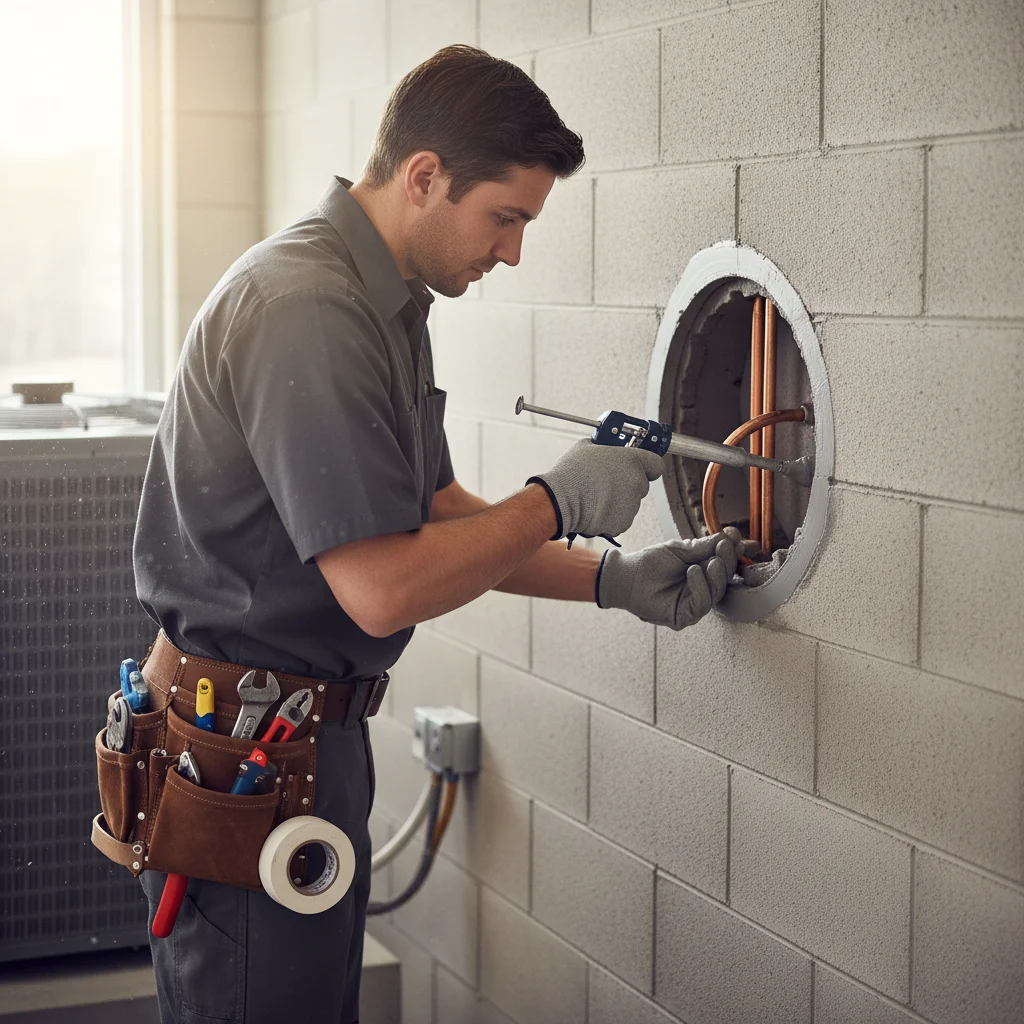
Ducts. ENERGY STAR reports that typical U.S. duct systems lose about 20-30% of the air that moves through them. That is a national typical figure, not a blower-door number for your house. Homes built before 2000 often have undersized or degraded ducts. A new indoor unit pushing into a leaky attic is comfort theater. Full replacement is a large add; partial sealing and repair is a different scope. Get it in writing.
Electrical. Older North Park, La Mesa, and similar stock may not have spare capacity for an all-electric heat pump. A licensed electrical evaluation belongs in the HVAC estimate. Safety, not optional.
Indoor air after a duct job: indoor air quality.
What about permits and Title 24?
Replacing an HVAC system in California needs a building permit from the City of San Diego, Chula Vista, or the county, as applicable. Check the company on the CSLB site.
Title 24 requires HERS verification on many replacements, including duct leakage limits. Anyone who offers to skip the permit is asking you to own the illegal work at sale. The California Energy Commission publishes the standards. Climate Pros SD does not quote permit fees.
Which 2026 incentives can you actually count on?
Build the bid from equipment and labor first. Add an incentive only with a documented reservation or a live utility offer.
- 25C: IRS credit for qualifying property placed in service through December 31, 2025. Not for 2026 placed-in-service dates. Qualifying 2025 heat pumps had an IRS design cap of $2,000 per year.
- TECH: techcleanca.com/incentives stopped new single-family HVAC reservations November 14, 2025.
- HEEHRA single-family: fully reserved February 24, 2026.
- TECH plus HEEHRA: not stacked as of July 15, 2025.
- SDG&E: Golden State retail offerings ended. Confirm sdge.com/rebates.
Manufacturer promotions and dealer financing are the installing company’s, not ours.
Operating cost on a heat pump depends on your rate plan. SDG&E time-of-use plans currently list 4-9 p.m. on-peak. See SDG&E pricing plans. No cents-per-kWh on this page.
When to call
A full-system price needs a look at insulation, windows, ducts, and the panel. Call (442) 777-6440. Climate Pros SD matches you with a licensed independent HVAC company. Ask for load calc, duct plan, electrical, and permit on the written estimate. This brand does not offer a free in-house survey or a same-day install.