When wildfire smoke reaches San Diego, close the windows, set HVAC to recirculate, and raise filtration only as far as the blower can handle. Check AirNow for AQI. Do not assume a 1-inch HEPA pad is safe in a standard furnace slot.
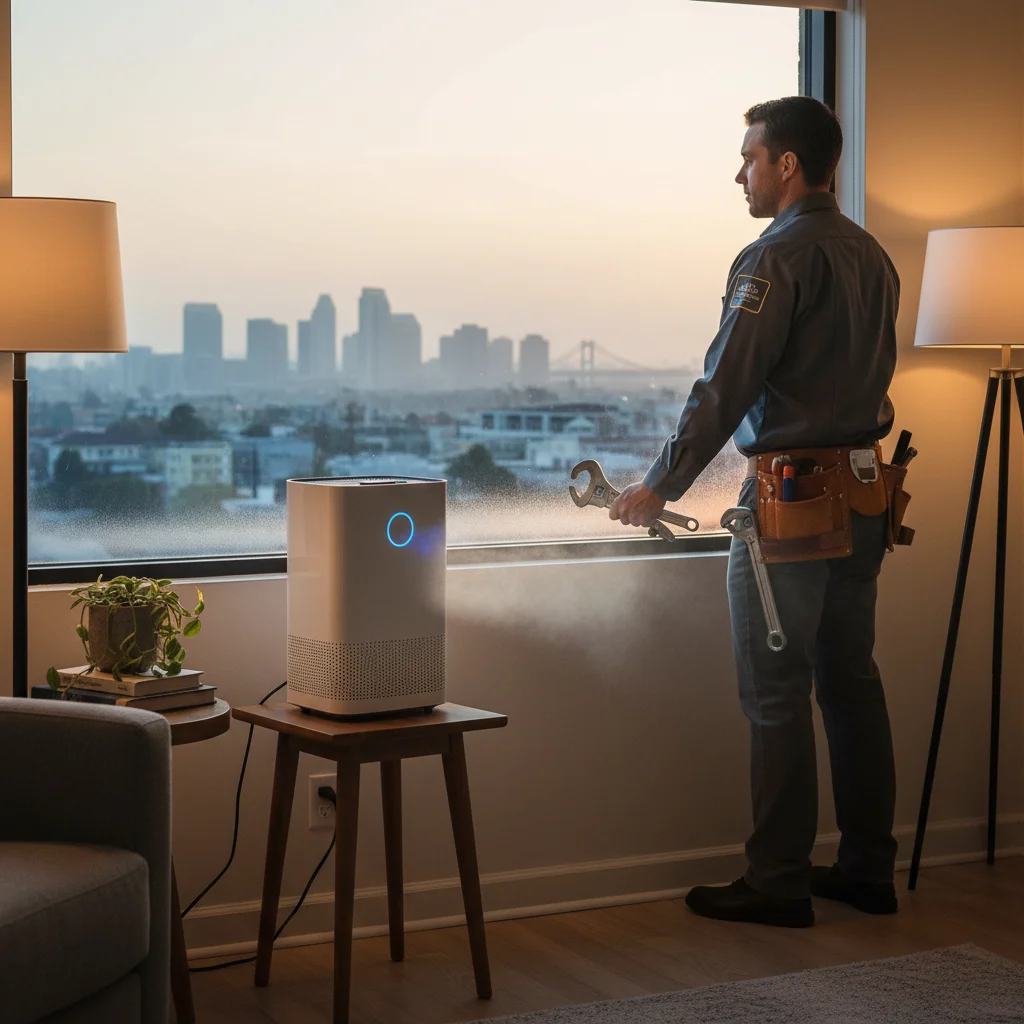
Wildfire smoke: recirculate, then raise filtration only as far as the blower allows
Set the system to recirculate. Do not pull outdoor air during a smoke event. A MERV 13 filter helps if the air handler can take the static pressure. A true HEPA pad in a 1-inch slot can freeze a coil. Santa Ana winds push smoke and dust into San Diego even when the fire is inland. Check airnow.gov for the local AQI rather than the sky color alone.
Checklist
- Close windows and set fan to recirculate.
- Photograph the current filter MERV and depth.
- See Santa Ana smoke HVAC.
- See thicker filters and airflow.
- Use indoor air quality service.
Related: Scripps Ranch purification and HVAC filter MERV guide.
The HVAC fan can move indoor air through a filter. It cannot clean the county. Outdoor air intakes and leaky windows still matter.
What San Diego air actually contains in 2026
Even on a clear day, the air in San Diego County isn’t just pure oxygen. We live in a bustling metropolitan area with a unique coastal environment, and our air reflects that. The air that comes into your home carries a mix of particles, some of which are harmless and others that can impact your health and comfort.
Here’s a quick breakdown of what we’re typically breathing:
- Pollen and Allergens: From the spring blooms in Balboa Park to natural chaparral, San Diego has year-round allergens that can make life miserable for sensitive individuals.
- Dust and Particulates: Standard dust, pet dander, and skin cells are always present. We also get fine dust kicked up by Santa Ana winds and from construction projects.
- Vehicle Emissions: Living near the I-5, 805, 15, or any major thoroughfare means dealing with microscopic particles and gases from vehicle exhaust.
- Salt and Moisture: The marine layer brings in salty, humid air, which can contribute to dampness and create conditions for mold growth if not properly managed.
- VOCs (Volatile Organic Compounds): These are chemicals off-gassed from everyday items in your home, like furniture, paint, cleaning products, and air fresheners.
Then, of course, there’s the seasonal threat that changes everything: wildfire smoke. This isn’t just a visible haze; it’s a complex mixture of fine particulate matter (PM2.5), carbon monoxide, and other harmful pollutants that can easily penetrate homes and pose a significant health risk.
Wildfire smoke season and what your HVAC can do
After the challenging fire seasons of 2024 and 2025, more San Diego homeowners are asking what they can do to protect their homes from smoke. When you seal your windows and doors, your HVAC system takes over, circulating every cubic foot of air in your home multiple times per hour. This can either be a major liability or your greatest asset.
If your system uses a standard, cheap fiberglass filter, it’s doing very little to stop smoke particles. Those basic filters are only designed to protect your HVAC equipment from large dust bunnies and debris, not to protect your lungs from microscopic threats. When you run your system, you could be just circulating the smoky air that has already seeped inside.
To turn your HVAC into an air purification machine, two things need to happen:
- Upgrade your filter. This is the single most important step. You need a filter capable of trapping the tiny PM2.5 particles that make wildfire smoke so dangerous. We’ll cover specific filter types in the next section.
- Run your fan. Switch your thermostat’s fan setting from “AUTO” to “ON.” This runs the fan continuously, even when the AC or furnace isn’t actively cooling or heating. This constant circulation pushes your indoor air through the upgraded filter over and over, progressively cleaning it. It uses a bit more electricity, but it’s a small price to pay for breathable air during a smoke event.
MERV vs HEPA vs standalone purifier, what’s worth it
When you start looking at air filters, you’ll run into a lot of acronyms. Let’s clear up the three most common terms, MERV, HEPA, and purifiers, to help you decide what’s right for your home.
MERV ratings
MERV stands for Minimum Efficiency Reporting Value. It’s a scale from 1 to 20 that rates a filter’s ability to capture airborne particles. The higher the MERV rating, the smaller the particles it can trap.
- MERV 1-4: These are the cheap, disposable fiberglass filters. They stop large dust and lint but do almost nothing for smoke, bacteria, or allergens.
- MERV 8: A good baseline for most homes. It captures pollen, dust mites, and mold spores. It offers a decent upgrade from a basic filter without putting too much strain on your system.
- MERV 13: This is the minimum rating recommended by air quality experts like the EPA for capturing wildfire smoke particles. A MERV 13 filter can trap smoke, smog, and virus-carrying particles. However, these filters are denser and can restrict airflow, which can strain some older or undersized HVAC systems. It’s critical to know if your system can handle it before installing one. Our detailed guide to HVAC filters and MERV ratings breaks this down even further.
HEPA filters
HEPA stands for High-Efficiency Particulate Air. A true HEPA filter is rated to capture 99.97% of particles down to 0.3 microns in size. While that sounds great, you cannot simply put a HEPA filter in a standard residential HVAC system. The material is so dense that it would starve your system of air, leading to reduced performance, frozen coils, and potentially a burned-out fan motor. HEPA filtration at the whole-home level requires specialized equipment.
Standalone air purifiers
These are portable, plug-in units that are highly effective for a single room. Most high-quality purifiers use a true HEPA filter and are an excellent solution for creating a “clean room” in your home, like a bedroom for sleeping during a smoke event. The downside is that they only clean the air in one space, not your entire house. A whole-home solution integrated into your HVAC system offers a more comprehensive approach to better indoor air quality in San Diego.
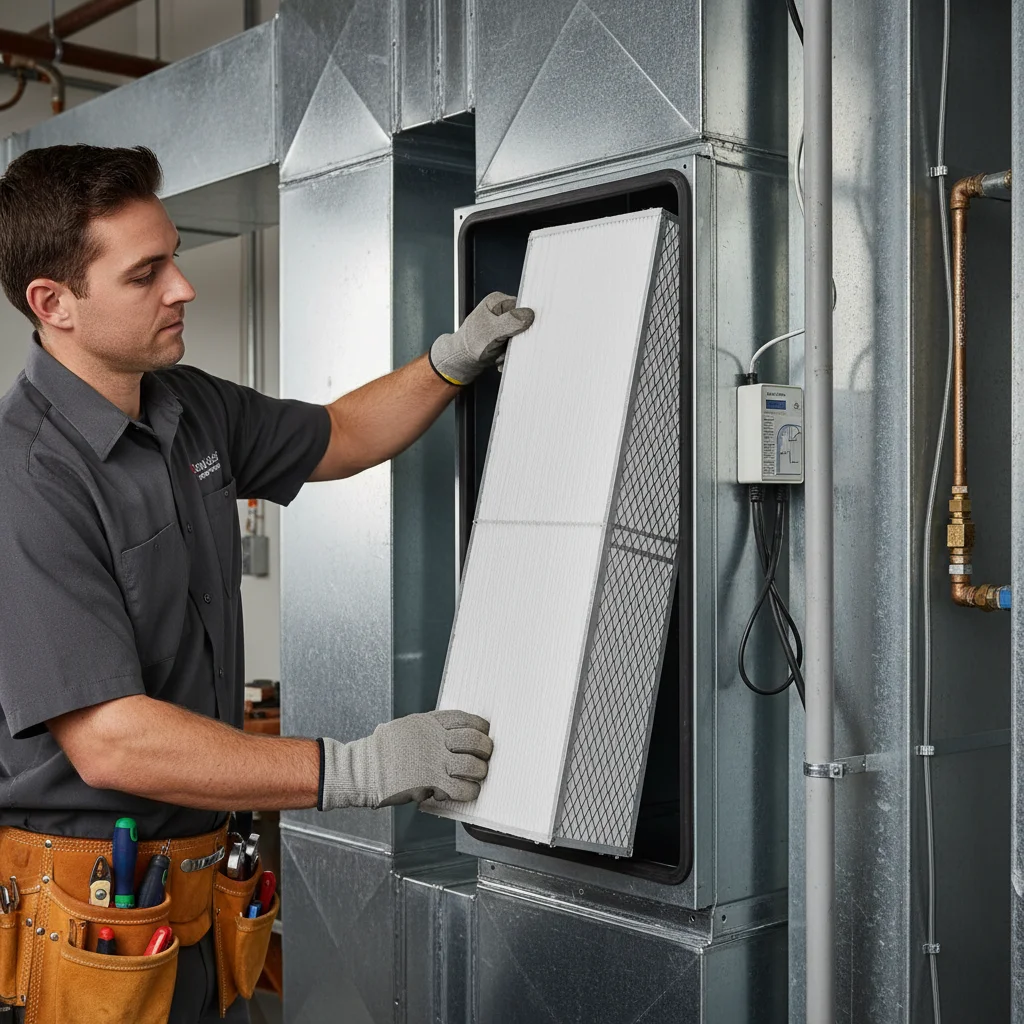
Whole-home solutions: media filters, UV, and fresh-air ventilation
If you’re serious about improving your home’s air quality beyond what a 1-inch filter can do, there are several professional-grade upgrades that integrate directly with your HVAC system. These solutions provide powerful, quiet, and convenient filtration for your entire home.
Whole-home media filters
This is often the best upgrade for most San Diego homes. Instead of a flimsy 1-inch filter, a media filter is a deep-pleated filter that’s typically 4 to 5 inches thick. It’s housed in its own cabinet installed right next to your furnace or air handler.
The massive surface area of the filter media allows it to achieve a high MERV rating (MERV 13 to 16) without the significant airflow restriction of a 1-inch filter with the same rating. This means you get superior smoke and allergen filtration without overworking your HVAC system. As a bonus, these filters only need to be replaced every 6 to 12 months, not every 1-3 months.
UV air purifiers
UV (ultraviolet) light purifiers are installed inside your ductwork or near the indoor coil. They don’t capture particles like a filter does. Instead, they use UV-C light to kill or sterilize biological contaminants like mold spores, bacteria, and viruses as they pass by. A UV purifier is a great addition if you’re concerned about germs or musty smells from the AC, but it does not remove dust, allergens, or smoke. It’s a tool for sterilization, not filtration.
Fresh-air ventilation systems
Modern homes are built to be very airtight for energy efficiency. This is great for your utility bills, but it can also trap indoor pollutants like VOCs and stale air. A Heat Recovery Ventilator (HRV) or Energy Recovery Ventilator (ERV) solves this. These systems continuously exhaust stale indoor air and bring in fresh outdoor air, passing it through a filter on the way in. In the process, they transfer heat and humidity between the two air streams, so you don’t lose all your conditioned air. An ERV is particularly well-suited for San Diego’s climate, as it helps manage humidity.
When IAQ upgrades pay back and when they don’t
Investing in your home’s air quality is a decision that depends on your family’s health, your home’s location, and your budget.
An IAQ upgrade is almost always worth it if:
- Someone in your home has asthma, allergies, or other respiratory conditions. The health benefits of removing triggers like pollen, dander, and smoke are immediate and significant.
- You live in an area prone to wildfire smoke. If you find yourself hunkering down indoors for days or weeks every year, a whole-home filtration system provides invaluable peace of mind and protection.
- You have pets. A better filter is much more effective at capturing pet dander and associated odors.
- Your home feels dusty all the time. Upgrading your filtration can dramatically reduce the amount of dust that settles on surfaces, meaning you’ll clean less often.
You might consider a smaller step first if:
- Your budget is limited. Starting with the best 1-inch MERV filter your system can handle and adding a portable HEPA purifier to the master bedroom is a cost-effective strategy.
- No one in your home has health sensitivities. If your family is generally healthy and you aren’t in a high-pollen or high-smoke area, the added cost may not feel necessary.
Remember that cleaner air also means a cleaner HVAC system. By capturing more contaminants before they enter your equipment and ductwork, high-efficiency filters can improve system performance and longevity. It complements other services like a professional duct cleaning, which removes built-up debris from the airway of your home.
Related service: AC repair. Local coverage: all 67 cities we cover in San Diego County.
When to call us
Choosing the right air filtration strategy isn’t just about buying a filter off the shelf. Installing a filter with too high a MERV rating for your system can cause serious damage. Evaluating and installing whole-home solutions like media filters, UV purifiers, or ventilators requires professional knowledge of airflow and HVAC design.
Climate Pros SD is a referral service. It matches you with a licensed C-20 contractor. That company diagnoses and quotes. Climate Pros SD does not repair or install. Call (442) 777-6440.