A window unit can cool one rental room without changing the whole property. The harder decision is whether the window, lease, electrical setup, and building rules all support that plan.
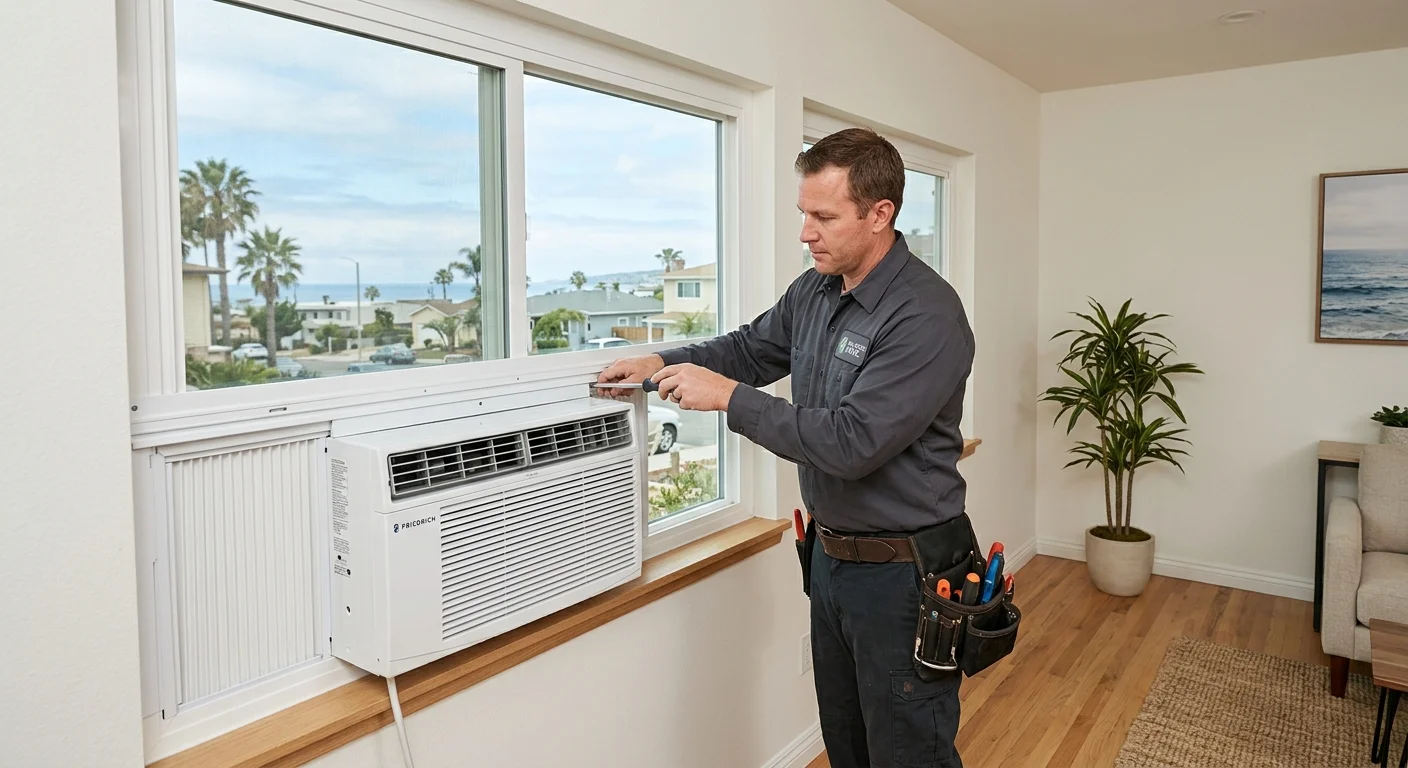
A rental window AC needs the window, the lease, and the circuit
Confirm the sash can support the chassis, the outlet is not a weak shared circuit, and the lease or HOA allows a unit. A portable may be the only option if the window fails any of those. Pacific Beach and North Park older stock often has aluminum sliders that do not seal a window chassis well. Ask before you buy.
Checklist
- Read the lease appliance clause.
- Measure the window opening.
- See window AC repair.
- See portable AC.
- See landlord AC.
Related: AC installation if the owner is open to a permanent system.
Which San Diego rentals can accept a window AC?
A good candidate has an opening that matches the unit’s installation instructions. It also has written approval from whoever controls changes to the property. Confirm both before buying the equipment.
Start with the way the window opens. A vertical sash, horizontal slider, casement window, and awning window present different installation problems. A unit designed for one opening shouldn’t be forced into another configuration. Use the manufacturer’s manual to confirm the approved window type and measurement range.
Measure the clear opening, not the surrounding trim. Note anything that reduces usable space, including screens, handles, tracks, security hardware, or deep exterior ledges. Photograph the window from inside and outside. Those images help the owner or contractor review the proposed placement.
The building itself matters too. An apartment near Pacific Beach may have exterior appearance controls. A City Heights rental may have an older window that doesn’t match newer equipment instructions. A Chula Vista condo may involve both an owner and an HOA. These are examples of questions to investigate, not confirmed rules for every property.
Don’t assume an open window means approval. Ask whether the lease permits a window unit, whether drilling is allowed, and who must approve exterior changes. If the opening isn’t compatible, compare portable AC options for San Diego before modifying the property.
Who should confirm the opening and electrical setup?
The equipment manual should guide the first review. It identifies the approved opening, mounting pieces, and electrical specifications for that exact model. Keep the model number available when speaking with the owner or a contractor.
A qualified pro can measure the opening and compare it with those instructions. The review may include the window frame, sill, sash movement, available mounting points, and exterior clearance. Ask the pro to explain any proposed drilling or added support before work begins.
The approved claims ledger doesn’t confirm one electrical setup for every window AC. Requirements vary by equipment, so don’t rely on a generic online checklist. Check the unit’s label and manual. Then ask the property owner and a qualified professional whether the existing setup fits those directions. If local approval may apply, confirm it with the authority responsible for that address.
A plug-in installation can become a larger project if the opening needs reconstruction or the electrical setup needs changes. At that point, ask which trade professional should handle each part. Climate Pros SD matches customers with licensed, independent local HVAC professionals. Customers contract with and pay the professional directly.
For HVAC work that calls for a licensed contractor, check the individual or company through the California Contractors State License Board. Don’t treat a referral, business card, or verbal statement as license verification.
How does a pro secure and weather-seal the unit?
A careful window AC installation starts with the manufacturer’s parts and directions. The pro checks that the unit, window, and included mounting pieces match. Any missing or substituted component should be discussed before installation continues.
The exact mounting method depends on the model. It may involve a window panel, side panels, brackets, fasteners, or other supports listed by the manufacturer. The manual also controls the required orientation. Don’t apply a generic angle or mounting rule to every unit.
After placement, the installer checks how the window closes around the assembly. Open gaps can admit outdoor air, moisture, dust, or insects. The supplied panels, gaskets, and approved sealing materials should fit the actual opening without blocking parts the manual says must remain clear.
Ask the pro to show you:
- Which pieces support the unit
- Which pieces close gaps
- Whether the window can still move
- Whether any fasteners enter the frame
- How the unit can be removed later
That last point matters in a rental. Removal may expose holes, compressed seals, or marks that need attention. Decide with the owner who will handle removal and restoration.
Weather-sealing also needs local context. A unit near the coast may face different outdoor exposure than one in El Cajon or another inland community. The approved ledger doesn’t provide a universal sealing specification for San Diego County. Follow the equipment manual and ask the installer which materials suit the specific opening.
If an installed unit later rattles, leaks, or stops cooling, review this guide to window AC repair in San Diego before deciding whether it needs service or removal.
What should renters check with the owner or HOA?
Get the decision in writing before the window AC unit installation begins. A text or email can document the exact window, equipment model, mounting plan, and any proposed holes. Keep that approval with your lease records.
Ask the owner these questions:
- Does the lease allow a window air conditioner?
- Is this specific window approved?
- May the installer drill into the frame or wall?
- Who approves exterior brackets or visible panels?
- Who handles removal and any restoration?
- Does an HOA or property manager need to review it?
These questions don’t imply that one answer applies across San Diego County. The approved claims ledger contains no verified countywide landlord duty or HOA rule for window units. Check the lease, owner’s written instructions, HOA documents, and the authority governing the property.
Jurisdiction matters as well. The City of San Diego publishes broad requirements for mechanical work through its mechanical permit information. However, the ledger doesn’t confirm how the city classifies every plug-in window unit or mounting situation. Ask Development Services about the exact scope and address.
Properties in Chula Vista, National City, El Cajon, other incorporated cities, or unincorporated San Diego County may be handled by different authorities. The applicable rules weren’t confirmed in the approved ledger. Contact the city or county office responsible for the property instead of applying City of San Diego information everywhere.
An HOA may also control visible exterior changes. Its current rules couldn’t be confirmed for your building. Request the documents directly and identify the person who can approve the proposed installation.
When is a mini split or portable unit the better fit?
A portable unit may fit when the lease or opening rules out a window-mounted cabinet. It still needs an approved way to vent outdoors, usually through a window panel designed for that model. Confirm the manual, window fit, and owner’s permission before choosing it.
Portable equipment can also make sense when you expect to move the unit between approved rooms. Compare the exhaust setup, floor space, drainage instructions, and electrical specifications. Don’t assume “portable” means it works in every room without preparation.
A mini split is a different type of project. It has indoor and outdoor components and can serve a room without occupying the window opening. Because it changes the property, the owner should approve the proposed locations and installation scope. HOA review or local approval may also apply. Confirm those details with the responsible parties.
Start with our guide to mini split installation when a permanent room system is under consideration. For a larger cooling plan, review available AC installation options with the property owner and a licensed local pro.
The right choice depends on how long you’ll occupy the rental, which changes are approved, and whether one room or more needs cooling. A window unit is attractive when the opening and manufacturer’s directions align. A portable unit preserves more of the opening. A mini split may suit an owner planning a lasting property improvement.
When to call us
Call when the window fit is uncertain, the owner requests a contractor’s assessment, or the project expands beyond a basic plug-in setup. Climate Pros SD can connect you with an independent HVAC professional who can review the proposed installation.
Call us at (442) 777-6440 and we will match you with a licensed local pro.