Short answer: heating is required, AC usually is not. California law requires landlords to provide working heat, but no statewide law forces a landlord to install air conditioning. The big exception: if your landlord provided AC, or advertised it as part of the rental, they generally have to keep it working.
That one rule trips up most renters and a lot of small landlords. Here’s the full picture for San Diego, with the law sourced and current as of 2026.
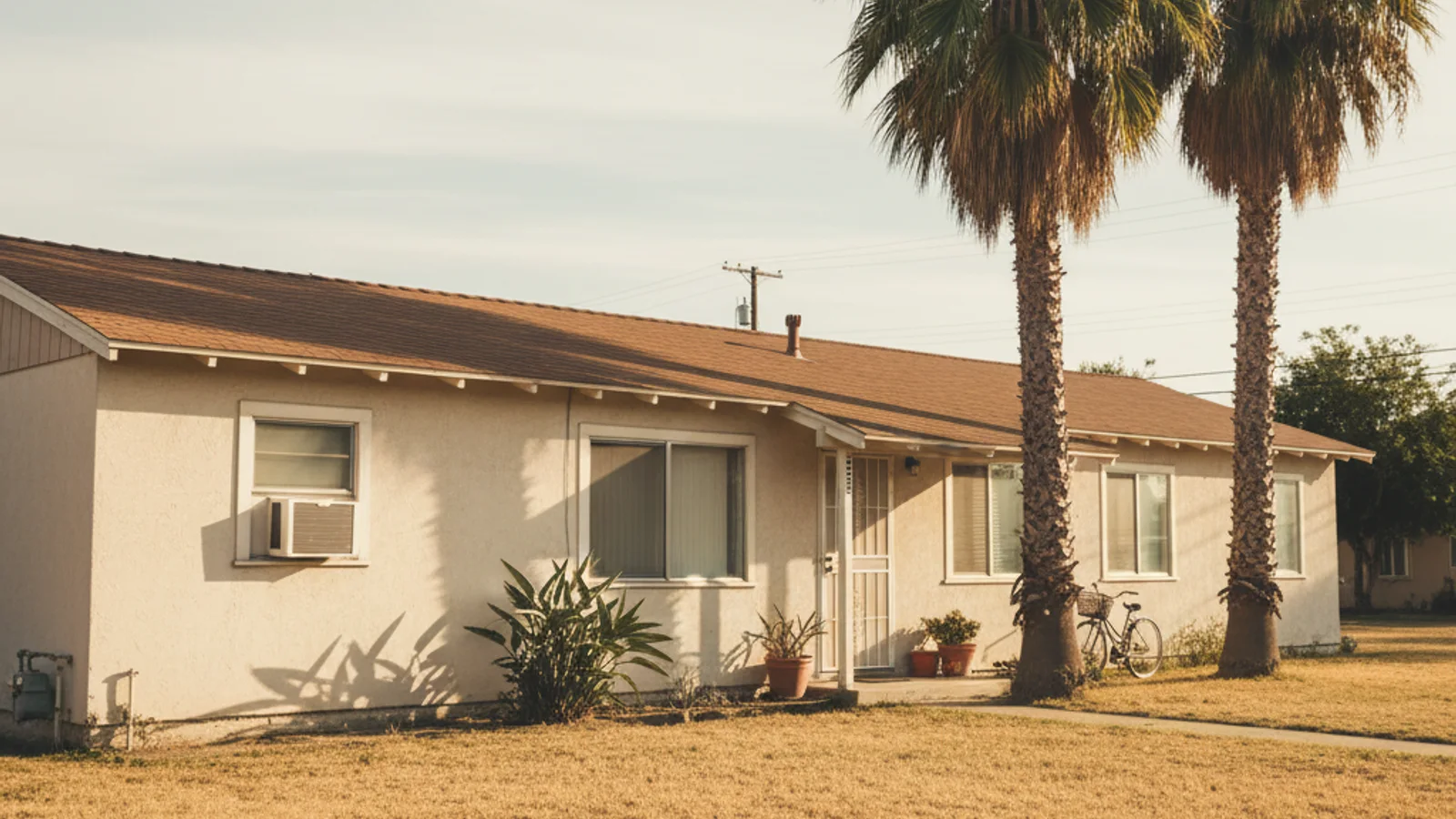
California landlords must provide heat. AC is different
Statewide habitability requires working heat. It does not require installing AC. If the landlord provided AC or advertised it, they generally must keep that equipment working. San Diego rentals without AC are common near the coast. Inland tenants still have no statewide AC mandate. Local ordinances and the lease control advertised amenities.
Checklist
- Save the listing that promised AC.
- Write repair dates and tenant notices.
- See rental HVAC maintenance.
- See window AC in rentals.
- Use AC repair for a licensed diagnosis, not a legal opinion.
Related: This page is not legal advice. Confirm current Civil Code and local rules with a qualified attorney or housing agency.
The fast answer
| Question | Answer |
|---|---|
| Is heating required in a California rental? | Yes |
| Is AC required by California law? | No, not statewide |
| If AC came with the unit, must the landlord fix it? | Yes, generally |
| Is there a maximum-temperature law for rentals? | Not yet (a future standard is coming) |
| Who pays to fix AC that was provided? | The landlord, for normal wear and tear |
What California law actually requires
California rentals carry an “implied warranty of habitability.” That means every rental has to meet basic livability standards, whether or not the lease says so. Landlords can’t waive it.
California Civil Code 1941.1 lists what makes a unit livable. It includes working plumbing, hot and cold running water, weatherproofing, safe wiring, and heating facilities kept in good repair. Heating is on the list. Air conditioning is not.
So a unit with no AC at all still meets the legal standard, as long as the heat works and everything else is sound. A landlord in San Diego is not required to add cooling just because summer gets warm.
Heating itself has a real benchmark. California building standards generally require heat capable of keeping rooms at roughly 68 to 70 degrees. A broken furnace is a habitability problem. A missing AC, on its own, is not.
The exception that matters: AC the landlord provided
Here’s where it flips. If your rental came with AC, or the listing advertised “central air” or “AC included,” that AC becomes an amenity the landlord has to maintain.
Once it’s part of the deal, a broken unit is the landlord’s problem to fix, the same as a provided refrigerator or dishwasher. California tenant-rights guidance is consistent on this: when AC is included in the unit or named in the lease, normal wear-and-tear repairs fall on the landlord, not the tenant. See this plain-English breakdown from a California eviction attorney.
The logic is simple. The landlord set the expectation. If the AC was working at move-in and quits later, the tenant is owed a working unit, unless the tenant broke it.
For renters: what to do when your provided AC breaks
Start by checking your lease and your move-in condition. If AC was provided or advertised, you’re in good shape to ask for a repair.
Put the request in writing. Text or email creates a record. Note the date it broke and ask for a timeline.
Give the landlord reasonable time. California treats 30 days as a general yardstick for repairs, but extreme heat shortens that. In a real heat wave, a reasonable landlord moves in a day or two, not weeks.
If they ignore you, two remedies exist under California law. You can “repair and deduct,” meaning you pay for the fix and subtract it from rent. That’s capped at one month’s rent and limited to twice per year. Or you can pursue rent withholding when the problem is serious enough to affect habitability. Nolo’s California guide walks through both, including the steps you have to follow first. Don’t skip the written-notice step. Self-help repairs without proper notice can backfire.
If you rent in a high-rental area like Chula Vista or El Cajon, inland heat makes a dead AC miserable fast. The faster you document and report it, the faster you get a fix.
For landlords: what you’re actually on the hook for
If you don’t provide AC, you generally don’t have to add it. Your required job is heat that works, plus the rest of the habitability list. Stay current on that and you’re covered on the cooling question.
If you do provide AC, you own the upkeep. A unit you advertised or installed has to keep working through normal use. Budget for it like any other provided appliance.
One 2026 change to know. AB 628 took effect January 1, 2026, and added a working stove and refrigerator to the habitability list under Civil Code 1941.1. AB 628 does not add air conditioning. Cooling is still outside the mandate. The change matters because it shows the trend: California keeps expanding what counts as a livable rental, and the rules tighten over time.
The smart move is preventive. Service provided AC once a year and you avoid the mid-July emergency call, the angry tenant, and the repair-and-deduct surprise on your rent ledger. Routine AC maintenance is cheaper than an emergency AC repair during a heat wave, when demand spikes and so do prices.
If you manage rentals across San Diego County, vetted local pros handle rental-property AC repair and maintenance, quoted before any work starts, so you can approve a fix without guessing at the cost.
Is there a maximum-temperature law? Not yet
California has no statewide maximum-temperature rule for rentals as of 2026. There’s a required minimum for heat. There is no required ceiling for cooling.
That’s changing, slowly. SB 655 was signed into law in October 2025. It declares it state policy that homes should be able to reach and hold a “safe maximum indoor temperature.” It does not require anyone to install AC right now. Instead, it directs state agencies to factor that policy into future rules, with regulation work beginning January 1, 2027.
So a real cooling standard may arrive, but it isn’t here yet, and SB 655 by itself doesn’t force a landlord to add AC today. For a neutral summary, see the Building Decarbonization Coalition’s overview.
Local San Diego notes
San Diego County hasn’t added its own AC mandate on top of state law. The state rules above apply countywide, from the coast to East County.
What changes by neighborhood is the stakes. Coastal areas stay mild, so a missing AC is rarely an emergency. Inland and East County, places like El Cajon, Santee, and Escondido, run far hotter in summer. There, a provided AC that fails can make a unit genuinely hard to live in, which raises the habitability question faster.
Heat-pump systems blur the old line too. A heat pump is your heater and your AC in one box. If a landlord provides a heat pump, the heating function is required by law, and the unit has to be maintained as the heat source regardless of the cooling debate.
General information, not legal advice
This article explains California rules in plain English. It is general information, not legal advice. Lease terms, local ordinances, and your specific situation can change the outcome. For a binding answer, talk to a tenant-rights organization or a landlord-tenant attorney.
FAQs
Is AC required in California rentals?
No. California law requires working heat, not air conditioning. A rental with no AC still meets the legal habitability standard, as long as the heating and other basics work.
Does my landlord have to fix a broken AC they provided?
Generally yes. If AC came with the unit or was advertised as included, it’s an amenity the landlord has to maintain. Normal wear-and-tear repairs are the landlord’s responsibility, not yours.
Is there a maximum temperature law for rentals in California?
Not as of 2026. There’s a required minimum for heat but no required ceiling for cooling. SB 655, signed in 2025, sets state policy toward a future safe-maximum-temperature standard, with agency rulemaking starting in 2027. It does not require AC now.
Who pays for AC repair in a rental?
If the landlord provided the AC, the landlord pays for normal-wear repairs. If the tenant installed their own window unit, the tenant owns it. If the tenant damaged a provided unit through misuse, the tenant can be charged for that repair.
What can I do if my landlord won’t fix the AC?
Put the request in writing, give reasonable time, then use a legal remedy. California allows “repair and deduct,” capped at one month’s rent and twice a year, or rent withholding for serious habitability problems. Follow the notice steps first, and consider tenant-rights help before acting.
Related service: AC installation.
When to call us
Renters: if your provided AC quit and you’re waiting on a fix, forward this to your landlord so they know where it stands. Landlords: we connect you with vetted local pros for rental-property AC repair and yearly AC maintenance, quoted before any work starts. Call (442) 777-6440 for a fast quote.