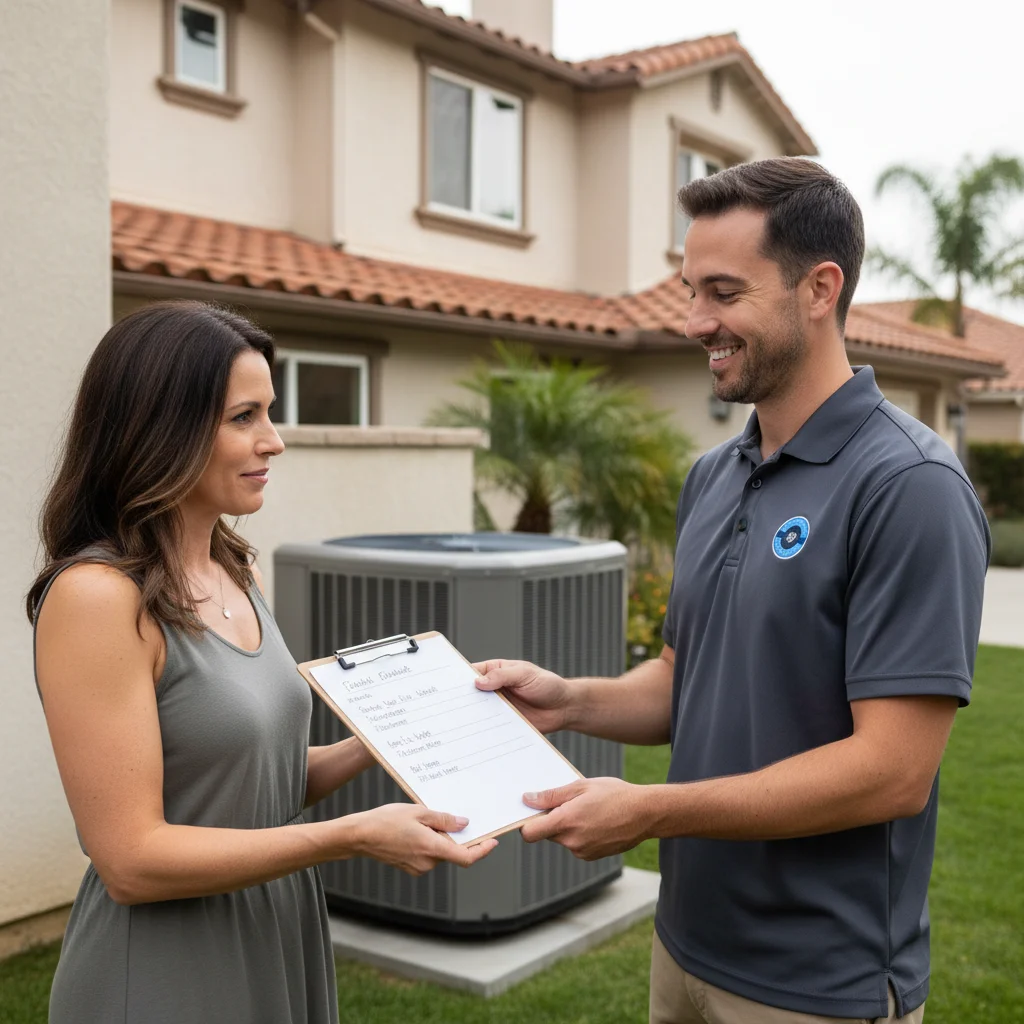
Your heat pump in Coronado, Solana Beach, Encinitas, or any coastal San Diego neighborhood is under constant attack. Salt spray from the ocean is corroding your system’s aluminum fins, copper lines, and electrical connections right now. Heat pumps are more vulnerable to salt-air damage than AC units because they run year-round, and most heat pump maintenance schedules miss coastal-specific checks until a breakdown costs $2,500 or more.
Heat pump maintenance for coastal San Diego is a different animal than inland service. You need more frequent coil cleaning, corrosion monitoring on all metal components, and protective treatments that inland technicians don’t recommend. This heat pump maintenance guide walks you through what your coastal system actually needs, when to schedule service, and exactly what to tell a contractor so they understand the coastal threat and don’t just run generic winter checks.
Why coastal San Diego heat pump maintenance is its own category
Heat pumps in coastal areas face two simultaneous attacks. The outdoor unit sits exposed to salt spray, which corrodes aluminum fins and copper lines. The reversing valve, the electrical contactor, and the compressor terminals all corrode when salt settles on them. At the same time, coastal humidity (60-75% year-round on the beach, even in San Diego’s “dry” season) means your heat pump service unit’s evaporator coil in the indoor unit grows mold and algae faster than inland units.
Salt-air corrosion isn’t just rust. When salt from ocean spray lands on your outdoor condenser, a chemical reaction begins. Aluminum oxidizes. Copper develops pinhole leaks. Electrical connections lose conductivity. The salt layer on your coils also blocks airflow, forcing your compressor to work 18-25% harder to move heat. A Coronado or Pacific Beach heat pump deteriorates in 4-6 months without coastal-specific care. An inland Escondido or Santee unit might run fine for 12-15 months on seasonal maintenance alone.
Heat pumps are worse off than AC units in coastal climates because they run in heating mode during winter. Your outdoor unit runs even when it’s cold and damp. That’s when salt spray is heaviest, and when corrosion accelerates because moisture sits on metal instead of evaporating quickly.
How often to schedule heat pump maintenance on the coast
Inland San Diego: twice yearly (spring and fall).
Coastal San Diego (Coronado, Imperial Beach, Ocean Beach, Pacific Beach, Mission Beach, La Jolla, Solana Beach, Encinitas, Cardiff, Leucadia, Oceanside, Carlsbad): five times yearly.
March: spring coil cleaning after winter salt buildup. June: mid-season salt inspection. August: pre-school-year check. November: pre-heating-season deep service. January: winter salt assessment.
Five visits sounds expensive at $180-$280 each, but a single pinhole leak in your copper lines costs $1,400-$2,000 to repair. A corroded compressor terminal that causes a motor failure costs $3,000-$4,500. One corroded reversing valve: $1,800-$2,600. Five maintenance visits a year prevent those bills.
For homes directly on the coast (Coronado beachfront, Ocean Beach oceanfront, South Bay beachfront), add one extra thorough cleaning in June when marine layer is thickest and salt spray peaks.
What heat pump maintenance actually includes in coastal areas
A standard inland tune-up checks refrigerant charge, tests electrical connections, and cleans the indoor coil. Coastal heat pump maintenance does all that, plus four coastal-specific checks that inland techs skip.
Outdoor coil cleaning and salt assessment. The tech rinses your outdoor coil with fresh water and visually inspects aluminum fins for white oxidation, pitting, or chalking. Any corrosion gets treated with a marine-grade coil cleaner that stops further oxidation. This adds 25-35 minutes to a standard tune-up and costs $130-$190 beyond a routine maintenance call.
Copper refrigerant line inspection for pinhole leaks. The tech inspects all exposed copper lines for discoloration, green patina (the early warning sign of corrosion), or seeping refrigerant. If a pinhole is suspected, UV dye is added so the leak shows up under ultraviolet light. Catching a pinhole before it becomes a full leak saves you $1,600+. Most contractors include basic visual inspection, but the dye test costs $90-$140 extra.
Reversing valve testing. Coastal heat pumps fail at the reversing valve because salt corrodes the solenoid and valve seat. The tech tests the valve for smooth operation in both heating and cooling modes. If resistance is detected, the valve gets replaced before it fails completely during winter. This test usually costs $60-$100 and takes 20-30 minutes.
Electrical terminal corrosion check. All terminals, contactors, and wiring connections on the outdoor unit are visually inspected and tested for resistance. Corroded terminals get cleaned with electrical contact cleaner. If a terminal is too far gone, it gets replaced ($250-$450). This prevents the compressor from struggling to start or tripping your breaker during peak cooling or heating.
Indoor evaporator coil protection. The indoor coil gets cleaned with algaecide, not just standard coil cleaner. Coastal humidity means algae and mold grow faster. Algaecide prevents mold from clogging the coil and reduces odors when the system switches between heating and cooling modes.
Optional corrosion protection coating. Some contractors offer a clear, salt-resistant coating for outdoor coils and aluminum components. It slows corrosion by 50-60% and lasts about 12 months. Costs $160-$280 per application. If you live directly on the coast, this is worth doing annually.
Common failures unique to coastal San Diego heat pumps
Inland systems fail from wear. Coastal systems fail from corrosion, even when they’re new.
Pinhole leaks in the suction line are the most common coastal failure. The suction line is the larger copper pipe carrying cold refrigerant back to the compressor. Salt water corrodes it from the outside. A pinhole develops silently. Your system still runs and cools, but refrigerant slowly escapes. By the time you notice reduced cooling or heating, the leak has been running for 2-4 months. You’ll lose 15-25 percent of refrigerant, your compressor will overheat, and your entire system will need a rebuild.
Reversing valve failure is the second most common coastal problem. The valve switches your heat pump between heating and cooling modes. Salt corrosion causes the solenoid to stick. During winter, the valve gets stuck in cooling mode, and your heat pump blows cold air instead of heat. You won’t know until a cold snap hits and your house drops to 62 degrees at night.
Contactor corrosion is the third. The outdoor contactor is an electrical relay that powers the compressor. Salt corrosion makes the contacts stick or burn. Your system clicks on but the compressor doesn’t start. Or it starts, then trips your breaker after 30 seconds. A corroded contactor usually costs $300-$500 to replace, but if it burns out the compressor starter, you’re looking at a $3,000-$4,500 compressor replacement.
All three failures are preventable with coastal-specific maintenance. The key is catching corrosion early, before it becomes a system failure. If your heat pump is already showing signs of corrosion or reduced efficiency, get an emergency HVAC service or schedule a heat pump service and installation visit. Regular HVAC maintenance and coastal-specific AC tune-ups are your best defense against expensive repairs.
Frequently asked questions
How much does heat pump maintenance cost for coastal San Diego homes?
Five annual heat pump maintenance visits run $900-$1,400 combined. Individual visits cost $180-$280 each. Emergency repairs from missed corrosion run $1,400-$4,500. The math is simple: regular coastal heat pump maintenance is cheaper than emergency repairs by $5,000 or more over the system’s life. If you’re in Coronado, Solana Beach, Encinitas, or other coastal San Diego neighborhoods, your heat pump is at higher risk.
Can I use regular AC maintenance shops for my heat pump?
Not for coastal homes. A contractor trained in standard HVAC maintenance won’t know to check for salt corrosion on the reversing valve or look for the green patina on copper lines that signals pinhole corrosion beginning. Find a contractor who specifically mentions coastal heat pump experience, salt-air protection, or marine-environment HVAC service.
Do I need a corrosion protection coating?
If you live directly on the coast (within 1-2 miles of the water), yes. If you’re 3-5 miles inland, a coating is optional but still worthwhile. If you’re 5+ miles inland but in a coastal area like North County, a coating isn’t necessary. Ask your contractor if your specific address qualifies.
What’s the difference between heat pump maintenance and AC maintenance?
AC maintenance focuses on cooling. Heat pump maintenance covers cooling and heating, plus the reversing valve and heating-mode operation. Heat pumps run more often (they heat and cool) so their compressors work harder and corrode faster in salt-air environments. For a detailed comparison, see our guide on AC maintenance for coastal San Diego homes. A heat pump needs more frequent attention than an AC unit in the same coastal location.
How do I know if my heat pump has a pinhole leak?
Early signs: reduced cooling or heating capacity, higher electric bills without increased use, a slight hissing sound near the outdoor unit, ice on the outdoor coil during winter, or refrigerant smell (smells like a strong chemical or solvent). Any of these warrant an immediate inspection by a technician trained in refrigerant leak detection.
Should I replace my coastal heat pump more often than inland units?
Not necessarily. Proper maintenance extends life significantly. An inland heat pump lasts 12-15 years. A coastal heat pump with proper salt-air maintenance lasts 10-12 years. Without maintenance, a coastal unit fails in 5-7 years. The difference is what you do now.