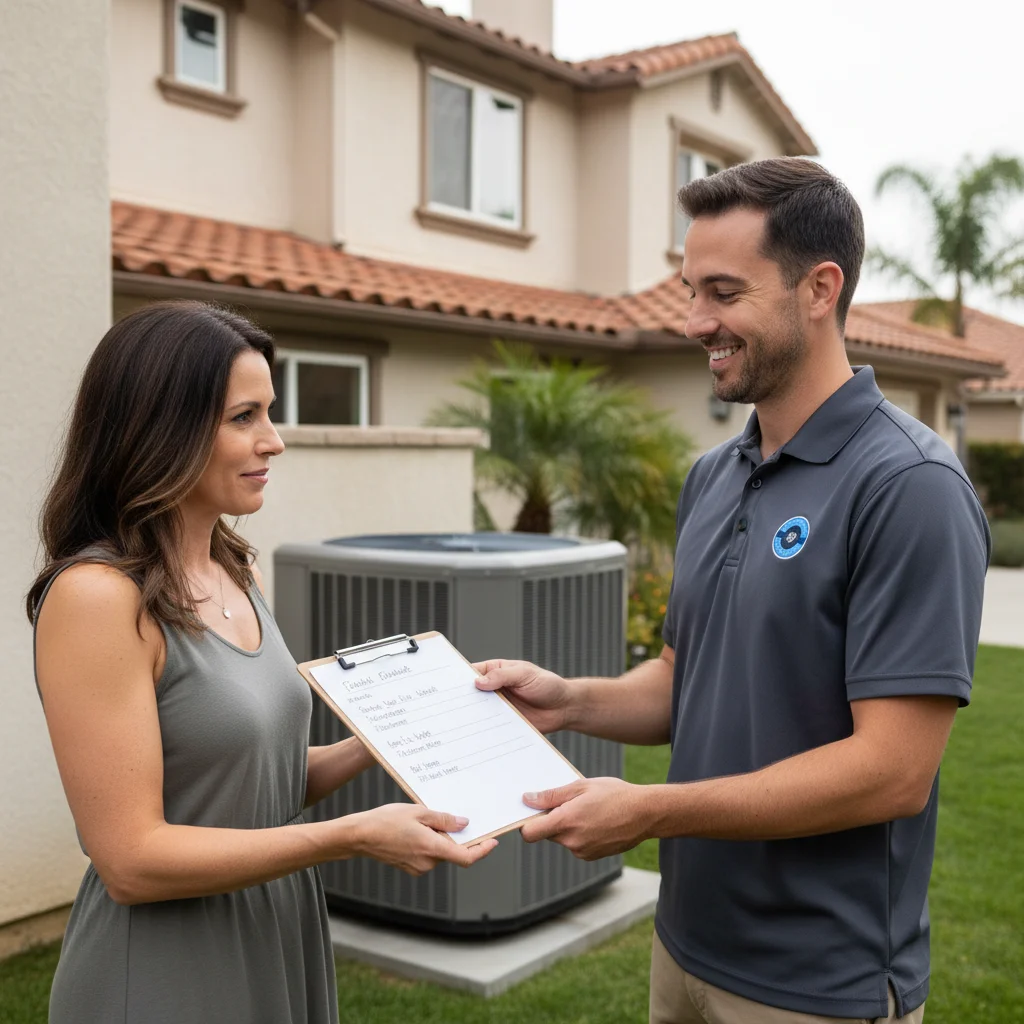
Your AC unit in Coronado, Solana Beach, Encinitas, or any coastal San Diego neighborhood faces a problem inland systems don’t: salt-air corrosion. The ocean air is eating your AC’s aluminum coils and copper lines right now, and generic maintenance schedules miss the damage until it’s expensive to fix.
Coastal AC maintenance is different. You need more frequent coil cleaning, more corrosion monitoring, and protective treatments that inland HVAC techs don’t typically recommend. This guide walks you through what your system actually needs, when to schedule service, and what to tell a contractor so they don’t just run the same checks they’d do on a Vista or Santee unit.
Why coastal San Diego AC maintenance is its own category
Salt-air corrosion isn’t just rust. When salt from the ocean spray lands on your AC’s outdoor condenser, it starts a chemical reaction. Aluminum coils oxidize faster. Copper lines develop pinhole leaks. Electrical connections corrode and lose conductivity. The salt layer on your coils also blocks airflow, making your system work 15-20% harder just to cool the same house.
Inland homes 10 miles from the coast don’t see this. A Lakeside or Ramona AC unit might run fine for 12 months on a seasonal maintenance visit. A Coronado unit starts showing corrosion damage in 3-4 months without coastal-specific care.
The ocean air in San Diego is salty because waves crash and spray salt water into the atmosphere. That salt travels inland for 3-5 miles and settles on anything metal. Your AC’s condenser is outside, exposed, and metallic. It’s a target.
How often to schedule AC maintenance on the coast
Inland San Diego: twice yearly (spring and fall).
Coastal San Diego (Coronado, Imperial Beach, Ocean Beach, Pacific Beach, Mission Beach, La Jolla, Solana Beach, Encinitas, Cardiff, Leucadia, Oceanside, Carlsbad, Laguna Niguel areas): four times yearly.
Spring (March): coil cleaning after winter salt buildup. Fall (September): coil cleaning after summer. Summer (June): mid-season salt inspection. Winter (December): pre-holiday system check before the heating season.
This sounds like a lot, but each visit costs $180-$280. One pinhole leak in your copper line costs $1,200-$1,800 to repair. One corroded electrical terminal that causes a compressor failure costs $2,000-$3,500. Four maintenance visits a year prevent those bills.
For homes directly on the coast (Coronado beachfront, Ocean Beach, South Bay beachfront), add one extra coil cleaning every June. Salt spray is heaviest during morning hours when the marine layer is thickest.
What coastal AC maintenance actually includes
A standard inland tune-up checks refrigerant levels, tests electrical connections, and cleans filters. Coastal maintenance does all that, plus three additional checks.
Coil cleaning and salt assessment. The tech rinses your outdoor coil with fresh water (not just compressed air) and inspects aluminum fins for white oxidation, pitting, or chalking. Any corrosion gets treated with a marine-grade coil cleaner that stops further oxidation. This takes an extra 20-30 minutes versus inland maintenance. It costs $120-$180 on top of a standard tune-up.
Copper-line inspection for pinhole leaks. The tech visually inspects all exposed copper refrigerant lines for discoloration, green patina (the early sign of pinhole corrosion), or actual seeping. If a pinhole is suspected, dye is added to the system so it shows up under UV light. Catching a pinhole before it becomes a full leak saves you $1,500+. This inspection is usually included in maintenance; the dye test costs $80-$120 extra if needed.
Electrical corrosion check on the condenser. All terminals, contactors, and wiring on the outdoor unit are visually inspected and tested for resistance. Corroded terminals get cleaned with an electrical contact cleaner. If a terminal is too far gone, it gets replaced ($200-$400). This prevents the compressor from struggling to start or tripping your breaker during peak cooling.
Condenser fan motor lubrication. The outdoor fan motor needs fresh lubrication in coastal air more often because salt clogs the bearing. Instead of yearly lubrication, coastal units need it every 4-6 months. Costs $40-$60.
Corrosion protection coating (optional but recommended). Some contractors offer a clear, salt-resistant coating for outdoor coils and aluminum components. It’s not a permanent fix, but it slows corrosion by 50-60% and lasts about 12 months. Costs $150-$250 per application. If you live directly on the coast, this is worth doing annually.
Common failures unique to coastal San Diego AC systems
Inland systems fail because of wear. Coastal systems fail because of corrosion, even when they’re new.
Refrigerant leaks from corroded copper lines. You’ll notice reduced cooling, ice on the indoor coil, or higher electric bills. Once a pinhole leak starts, it accelerates. A 2-year-old system can develop a major leak in 3-4 months without treatment. Fix: replace the damaged line section ($1,200-$1,800) and add corrosion inhibitor to the system.
Compressor starting failures. The outdoor contactor corrodes, so the compressor gets weak electrical signal and struggles to start. You hear a clicking sound, or the AC shuts off after 5 minutes, then won’t restart for 30 minutes. Fix: clean or replace the corroded contactor ($250-$400).
Condenser fan motor burnout. Salt clogs the motor bearing, the fan works harder, and the motor overheats. The system shuts down to protect itself, and your AC doesn’t cool. Fix: replace the motor ($600-$1,000) or the whole outdoor unit if the motor is original and more than 10 years old.
Loss of cooling capacity. Salt buildup on the coil blocks airflow. Your system runs all day and only cools to 76 degrees instead of 72. You think the system is failing. A deep coil cleaning restores 100% of cooling in one visit. Cost: $200-$300.
High electric bills without obvious cause. A salted-up coil or corroded electrical connection forces your system to work 20% harder. Your bill climbs $30-$50/month. Maintenance catches this and drops the bill back down immediately.
What to tell your HVAC contractor
If you hire a contractor for coastal maintenance, be specific. Say: “I need coastal maintenance, not standard maintenance. This means coil cleaning with fresh water, copper-line pinhole inspection, electrical corrosion check on all outdoor terminals, and fan motor lubrication. I live [distance] from the coast.”
Many contractors will do standard maintenance and charge standard rates unless you ask. Coastal maintenance takes longer and is worth paying for. A $280 coastal tune-up prevents a $2,000-$3,000 emergency repair.
If a contractor tells you your AC doesn’t need coastal-specific maintenance, find someone else. Salt-air corrosion is real, documented, and faster in coastal neighborhoods than 5 miles inland.
DIY things you can do between professional visits
You can’t test electrical components or open the sealed refrigerant lines yourself, but you can slow corrosion between maintenance visits.
Rinse the outdoor condenser coils with a garden hose monthly (or weekly if you’re directly beachfront). Use gentle pressure, not a pressure washer, and spray from the inside out to push salt off without pushing it into the coil fins. This cuts salt buildup by 60%.
Keep the area around the outdoor unit clear of salt spray. If your condenser is near salt-water pools or exposed ocean views, a windscreen helps. The screen doesn’t reduce cooling (airflow still happens around the screen) but blocks direct salt spray. Costs $60-$120.
Check your filter monthly instead of quarterly. Salt-laden air clogs filters faster. A clogged filter forces your system to work harder and makes corrosion worse.
If you see white, powdery coating (oxidation) on the outdoor coil, that’s the salt corrosion starting. Call for maintenance. Don’t wait for cooling loss or electrical failures. Early corrosion is cheap to treat; advanced corrosion is expensive to fix.
Frequently asked questions
How much does coastal AC maintenance cost in San Diego?
A single coastal tune-up runs $280-$350. Four visits yearly (recommended for homes within 3 miles of the coast) cost $1,100-$1,400 annually. For homes directly on the beach, add coil protection coatings ($150-$250/year) for a total of $1,250-$1,650/year. This sounds expensive until you compare it to one emergency repair ($1,500-$3,500).
Can I use inland maintenance if I live near the coast?
Not if you want to keep your system working. Inland maintenance misses the corrosion happening on your coils and terminals. You’ll end up paying for repairs that coastal maintenance would have prevented. The difference between $300/year prevention and $2,500 emergency repair is worth being specific.
Is a maintenance plan required in coastal San Diego?
No law requires it, but your AC warranty may include free seasonal maintenance if you maintain the system. Check your warranty terms. Many manufacturers void coverage if you don’t maintain the unit. Coastal maintenance ensures you stay compliant with warranty conditions.
Should I replace an old coastal AC unit before it fails?
If your system is 12-15 years old and lives on the coast, start planning a replacement. Corrosion gets exponential after year 10. An emergency failure at peak summer heat costs more than planned replacement. If your system is under 10 years old, aggressive coastal maintenance keeps it running.
Can a new AC system resist salt-air corrosion better?
Modern AC units use slightly more corrosion-resistant materials than systems from 10+ years ago, but salt-air still damages them. New coastal units still need four maintenance visits yearly. The advantage is you’re starting with uncorroded components, so you’re preventing damage rather than fighting existing corrosion.
What’s the difference between coastal and beachfront maintenance?
Homes directly on the beach (within 100 feet of the water) should use the beachfront protocol: six maintenance visits yearly, monthly coil rinsing, and annual protection coatings. Homes 0.5-3 miles from the coast use the coastal protocol (four visits yearly). Homes 3-5 miles inland but with ocean views use coastal maintenance if they’re exposed to persistent salt spray. Homes 5+ miles inland can use standard inland maintenance.