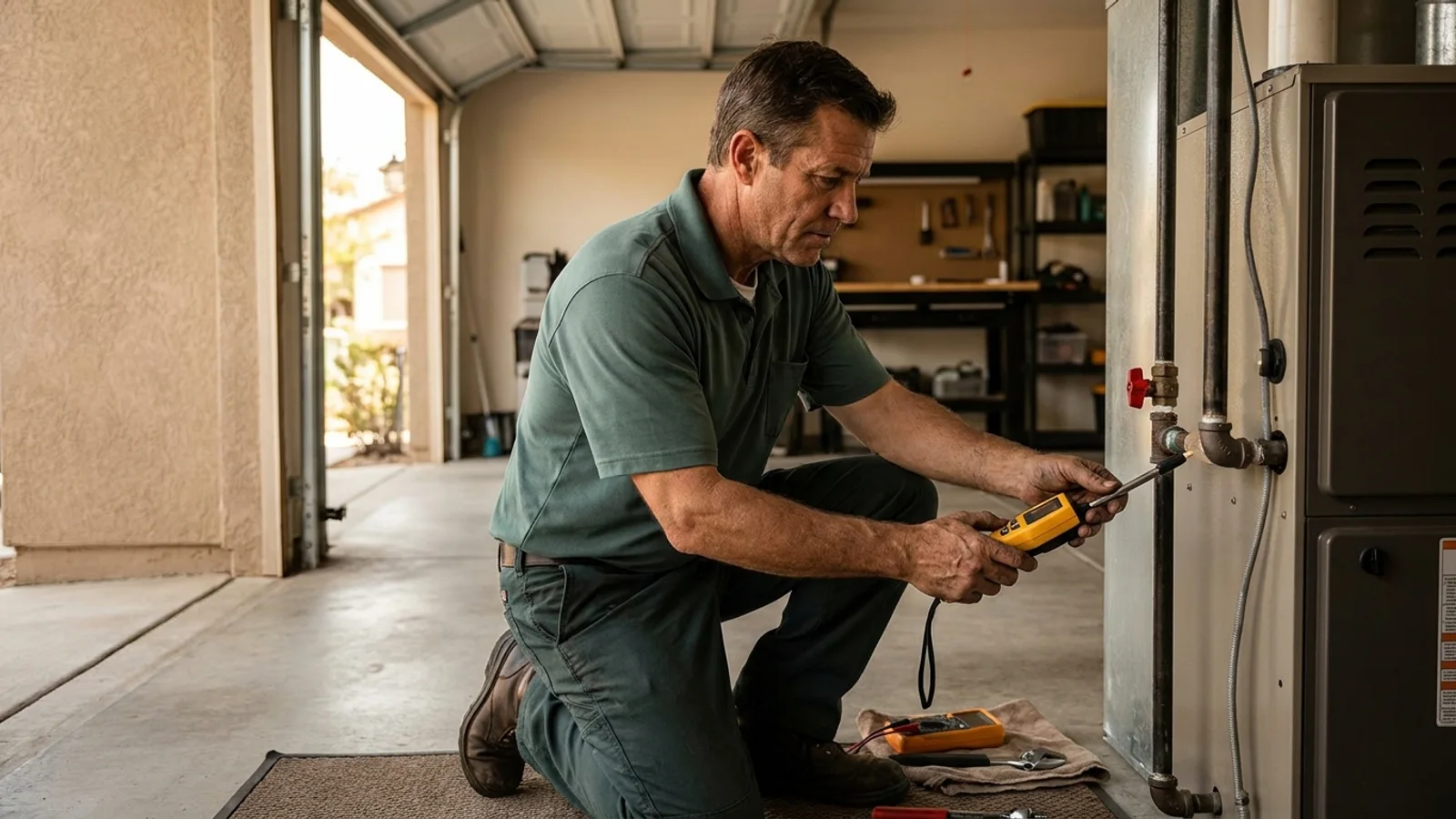
The most common signs of a natural gas leak are a rotten-egg or sulfur smell, a hissing or whistling sound near a gas line or appliance, a pilot light that keeps going out, dead or discolored plants near a buried gas line, and physical symptoms like headaches, dizziness, or nausea that ease once you leave the house. Gas leaks are a fire and explosion risk, not just a health one, so recognizing these signs fast and knowing what to do next matters.
What are the signs and symptoms of a gas leak in your home?
A gas leak usually announces itself through smell first, sound second, and a physical reaction third if it goes unnoticed long enough.
- A rotten-egg or sulfur smell. Natural gas is odorless, so utilities add a chemical called mercaptan specifically so a leak has a smell people notice fast.
- A hissing or whistling sound. Usually a gas line, valve, or appliance connection under pressure, often near the meter, a stove, or a furnace.
- A pilot light that won’t stay lit. A furnace, water heater, or stove pilot that keeps going out can point to a gas supply or valve problem.
- Dead or discolored plants near a gas line. An underground leak starves nearby roots of oxygen, and plants above a buried line die off in a strip.
- Bubbles in standing water or wet soil. Escaping gas pushes through damp ground near a meter or buried line, showing up as small bubbles with no obvious cause.
- A higher gas bill with no change in usage. A slow leak burns gas nobody’s using, and the bill creeps up before anything smells wrong.
- Headache, dizziness, or nausea that fades outdoors. Symptoms that ease when you leave the house and return once you’re back inside are a clear sign something’s wrong with the air.
What does a gas leak smell like?
A gas leak smells like rotten eggs or sulfur, because utility companies add a chemical called mercaptan to natural gas specifically so people can detect a leak by smell. Natural gas on its own has no odor at all, which is exactly why the additive exists. Some people have a reduced sense of smell from age, illness, or a cold, so the smell alone isn’t something to rely on completely. That’s part of why a hissing sound, dying plants near a line, or physical symptoms matter just as much as the smell itself.
What are the physical symptoms of a gas leak?
The physical symptoms of a gas leak include headache, dizziness, nausea, fatigue, and irritated eyes or throat, usually appearing gradually as exposure continues in an unventilated space. These symptoms tend to ease once a person steps outside for fresh air and return if they go back inside before the leak is fixed. Anyone in the home feeling sick at the same time, especially alongside a rotten-egg smell or hissing sound, is a stronger signal than any one symptom alone. A gas leak is also flammable, and a spark from a light switch, phone, or appliance can ignite it, which is why leaving the house matters even before symptoms get serious.
| Sign | What it usually means | What to do |
|---|---|---|
| Rotten-egg smell indoors | Active gas leak from a line or appliance | Leave immediately, don’t flip switches, call from outside |
| Hissing or whistling near meter or appliance | Gas escaping under pressure | Leave immediately, call 911 and SDG&E’s emergency line |
| Pilot light won’t stay lit | Gas supply or valve issue on that appliance | Have a pro check the furnace or water heater once it’s safe |
| Dead plants or grass over a buried line | Underground gas line leak | Stay away from the area, report it to SDG&E |
| Bubbles in wet soil or standing water | Underground leak pushing through the ground | Stay clear, call SDG&E to investigate |
| Headache, dizziness, or nausea that eases outdoors | Exposure to leaking gas | Get outside to fresh air, call for medical help if severe |
| Rising gas bill with no usage change | Slow leak in a line or appliance connection | Schedule a gas appliance inspection |
What should you do if you smell gas in your home?
If you smell gas in your home, leave immediately, don’t touch any switches or use your phone inside, and call for help once you’re outside. This is the single most important sequence in this guide, and it’s worth following exactly.
- Get everyone and pets out of the house right away. Don’t stop to open windows, look for the source, or grab belongings.
- Don’t flip a light switch, use a phone, or light anything inside. Any spark, even a small one, can ignite built-up gas.
- Once you’re outside or at a neighbor’s, call 911, then SDG&E’s 24-hour gas emergency line at 1-800-611-7343.
- Don’t go back inside until the utility confirms it’s safe. Gas concentration isn’t something you can judge by how you feel.
Once SDG&E has made the home safe, the job shifts to finding and fixing whatever caused the leak. The HVAC pros in the Climate Pros SD network handle that follow-up: inspecting and repairing the gas furnace, wall or floor heater, or appliance connection that leaked. An emergency HVAC visit after a confirmed leak focuses on that repair, not on the active emergency itself, which is always a job for 911 and the utility first.
Where do gas leaks usually come from in a San Diego home?
Most residential gas leaks in San Diego trace back to a gas furnace, a wall or floor heater, a gas water heater, or the connections and shutoff valves feeding a stove or dryer. Older equipment and older fittings are the common thread. Inland communities like El Cajon, La Mesa, and Santee have a lot of housing stock from the 1950s through the 1980s still running original or early-replacement gas furnaces and wall heaters, and aging connections are more likely to loosen or corrode over decades of use. Coastal homes run gas heat less often, but plenty of older coastal properties still use a gas furnace or wall heater for winter heat, and those units carry the same risk. HVAC service in El Cajon sees this pattern often, older forced-air systems that haven’t had a combustion or connection check in years. A furnace showing other signs it needs a tune-up, like a rising gas bill or a longer ignition delay, is worth checking at the same visit.
How is a gas leak different from carbon monoxide?
A gas leak and a carbon monoxide problem are two different hazards from the same fuel-burning appliances. A gas leak is natural gas itself escaping before it burns, with a smell (mercaptan) and a fire or explosion risk if it finds a spark. Carbon monoxide is a byproduct of gas that has already burned incompletely, usually from a cracked heat exchanger or blocked flue, and it’s completely colorless and odorless. That’s what causes carbon monoxide in a home in most cases, which is why a home needs both a gas leak response plan and working CO detectors. Symptoms overlap, headache, dizziness, and nausea show up with both, but a gas leak usually comes with a smell or hissing sound that CO never will.
Frequently asked questions
Is a small gas leak dangerous?
Yes. Even a small gas leak carries real risk, because natural gas is flammable at a fairly low concentration in air, and a leak that seems minor now can worsen before anyone notices. There’s no safe threshold to wait out. Any confirmed or suspected leak, no matter how faint the smell, calls for the same leave-and-call routine.
Can a gas leak make you sick?
Yes. Breathing in leaking natural gas can cause headache, dizziness, nausea, fatigue, and irritated eyes or throat, especially in an enclosed space with poor airflow. Symptoms typically ease once you’re outside in fresh air. The bigger immediate danger is usually fire or explosion, which is why leaving the house comes before anything else.
How much does it cost to find a gas leak?
A leak-detection or diagnostic visit from an HVAC pro commonly runs about $100 to $250 in San Diego, as a rough estimate, depending on the appliance and how accessible the connection is. That’s separate from any utility response to an active emergency, which doesn’t carry a homeowner charge. The final cost depends on whether the fix is a simple connection tightening or a bigger repair.
Will my gas furnace shut off on its own if it leaks?
Not reliably. Some furnaces have safety switches that shut off gas flow under specific fault conditions, but a loose fitting or cracked line downstream of those controls can leak without tripping anything. A furnace can run normally while a nearby connection leaks, which is why detection depends on smell, sound, and symptoms rather than the equipment catching it.
Who do I call for a gas leak in San Diego?
For an active or suspected gas leak, call 911 first, then SDG&E’s 24-hour gas emergency line at 1-800-611-7343, both from outside the house. Once the utility has made the home safe, an HVAC pro handles the follow-up repair. The techs in the Climate Pros SD network cover that step across the county, reachable at (442) 777-6440.
If a leak traced back to a furnace, wall heater, or water heater connection, get it inspected and repaired once the utility clears the home, and consider pairing that visit with the fall HVAC checklist for San Diego. Call (442) 777-6440 to connect with a tech who handles gas appliance safety calls.