Blower motor replacement in San Diego runs $300 to $900 for a standard motor, and $1,200 to $1,800 or more for a high-efficiency ECM or variable-speed motor. The national average lands around $560, and most San Diego homeowners fall inside that standard range unless their system uses a variable-speed motor, which is common in newer high-efficiency furnaces and air handlers.
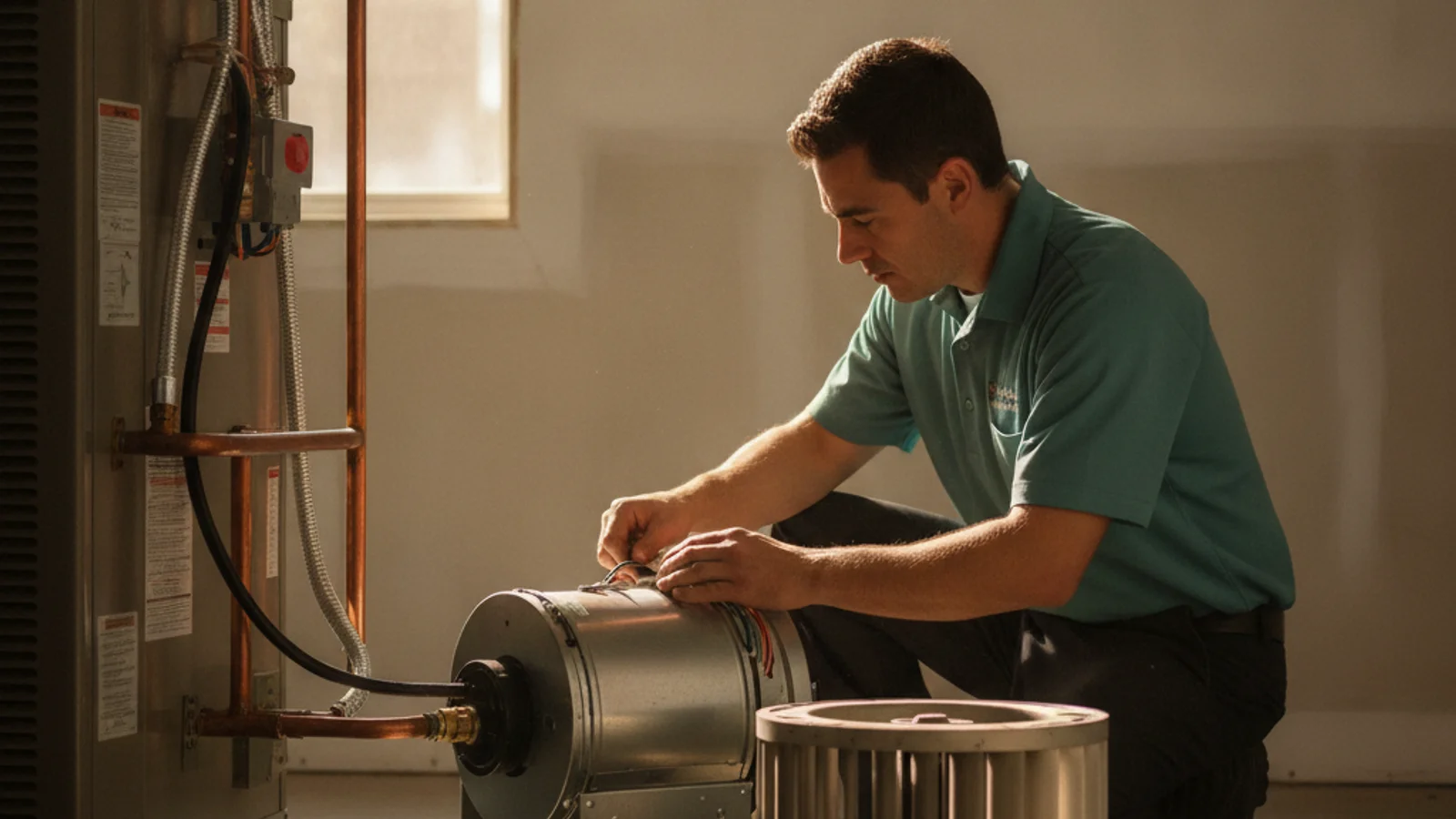
The fast answer
| Motor type | Typical installed cost |
|---|---|
| Standard PSC motor | $300-$900 |
| High-efficiency ECM / variable-speed motor | $1,200-$1,800+ |
| National average (all motor types) | About $560 |
| Labor only (motor already on hand) | 1-3 hours |
The blower motor moves air across both heating and cooling, so when it fails, you lose airflow for the whole system, not just the furnace side. That’s usually what brings homeowners in urgently, especially mid-summer when the AC side stops moving air entirely.
Why the motor type changes the price so much
There are two main motor types in San Diego homes, and the gap between them is the single biggest factor in your quote.
PSC motors (permanent split capacitor) are the older, simpler design. They run at a fixed speed, they’re widely stocked, and they’re inexpensive to source and swap. Most furnaces and air handlers installed before the mid-2010s use this type.
ECM motors (electronically commutated) are the variable-speed motors found in newer high-efficiency systems. They ramp speed up and down automatically, run quieter, and use less electricity over the life of the system. That control comes from a built-in electronic module, and that module is the expensive part, not the motor itself. A failed ECM control board can push the total replacement cost well past $1,000 even though the physical motor looks similar to a PSC unit.
If you’re not sure which type your system uses, your model number tells a technician immediately. It’s worth asking before you get a quote, since the two costs aren’t close.
What’s included in the job
A blower motor replacement covers:
- The new motor, matched to your system’s airflow (CFM) rating and voltage
- Removal of the old motor and blower wheel assembly
- Reinstalling or replacing the blower wheel if it’s worn or unbalanced
- Electrical connections and, on ECM systems, programming the control module to your system’s settings
- A full airflow and amperage test after install to confirm proper operation
Most jobs take 1 to 3 hours. Same-day completion is normal if the motor is in stock, which standard PSC motors usually are locally. Specific ECM modules for less common brands sometimes take a day or two to source.
What pushes the price up
Four factors matter most:
1. Motor type. ECM and variable-speed motors run two to three times the cost of a standard PSC motor, mostly due to the electronic control module.
2. Parts availability. Common brands (Carrier, Trane, Lennox, American Standard) keep both motor types stocked locally. Less common or older proprietary motors can add shipping time and cost.
3. Blower wheel condition. If the blower wheel itself is bent, unbalanced, or caked with dust and debris, replacing it alongside the motor adds $100-$300 but prevents premature failure of the new motor.
4. Access. Motors in tight attic furnaces or hard-to-reach air handlers take longer to pull and reinstall than a motor in an accessible garage or closet unit.
Repair vs replace: is it ever worth just fixing the motor?
Blower motors themselves aren’t usually repaired. Bearings wear out, windings fail, or capacitors that power the motor go bad, and in nearly every case the whole motor gets swapped rather than rebuilt. The real decision homeowners face is whether a blower motor failure signals it’s time to look at the whole system.
Under 10 years old: replace the motor and move on. This is a normal wear-item failure, not a sign of bigger problems.
10 to 15 years old: worth asking your technician whether other components, the coil or compressor especially, are showing early wear while they’re already inside the cabinet.
Past 15 years: a blower motor failure on a system this age is often the first of several failures coming close together. Ask for a full system inspection before committing to just the motor.
Why blower motors fail
Four common causes:
1. Bearing wear. Motors run constantly during San Diego’s long cooling season, especially in inland homes (Escondido, San Marcos, El Cajon) with heavier AC use. Bearings wear out from accumulated runtime.
2. Capacitor failure. On PSC motors, a weak start or run capacitor forces the motor to work harder, shortening its life. This is often caught during routine maintenance before it causes a full failure.
3. Dust and debris buildup. A dirty blower wheel or clogged filter forces the motor to work against restricted airflow, generating extra heat and stress. Regular filter changes prevent most of this.
4. Electrical issues. Power surges or a failing control board on ECM systems can damage the motor’s electronics without any mechanical wear at all.
Transparent diagnostic pricing
Before quoting a blower motor replacement, a technician needs to confirm the motor is actually the failure point and not a symptom of something else, like a failed capacitor or a control board issue that’s cheaper to fix. Our diagnostic fee is a flat, upfront number and it’s credited toward the repair when you move forward. No guessing, no surprise add-ons once the technician is already at your home.
For a broader look at what drives AC repair costs across San Diego, see our AC repair cost guide for 2026. If your system is showing multiple issues at once, our ac-repair services page covers the full range of diagnostics we run before recommending any repair.
FAQs
How much does a blower motor replacement cost in San Diego?
$300-$900 for a standard PSC motor, $1,200-$1,800 or more for a high-efficiency ECM or variable-speed motor. The national average across all motor types runs about $560.
How do I know which motor type I have?
Your system’s model number tells a technician immediately. Furnaces and air handlers from before the mid-2010s usually run PSC motors; most newer high-efficiency systems run ECM.
Can a blower motor be repaired instead of replaced?
Rarely. Bearings, windings, and capacitors that support the motor typically fail in a way that makes full replacement more practical and reliable than a rebuild.
How long does blower motor replacement take?
1 to 3 hours for most residential jobs. Same-day completion is normal when the motor is in stock, which is common for standard PSC motors.
Why did my blower motor fail so early?
Heavy runtime in inland San Diego heat, a weak capacitor that went unnoticed, dust buildup restricting airflow, or an electrical surge are the most common causes. Annual maintenance catches most of these before full failure.
Is a blower motor failure a sign I need a new system?
Not by itself, especially under 10 years old. Past 15 years, it’s worth having the whole system inspected while the technician is already inside the cabinet.
When to call us
If your system stopped moving air, whether it’s the heating side or the AC side, we’ll diagnose whether it’s the motor, a capacitor, or something else before we quote anything. Call (442) 777-6440 and we’ll get airflow back the same day in most cases.