Your AC stops cooling on a 90-degree day in Chula Vista and your first question isn’t “what’s wrong” — it’s “what is this going to cost me.” That’s a reasonable question, and most HVAC websites bury the answer. We’re not going to do that.
Typical AC repair price ranges by problem type
The repair that fits your situation depends on what failed. Here are the most common fixes our techs handle across San Diego County, with real 2026 price ranges.
Capacitor replacement: $150–$350
A bad capacitor is one of the most frequent AC failures in San Diego, especially after the first real heat wave of the season. The part itself is cheap — the cost covers diagnosis, the part, and labor. Most capacitor jobs are done in under an hour.
Contactor replacement: $200–$400
The contactor is an electrical switch that tells your compressor and condenser fan to run. When it burns out, the outdoor unit won’t start at all. Parts and labor combined land in the $200–$400 range for most homes.
Refrigerant leak repair: $400–$1,500
This is where costs spread wide. A small leak in an accessible line set sits at the low end. A leak inside the evaporator coil — which requires coil removal — pushes toward $1,500 or beyond. The refrigerant recharge itself adds cost on top of the repair, particularly if your system uses R-22, which is no longer manufactured and commands premium pricing when recycled stock is available.
Evaporator or condenser coil: $600–$2,000
Coil replacement is labor-intensive. Evaporator coils require pulling the air handler apart; condenser coils mean disassembling the outdoor unit. The job usually takes half a day to a full day.
Compressor replacement: $1,800–$3,500
A compressor failure is the most expensive single-component repair on a standard split system. Parts alone can top $1,200–$2,000 depending on the brand and tonnage. If your system is more than 10 years old and the compressor dies, the repair-vs-replace math gets complicated fast — more on that below.
Fan motor (indoor or outdoor): $300–$650
Fan motors fail from dust buildup, age, or running too hard through San Diego’s dry-heat stretches. Indoor and outdoor motors are priced similarly; the indoor blower motor tends to run slightly higher because access is more involved.
For more detail on why your system might have stopped cooling in the first place, see our AC not cooling checklist.
What drives the bill up: parts, refrigerant, after-hours
The base price of a repair is just the starting point. Several factors can move the final number significantly.
Parts availability. San Diego doesn’t have a single massive wholesale HVAC district. If your system uses a proprietary part from a less-common brand, expect a 1-2 day wait and a higher parts markup. American Standard, Carrier, Lennox, and Trane parts are generally stocked locally. Some budget-brand systems take longer.
Refrigerant type and quantity. R-410A systems are the current standard. R-22 systems (generally units installed before 2010) pay a significant premium for refrigerant because production stopped in 2020 and supply is limited. Even R-410A has seen price pressure as the industry transitions to R-454B and R-32 under newer EPA rules. A full recharge on a 3-ton system can add $150–$400 to any leak repair bill.
After-hours and weekend calls. Most San Diego HVAC companies charge an after-hours premium of $75–$150 on top of standard service fees. Weekend rates vary by company — some flat-rate it, others add a percentage. If you’re calling at 10 p.m. on a Saturday because your AC failed during a heat event, that premium is real. Our emergency HVAC service is available around the clock, and we quote the after-hours fee upfront before we dispatch.
System age and access. An older system often requires more labor time. Screws are rusted, refrigerant lines are stiff, electrical connections need cleaning. A 15-year-old unit might cost 20-30% more to work on than a 5-year-old one, even for the same repair.
Diagnostic fees and what they should include
Most San Diego HVAC companies charge a diagnostic fee of $75–$150 to come out and assess your system. That fee should buy you more than a technician glancing at the unit and reading you a number off a price sheet.
A proper diagnostic means the tech checks electrical components with a multimeter, measures refrigerant pressure, inspects the evaporator coil for ice or dirt, checks the condensate drain, looks at airflow, and reviews the thermostat and electrical disconnect. That typically takes 30–45 minutes.
The diagnostic fee is usually — but not always — applied toward the repair if you proceed. Ask before you book. If a company quotes you a $49 “coupon” diagnostic but then the applied credit disappears when you approve the repair, that’s a red flag.
Also ask whether the diagnostic fee changes if the tech needs to come back. Some companies charge a second trip fee if parts have to be ordered; others don’t. Get clarity on this before you schedule.
Repair-vs-replace cost thresholds
There’s a simple rule of thumb that’s been around the HVAC industry for years: if the repair costs more than 50% of the price of a new system, replacement is usually the smarter move. In San Diego, a new central AC system runs roughly $4,500–$9,000 installed depending on tonnage and brand. That puts the repair threshold somewhere around $2,200–$4,500.
But that rule doesn’t tell the whole story. Age matters more than people realize. A 12-year-old system that needs a $900 coil repair might be worth fixing — it still has 4-6 years of life left if it’s been maintained. The same repair on a 17-year-old unit, where the efficiency is already degraded and the compressor could go next season, is a different calculation.
If you’re in that gray zone, our detailed guide on AC repair vs. replacement walks through the decision with real numbers. The short version: factor in age, efficiency rating, repair history, and what your utility bills have been running. SDG&E rates make inefficient equipment expensive to operate year over year.
California also offers incentives for replacing old systems with heat pumps. If your unit is at the end of its life, it may be worth reviewing the 2026 heat pump rebate options before committing to a major repair.
How to get a fair quote in San Diego County
Getting a fair price starts before you call. Here’s what to do.
Verify the contractor’s license. California requires HVAC contractors to hold a C-20 (warm-air heating and air conditioning) license. You can check any contractor’s license status directly at the CSLB license lookup. An unlicensed tech working on your refrigerant system is also working illegally under EPA Section 608 rules.
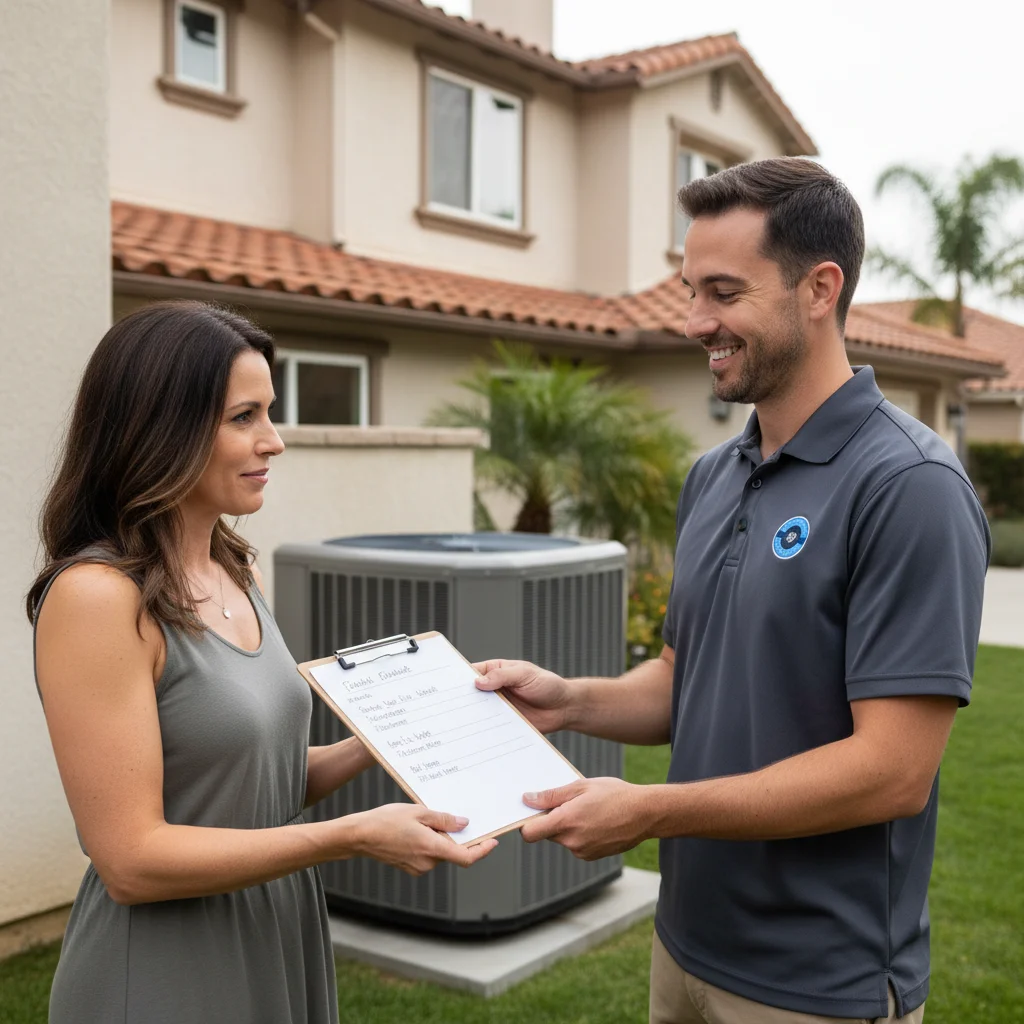
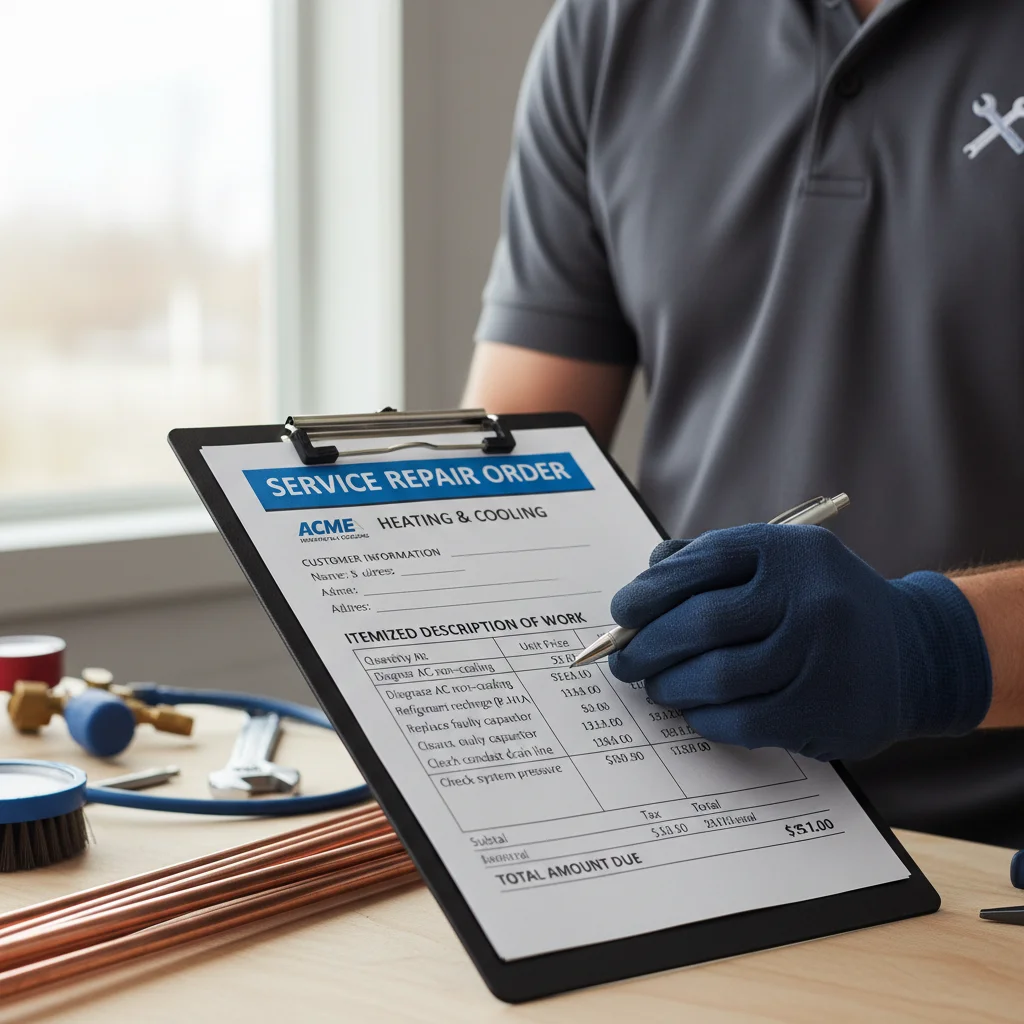
Get the diagnostic in writing before repairs start. A reputable company will hand you a written estimate — itemized by labor and parts — and wait for your approval before touching anything. If a tech pressures you to decide immediately or won’t write it down, that’s a pass.
Ask for itemized pricing, not a lump sum. You’re entitled to know what the part costs separately from labor. That lets you compare quotes apples-to-apples. A $1,200 quote where labor is $900 and the part is $300 is a very different situation than one where labor is $300 and parts are $900.
Get two quotes for anything over $500. Most honest HVAC companies expect this. A second opinion on a compressor replacement or coil job is worth the time. If the first company discourages you from getting another quote, take note.
Ask if the repair comes with a warranty. Parts should carry at least a 1-year manufacturer warranty. Labor warranties vary — 30 days is low, 90 days is standard, 1 year is good. Get it in writing.
For San Diego residents who want to understand the full scope of our AC repair service, we’ve laid it out clearly — what we check, what we guarantee, and how we price.
When to call us
AC problems don’t get better with time, and San Diego’s coastal marine layer doesn’t make them easier to diagnose without the right equipment. If your system is running but not cooling, making unusual sounds, tripping breakers, or has simply stopped entirely, those are all situations that need a licensed HVAC technician — not a wait-and-see approach.
Call us at (858) 925-5546 for a same-day estimate.