The clearest signs your furnace needs a tune-up are weak or reduced airflow, a longer delay before the burners ignite, a gas bill that creeps up with no change in usage, more dust than usual around the vents, a faint burning-dust smell that lingers past the first startup of the season, rattling or whistling sounds when the system runs, and a furnace that hasn’t been serviced in 12 months or more. None of these mean the furnace is failing. They mean it’s time to get it cleaned, inspected, and adjusted before San Diego’s heating season hits.
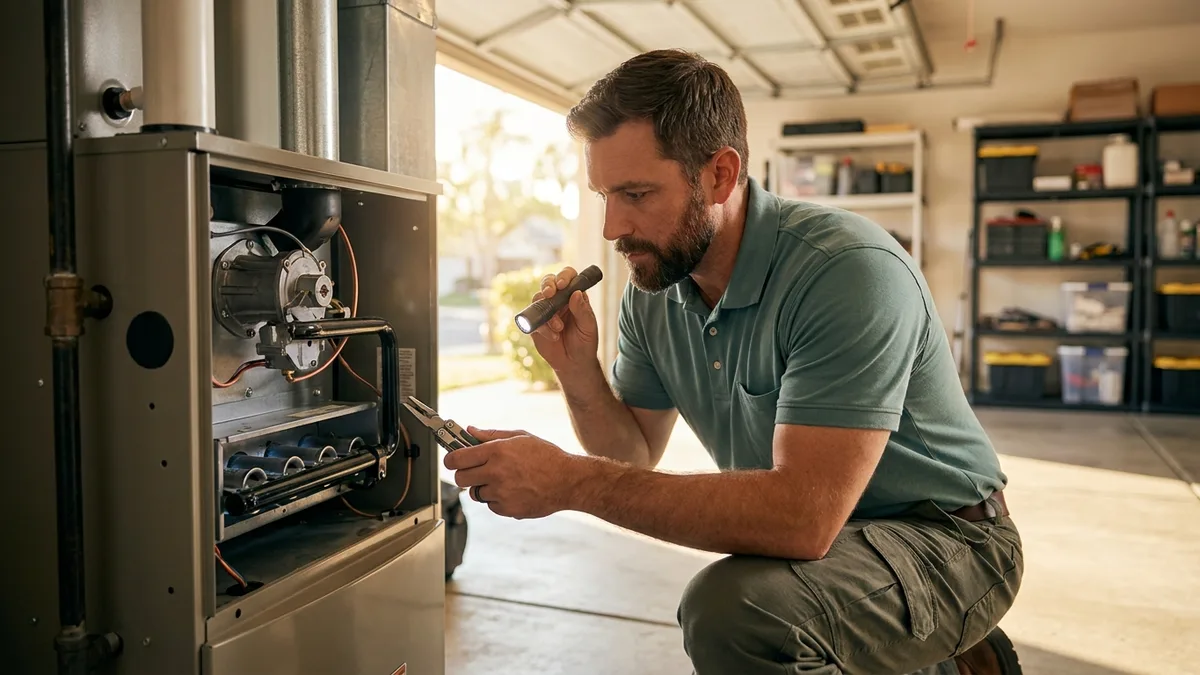
These signs are not the same as the signs a furnace is actually dying. A furnace that’s short-cycling, tripping the breaker, blowing cold air, or making a loud bang on startup is telling a different story. Climate Pros SD covers that scenario in signs your furnace is going out, which is worth a look if the system feels like it’s failing rather than just overdue for service. This guide is about the early, still-cheap-to-fix stage, when a $90-$200 tune-up can prevent a repair bill that runs into the thousands.
What are the signs your furnace needs a tune-up?
The clearest sign a furnace needs a tune-up is that it still runs, just not quite the way it used to. Here are the early warning signs that tell a homeowner to book service now, before anything breaks.
- Weak or uneven airflow. Some rooms heat slower than others, or vents that used to blow strong now feel soft. This usually points to a dirty filter or blower buildup, both fixed during a standard tune-up.
- A longer delay before ignition. The furnace clicks and hums for a few extra seconds before the flame catches. A dirty igniter or flame sensor is the usual cause, and cleaning it is routine maintenance work.
- A gas bill that’s rising with no change in habits. A furnace burning less efficiently pulls more gas to hit the same temperature. A tune-up adjusts the burn and gas pressure back to spec.
- More dust than usual around vents and registers. A furnace pushing out extra dust is often overdue for a filter change and a duct and blower check.
- A faint burning-dust smell that lingers. Some dust burn-off on the first startup of the season is normal. If the smell doesn’t fade after a few minutes of runtime, it’s worth having a tech look at the burners.
- Rattling, whistling, or humming sounds. Loose panels, a dirty blower wheel, or a worn belt cause most of these noises, and a tune-up is where a tech tightens and cleans them.
- No service in the last 12 months. A furnace that hasn’t been touched by a tech in a year is due, even if nothing feels obviously wrong yet.
| Sign | What it usually means | Tune-up or repair? |
|---|---|---|
| Weak or uneven airflow | Dirty filter or blower buildup | Tune-up |
| Longer ignition delay | Dirty igniter or flame sensor | Tune-up |
| Rising gas bill, same usage | Inefficient burn, dirty burners | Tune-up |
| Short-cycling on and off | Failing limit switch or airflow restriction | Repair |
| Blowing cold air instead of heat | Failed ignition or gas valve issue | Repair |
| Loud bang or boom on startup | Delayed ignition, possible cracked heat exchanger | Repair, and treat as urgent |
If a symptom lands in the repair column, furnace repair is the right call, not a tune-up. If it lands in the tune-up column, catching it now is what keeps it from becoming a repair-column problem later.
When should you schedule a furnace tune-up in San Diego?
The best time to schedule a furnace tune-up in San Diego is September through November, before the first cold night of the season. Most furnaces here sit unused for six to nine months out of the year, which gives dust, debris, and sometimes pests plenty of time to settle into the system undisturbed. A fall tune-up catches those problems while the weather is still mild, instead of on the first genuinely cold night when the furnace gets asked to work hard for the first time in months. Inland communities lean harder on their gas furnaces than the coast does, since temperature swings run colder at night, so a fall check matters even more for those homes. HVAC service in Escondido sees more of this inland furnace demand than most coastal areas do, and a full fall HVAC checklist covers the rest of the seasonal prep beyond just the furnace.
What does a furnace tune-up include?
A standard furnace tune-up includes a burner inspection and cleaning, a check of the heat exchanger for cracks, and a test of the ignition system and flame sensor. A good tech will also check gas pressure and connections, inspect or replace the filter, test the blower motor and airflow, verify the thermostat is communicating correctly, and check the flue and venting for blockage or corrosion. The heat exchanger check is the safety-critical piece of the visit. A cracked heat exchanger can let carbon monoxide leak into the airflow, which is why it gets checked every time, not just when something seems off. This full inspection is the core of any furnace tune-up service worth paying for.
How much does a furnace tune-up cost in San Diego?
A furnace tune-up in San Diego usually runs $90-$200 as a standalone visit, depending on the company and what the inspection turns up. Many HVAC companies also offer maintenance plans that bundle a fall furnace tune-up with a spring AC tune-up for a flat annual or monthly fee, which tends to cost less over a year than paying for each visit separately. A full breakdown of what drives that price up or down is in the HVAC maintenance cost guide for San Diego.
Why San Diego furnaces still need a yearly tune-up
San Diego’s mild climate is exactly why furnaces here need a yearly tune-up, not a reason to skip it. Low run hours don’t mean low risk. A furnace that only runs a handful of nights a year sits dormant the rest of the time, and dormant systems collect dust, and occasionally rodent nests, in the flue and around the burners. Newer, tightly sealed homes in areas like Point Loma or Mission Valley trap combustion byproducts more effectively than older, drafty houses, which raises the stakes on a proper venting check. Older inland housing stock in places like El Cajon and La Mesa often still runs furnaces that are 15 to 20-plus years old, and aging equipment needs more attention, not less, even if it’s barely used. The same seasonal logic runs in reverse each spring, when it’s time for an AC tune-up before the first real heat wave.
Frequently asked questions
How often should a furnace be tuned up?
A furnace should be tuned up once a year, ideally in early fall before it’s needed. For a broader answer on the full HVAC system, see how often HVAC should be serviced in San Diego.
Can I do a furnace tune-up myself?
A homeowner can handle filter changes and clearing dust and debris away from vents and the unit itself. Burner cleaning, gas pressure checks, and the heat exchanger inspection require a licensed tech with the right tools and training, since a mistake there can create a carbon monoxide risk.
Is a furnace tune-up worth it in San Diego’s mild climate?
A furnace tune-up is worth it precisely because the climate is mild. Furnaces here sit unused most of the year, and that idle time lets dust and small issues build up unnoticed, so the annual check is what catches them before the first cold night exposes them the hard way.
What happens if you never tune up your furnace?
A furnace that’s never tuned up runs less efficiently, costs more to operate, and is more likely to fail when it’s finally needed. Small issues like a dirty flame sensor or a clogged filter compound over time into bigger repairs, and in rare cases, into a safety issue tied to the heat exchanger or venting.
How long does a furnace tune-up take?
A standard furnace tune-up usually takes 45 minutes to an hour and a half, depending on the furnace’s age and whether the tech finds anything that needs extra attention.
If any of these signs sound familiar, the answer is a fall tune-up, not a wait-and-see approach. The HVAC pros in the Climate Pros SD network at (442) 777-6440 cover the whole county, from the coast to the inland valleys, and can usually get a tech out for same-day scheduling.