For most San Diego homes, HVAC should be serviced once a year, a single tune-up before the cooling season covers the whole year. For three specific situations, it should be twice a year. Here’s how to know which one is you.

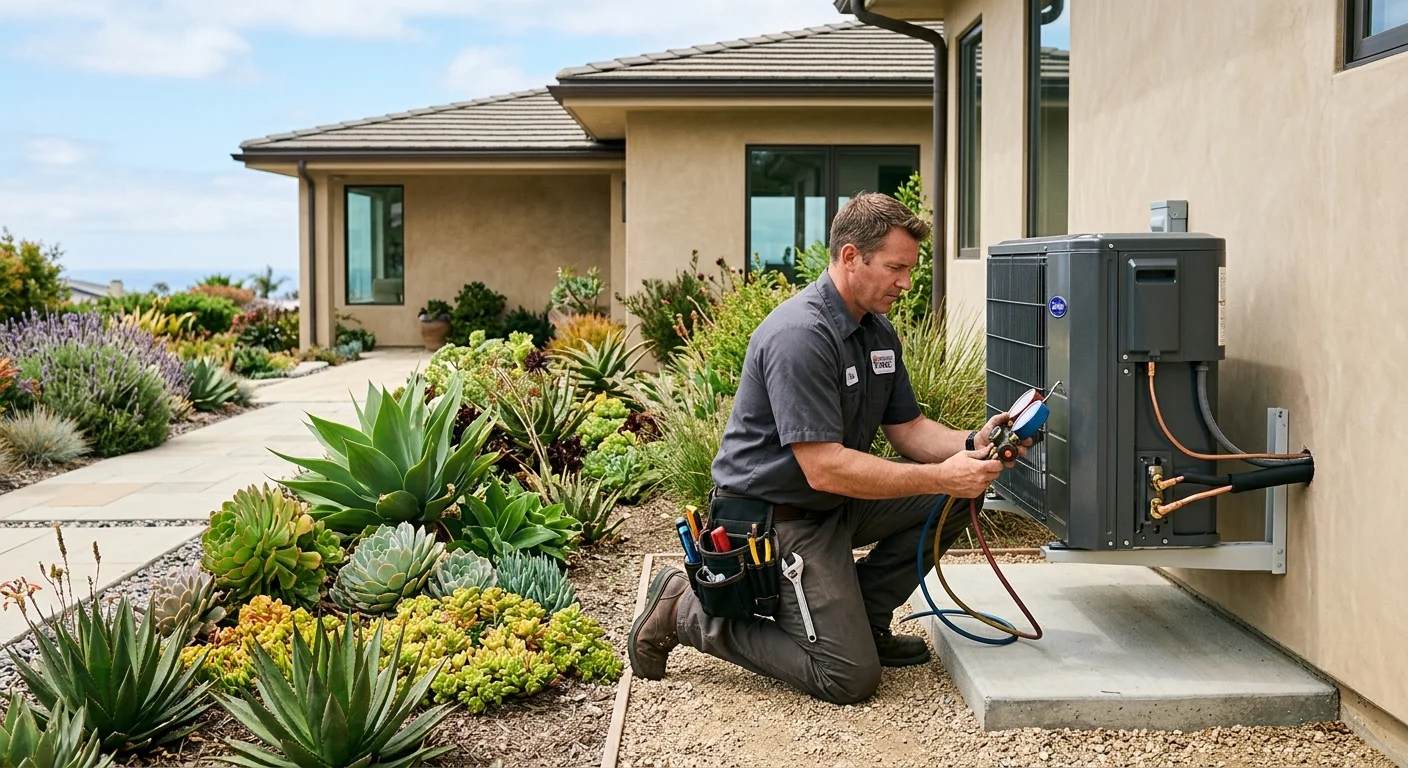
Technician performing seasonal maintenance on a residential outdoor AC condenser unit

The fast answer

Your situationService frequencyWhen
Standard San Diego home, AC + furnaceOnce a yearSpring (March-May)
Coastal home (within 5 miles of ocean)Twice a yearSpring + fall
Heat pump as primary heat + coolTwice a yearSpring + fall
Inland home with heavy summer use (Escondido, El Cajon, Santee)Twice a yearSpring + fall
Home over 15 years oldTwice a yearSpring + fall
Commercial systemQuarterly minimumEvery 90 days

If none of those apply, one visit in April or early May is enough.

Why San Diego is different

Most “how often should HVAC be serviced” guides assume a four-season climate where the system runs hard both summer and winter. San Diego doesn’t work that way. For most homes here, the AC runs hard for 4-5 months and the furnace runs lightly for 3-4 months. That justifies a different cadence than the national recommendation of twice a year.

The exceptions are real, though. Three patterns in San Diego push systems harder than the standard service interval can keep up with.

Coastal salt-air corrosion. Homes within roughly 5 miles of the Pacific get continuous salt deposition on the outdoor coil. Even if the system isn’t running, the coil corrodes. By year 5-8 it starts showing in capacity loss; by year 10-13 the coil is usually leaking. Twice-yearly visits catch the corrosion early, allow protective coil treatments, and add years to the system’s life.

Heat pumps replacing furnaces. A heat pump that handles both heating and cooling runs year-round. That’s roughly twice the operating hours of a separate AC + furnace setup. The reversing valve, defrost board, and refrigerant charge all wear faster.

Heavy-use inland homes. Escondido, El Cajon, Santee, San Marcos, and Lakeside homes can run AC 8-10 hours a day for 100+ days in a summer. That cumulative load surfaces capacitor failures, contactor pits, refrigerant leaks, and motor wear that a spring-only visit catches too late.

What “service” actually means

A real HVAC tune-up is not “we cleaned the coils and changed the filter.” That’s a marketing visit and you don’t need it. A real maintenance visit measures system performance against the manufacturer spec, finds the parts that are aging out, and corrects small drift before it becomes a breakdown.

A proper visit covers:

  • Refrigerant charge. Measured by superheat and subcooling, not just sight glass or pressure readings. A 5% undercharge cuts efficiency 10-15% and you’d never notice from comfort alone.
  • Capacitor microfarads. Measured against the rated value. Capacitors weaken before they fail. Catching one at 85% of rated value lets you replace it on a maintenance call instead of an emergency.
  • Contactor condition. Pitted contacts cause hard starts that age the compressor. Replaceable in 15 minutes during maintenance; root cause of dead-compressor calls if ignored.
  • Static pressure across the air handler. Tells you if ductwork is restricted, filters are too restrictive, or the blower is failing. Most homes have static pressures well above design spec; nobody ever measures.
  • Temperature split. Difference between return and supply air. 18-22 degrees on AC, 35-50 degrees on heat. Tells you the system is moving heat correctly.
  • Amp draw on compressor and fans. Compares actual to rated amps. Rising amps over time predict motor failure.
  • Electrical connections. Loose lugs and burned terminals show up before they fail.
  • Drain line and condensate pan. Cleared, treated, float switch tested.
  • Flame sensor, igniter, gas pressure (furnace). Cleaned, tested, measured.
  • Heat exchanger inspection. Visual + combustion analysis. Cracks kill people.

Our full 21-point spec is on the HVAC maintenance service page.

If your last “tune-up” was 20 minutes of vacuuming the outdoor unit, that wasn’t service. That was a sales call.

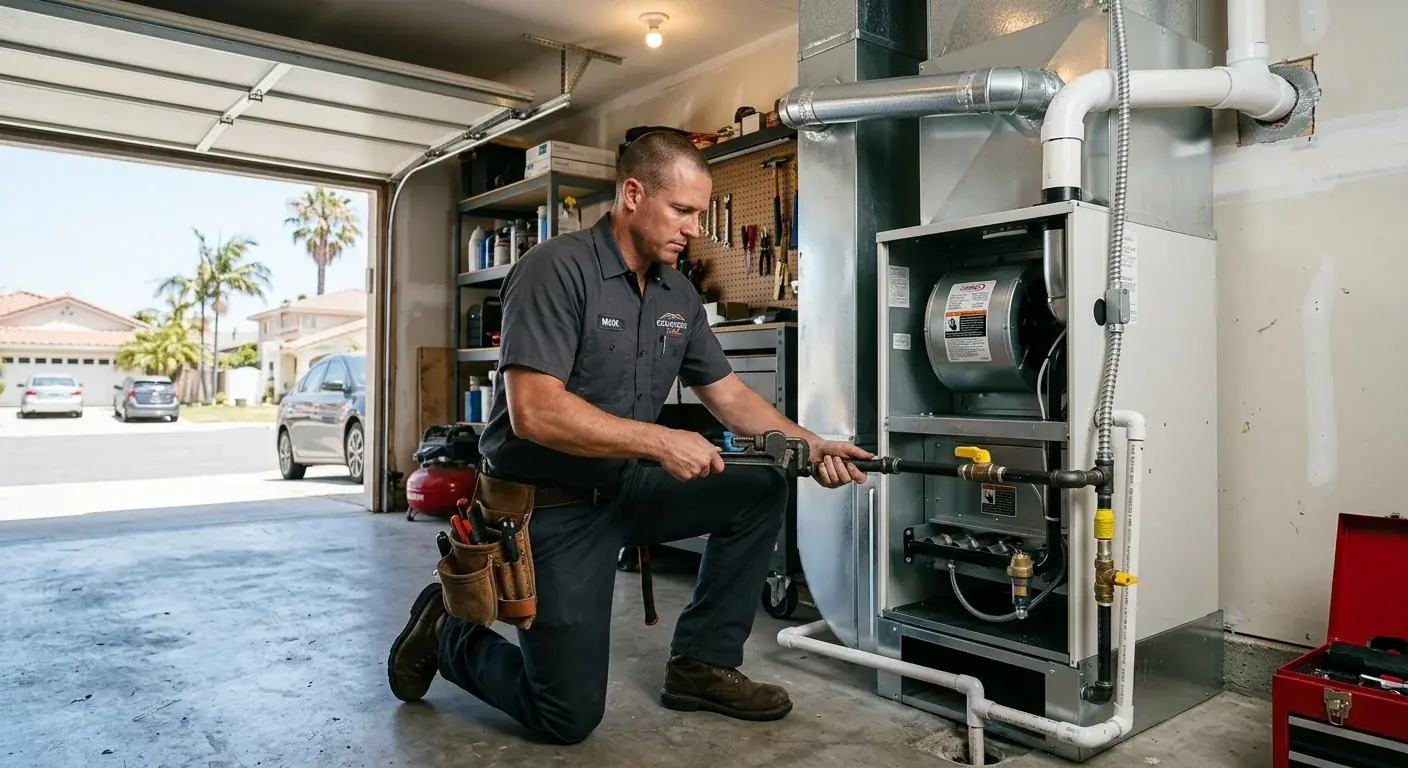
Technician inspecting indoor furnace components during a fall maintenance visit

Spring vs fall, which one matters more

For an AC + furnace setup in San Diego, spring matters more. The AC runs hard for 4-5 months and you don’t want it to fail on July 4th. Spring service catches:

  • Capacitors that are weakening
  • Refrigerant lost over winter from a slow leak
  • Coil corrosion or dust accumulation
  • Drain line clogs that will overflow with the first humid days
  • Thermostat wiring issues from winter rodent activity

Fall service for the furnace is shorter and cheaper, but for safety reasons it’s worth scheduling if you have small kids, elderly relatives, or any history of carbon monoxide concerns. A 20-minute combustion analysis is the only way to catch a cracking heat exchanger before it dumps CO into your house.

For heat pumps, both visits matter equally because the system runs year-round.

What it actually costs in San Diego

Service tierTypical 2026 cost
Single visit (one-time, no plan)$149-$229
Annual maintenance plan (one visit/year)$179-$249/year
Bi-annual plan (two visits/year)$249-$349/year
Multi-system plan (AC + furnace separate)Add ~$80/year per extra system

Maintenance plans usually include priority scheduling during heat waves, a 10-15% discount on repairs, and waived diagnostic fees on the system covered. For most San Diego homeowners the plan pays for itself the first time you avoid an emergency call.

What you can do yourself between visits

You don’t need a tech for everything. Five things you should do on your own:

  1. Change the filter on schedule. 1-inch fiberglass: every 30 days. 1-inch pleated: every 60-90 days. 4-inch media filter: every 6 months. In San Diego, don’t extend these for the off-season; coastal salt and inland dust keep loading them year-round.
  2. Clear the outdoor unit. Trim plants back 2 feet on all sides. Hose off the coil from inside out (turn off power first). Especially important after Santa Ana wind events.
  3. Check the condensate drain. Look at the indoor unit’s drain line. If you see standing water in the secondary pan or a wet spot near the air handler, the primary drain is clogged.
  4. Listen for new noises. Squeaking, grinding, rattling, or buzzing that wasn’t there a month ago is your system telling you something is changing.
  5. Watch your power bill. A bill that’s 15%+ higher than the same month last year, with similar weather, is usually the first symptom of efficiency loss.

San Diego-specific timing

The best month for spring service is April. Demand is light, prices haven’t surged, and you beat the May rush when everyone realizes their AC isn’t keeping up. The worst time to need service is July 1-15; you’ll wait 5-10 days for a non-emergency tune-up visit and pay 10-20% more.

For coastal homes, October is the ideal fall visit. The marine layer starts lifting, salt deposits from the windier summer months can be cleared, and any corrosion from the wet season gets caught before winter humidity makes it worse.

FAQs

How often should I service my central air conditioner?

Once a year for most San Diego homes. Twice a year if you’re within 5 miles of the coast (salt-air corrosion), have a heat pump (year-round use), or live in inland areas with heavy summer use like Escondido or El Cajon. Service in spring before cooling season starts.

How often should I service my furnace?

Once a year if you also have an AC and the furnace gets light winter use, which describes most SD homes. Schedule it in fall (October-November) before first cold weather. Twice a year if you have a heat pump providing primary heat or if your furnace is over 15 years old.

Is HVAC maintenance worth the cost?

Yes for most homes if the visit is real maintenance (measured performance + part-condition testing) rather than a sales call. A typical $200 yearly visit catches the $300 capacitor before it strands you in July or the $1,500 coil corrosion before it leaks. Plans pay for themselves on a single avoided emergency.

What happens if I never service my HVAC?

Most systems run for years without obvious problems, then fail abruptly during the hottest week of summer. Without maintenance, you lose roughly 5-10% efficiency per year, 2-4 years of useful life off the system, and the warranty coverage on most major-component failures (manufacturers require documented annual maintenance to honor parts coverage).

Can I do my own HVAC maintenance?

You can do filter changes, outdoor coil rinses, condensate line checks, and visual inspections. You can’t safely do the parts that actually predict failure: refrigerant measurement, capacitor testing, combustion analysis, static pressure measurement. Those need tools and licensing.

When should I get my AC serviced before summer in San Diego?

April is ideal. May still works. June is too late, you’ll be competing with emergency calls and paying surge pricing. The single best date in San Diego is the first or second week of April.

Do new HVAC systems still need annual maintenance?

Yes, and this is where homeowners make the most expensive mistake. Manufacturers require documented annual maintenance to honor the 10-year parts warranty on compressors and coils. Skip a year and you can void the warranty on the most expensive components in the system.

When to schedule

If your last service was over a year ago, or you’ve never had a real tune-up, schedule one before the next season hits. Call (442) 777-6440 or book through our HVAC maintenance service page. Our 21-point visit takes 90 minutes and includes a written report on every measured value. If a tech finds a bigger issue, the same report tells you whether you’re looking at a repair or an AC replacement decision.