Carbon monoxide in a home comes from the incomplete burning of fuel in appliances like gas furnaces, water heaters, stoves, and fireplaces. CO is colorless and odorless, so there’s no way to sense it building up in a room, which is exactly why a working detector matters more than instinct. A cracked furnace heat exchanger or a blocked flue is the most common source found inside a house. The CDC estimates more than 400 Americans die each year from unintentional CO poisoning not linked to fires, with over 100,000 emergency-room visits tied to the same cause.
What causes carbon monoxide in a home?
Carbon monoxide forms whenever fuel burns without enough oxygen to finish the combustion process, and a handful of household sources cause most of it.
- Gas furnace with a cracked heat exchanger. This is the number one hidden source in homes, because a crack lets combustion gases leak into the air stream instead of venting outside.
- Gas or propane water heater with bad flue or venting. A disconnected vent pipe or a blocked exhaust sends CO back into the house instead of up and out.
- Gas stoves and ovens used improperly. Running a stovetop or oven for warmth burns fuel with no vent at all, and CO collects fast in a closed kitchen.
- Blocked or corroded chimney and flue. Debris, nesting birds, or rust can seal off an exhaust path, trapping combustion byproducts inside the home.
- Cars idling in an attached garage. Exhaust seeps through shared walls and doorways even with the garage door partly open.
- Gas fireplaces and space heaters. Unvented or poorly maintained units burn fuel indoors and rely entirely on proper airflow to stay safe.
- Portable generators run too close to the house. A generator produces CO at a rate that can fill a garage or breezeway within minutes.
Each of these shares the same root cause: incomplete combustion, or a blocked path for the exhaust to leave the house. Take away either the clean burn or the clear vent, and CO has somewhere to go besides outside.
Why San Diego homes have a specific carbon monoxide risk window
The highest-risk moment for a San Diego home is the first cold night of the year, when a gas furnace fires up after sitting unused for six to nine months. Our mild climate means most furnaces run only a fraction of what a furnace in a colder state would, so a cracked heat exchanger or a rodent-blocked flue can sit undetected all spring and summer. Older housing stock inland, in places like Escondido, El Cajon, and Vista, leans heavily on gas furnaces that were installed decades ago and haven’t been inspected since. Newer, tighter homes add a second wrinkle: better sealing keeps conditioned air in, but it also traps combustion gases that a leakier older home would have let escape on its own. That combination, a long dormant season followed by a sudden startup, is why a gas furnace deserves a look before the first real cold snap rather than after something already smells wrong.
What are the signs and symptoms of carbon monoxide poisoning?
The early symptoms of CO poisoning mimic the flu: headache, dizziness, nausea, and fatigue, but without a fever. That overlap is part of why cases get missed for days.
- Headache, often the first symptom noticed and easy to blame on stress or dehydration.
- Dizziness and weakness, especially when standing up or moving between rooms.
- Nausea or vomiting, sometimes mistaken for a stomach bug.
- Confusion, which can range from mild fog to real disorientation.
- Chest pain, particularly in anyone with existing heart issues.
- Blurred vision, usually appearing later as exposure continues.
Two details separate CO poisoning from an ordinary illness. Symptoms ease when you leave the house and return when you come back inside. And multiple people or pets in the same home feel sick at the same time, since everyone is breathing the same air. High exposure causes loss of consciousness and death without warning. Anyone who suspects CO in a home should get outside to fresh air immediately and call 911 rather than waiting to see if symptoms pass. Carbon monoxide is one of several gases that shape what you actually breathe indoors, which is why it shows up in any serious look at indoor air quality.
Where should you install a carbon monoxide detector?
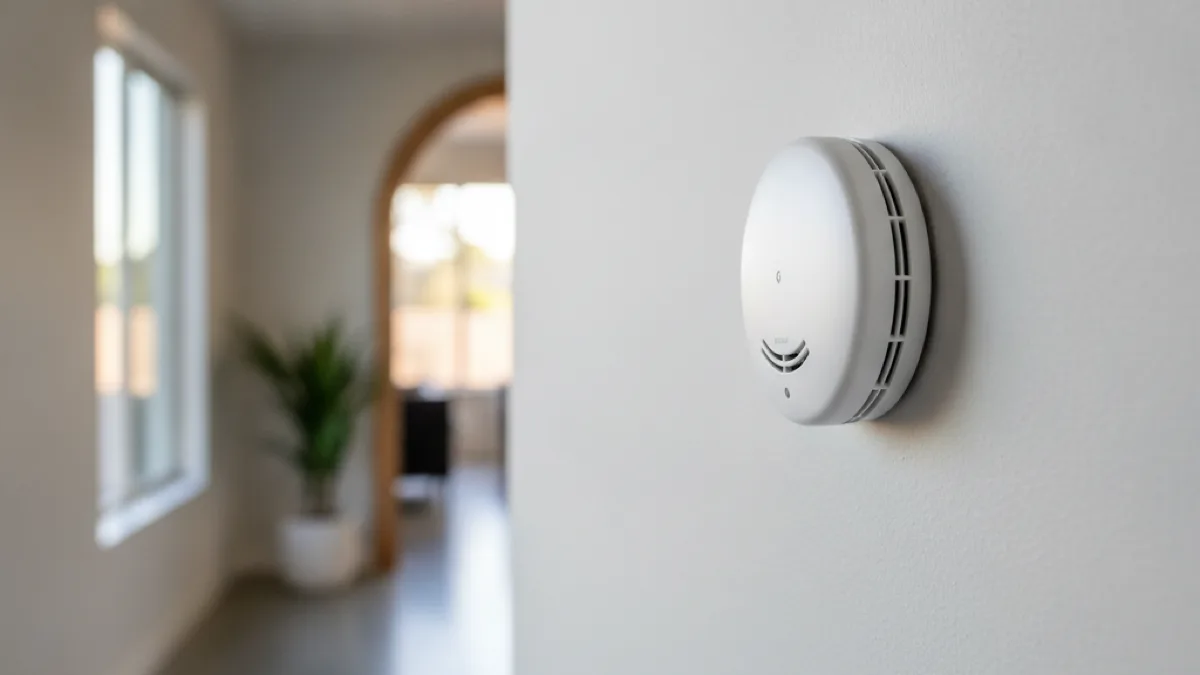
Install a CO detector on every level of the home and within 10 feet of each sleeping area, so an alarm is loud enough to wake someone up at night.
- One outside each separate sleeping area, and on every floor, including the basement if the home has one.
- At least 5 to 15 feet away from fuel-burning appliances, so normal operation doesn’t trigger false alarms.
- On a wall about 5 feet up, or on the ceiling. CO mixes evenly with air, so height matters far less here than it does for smoke detectors.
- Not in dead-air corners, bathrooms, or directly above or beside a stove, all locations that either trap air poorly or trigger nuisance alerts.
- Replace detectors every 5 to 7 years and test them monthly, since the sensor inside degrades over time even if the unit still powers on.
California’s Carbon Monoxide Poisoning Prevention Act, Senate Bill 183, requires a working CO alarm in every dwelling that has a gas appliance, a fireplace, or an attached garage. That covers the overwhelming majority of San Diego County homes, whether the appliance is a furnace, a water heater, or just a gas range.
How to prevent carbon monoxide in your home
The single most effective prevention step is an annual professional furnace inspection that checks the heat exchanger and flue before heating season starts.
- Schedule an annual furnace inspection or heating tune-up, timed for early fall before the first cold nights hit.
- Install and maintain CO detectors on every level, testing them on the same schedule as smoke detectors.
- Never run a car, generator, or grill in an attached garage or indoors, even briefly and even with a door cracked open.
- Keep vents and the chimney clear of debris, nests, and corrosion by having them checked along with the furnace.
- Don’t use a gas oven or stovetop to heat the home, no matter how cold it gets or how short a time it feels like it will run.
A cracked heat exchanger and poor combustion venting aren’t always visible from the outside, which is why the inspection matters more than a visual check. The HVAC techs in our San Diego network can inspect a heat exchanger and combustion venting in one visit, catching a problem before the furnace runs for the season. Combustion safety is one piece of healthy indoor air quality across the whole home, not a separate concern.
What to do if your carbon monoxide detector goes off
- Get everyone and pets outside to fresh air immediately. Don’t stop to open windows or investigate first.
- Call 911 from outside the home, not from inside, even if the alarm seems like it could be a false one.
- Do not go back inside until the fire department confirms it’s safe. CO levels aren’t something you can judge by how you feel.
- Have the heating system and gas appliances inspected before running anything again, since the source needs to be found and fixed, not just ventilated away.
If the alarm traces back to the furnace or water heater, ask for emergency HVAC from a licensed company that handles combustion-safety calls. Call (442) 777-6440. Climate Pros SD matches you with that company. It does not dispatch a truck or promise same-day arrival.
Frequently asked questions
Can carbon monoxide come from an air conditioner?
No. A standard electric air conditioner or heat pump does not burn fuel, so it cannot produce carbon monoxide on its own. CO only comes from fuel-burning appliances like gas furnaces and water heaters. If a gas furnace shares ductwork or a cabinet with the AC system, that furnace is the part worth checking, not the cooling unit itself.
Does carbon monoxide have a smell?
No. CO is completely colorless and odorless, which is exactly why it’s dangerous and why a detector is the only reliable way to know it’s present in a home. A rotten-egg smell is natural gas, a different hazard with its own detection method, not a sign of carbon monoxide.
How often should I replace my carbon monoxide detector?
Every 5 to 7 years, even for hardwired units, because the internal sensor degrades with age regardless of power source. Test the unit monthly and change any batteries once a year. Most detectors print a manufacture or expiration date on the back, so check that directly rather than guessing.
Is carbon monoxide heavier or lighter than air?
CO is very close to the same weight as air, so it mixes evenly and spreads through an entire home rather than settling near the floor or ceiling. That’s why detector height matters far less than it does for smoke, and why covering every level and sleeping area matters more.
What are the most common sources of carbon monoxide in San Diego homes?
Gas furnaces with cracked heat exchangers and gas water heaters with poor venting cause most residential CO cases here, especially after months of disuse in our mild climate. Attached-garage car exhaust is the other major source. A furnace that struggles to ignite or stay running is worth a closer look at the same visit, since ignition problems and combustion leaks often share a cause.
Do I need a carbon monoxide detector if I have all-electric appliances?
If a home has zero fuel-burning appliances, no gas furnace, water heater, stove, or fireplace, and no attached garage, the CO risk is genuinely low. But an attached garage alone is reason enough to install one, and California law still requires an alarm in most homes regardless of appliance type. When in doubt, install a detector anyway. Older inland homes, including much of the housing stock covered by HVAC service in Escondido, tend to have the oldest gas appliances in the county, which makes this an easy one to overlook.