How much does HVAC maintenance cost in Lakeside?
The company you are matched with quotes the visit in writing. Ask whether they offer a single appointment or a plan, what they inspect, and which fees are extra. Climate Pros SD does not sell a branded maintenance plan or inspection protocol. Filter replacement is priced separately by filter type. Ask whether extended coil cleaning for wildfire ash is extra.
How often should I service my HVAC in Lakeside?
Twice a year. Pre-summer in March or April and fall in October. The combination of peak-summer-degree summers, wildfire smoke and ash, equestrian dust, and older housing stock makes Lakeside one of the harder environments for HVAC equipment in the county. One visit per year is not enough to stay ahead of the dust loading and corrosion this environment creates.
What should I ask the matched company to inspect?
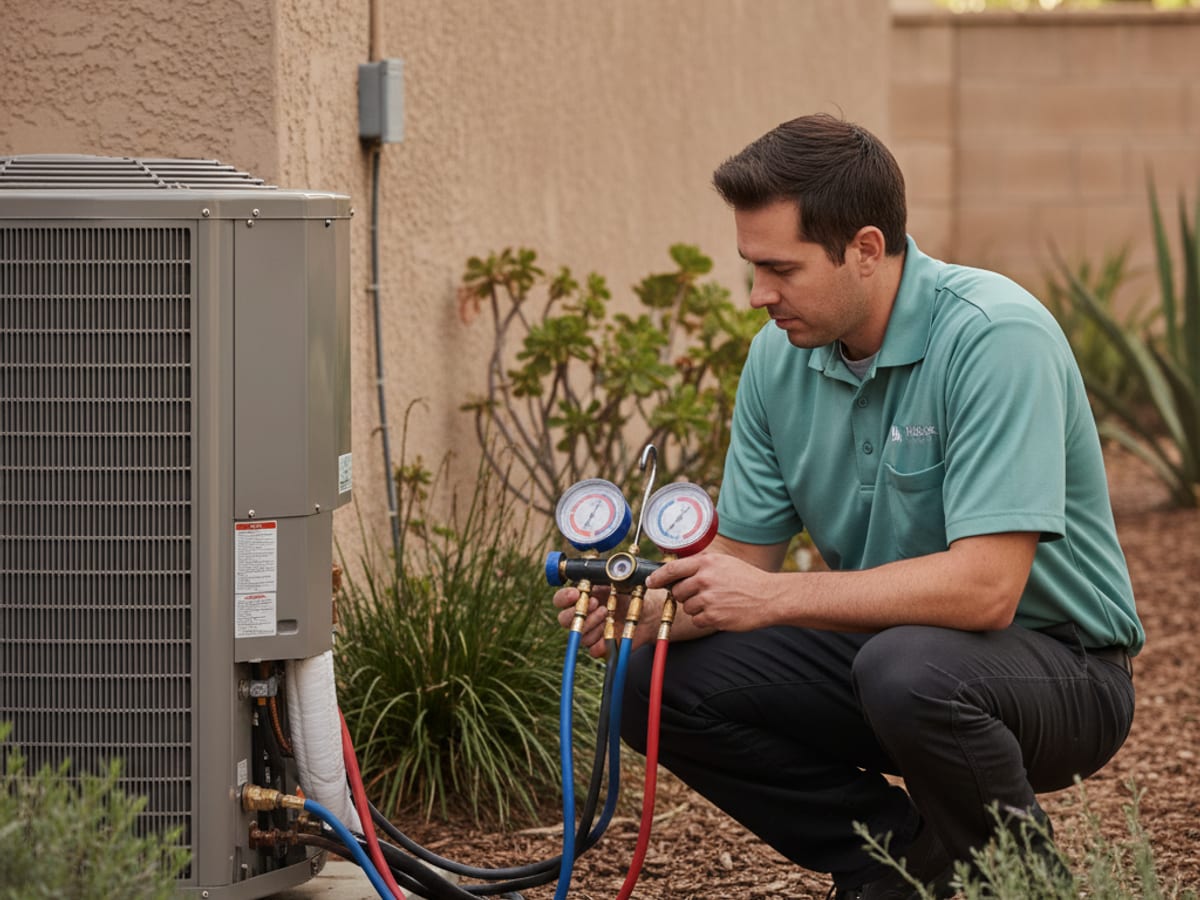
Refrigerant level check with gauges, capacitor microfarad test, compressor and motor amp draw, condenser coil cleaning, evaporator coil inspection, ductwork visible section check for rodent damage, static pressure measurement, condensate drain flush and float switch test, contactor and electrical connection check, thermostat calibration and cycle timing, temperature split measurement, filter condition check, and blower wheel inspection. Every visit ends with a written summary of everything found.
Do you check for rodent damage during the tune-up?
Yes. The air handler cabinet gets opened and visible duct sections inspected for nesting material, chew damage on wiring, and evidence of rodent entry on every Lakeside tune-up. Rodent pressure from the surrounding chaparral is real in this area, and the damage it causes ranges from minor to significant. Catching it during a maintenance visit is the right time.
How does wildfire smoke affect my HVAC in Lakeside?
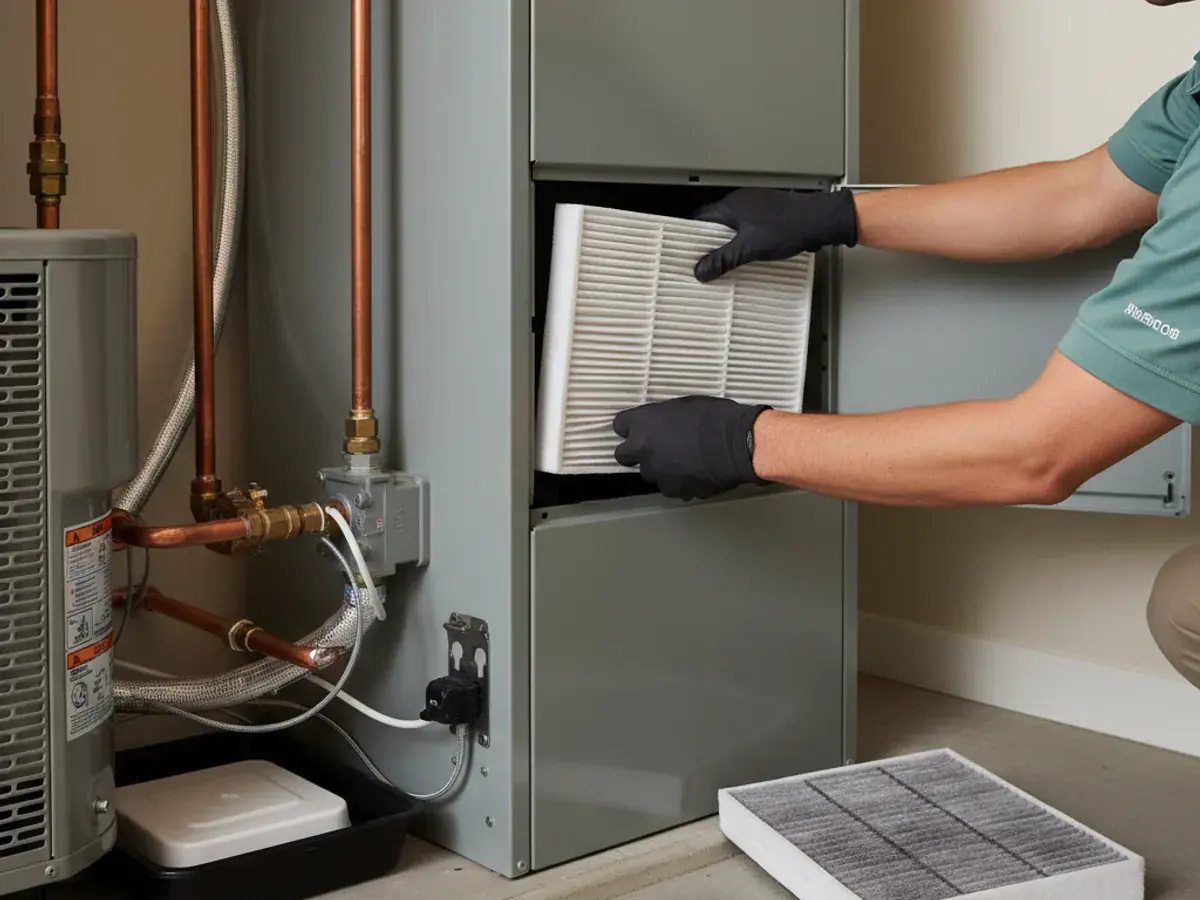
Smoke loads the air filter in days rather than months during a fire event. A filter at 80 percent capacity chokes airflow enough to freeze the evaporator coil and stress the compressor. Change the filter every one to two weeks during smoke events. Ash deposits on the condenser fins also require different cleaning technique than standard dust: the fall tune-up includes ash assessment and adjusted cleaning for any coil that has been through smoke season.
When is the best time to schedule HVAC maintenance in Lakeside?
March or April for the pre-summer visit. Lakeside heats up earlier than coastal cities and contractor calendars tighten as the heat arrives. October is a common window if you book a second visit, after smoke season begins to taper.
My Lakeside home has not had HVAC service in years. What should I expect?
A first tune-up on a long-neglected system typically surfaces more findings than a well-maintained unit. Expect a capacitor that has drifted low, a coil with significant dust buildup, a refrigerant charge that may be off, and possibly evidence of rodent activity if the home has open chaparral nearby. Everything gets documented, priorities set for what needs attention now, and you get a clear picture of where the system stands going forward.
What is a run capacitor and why does it fail in Lakeside heat?
A run capacitor stores charge and helps compressor and fan motors start and maintain speed. Heat degrades capacitors over time. Lakeside's sustained peak-summer-degree summers push this degradation faster than in coastal cities. A capacitor at 70 or 75 percent of rated microfarads in April may hold through mild weather but will often fail when the first serious heat wave hits.
What are PSPS outages and how do they affect my AC?
SDG&E issues Public Safety Power Shutoffs during high fire risk conditions. Lakeside falls within the affected East County zone. When power comes back on after a shutoff, an air conditioner compressor does a hard start under load. A weak capacitor is most likely to fail at that moment. Capacitor testing is part of every tune-up, and a hard-start kit that reduces the startup amp surge can be installed.
Do you service Eucalyptus Hills, Harbison Canyon, and Winter Gardens?
Yes. Pros in our network cover all Lakeside neighborhoods including Eucalyptus Hills, Harbison Canyon, Winter Gardens, and properties along El Monte Valley Road. Ask the matched company how they price hillside or canyon addresses and get that in writing.
How long does the tune-up take?
Most appointments run 60 to 90 minutes. Homes with significant wildfire ash buildup on the coil, rodent activity in the air handler, or systems that have been neglected for several years run closer to 90 minutes to 2 hours. Findings get documented without rushing the inspection.
Can maintenance extend the life of my older Lakeside system?
Yes, meaningfully. A system that gets annual coil cleaning, capacitor checks, and refrigerant monitoring runs cooler, starts easier, and operates within its design amp draw. All of that reduces wear on the compressor, which is the most expensive part. Systems regularly hit 18 to 22 years with consistent maintenance. Systems that never get serviced in Lakeside's climate rarely make it past 12 to 15 years.