How much does HVAC maintenance cost in Poway?
The company you are matched with quotes the visit in writing. Ask whether they offer a single appointment or a plan, what they inspect, and which fees are extra. Climate Pros SD does not sell a branded maintenance plan or inspection protocol. Filter replacement is priced separately by filter type and is separate from the tune-up cost. Ask whether coil cleaning is included. A hard-start kit installation, recommended for eastern hill properties in PSPS territory, is quoted after inspection.
What is a PSPS shutoff and how does it affect my HVAC?
SDG&E's Public Safety Power Shutoffs cut power to high fire risk areas during dangerous wind and dry conditions. Eastern Poway, including Green Valley Trails, is affected several times per year. When power is restored, the AC compressor does a hard start: full voltage applied to a hot, pressurized system. A capacitor that is already drifting low is very likely to fail at restoration. A hard-start kit reduces the startup amp surge and extends compressor life in shutoff territory.
How often should I service my HVAC in Poway?
Twice a year. Poway runs a ten-month cooling season with summers that regularly hit 82 to 83 degrees. The heat load on equipment here is among the highest in San Diego County. A spring visit in March or April and a fall visit in October is the right schedule. The spring visit catches capacitors, refrigerant levels, and coil condition before the first heat wave. The fall visit covers the furnace and any components the long summer stressed.
My property is on Garden Road. Does equestrian dust affect my HVAC?
Yes, more than most homeowners realize. Horse traffic, unpaved paddock soil, and hay storage generate a persistent fine dust that packs condenser coil fins fast. On an equestrian property, heavier coil buildup than on standard residential lots of the same vintage is a common find. Coil cleaning is the core of the Garden Road tune-up. Check your filter every four to six weeks rather than monthly. A loaded filter on a peak-summer day is a direct path to an evaporator freeze.
What should I ask the matched company to inspect?
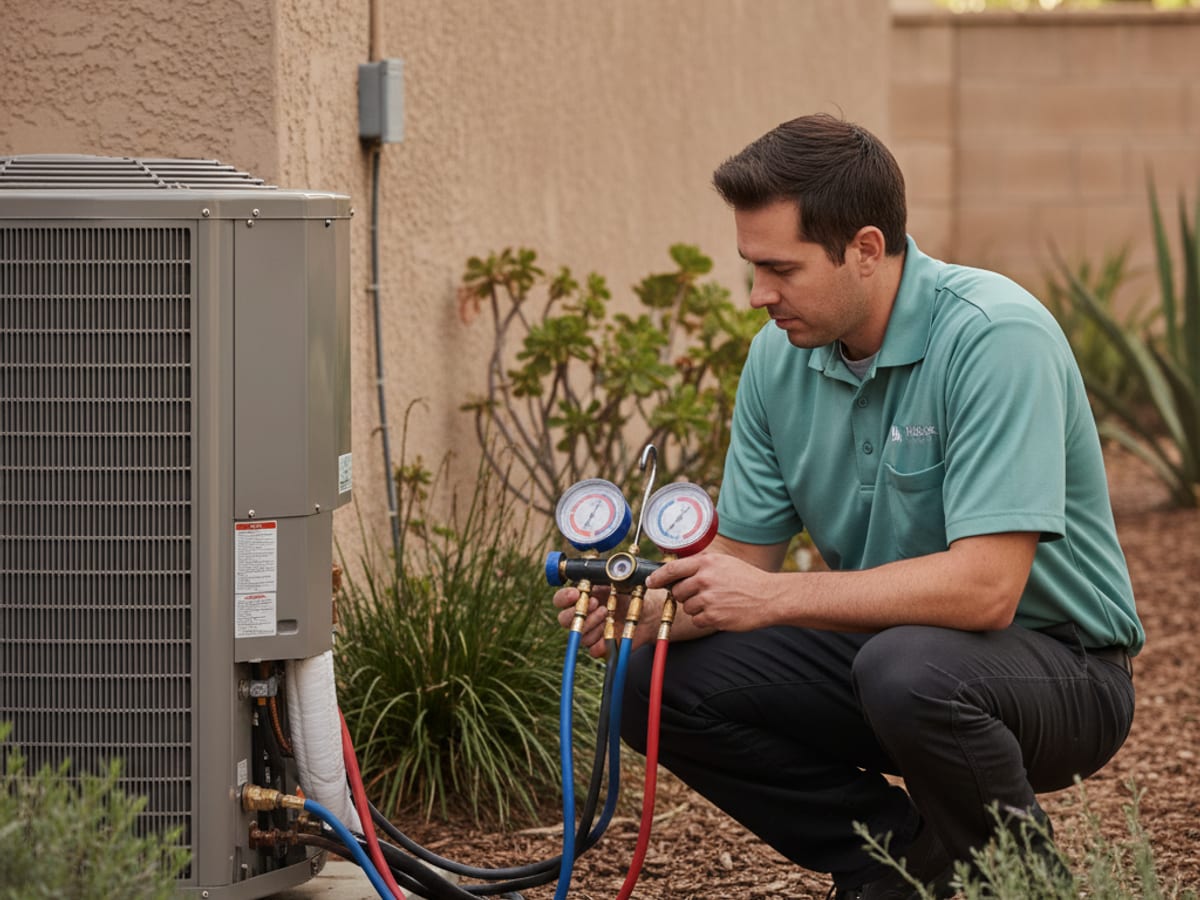
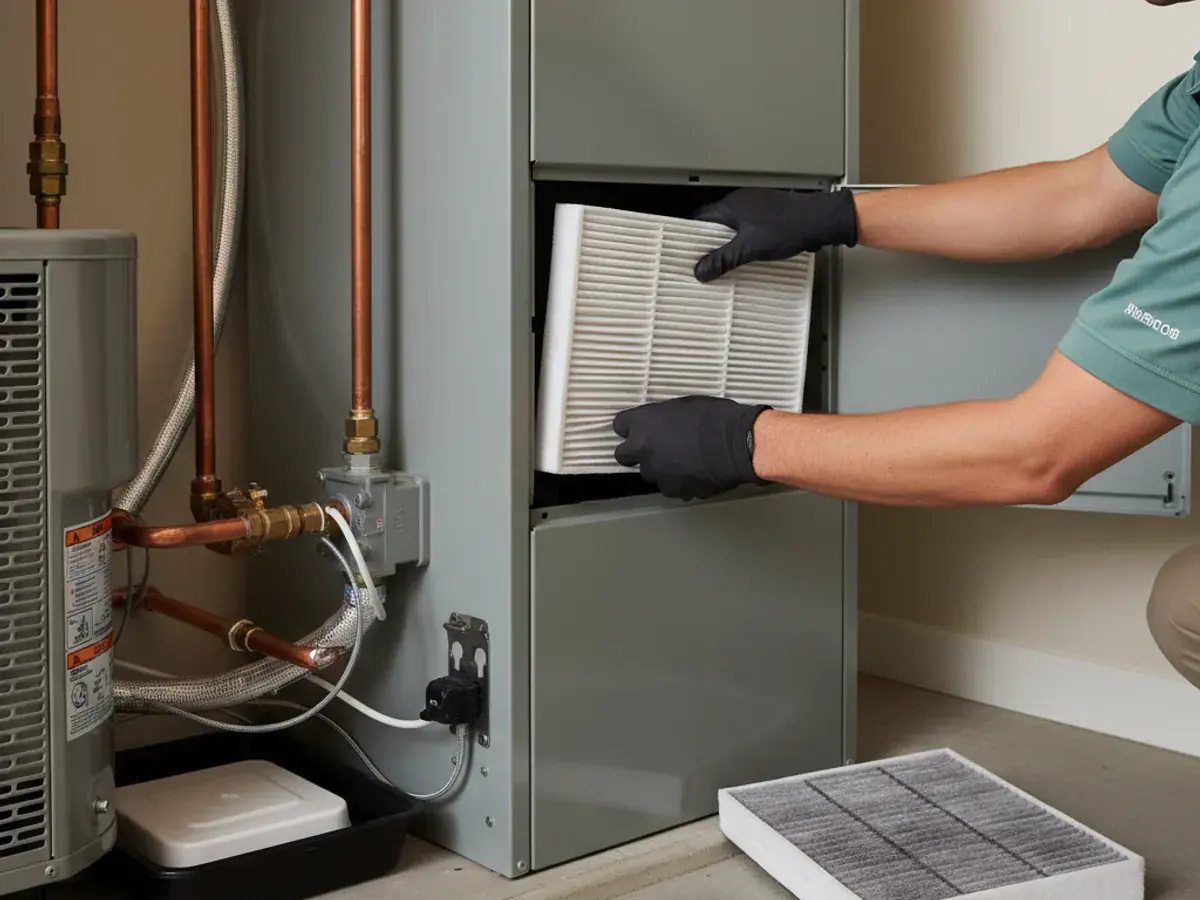
Refrigerant level check with gauges, capacitor microfarad test, compressor and motor amp draw, condenser coil cleaning, hard-start surge assessment for eastern hill properties, evaporator coil inspection, static pressure measurement, condensate drain flush and float switch test, contactor and electrical connection check, thermostat calibration and cycle timing, temperature split measurement, filter condition check, and blower wheel inspection. Every visit ends with a written summary.
Should I get my HVAC serviced before summer in Poway?
Yes, and March or April is the right window. Poway's first heat waves can arrive in late May, and by June the schedule is full. A tune-up that catches a failing capacitor or a low refrigerant charge in April is a scheduled repair. The same issue found on the first peak-summer day carries an emergency call premium and likely a wait. The earlier the appointment, the more options you have if something is found.
I am in Green Valley Trails. Do I need a hard-start kit?
Capacitor condition gets checked first and the kit recommended based on what's found. Green Valley Trails sits in PSPS territory, so the hard-start risk is real. If the capacitor is in good shape and the system is newer, you may not need the kit yet. If the capacitor is showing wear, the combination of a new capacitor and a hard-start kit is the right call for a property in shutoff territory. The kit can be installed during the tune-up visit.
My Poway system is a heat pump. Is the fall visit different?
Yes, in one important way. Heat pumps use a reversing valve to switch between cooling and heating mode, and a defrost cycle to prevent ice buildup on the outdoor coil in cold weather. Both of those systems get checked on the fall visit. Poway winter nights can drop to the mid-30s in the hills, and a heat pump that has not had its defrost controls verified before winter may run into efficiency problems during cold snaps. Ask whether a fall visit includes those items.
What is the cooling season length in Poway compared to coastal cities?
Poway typically runs AC from April through November, sometimes into early December during warm falls. That is roughly ten months. Coastal cities like Carlsbad or Encinitas run cooling for four to six months. The difference in annual run hours is significant: a Poway system may log 2,500 to 3,000 operating hours per year while a comparable coastal system logs 800 to 1,200. That is why annual maintenance in Poway prevents failures that the same neglect would not cause for another several years in a coastal city.
Does Poway have unique wildfire smoke challenges for HVAC?
Yes. Poway sits near fire-prone chaparral and is closer to historical fire corridors than coastal cities. During smoke events, air filter loading happens in days rather than months. A MERV 11 or higher filter is worth considering for Poway homes if air quality is a regular concern. Check the filter every one to two weeks during smoke season and replace it when it is visibly loaded. A clogged filter during a smoke event leads to evaporator coil icing and compressor overload at exactly the moment indoor air quality matters most.
My Old Poway Village home has a system from the 1990s. Should I maintain it or replace it?
That is what the inspection tells you. A 25 to 30-year-old system that has tight electrical connections, a compressor running within amp spec, no refrigerant leaks, and a clean coil may have another few years of reliable service. A system of the same age running hot amps, showing heat damage on contactors, and needing refrigerant every season is telling you it is done. The honest read gets delivered after every visit. A modest scheduled inspection that confirms the system is at end of life is worth it compared to a surprise compressor failure in August.
What should I do right after a PSPS restoration before turning on the AC?
Wait ten to fifteen minutes after power comes back before switching the thermostat to cooling. This allows refrigerant pressures to equalize across the system after sitting idle during the shutoff. Starting the compressor against full pressure differential is what causes hard-start damage. The wait is short, costs nothing, and reduces the startup stress meaningfully. A hard-start kit installed during your tune-up provides additional mechanical protection beyond the waiting period.