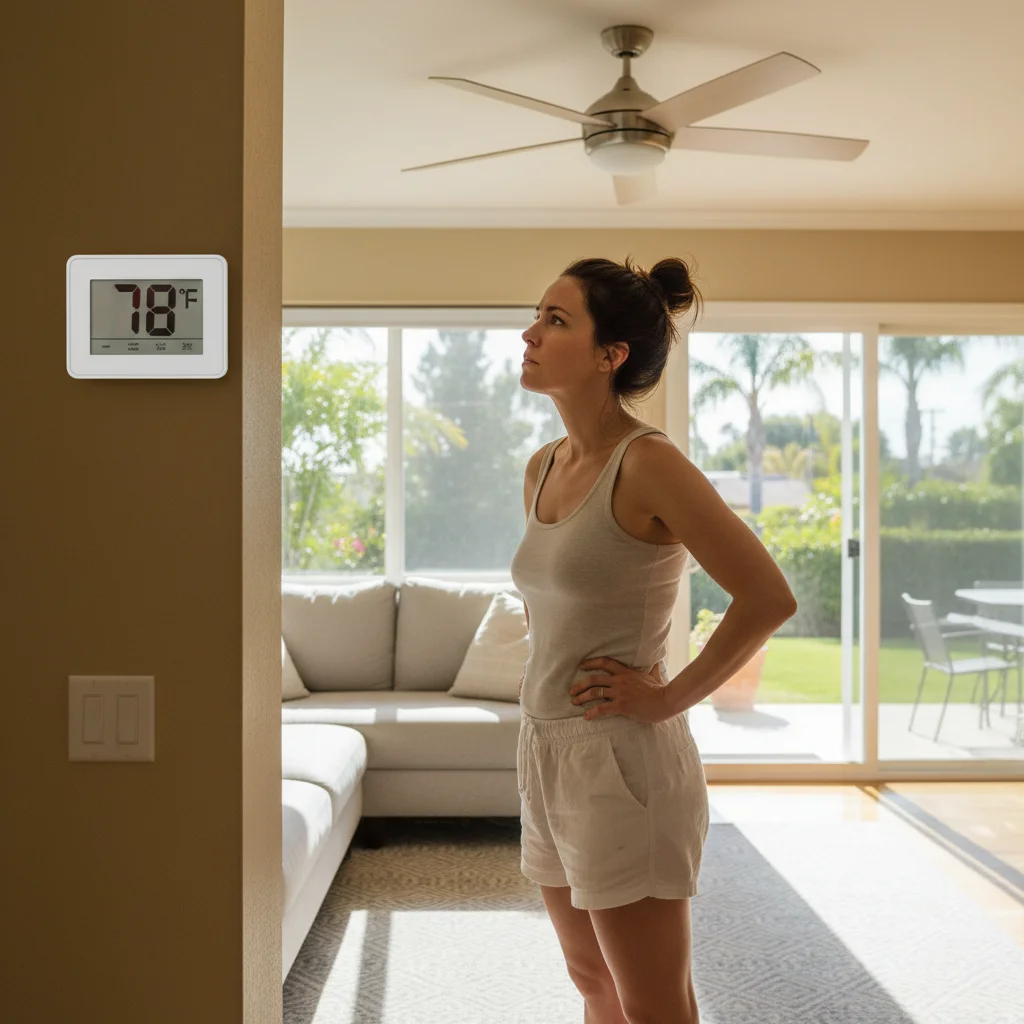
Your AC is on. The fan is blowing. But walk past any vent and the air is somewhere between cool and room temperature, definitely not what 72°F on the thermostat promised. This isn’t the same as an AC that won’t turn on at all. It’s a subtler problem, and the cause is usually one of five things.
The five most common causes we see in San Diego homes
San Diego’s climate is mild enough that a lot of AC systems go untouched for months at a time. That gap between winter and summer does real damage in ways that don’t show up until you actually need the system.
1. A dirty or clogged air filter A filter that’s blocked enough will starve the evaporator coil of airflow. The coil gets too cold, freezes over, and suddenly your system is pushing air across a block of ice instead of a functioning coil. Output drops fast. Check your filter first, if it’s gray and dense, that might be your entire answer.
2. A frozen evaporator coil Even with a clean filter, a coil can freeze due to low refrigerant or poor airflow from dirty return vents. If you see ice forming on the copper lines near your air handler, shut the system off and let it thaw before running it again. Running it frozen makes things worse. Our post on why your AC keeps freezing up walks through this in more detail.
3. A dirty condenser unit outside The outdoor unit dumps heat from inside your home. If the condenser coils are packed with dust, pollen, or debris, which happens fast in San Diego’s drier months, it can’t release heat efficiently. The system runs but never gets the refrigerant cold enough to do its job.
4. Low refrigerant from a slow leak This is one of the most common reasons for lukewarm air rather than no air at all. More on this in its own section below, because there’s a persistent myth around it worth addressing directly.
5. A failing compressor The compressor is the heart of the system. When it starts going, cooling capacity drops gradually before it goes out entirely. That “it used to keep up but now it doesn’t” feeling is often early compressor trouble.
What you can safely check before calling
Before you schedule a service call, there are a few things worth checking yourself. None of these require tools or technical knowledge.
Thermostat settings: Make sure it’s set to “cool,” not “fan only.” Fan-only mode circulates air without cooling it. It sounds obvious, but it’s a real call we get.
The air filter: Pull it out and hold it up to light. If you can’t see through it, replace it. Standard 1-inch filters should be replaced every 30-60 days in a home that runs the AC regularly. Our AC not cooling checklist has a fuller walkthrough of this process.
The outdoor unit: Walk outside and look at the condenser. Is it running? Can you hear the fan? Is there ice anywhere on the lines? A unit that’s running hot to the touch on the cabinet, or one where the fan blade isn’t spinning, is a problem for a technician, but at least you’ll have useful information when you call.
Vents and returns: Make sure supply vents are open throughout the house and that furniture isn’t blocking return grilles. A partially starved system will struggle to cool even if everything mechanical is fine.
Circuit breakers: Some systems have split breakers, one for the air handler inside and one for the condenser outside. If the outdoor breaker tripped, the fan inside keeps running but the cooling stops. Check the panel.
Why low refrigerant means a leak, not a top-up
Here’s the myth: refrigerant gets “used up” over time the way gas does in a car, and systems need periodic top-offs. It’s not true, and believing it costs homeowners money.
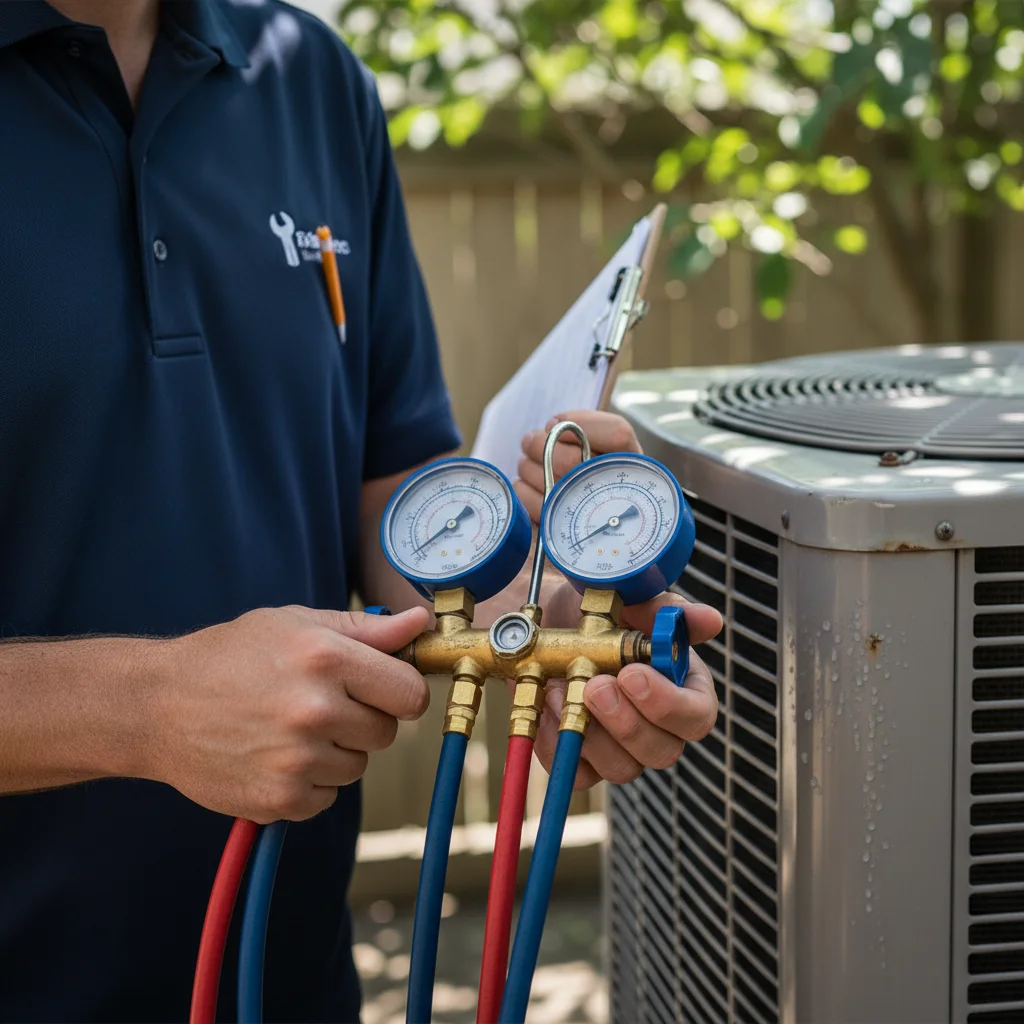
A properly functioning AC system is a closed loop. Refrigerant circulates through it indefinitely without being consumed. If your system is low on refrigerant, it’s because refrigerant leaked out somewhere. Adding more without finding and fixing the leak just means it’ll leak out again, usually within a season.
This matters because some companies will offer to “recharge” your system as a standalone service without discussing the leak. That’s a temporary fix at best. The EPA’s rules around refrigerant handling also require that leaks in systems above a certain size be repaired, not just topped off.
The right call is a leak search first. A technician will pressure-test the system, find the leak, repair it, and then recharge to the manufacturer’s specified level. If the leak is in a coil that’s heavily corroded, which we see often in coastal San Diego homes where salt air accelerates corrosion, the repair cost has to be weighed against the age of the system.
When refrigerant is low, the symptoms are usually subtle at first: the house cools slowly, it can’t keep up on hot days, or the air from vents feels like it’s 58°F instead of 52°F. If you’ve noticed your system gradually losing ground over a season or two, a refrigerant leak is worth investigating early. Our AC repair service includes a full refrigerant diagnostic.
Signs the compressor is the real problem
The compressor lives inside the outdoor unit. It’s the component that pressurizes refrigerant so the whole cooling cycle can happen. When it starts failing, the symptoms overlap with other problems, which makes it tricky to diagnose without gauges.
Signs that point toward the compressor rather than other causes:
- The outdoor unit runs but you can hear it struggling, a hard start, a grinding or rattling noise, or it trips the breaker shortly after starting
- Suction and discharge pressures are both abnormal when a technician checks with gauges
- The system is more than 12-15 years old and has never been serviced
- It cools briefly then stops cooling, even though the unit is still running
One thing worth knowing: some compressors fail gradually while others fail suddenly. A failing capacitor, a much cheaper part, can mimic early compressor symptoms because it’s what gives the compressor the electrical kick to start. A good technician will check the capacitor before condemning the compressor. That’s a named capacitor ticket versus a compressor replacement or a full system replacement conversation.
If your system is older and the compressor is confirmed failed, it’s worth reading through what a new AC costs in San Diego before committing to a repair that might not make financial sense on an aging system.
When this becomes an emergency repair
Lukewarm air in April is annoying. Lukewarm air during a San Diego heat event in August, when overnight lows stay in the 70s and the house never recovers, is a health concern, especially for households with elderly residents or young children. If your system stops cooling meaningfully during a heat advisory, that’s not a wait-and-see situation.
Other signs to treat as urgent: ice building up on the refrigerant lines and not melting after the system is shut off, the outdoor unit making sounds it’s never made before, or a burning smell coming from any part of the system.
Related services: AC installation and HVAC maintenance. Local coverage: all 67 cities we cover in San Diego County.
Not sure this is your symptom? Our HVAC symptom finder matches what the system is actually doing to the likely cause.
When to call us
If you’ve checked the basics and the air still isn’t cold, the next step is a professional diagnostic. Refrigerant leaks, compressor issues, and coil problems aren’t something you can fix with a YouTube video, and guessing wrong can turn a small repair into a compressor replacement. A licensed HVAC technician can identify the exact cause with the right equipment. Call us at (442) 777-6440 for an estimate.