The gas furnace versus heat pump decision in San Marcos is usually settled by three things you already own: whether gas is run to the equipment closet, what your electrical panel can carry, and where the ducts run. Equipment brands come last, not first.
Most people start this shopping trip at the wrong end. They read about efficiency ratings for a week, then a contractor walks the house and finds a 100 amp panel, a furnace tucked in a hall closet with no room for a coil, and a gas line that was never extended past the water heater. Here’s the order that actually saves you money.
Start with what the house already has
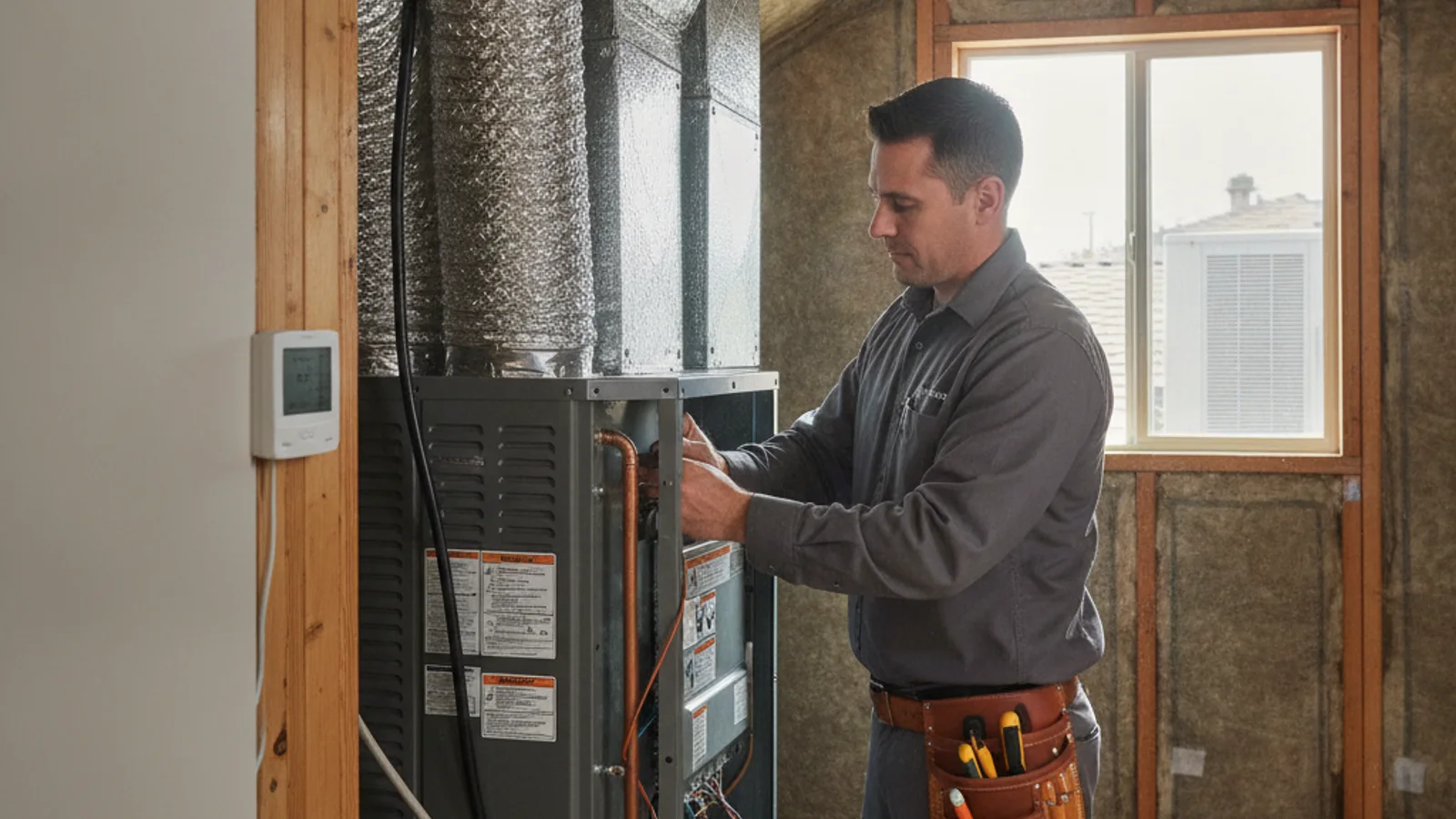
Walk to the equipment first. If your existing heater is a gas furnace, gas is already run and sized for it, and a like-for-like furnace changeout is the least disruptive path. If your heater is an electric wall unit, electric baseboard, or a heat-only air handler, there may be no gas at the equipment at all, and running a new line becomes a line item on the quote rather than an afterthought.
Then open the electrical panel and read the main breaker. A heat pump adds a dedicated circuit and a compressor load your panel was never planned around, especially in homes built before the mid-1980s. That doesn’t automatically mean a service upgrade, because a proper load calculation often shows headroom that a quick glance doesn’t. We walked through that math in detail in our guide to running a heat pump on a 100 amp panel, and it applies the same way here.
Last, look at the ducts. A furnace pushes hot air and can get away with a duct system that leaks a little in a hot attic, because the temperature difference is large. A heat pump delivers air at a gentler temperature, so duct leakage and undersized returns show up as rooms that never quite catch up. If a contractor proposes a heat pump without ever looking at the return grille, keep interviewing.
San Marcos is not one housing stock
San Marcos homes don’t share one equipment setup, so each house needs its own walk-through.
In San Elijo Hills, a two-story home may have the air handler in a conditioned closet or a semi-conditioned attic space. Check the panel, gas connection, and duct layout before choosing between a furnace and a heat pump. An upstairs-gets-hot complaint may also point to a zoning or return-air problem that a changeout is a good moment to investigate.
Lake San Marcos is a different project. A single-story home may have equipment in a garage or an exterior closet. Check the ducting and panel rather than assuming either is ready for the new system. Community rules around exterior equipment placement may also apply, so ask before anyone sets a condenser pad on the side yard facing a common area.
Twin Oaks Valley, Discovery Hills, and the Richmar corridor also need a house-by-house review. Confirm whether gas reaches the furnace and whether the panel can carry the proposed equipment before comparing either direction.
Hillside lots add one more wrinkle. A condenser sitting on a narrow downhill terrace needs clearance for airflow and safe service access, and the line-set route to the indoor unit belongs in the walk-through, not the surprise column.
When a gas furnace is still the right answer
A furnace changeout stays the sensible pick in a few clear cases. If gas is already at the equipment, the panel is tight, and you are replacing a failed furnace in a house you may sell within a few years, matching what’s there limits the scope of the job.
It’s also the practical choice when the existing air conditioner is newer than the furnace. Pulling a working condenser out to convert to a heat pump throws away equipment life you already paid for. In that case, replace the furnace now and revisit the heat pump question when the cooling side reaches the end of its run. Our breakdown of heat pump versus gas furnace costs lays out how that timing changes the math.
One planning note that should shape your thinking either way: the federal Section 25C tax credit for efficient home equipment expired on December 31, 2025, according to the IRS, so it does not apply to a 2026 installation. The IRS $2,000 figure is the 2025 qualified heat-pump cap, not this bid. TECH Clean California stopped new single-family heat-pump HVAC reservations on November 14, 2025. HEEHRA single-family rebates were fully reserved statewide as of February 24, 2026. The $8,000 / $4,000 HEEHRA figures are design caps, not live money. Any quote that leans on a rebate needs the current program status confirmed in writing before you sign.
When the switch to a heat pump pays off
A heat pump earns its place in San Marcos when you need cooling anyway. That’s the honest version of the pitch. Coastal areas experience milder temperatures than inland valleys, and a single piece of equipment that handles both seasons removes a whole second system from the future replacement schedule.
It also fits homes with no gas at the equipment. If your house heats with wall units or electric resistance, the cost of running and permitting a new gas line is real money that can go into the heat pump instead.
Efficiency ratings are worth reading here, but read the right ones. ENERGY STAR certifies air-source heat pumps at SEER2 15.2 and HSPF2 7.8 or better across all three US climate regions, which gives you a floor to compare quotes against. Anything a salesperson tells you about legal minimums in California should be checked against the manufacturer’s published specs rather than taken on faith.
New equipment sold now also uses lower-global-warming refrigerant. EPA rules under the AIM Act set a GWP limit of 700 for residential air conditioning and heat pump equipment beginning January 1, 2025, which is why the refrigerant on a new system won’t match the R-410A in your old one. Existing R-410A systems remain serviceable with R-410A.
Permits, Title 24 verification, and who signs off
The specific permit requirements for a heating changeout in San Marcos could not be confirmed from the approved sources. Confirm the current process, fees, and responsible party with the City of San Marcos before assuming a neighbor’s experience in another city transfers.
California’s Title 24 energy code requires field verification and diagnostic testing when HVAC systems are altered or replaced, performed by a certified rater rather than the installing contractor. The California Energy Commission moved that verification scope into its Energy Code Compliance program as of January 1, 2026, and points questions to its Standards Compliance Branch. You can start at the CEC program page. Ask the contractor and certified rater which requirements apply to your project and whether their charges appear on the quote.
Before you hire anyone, check the license. The C-20 classification covers warm-air heating, ventilation, air-conditioning systems, and related components. California requires a C-20 license for HVAC work exceeding $1,000 or requiring a permit. You can look up a license number, status, classification, bond, workers’ compensation, and complaint history through the CSLB license check. Every HVAC pro in the network is licensed and insured, and you should still run the number yourself.
What a quote should spell out
Ask for a written scope that names the equipment model numbers, the duct and return work included, the electrical work included, who pulls the permit, and whether Title 24 verification is in the price or extra. Ask whether a load calculation was performed on your actual house, and ask to see it. Don’t accept a proposal that sizes the system from the old unit’s nameplate alone.
Compare quotes on scope, not just the bottom line. Check whether each quote includes the same return-air work, pad, disconnect, and verification. For related work and neighborhood notes, see the San Marcos HVAC page, our furnace repair guide for San Marcos, and the heat pump service overview.
When to call us
A heating changeout may touch gas, electrical, ducting, and permitting, so ask a licensed C-20 contractor to walk the house before quoting it. If you want a second opinion on a proposal you already have, that’s a good use of a visit too. Call us at (442) 777-6440 and we will match you with a licensed local pro.