Yes, most San Diego homes can run a heat pump on a 100 amp panel. A modern heat pump draws far less power than people expect, and California’s electrical code lets an electrician prove your panel has room with a load calculation, or add a load-management device instead of a full upgrade. A panel upgrade is the exception here, not the default. Climate Pros SD does not publish a 100-to-200 amp dollar band. Ask a licensed electrician for that quote. The reason upgrades are often skipped: our mild winters. Most San Diego heat pumps skip the electric backup heat strips that eat up amperage in cold climates. This guide shows how to tell whether your 100 amp panel has room, and what to do if it doesn’t, before you buy electrical work you may not need.
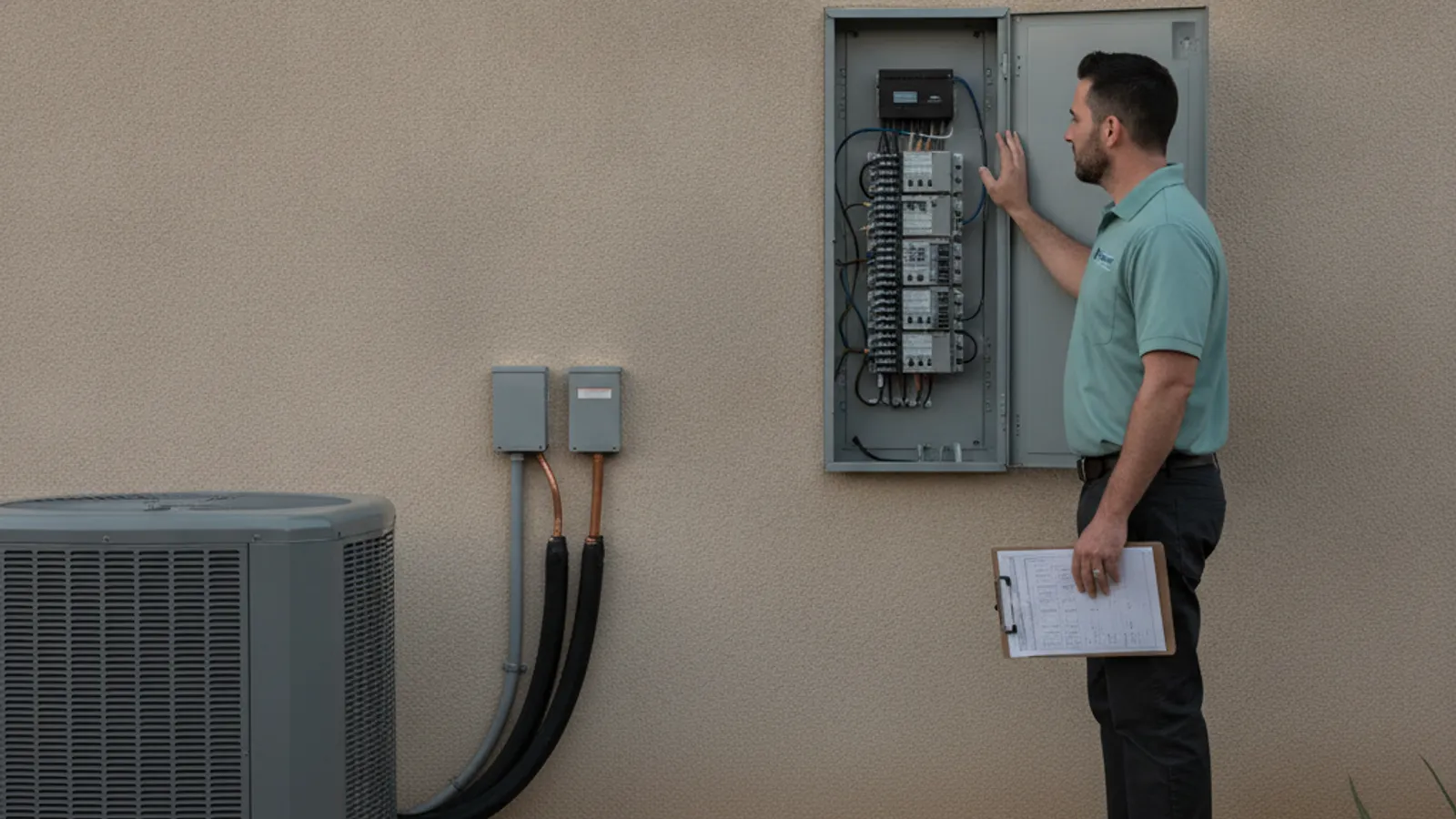
How much electrical load does a heat pump actually add?
Less than most people think. A typical residential heat pump for a San Diego home runs on a 20 to 40 amp double-pole 240-volt breaker, and the outdoor unit’s real running draw is lower than that rating. The breaker is sized to the nameplate maximum, not the everyday load.
Here’s roughly what a heat pump condenser needs by size:
- 2 ton (small home or ADU): 20 to 25 amp breaker
- 3 ton (average San Diego single-family home): 25 to 30 amp breaker
- 4 ton (larger inland home): 30 to 40 amp breaker
The number that scares people is electric-resistance backup heat. Heat strips in the air handler can add 40 to 60 amps on their own, and that’s what pushes homes in cold states onto 200 amp service. In San Diego, we rarely need them. Our winter design temperature stays mild enough that a properly sized heat pump handles the heating load without resistance backup, or with only a small strip that runs a few hours a year. Skip or minimize the strips and the added load stays modest.
Can a 100 amp panel handle a heat pump? Run the load calculation.
The only way to answer this for your specific house is a load calculation, and an electrician does it in about an hour. California’s electrical code uses a standard method for existing homes (NEC Article 220.83) that adds up your home’s actual electrical demand and compares it to what the service can carry.
A 100 amp panel at 240 volts can carry 24,000 volt-amps of load. The calculation totals your existing demand (lights, outlets, kitchen, laundry, water heater, existing AC) and adds the new heat pump. If the total stays under the service rating, your 100 amp panel has room, and you don’t need an upgrade.
This is where a lot of older San Diego homes come out ahead. If your range, water heater, and clothes dryer run on gas, your baseline electrical demand is low, which leaves headroom for a heat pump. A home that’s already all-electric has less room to work with. The calculation, not a guess, is what settles it. A note on wording: people search for both “100 amp panel” and “100 amp service,” and they mean the same thing here, the total amperage your main breaker and utility feed allow.
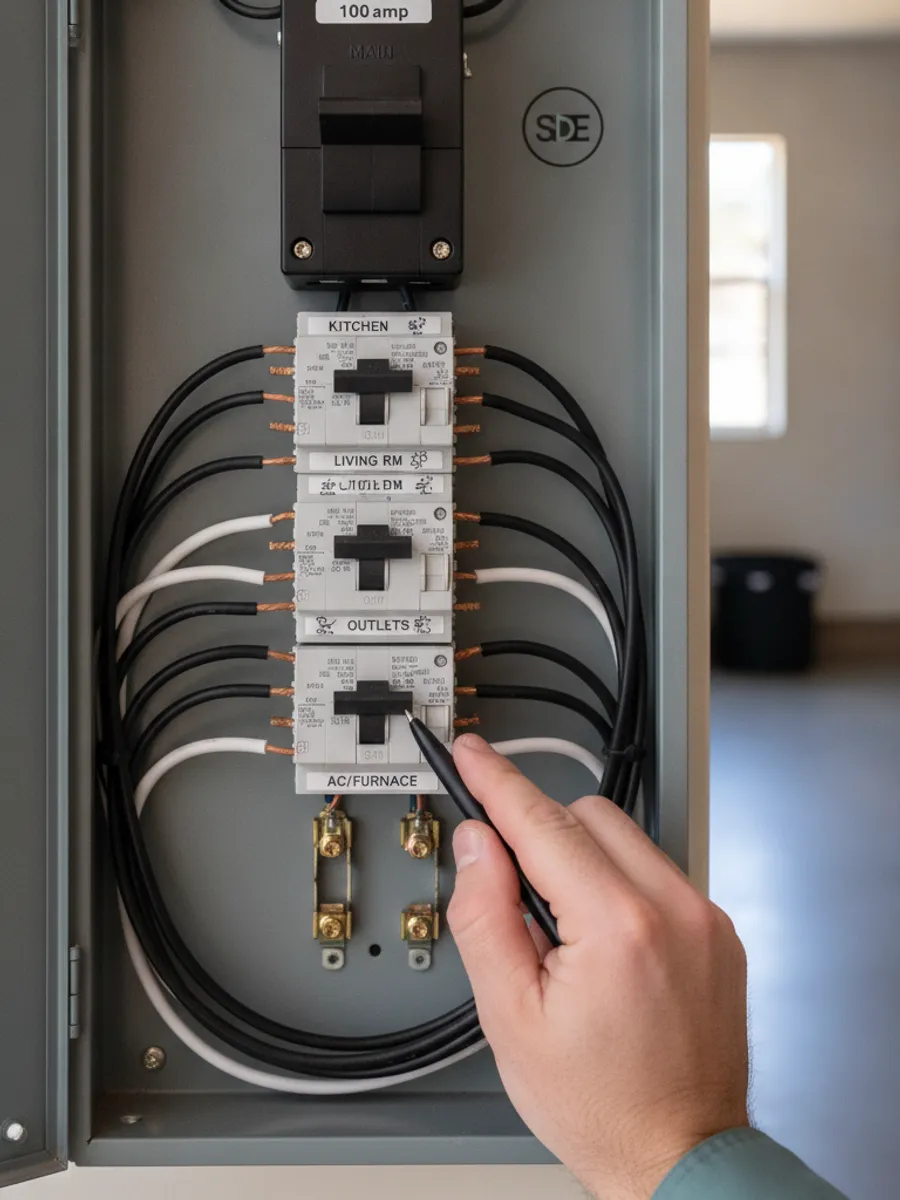
What if the load calc says the panel is full?
A full load calc does not automatically mean a service upgrade. There are several other paths an electrician can use, and California code recognizes them:
- Reuse the old AC circuit. If you’re replacing a central AC with a heat pump, you’re removing one 240-volt load as you add another. Often the existing AC breaker and wiring can carry the new heat pump, so the net change to your panel is close to zero.
- Add a load-management device. These are code-recognized controllers (NEC Article 750) that prevent two big loads from running at the same instant, so your panel never sees both at once. Ask the electrician to quote this path next to a service upgrade. Climate Pros SD does not publish either number.
- Choose a low-amp or soft-start heat pump. Some modern inverter-driven models have very low startup and running current, and add-on soft-start kits cut the inrush further. A lower draw can be the difference between fitting and not fitting.
- Skip the resistance heat strips. As covered above, dropping the electric backup heat removes the single biggest load. In San Diego that’s usually a safe call.
The right choice depends on your load calc, so this is a conversation to have with the contractor and electrician before anyone quotes a panel upgrade.
Why San Diego homes are often fine on 100 amps
Three things work in our favor here. First, the climate: our mild winters mean most heat pumps run without the electric-resistance backup that forces cold-climate homes onto bigger panels. Second, the housing stock: a lot of homes in North Park, La Mesa, Ocean Beach, and older parts of Encinitas still run on 100 amp service but were built with gas appliances, which keeps their baseline electrical demand low. Third, the swap itself: replacing a central AC with a heat pump trades one large 240-volt load for another, rather than adding a brand-new one.
Put together, a 3 ton heat pump going into a gas-appliance San Diego home on 100 amp service frequently passes the load calculation with room to spare. The homes that run into trouble are usually the ones doing a full electrification at once. For a broader look at what the switch involves, see our guide on replacing your AC with a heat pump in San Diego, and if you’re still deciding whether a heat pump fits your home, what a heat pump is and how it works covers the basics.
When you do need a panel upgrade
Some homes genuinely need the upgrade, and it’s worth knowing the real triggers:
- You’re going all-electric at once. Adding a heat pump plus an electric range, heat-pump water heater, and an EV charger in the same project can max out a 100 amp panel. The combined load is the issue, not the heat pump alone.
- The panel is already full or unsafe. Older fused panels and certain recalled brands (Zinsco, Federal Pacific) often need replacement for safety regardless of the heat pump. If yours is one of these, roll the upgrade into the project.
- The load calc comes back over. If an electrician runs the numbers and you’re genuinely over capacity with no load-management option that fits, the upgrade is the honest answer.
A 100-to-200 amp service upgrade needs a licensed electrician’s quote. Typical lines on that bid: labor, the new panel, SDG&E coordination to release and reconnect the meter, and a city or county electrical permit. Climate Pros SD does not install electrical work and does not publish a panel range. Panel upgrades tied to electrification can qualify for rebates when a program is actually open. Our roundup of California HVAC rebates for 2026 and the SDG&E heat pump rebates guide cover what to check, and if you have solar, how NEM 3.0 changes the math is worth reading before you electrify.
Do you need a permit to add a heat pump circuit or upgrade the panel?
Yes. Any new 240-volt circuit or panel change in San Diego needs an electrical permit, and a service upgrade also needs SDG&E to coordinate disconnecting and reconnecting your meter. A permit isn’t just paperwork. It triggers an inspection that catches undersized wire, bad grounding, and overloaded panels before they become a fire risk. A contractor who tells you a heat pump install needs no electrical permit is cutting a corner you don’t want cut. For the full picture on what’s required, see our post on whether you need a permit for HVAC work in San Diego.
Call (442) 777-6440 to get connected with a San Diego heat pump installer who runs a real load calculation before quoting any electrical work.
Frequently asked questions
Can you run a heat pump on a 100 amp service?
Usually yes. A load calculation (the standard method for existing homes under NEC 220.83) adds your current electrical demand to the new heat pump and compares it to your 100 amp service. Because San Diego homes rarely need electric-resistance backup heat, and many older homes run gas appliances that keep baseline demand low, a typical 3 ton heat pump often fits without any upgrade. If the numbers come back tight, a load-management device or reusing the old AC circuit is what the electrician should price next to an upgrade.
Does a heat pump need a 200 amp panel?
No, that’s a common myth. The 200 amp assumption comes from cold-climate installs that rely on 40 to 60 amps of electric backup heat strips. In San Diego’s mild winters most heat pumps run without those strips, so the added load is small. Whether you need 200 amp service depends on your total electrical demand, which is what a load calculation measures, not on the heat pump by itself.
How many amps does a heat pump use?
Most residential heat pumps run on a 20 to 40 amp double-pole 240-volt breaker, sized to the unit’s nameplate. A 2 ton unit typically needs a 20 to 25 amp breaker, a 3 ton needs 25 to 30 amps, and a 4 ton needs 30 to 40 amps. The everyday running draw is lower than the breaker rating, which is set to the maximum the unit can pull.
What is a load-management device and does San Diego allow it?
A load-management device is a code-recognized controller (NEC Article 750) that keeps two large appliances from drawing peak power at the same moment, so your panel never sees both loads at once. California’s electrical code accepts these, and they let many homes add a heat pump without upgrading the service. An electrician confirms the right device based on your load calculation.
How much does a panel upgrade cost in San Diego?
Ask a licensed electrician. Climate Pros SD does not publish a 100-to-200 amp range. The bid should include permit and SDG&E meter work. If you’re electrifying several appliances at once, or your existing panel is an older unsafe model, the upgrade may be worth doing regardless of the heat pump. Check live electrification rebates with the electrician and at sdge.com/rebates.
When to call us
Climate Pros SD connects you with heat pump and AC installation companies across San Diego County who run a real load calculation before they quote electrical work. If you’re heating a single room or an ADU, a ductless mini split is often the lowest-amperage option of all. The companies in the network work with licensed electricians on the panel side, so you get one answer on whether your 100 amp service has room, instead of a default panel upsell. They cover the whole county, from older gas-appliance homes in La Mesa and Ocean Beach to all-electric remodels inland.
Call (442) 777-6440 to get connected with a vetted San Diego heat pump installer for an assessment.