In San Diego County, most HVAC repairs don’t need a permit. Most HVAC replacements and new installs do. Doing replacement work without a permit is illegal, can void homeowner’s insurance coverage for related damage, creates problems at resale, and can result in fines and forced removal of the unpermitted equipment.
Climate Pros SD matches you with licensed HVAC companies. We do not pull permits, set permit fees, or inspect work. The matched contractor should pull the permit and include that fee in the written install quote.
Here’s what requires a permit, what doesn’t, and what happens if you skip it.
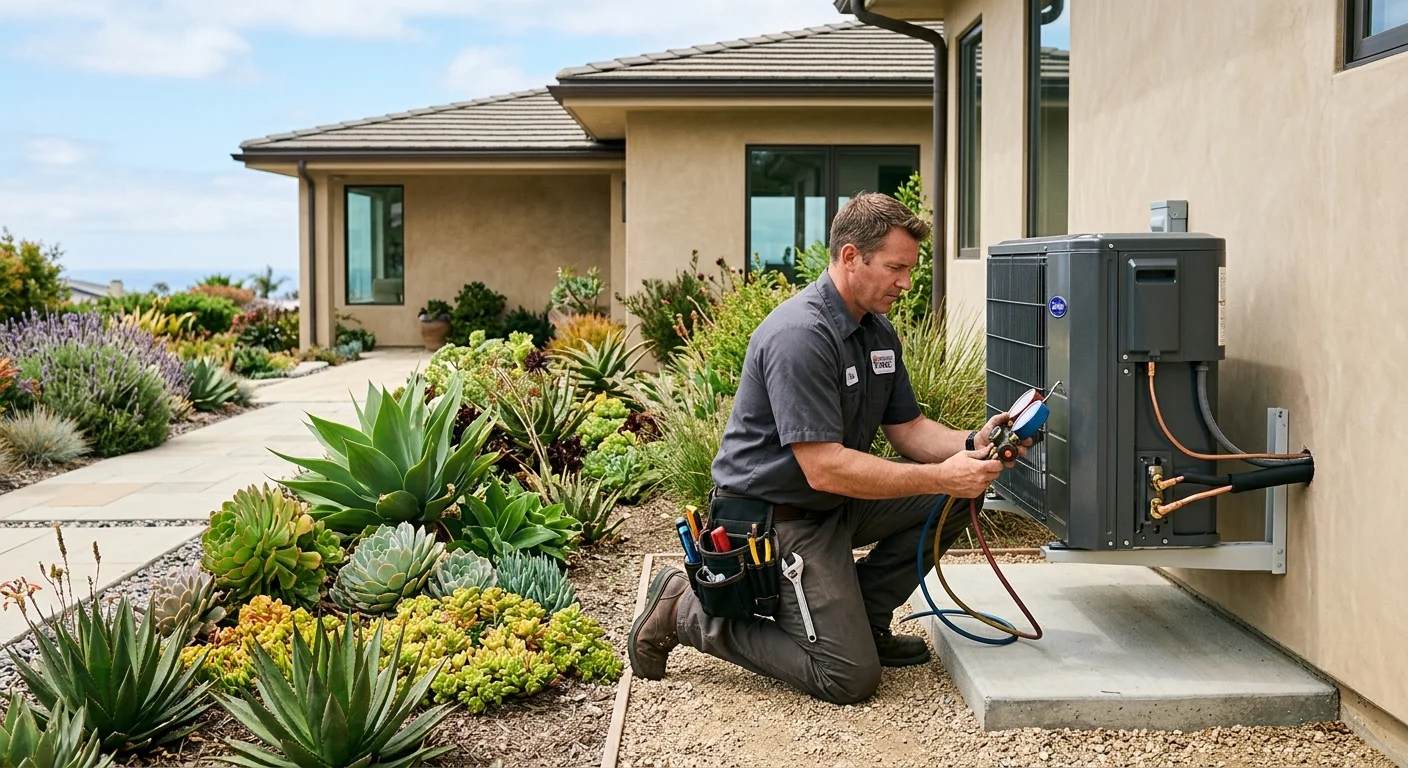
The fast answer
| Work type | Permit required? |
|---|---|
| Capacitor, contactor, or other small part replacement | No |
| Refrigerant recharge or leak repair | No |
| Filter changes, coil cleaning, drain line clearing | No |
| Annual maintenance / tune-up | No |
| Thermostat replacement (like-for-like) | No |
| Smart thermostat install with new wiring | Sometimes (electrical permit) |
| AC condenser replacement | Yes (mechanical permit) |
| Furnace replacement | Yes (mechanical permit) |
| Heat pump install (replacing AC + furnace) | Yes (mechanical + electrical) |
| New ductwork installation | Yes (mechanical permit) |
| Ductless mini-split install | Yes (mechanical + electrical) |
| Electrical panel upgrade for HVAC | Yes (electrical permit) |
| Adding HVAC to a previously unconditioned space | Yes (mechanical + electrical) |
The simple rule: if a part is being replaced inside an existing system, usually no permit. If equipment is being replaced as a unit or added new, almost always a permit.
Why permits matter
Four reasons:
1. It’s the law. California Building Code requires mechanical permits for HVAC equipment changeouts in all jurisdictions, including all of San Diego County (City of San Diego, North County cities, East County cities, South Bay).
2. Insurance coverage. If unpermitted HVAC work causes property damage (electrical fire, water damage, CO leak), your homeowner’s insurance often won’t cover it. The work was performed in violation of code, which can void coverage.
3. Resale problems. Title companies pull permit history during home sales. Unpermitted improvements show up as “open permits” or “missing permits” and either delay the sale, require the buyer to accept the risk, or require the seller to retroactively permit (which often means redoing or modifying the work).
4. Inspections catch real problems. Permit inspections aren’t bureaucratic theater. Inspectors catch wrong refrigerant line sizing, improper electrical connections, undersized condensate drains, and dozens of other installer errors that affect system performance and safety.
Who pulls the permit
Your HVAC contractor pulls the permit. It’s part of their job and should be included in the install price. Climate Pros SD does not publish a mechanical-permit fee table. Fees scale with jurisdiction and project scope. Check the current schedule from the office that covers your address, such as City of San Diego Development Services or County of San Diego Planning & Development Services. Ask the matched company to show the permit line on the quote.
If a contractor offers to “skip the permit to save you the fee,” walk away. Three problems:
- They’re asking you to break the law to save them paperwork
- The unpermitted work creates the insurance and resale problems above
- A contractor willing to skip permits is also willing to skip other code compliance, a bad sign for installation quality
This isn’t a small thing. Contractors can lose licenses over consistent permit skipping. Homeowners can lose insurance claims.
Jurisdictional differences in San Diego County
Permit specifics vary by jurisdiction. The main ones:
City of San Diego. Mechanical permits issued through the Development Services Department. Fees scale with project scope. Inspections typically scheduled within 5-10 business days.
North County coastal (Carlsbad, Oceanside, Encinitas, Del Mar, Solana Beach). Each city has its own permit office. Generally faster turnaround than the City of San Diego.
North County inland (Escondido, San Marcos, Vista, Valley Center, Fallbrook). Escondido has its own Building Division. Vista and San Marcos share some processes. Unincorporated areas go through County of San Diego Planning & Development Services.
East County (El Cajon, Santee, La Mesa, Lakeside, Alpine). El Cajon and La Mesa have city departments. Lakeside and Alpine go through County PDS.
South Bay (Chula Vista, National City, Imperial Beach, Coronado). Each city has its own permit process. Chula Vista is known for thorough inspections.
Your contractor knows which jurisdiction your address falls under and which permit office to use. If they don’t know this, they don’t do enough permitted work to be your contractor.
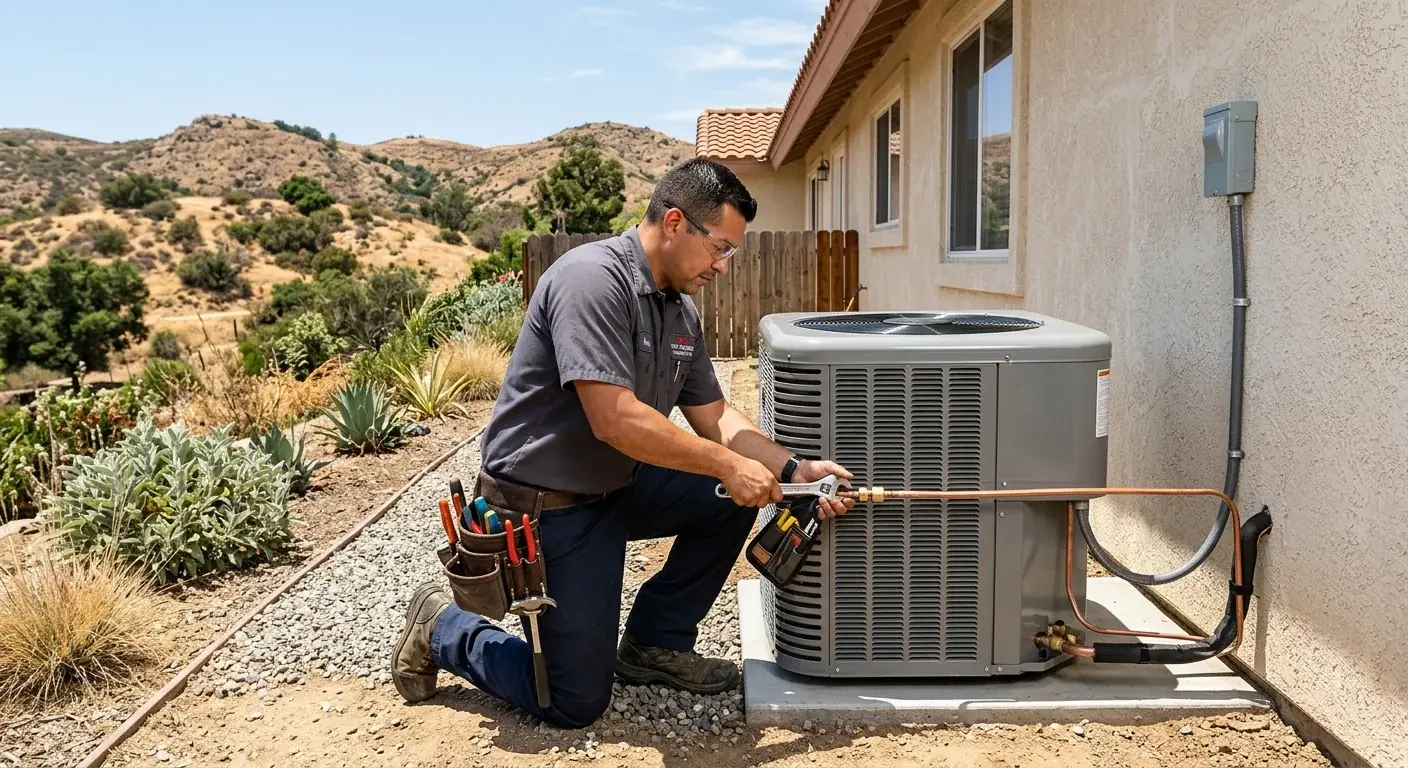
What the inspection covers
A typical mechanical permit inspection for HVAC replacement includes:
- Equipment placement and clearances (manufacturer spec)
- Refrigerant line set sizing and insulation
- Condensate drain installation and trap
- Electrical disconnect and proper sizing
- Combustion air requirements (gas furnaces)
- Flue and vent installation (gas furnaces)
- Earthquake bracing of outdoor units (California-specific)
- Smoke and CO detector verification (if home requires)
- Insulation values where applicable
Inspections usually take 30-60 minutes. The inspector either passes the work, fails with corrections required, or requires changes before re-inspection.
What happens if you skip the permit
Three scenarios:
1. You’re caught at sale. Most common. Title search reveals unpermitted improvements. Sale delayed; buyer’s lender may not approve. Options: retroactively permit (often requires opening walls or modifying installed work), reduce sale price to compensate buyer for accepting risk, or remove the unpermitted equipment.
2. Your insurance claim is denied. A house fire that originates with HVAC electrical, water damage from a failed condensate drain, or CO poisoning from a venting failure, all routinely lead to insurance investigators checking permit status. Unpermitted work is often denied.
3. The county catches you proactively. Less common but happens. Neighbor complaints, satellite imagery review, or routine code enforcement sweeps. Result: a fine plus required retroactive permitting at penalty rates. Penalty amounts come from the jurisdiction, not from this page.
Skipping the permit to dodge a line-item fee trades a small paperwork cost against insurance, resale, and enforcement risk. It is almost never the right call.
Specific permit situations homeowners ask about
“My contractor offered to do it without a permit for a discount.” Walk away. The discount is the contractor’s way of pocketing the time they would have spent on permit work, while leaving you with all the downside risk.
“I’m replacing my AC condenser only, same size, same location.” Still requires a mechanical permit. The equipment is being replaced as a unit; that triggers the permit requirement regardless of whether sizing or location changes.
“I’m adding a ductless mini-split to one room.” Requires both mechanical and electrical permits. Mini-splits are new equipment installs, not just repairs.
“My existing furnace works but I want to install AC for the first time.” Requires mechanical permit for the AC and electrical permit for the new circuit feeding it.
“I’m just upgrading my thermostat to a Nest.” Like-for-like replacement at the same wiring point usually doesn’t require a permit. Running new wiring (C-wire installation, panel changes) may require an electrical permit depending on scope.
How to verify the permit is real
After install, ask for:
- A copy of the permit application (filed before work started)
- The permit number
- Inspection records showing the work passed inspection
- Permit closure / final inspection sign-off
If the contractor can’t produce these, the permit may never have been pulled. You can verify directly with the relevant jurisdiction’s building department by searching the permit number.
FAQs
Do I need a permit to replace my AC unit in San Diego?
Yes. Replacing an AC condenser is considered an equipment changeout under California Building Code and requires a mechanical permit. Your HVAC contractor should pull the permit as part of the install price.
Do I need a permit for furnace replacement?
Yes. Same as AC replacement, mechanical permit required. Gas furnace replacements also require combustion air and venting inspection.
Does an AC repair require a permit?
No. Repairs to existing equipment (capacitor replacement, refrigerant recharge, motor replacement, electrical components) don’t require a permit. Only changing out major equipment as a unit triggers the permit requirement.
How much does an HVAC permit cost in San Diego?
Climate Pros SD does not publish a permit-fee range. Typical residential mechanical permits are a modest line on an install quote and vary by city or unincorporated county. Heat pump installs often need both mechanical and electrical permits. Read the current fee schedule for your address, then ask the matched contractor to show the permit line in writing.
What happens if I don’t get a permit for HVAC work?
Three downsides: illegal under California Building Code, can void homeowner’s insurance coverage for related damage, and creates problems at resale when title search reveals unpermitted improvements.
Can I pull my own HVAC permit?
Yes, but most homeowners shouldn’t. Owner-pulled permits make you responsible for hiring licensed labor and ensuring code compliance. Most homeowners aren’t equipped to verify either. Better to use a licensed contractor who pulls the permit themselves.
How long does an HVAC permit take in San Diego?
Application processing: often within one business day, up to 5 business days. Inspection scheduling: typically 5-10 business days after install. Final permit closure: 5-15 business days after inspection passes. Total elapsed time: often 2-4 weeks from install to closed permit.
Will a permit slow down my HVAC install?
Marginally. Most install timing isn’t permit-limited; equipment delivery and contractor scheduling are bigger factors. Final inspection usually happens within 5-10 business days of install, which doesn’t affect when you start using the new system.
Related services: AC repair and thermostat installation.
When to call us
The contractors in our network pull permits as part of every install. There should be no “let’s skip it to save you money” conversation. Call (442) 777-6440 to get matched with a licensed pro for an in-home assessment, or read our how to choose an HVAC contractor guide for the broader contractor-vetting checklist.