TL;DR
- For pet households in San Diego, MERV 11 in a 1-inch return is usually the ceiling. MERV 13 only if you have a 4-inch filter cabinet or media-grade air handler.
- Change 1-inch filters more often with pets than the 90-day default on the box. Two-pet homes often need a monthly look.
- San Diego’s marine layer humidity keeps dander suspended longer than dry-climate guides assume. Pair filtration with regular brushing and coil checks when the system is opened for service.
- Whole-house filtration and portable HEPA units solve different rooms. Compare written quotes and coverage, not a blog dollar table.
San Diego is a coastal-influenced climate with persistent low-grade humidity from the marine layer May through August. That combination matters more than national HVAC guides admit: humid air keeps fine particulate, including pet dander, suspended longer than dry desert air does. The same shedding load that is manageable in Phoenix can circulate through your ducts for days here.
Climate Pros SD matches you with licensed HVAC companies. We do not install filters as a brand, set prices, or promise arrival windows.
Here is the playbook for filter choice, cadence, and air-quality strategy when there is fur in the house.
What MERV rating should pet households use?
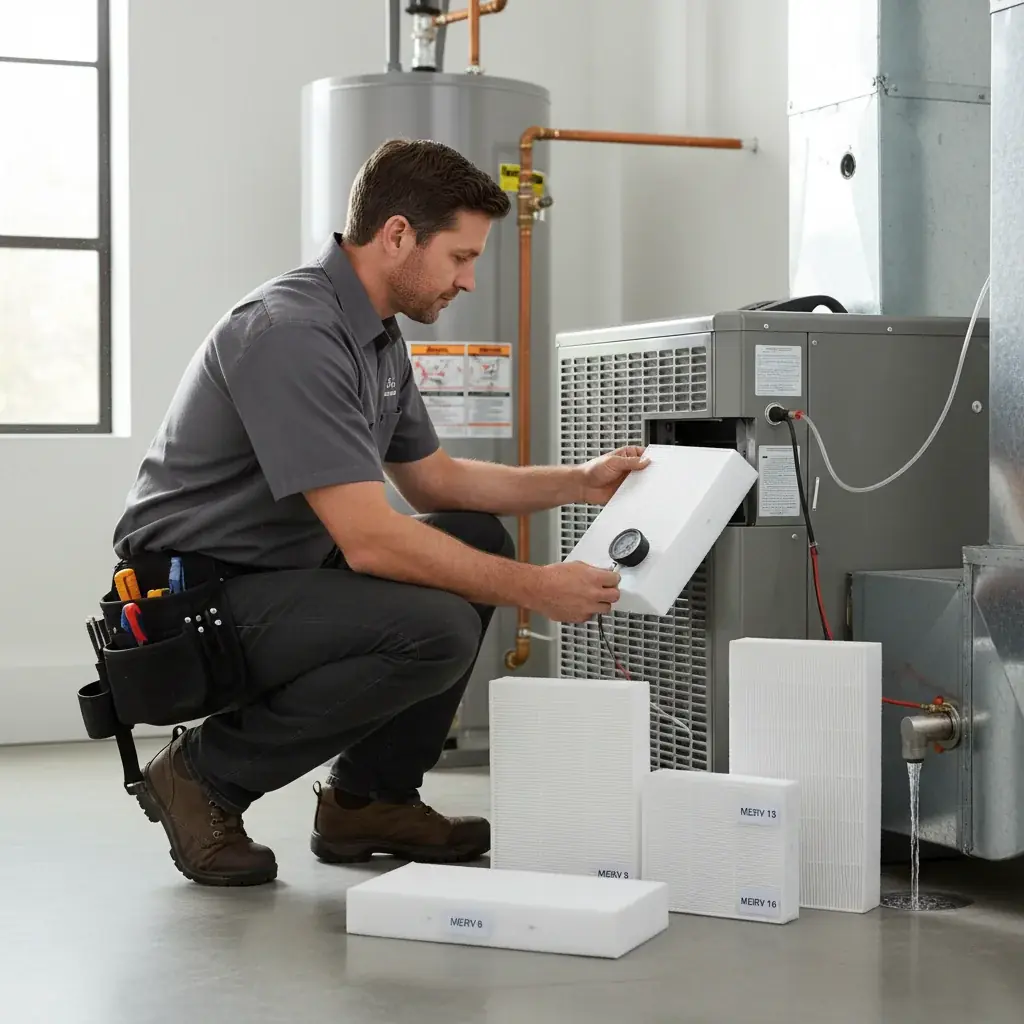
Most national pet-filter advice recommends MERV 13. That is correct only if your system can handle it. In a typical San Diego single-family home with a 1-inch return grille and an older air handler, MERV 13 in a 1-inch slot is a mistake. It restricts airflow enough to ice the evaporator coil, starve the blower, and shorten compressor life.
The right answer depends on the filter slot you have:
1-inch return grille (most common): MERV 11 is usually the ceiling. It captures much of the pet dander without choking the system. MERV 8 captures pet hair but lets more dander through.
4-inch media cabinet (newer installs): MERV 13 can work here. The larger surface area means lower pressure drop at the same particle-capture rating.
5-inch media filter: MERV 13 to MERV 16. These are the only common residential configurations where MERV 16 is reasonable. Anything above that is HEPA territory and needs a bypass filter loop, not the main air handler.
For a deeper breakdown of what each rating actually filters and where the airflow penalties hit, see our HVAC filter guide and MERV ratings.
How often should you change the filter with pets in the house?
The 90-day rule on the filter packaging assumes a pet-free, low-occupancy home. With pets, that number drops fast.
One short-haired pet (cat or small dog): Check at 60 days.
Two pets, or one heavy shedder (Husky, Lab, Golden, Persian): Every 30 to 45 days.
Three or more pets: Monthly. A packed filter raises static pressure and can cut cooling capacity.
A practical signal: pull the filter and hold it up to a window. If you cannot see clear daylight through the pleats, it is overdue. Do not wait for the system to short-cycle or the coil to freeze. By then you are closer to a refrigerant or coil call.
Buy multi-packs and date the edge with a marker when you install. Climate Pros SD does not publish a per-filter price.
What does pet hair actually do inside your HVAC?
Hair and dander do not just clog the filter. When the filter overflows (and a 90-day filter in a two-pet home will overflow), the excess gets pulled past the frame edges and into the system. Three things happen:
- Evaporator coil fouling. Hair mats onto the cold coil fins. The mat insulates the coil, drops cooling capacity, and holds moisture. Pet households often need coil cleaning sooner than a calendar default.
- Blower wheel imbalance. Dander cakes on the squirrel-cage fins. The wheel goes out of balance, the motor draws more amps, the bearings wear faster.
- Duct settlement. Hair too heavy to filter settles in horizontal duct runs and can aerosolize every time the blower kicks on.
For pet households, a coil-and-blower look during a yearly maintenance visit is reasonable. Ask what the visit includes. Climate Pros SD does not bundle a branded pet-tune-up price.
Whole-house filtration vs portable HEPA: how should you compare them?
A common pet-owner mistake is buying several room-sized HEPA purifiers because the IAQ marketing is everywhere. Compare coverage, not a blog cost table.
| Option | What it covers | What to ask |
|---|---|---|
| 4-inch filter cabinet upgrade | Whole house, if the handler can take it | Static pressure after the upgrade |
| Portable HEPA units | The rooms they sit in | CADR versus room size, filter replacement schedule |
| Whole-house HEPA bypass | Whole house, separate from the 1-inch slot | Whether the handler needs a bypass loop |
The 4-inch cabinet upgrade often wins on whole-house coverage for most homes. A whole-house HEPA bypass can make sense if anyone in the household has severe pet allergies or asthma. Portable units make sense for a single bedroom belonging to a high-sensitivity sleeper, on top of whole-house filtration, not in place of it.
The cabinet upgrade is also useful during wildfire smoke events. See our indoor air quality service page for what an install looks like. The matched licensed contractor installs equipment. Climate Pros SD does not.
How should you protect the outdoor unit from pets?
The condenser unit outside is the other half of the equation. Two specific issues for pet households:
Urine corrosion. Male dog urine is acidic and salty enough to corrode the aluminum coil fins on the outdoor unit. If your unit sits along a fence or against a wall where the dog has access, you can see premature fin damage and refrigerant leaks. This shows up faster in coastal zip codes where salt air already accelerates corrosion. Fence the unit off with clearance on all sides, or rinse the fins with fresh water. Power off at the disconnect first.
Hair and yard debris. Dogs shed in the yard, the breeze carries it to the condenser intake, the coil clogs. A clogged condenser coil drops capacity and runs the compressor hot. Rinse from inside-out with the breaker off, twice a season.
A simple decision framework
If you have:
- One indoor pet, low shedder: MERV 11 in 1-inch slot, change about every 60 days. Brush the pet twice a week. Annual tune-up.
- Two pets, or one heavy shedder: MERV 11 in 1-inch slot, change every 30 to 45 days. Consider upgrading to a 4-inch filter cabinet. Annual tune-up with a coil look.
- Three or more pets, or anyone with pet allergies: 4-inch cabinet upgrade with MERV 13 if static pressure allows. Bedroom HEPA for the allergy sufferer.
- Allergies plus a chronic respiratory condition: Whole-house HEPA bypass conversation. This is a system-level decision and worth a consult before spending the money.
FAQs
Are MERV 13 filters bad for older HVAC systems? In a 1-inch slot on an older system, yes. The pressure drop is enough to ice the coil and stress the blower. In a 4-inch cabinet or on a newer variable-speed air handler, MERV 13 is often fine. If you are not sure, ask the technician to measure static pressure during the next service call.
How often should I clean my air ducts if I have pets? The EPA does not recommend cleaning ducts on a fixed calendar. Clean when there is a reason: visible mold, pest debris, dust blowing from supplies, or a contamination event. Duct cleaning is not a proven health or efficiency guarantee. Sealing leaks is a different job. ENERGY STAR says a typical forced-air house can lose about 20% to 30% of the air moving through ducts. That is national typical-house language, not your measured leakage. See our duct cleaning cost guide for quote questions, not a 2026 price.
Does running the fan continuously help with pet dander? Yes, if your filter and coil are clean. Running the blower on “fan on” instead of “auto” cycles indoor air through the filter even when the AC is not actively cooling. The tradeoff is extra electricity on SDG&E time-of-use plans, including 4 p.m. to 9 p.m. on-peak. This page does not publish a monthly dollar figure. If your filter is overdue, fan-on just spreads dander around faster.
Do air purifiers in the duct work better than filter upgrades? UV lights and PCO (photocatalytic oxidation) duct add-ons are marketed hard but the residential evidence is mixed. They do not replace mechanical filtration. If budget is limited, spend on a 4-inch filter cabinet before any in-duct purifier add-on.
Is San Diego humidity really different enough to matter? Coastal summer relative humidity is often much higher than inland desert climates. Higher humidity keeps fine particulate, including dander, suspended longer. That is why filtration cadence matters more here than in Phoenix or Las Vegas, even when total dust load is lower.
Should I close the air vents in rooms my pet doesn’t go in? No. Closing vents raises duct static pressure and stresses the blower. If you want to balance airflow, have a tech adjust the dampers at the air handler. Closing registers at the wall does not save a proven amount of money and may shorten equipment life.
Related service: AC repair. Local coverage: all 67 cities we cover in San Diego County.
When should you call?
Pet households tend to need filter and coil attention more often than a pet-free house. If it has been over a year since the last tune-up, the filter is grey before its scheduled change, or the system is short-cycling, those are signals to book a visit.
Call (442) 777-6440. Climate Pros SD matches you with a licensed pro. Ask what a maintenance visit includes for coil and blower inspection. This brand does not publish a tune-up price or a free-estimate promise.