A whole-system install in Vista is one decision about heating and cooling together, not two purchases made a few years apart. The sequence that produces a good outcome is the same every time: load calculation, then equipment, then duct scope, then permit, then field verification.
Climate Pros SD matches Vista homeowners with licensed independent HVAC companies. We do not install systems or set prices. Most people arrive because the air conditioner died. The furnace is often the same age, on the same ducts. Replacing one and leaving the other means two mobilizations, two permits, and overlapping labor.
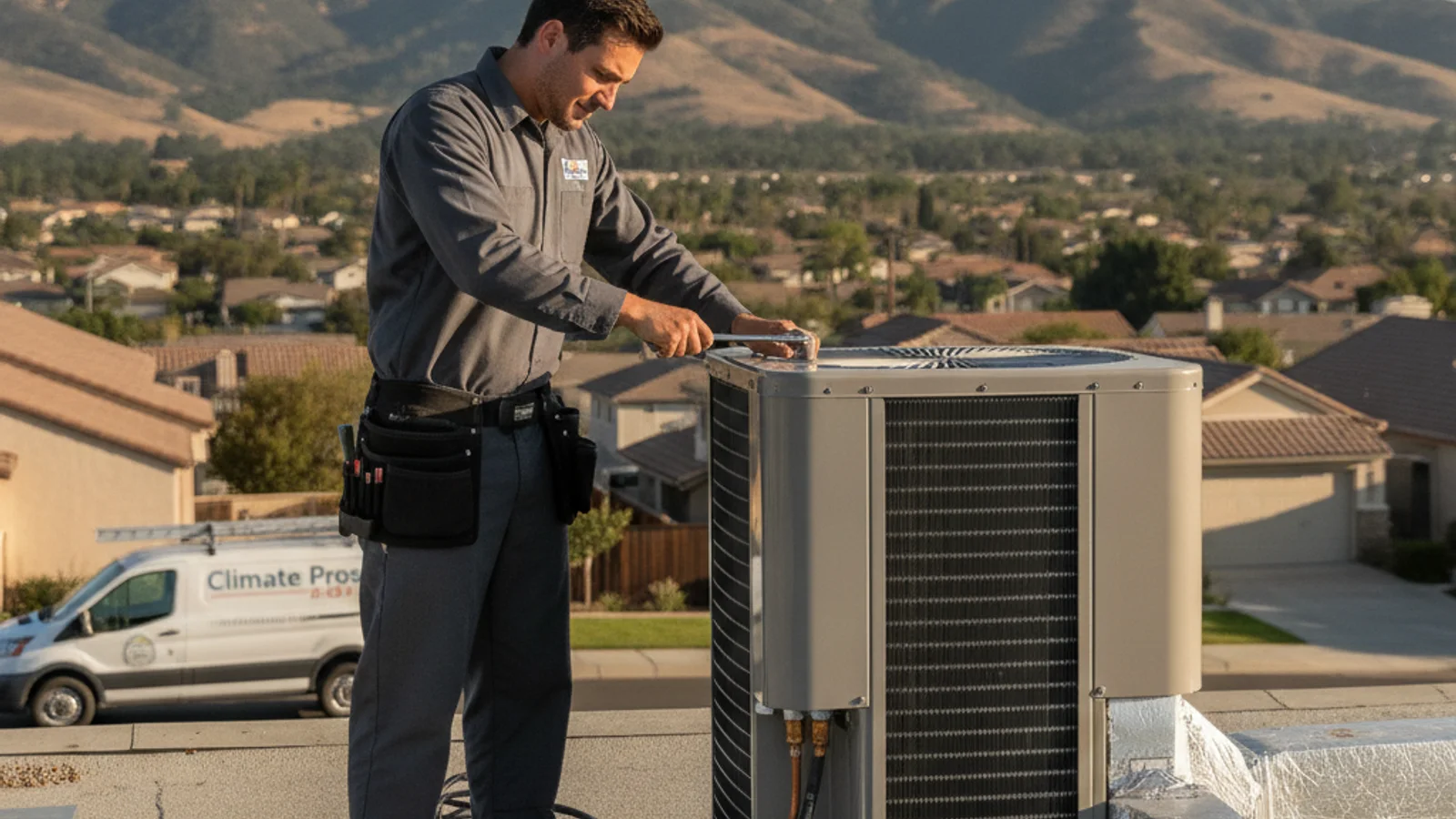
Why Vista makes this one decision instead of two
Vista sits inland of the coastal cities. Summer afternoons put a real cooling load on the system. Winter nights inland actually use heat, unlike beach cities where a furnace may barely run.
A heat pump does both jobs from one outdoor unit and one air handler. A gas furnace plus a straight air conditioner does both jobs with two machines, two failure timelines, and a gas line and flue.
Neither is automatically right. If the furnace is genuinely young and the panel is tight, replacing the air conditioner alone can be reasonable. If both need replacement, or the ducts are coming out, ask each company to quote one project and separate scopes. If the panel cannot carry all-electric without a service upgrade, dual-fuel keeps gas backup and still uses a heat pump most of the year.
Do not let whatever is on the truck decide. Heat pump versus gas furnace and the 2026 HVAC installation cost guide cover tradeoffs without treating a sales visit as a price list.
For a 2026 heat-pump install, do not subtract Section 25C, open TECH single-family HVAC money, or open HEEHRA single-family money. 25C does not cover installs after December 31, 2025. TECH single-family HVAC reservations stopped November 14, 2025. HEEHRA single-family was fully reserved February 24, 2026. Confirm: IRS 25C, TECH incentives, CEC IRA rebates, SDG&E rebates.
The load calculation comes first, and it is not optional
A Manual J load calculation sizes the system from orientation, glass, insulation, infiltration, ceiling height, and design temperature. Square-footage rules of thumb oversize. Oversizing short-cycles, leaves humidity in the air, and wears the compressor.
The existing nameplate is not proof of what the house needs now. Ask for the calculation as a document with inputs named. If two companies return different sizes, the inputs show why. Manual J in San Diego.
What inland sizing actually changes
Vista’s design conditions are not Carlsbad’s. The same floor plan calculates differently a few miles inland. Cooling has to carry a hotter afternoon. Heating nights draw more than the coast, which matters for heat-pump capacity and whether backup heat is specified.
Two-stage and variable-speed equipment often fit a long cooling season better than single-stage, because they can run at part load. NWS San Diego is the climate overview to read yourself. ENERGY STAR heating and cooling lists certified performance levels. DOE describes SEER2 as Btu per watt-hour and notes actual savings vary with usage.
Ductwork decides how much of the new system you feel
Excellent equipment on leaky ducts is a mediocre result. ENERGY STAR says a typical forced-air house can lose about 20% to 30% of the air moving through ducts to leaks and poor connections. That is a national typical-house figure, not a Vista attic measurement.
A pro has to inspect and test the actual system. Honest outcomes: ducts stay, accessible runs get sealed and insulated, or they get replaced. That comes from a leakage test. Duct leak repair. While the attic is open is the cheap time to add a second return if one hallway grille feeds the whole house.
Permits and field verification
We could not confirm the City of Vista’s current permit fee schedule from an approved primary source. Confirm requirements with Vista’s building division before work starts. The matched contractor pulls the permit, not this brand.
California Title 24 requires field verification when HVAC is altered or replaced, by a state-certified rater independent of the installer. As of January 1, 2026, CEC relocated that HERS field-verification scope into the Energy Code Compliance program. Ask which tests apply. CEC HERS / ECC.
Verify the C-20 at CSLB. If an HOA governs exterior equipment, ask them before work starts.
The install week, and what you should hold at the end
Ask the company for a written sequence and what would change it. Ask how old equipment comes out, how new equipment goes in, and which startup readings they will record.
When it is done you should hold the load calculation, model and serial numbers, permit and final inspection, field-verification results, startup readings, and manufacturer warranty registration in your name. That warranty is the manufacturer’s, not a Climate Pros SD guarantee. Vista service area.
When to call us
Plan a whole-system job before the house is already hot. Load, ducts, and permits take calendar time. Call (442) 777-6440. Climate Pros SD matches you with a licensed, insured local company. That company writes the bid and does the work.