The silence when your old air conditioner finally gives up is unmistakable. One minute it’s humming along, the next, there’s nothing but quiet, rising heat. You’re not just facing an uncomfortable afternoon; you’re looking at an unexpected and significant home investment. Understanding the true HVAC replacement cost in San Diego is the first step toward making a confident decision without feeling overwhelmed or overcharged.

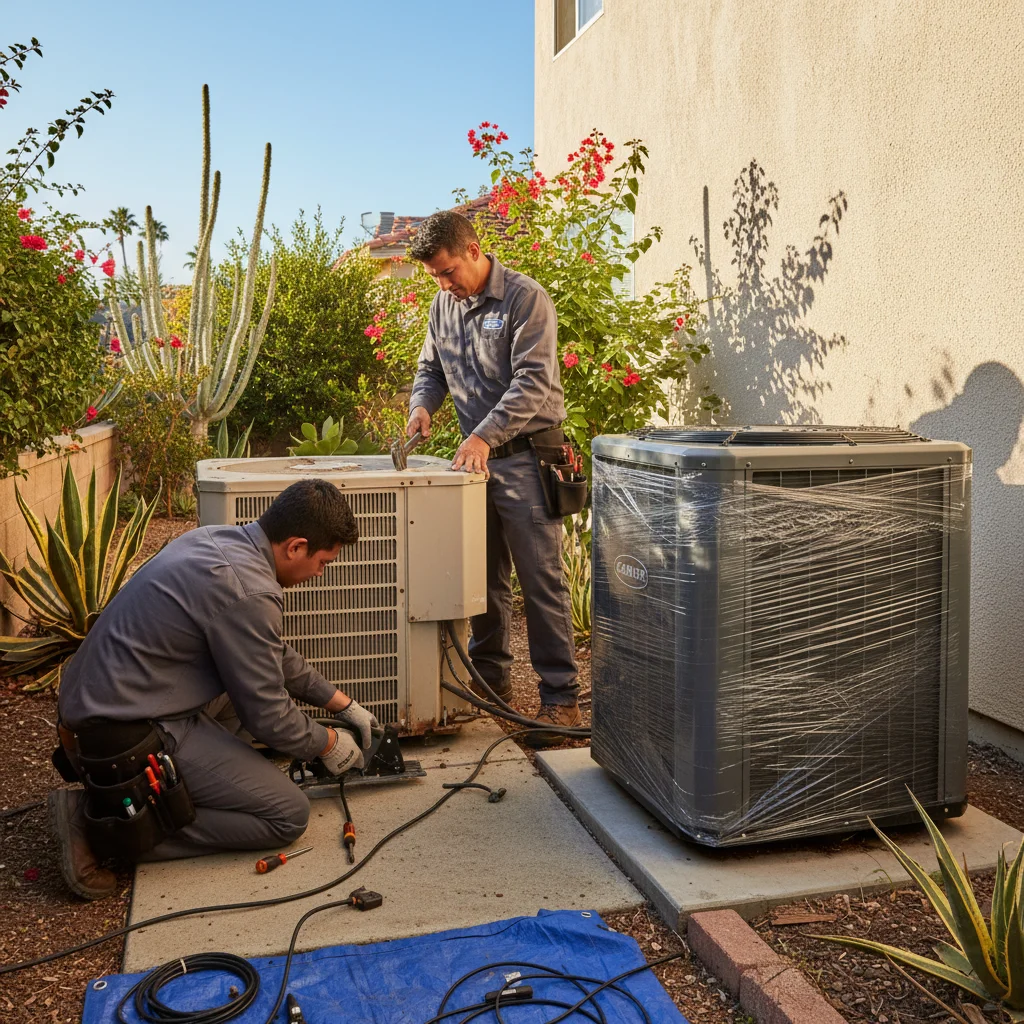
Old AC condenser being removed by technicians beside a new replacement unit on a

What a fair 2026 HVAC replacement quote includes line-by-line

A trustworthy quote is never just a single number on a business card. It’s a detailed breakdown that shows you exactly what you’re paying for. When your system has failed and you need a full replacement, a professional quote should clearly itemize several key areas. Anything less is a red flag.

Here’s what to look for on an estimate from a reputable San Diego HVAC contractor:

  • Equipment: This is the biggest part of the cost. The quote should specify the brand, model numbers, and efficiency ratings (SEER2 for cooling, HSPF2 for heating, AFUE for furnaces) for both the indoor unit (air handler or furnace) and the outdoor unit (condenser or heat pump).
  • Labor: This covers the skilled work of a certified team. It includes the safe removal and EPA-compliant disposal of the old system and its refrigerant, setting the new equipment, running new electrical and refrigerant lines if needed, and connecting everything. A standard replacement is often a full day’s work for two technicians.
  • Materials & Supplies: This isn’t just “miscellaneous.” A good quote lists the necessary components. This includes a new concrete or composite pad for the outdoor unit, a new electrical disconnect and whip, copper line sets, PVC for the condensate drain, new thermostat, and potentially new flue piping for a gas furnace. Vague “shop fees” can be a way to pad the bill.
  • Ductwork Modifications: It’s rare for a new system to fit exactly like the old one. The quote should account for any necessary sheet metal transitions or adjustments to connect the new equipment to your existing ductwork for proper airflow.
  • Permit & Inspection Fees: A line item for pulling the required city or county permit. This is non-negotiable for safety and code compliance.
  • Title 24 & HERS Testing: A separate line item for the third-party HERS rater who must verify compliance with California’s energy code. We’ll dive deeper into this below.

A transparent quote builds trust. It shows the contractor has done their homework and is pricing the job based on your specific home, not a generic guess.

Price bands by system type and home size

While every home is unique, we can provide realistic price ranges for common HVAC replacement scenarios in San Diego County for 2026. These prices reflect a complete, permitted, and code-compliant job by a licensed and insured company.

Standard AC and gas furnace replacement

This is the most common system in San Diego homes. It pairs an outdoor air conditioner with an indoor gas furnace for heating.

  • Small Home or Condo (under 1,200 sq. ft.): $10,000 – $14,000
  • Medium Home (1,200 – 2,000 sq. ft.): $12,000 – $18,000
  • Large Home (over 2,000 sq. ft.): $16,000 – $25,000+

All-electric heat pump system replacement

A heat pump is a single unit that provides both highly efficient cooling and heating. They are becoming the standard in San Diego due to their efficiency and a host of available rebates.

  • Small Home or Condo (under 1,200 sq. ft.): $12,000 – $16,000
  • Medium Home (1,200 – 2,000 sq. ft.): $15,000 – $22,000
  • Large Home (over 2,000 sq. ft.): $20,000 – $30,000+

These ranges can be affected by factors like the system’s efficiency rating (a 18 SEER2 system costs more than a 14.3 SEER2 system), brand, and the complexity of the installation (e.g., an attic furnace is more difficult than one in a garage). The final out-of-pocket cost for a heat pump can often be lower than a gas system after factoring in substantial rebates.

Why two quotes for the ‘same’ job can vary by $8,000

It’s one of the most confusing parts of getting bids. You get two or three quotes for what seems like the same replacement, and the prices are thousands of dollars apart. This massive variance usually comes down to a few key factors.

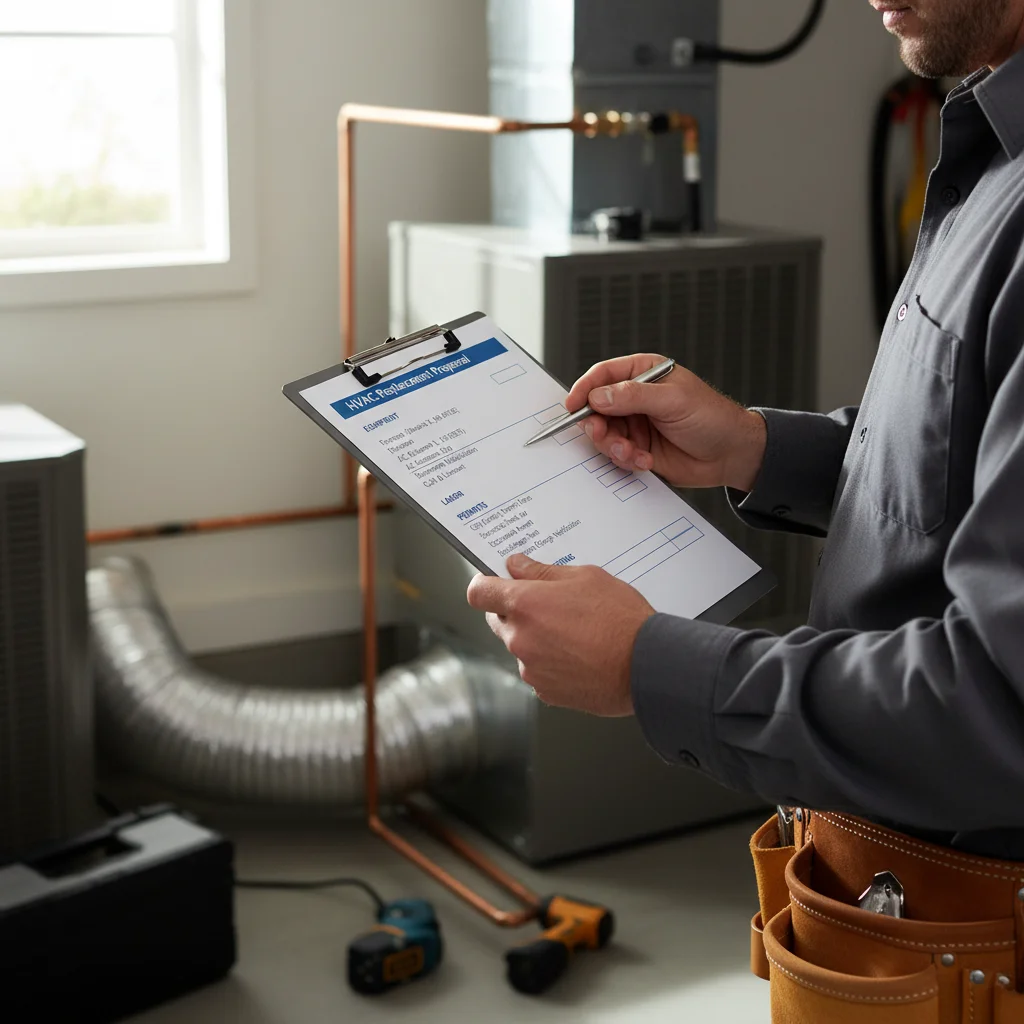
Itemized HVAC replacement estimate on a clipboard showing line items for equipme

Legitimate reasons for price differences

  • Equipment Quality & Efficiency: A quote for a single-stage, builder-grade system will be much cheaper than one for a multi-stage or variable-speed, high-efficiency system from a premium brand. The more efficient and feature-rich the equipment, the higher the upfront cost.
  • Scope of Work: One contractor might quote flushing and reusing your old refrigerant lineset, while another insists on replacing it to meet the new system’s warranty requirements. One might include a new smart thermostat, while another re-uses your old one. These details add up. If you’re not even sure if replacement is the right call, our guide on AC replacement vs. repair can help clarify your options.
  • Company Legitimacy: A licensed, insured, and bonded company has significant overhead. This includes paying for trained technicians, workers’ compensation insurance, liability insurance, fully-stocked work vehicles, and a physical office. A contractor working out of their truck has lower costs but carries far more risk for you, the homeowner. Always verify a contractor’s license on the CSLB website.
  • Warranties: A top-tier company will offer a 10-year parts and a 1-2 year labor warranty. A lower-cost bid might only offer the manufacturer’s standard warranty with little or no labor coverage.

Red flags that signal a bad quote

  • No Itemization: A single price for “HVAC system” is a major red flag.
  • Suggesting You Skip Permits: This is illegal and puts all the liability on you. It can cause major problems if you ever sell your home.
  • High-Pressure Tactics: “This price is only good if you sign today” is a classic sales tactic, not a professional assessment.

Permit, Title 24, and HERS costs you can’t skip

In California, replacing an HVAC system isn’t just a mechanical job; it’s a legal one. Any contractor who tells you otherwise is cutting corners. These three components are required by law in San Diego County and will be part of any legitimate quote.

  • The Permit: Every city in San Diego County requires a permit to replace your HVAC system. This ensures the work is performed to current safety codes, especially regarding electrical and gas connections. The permit itself usually costs between $200 and $500 and involves a final inspection by a city official.
  • Title 24: This is California’s Building Energy Efficiency Standard. When you replace an HVAC system, it triggers Title 24 compliance. The most significant part of this for a replacement project is mandatory duct leakage testing. The goal is to ensure your new, efficient system isn’t wasting energy by leaking conditioned air into your attic or crawlspace. You can learn more about these standards from the California Energy Commission.
  • HERS Testing: HERS stands for Home Energy Rating System. To comply with Title 24, a certified, independent HERS Rater must test your duct system for leakage after the installation is complete. They submit the passing results to a state registry. The contractor can’t call for the final city inspection until this is done. A HERS test typically costs between $300 and $600.

Together, these legally required steps can add $500 to $1,100 to your total cost. A quote that doesn’t include these items isn’t giving you a real, all-in price.

Financing options and rebates that change the out-of-pocket

The sticker shock of an $18,000 quote can be daunting, but that’s rarely the amount you have to pay at once. A combination of financing and incentives can make a high-quality system much more affordable.

First, most established HVAC companies offer financing plans. These can range from 12-18 months of no-interest payments to longer-term, low-interest loans that spread the cost over five or even ten years. This turns a massive one-time hit into a predictable monthly payment.

Second, rebates and tax credits are more generous than ever, especially if you’re upgrading to an energy-efficient system.

  • Federal Tax Credits: The Inflation Reduction Act provides a tax credit of 30% of the project cost, up to $2,000, for installing a qualifying high-efficiency heat pump.
  • SDG&E Rebates: San Diego Gas & Electric frequently offers rebates for homeowners who install energy-efficient equipment. These programs change, but they often provide hundreds of dollars back for high-SEER2 AC units and even more for converting from gas to an electric heat pump.
  • TECH Clean California: This state-level program offers significant rebates, often thousands of dollars, for homeowners switching from a gas furnace to a heat pump system.

When we prepare a quote for a new AC installation, we always factor in these available incentives. Stacking a federal credit with state and utility rebates can reduce the final cost by $3,000, $5,000, or even more, making a top-of-the-line system a much smarter financial decision.

When to call us

When your HVAC system fails, you need a clear, itemized quote from a licensed professional. We provide transparent pricing and help you navigate all available rebates to find the best solution for your San Diego home.

Call us at (858) 925-5546 for a same-day estimate.