HVAC stands for heating, ventilation, and air conditioning. Those are three jobs, often sharing ducts and one thermostat in a San Diego house. Heating may be a gas furnace or a heat pump. Ventilation is air exchange and exhaust. Air conditioning removes heat and moisture. Filtration sits with the air handler. It is related, but it is not the V.
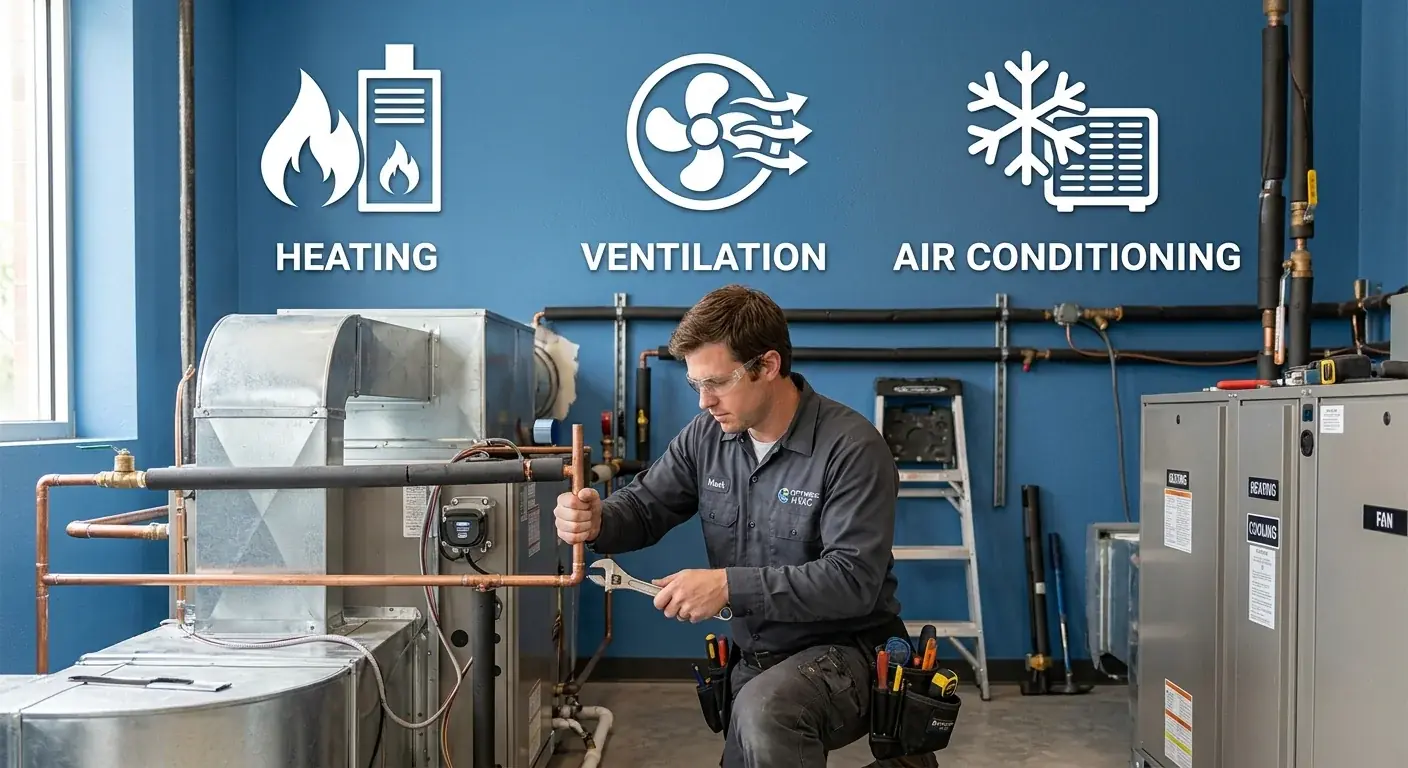
HVAC means heating, ventilation, and air conditioning
In a San Diego house that usually means a furnace or heat pump for heat, ducts or a mini split for air movement, and an AC or heat pump for cooling. Ventilation is the fresh-air and exhaust piece, not the same as filtration. Coastal homes may live on ventilation and light cooling. Inland homes treat the AC as the primary comfort machine. The letters stay the same.
Checklist
- If you have no cool air, use AC repair.
- If you have no heat, use furnace repair.
- If the air smells like smoke, use IAQ wildfire.
- If you are choosing equipment, use heat pump vs AC.
- HVAC/R adds refrigeration, which is commercial-scale cooling.
Related: HVAC service in San Diego County and how a heat pump works.
Heating, ventilation, and air conditioning
The term “HVAC” is often used as a catch-all for your home’s indoor climate. It’s an acronym defining three essential functions working together to keep your space comfortable and healthy. HVAC stands for Heating, Ventilation, and Air Conditioning. These systems regulate temperature, humidity, and air purity within your San Diego home.
From furnace warmth on a chilly morning to cool, dry air during a summer heatwave, your HVAC system is constantly working. Ventilation ensures a steady exchange of indoor and outdoor air, removing pollutants and bringing in fresh oxygen. Together, these components create an ideal indoor environment, crucial for comfort and well-being. Understanding each element helps demystify how your home stays comfortable year-round.
What each part of the system does
Here is what each letter maps to in a local home.
Heating
In San Diego, a reliable furnace is essential for cooler months. The heating component raises indoor air temperature. This is typically achieved through a furnace, burning natural gas or propane, or an electric heat pump, which extracts heat from outside air. A heat exchanger warms the air, and a blower fan circulates this warm air through your home’s ductwork. A well-maintained heating system ensures cozy evenings and consistent warmth. Regular maintenance ensures efficiency and prevents inconvenient breakdowns.
Ventilation
Ventilation is often the unsung hero of indoor comfort and health. This part of the HVAC system is about air exchange, replacing stale indoor air with fresh outdoor air. Proper ventilation is vital for maintaining good indoor air quality. It removes pollutants, allergens, odors, excess humidity, and carbon dioxide. Systems range from natural ventilation (opening windows) to mechanical systems like exhaust fans or energy recovery ventilators (ERVs). Effective ventilation reduces respiratory issues, minimizes condensation, and ensures a healthier environment for your family. In San Diego, where coastal breezes bring in pollens, good filtration is also vital.
Air conditioning
For most San Diegans, air conditioning is the most appreciated aspect of the HVAC system. It keeps your home cool and comfortable when temperatures rise. An AC unit works by removing heat and humidity from your indoor air. It typically consists of an indoor evaporator coil and an outdoor condenser unit. Refrigerant circulates, absorbing heat indoors and releasing it outdoors. A blower fan then circulates the cooled, dehumidified air through your ductwork. Modern AC systems are designed for efficiency, helping you stay cool without excessive energy bills. Proper sizing and regular servicing are key to maximizing performance and lifespan in our long, warm summers.
Why it’s treated as one single system
Heating, ventilation, and air conditioning are integrated into a single, cohesive system for critical reasons. This approach ensures optimal performance, energy efficiency, and convenience for homeowners.
Firstly, efficiency is a major driver. Many components are shared. The same ductwork distributes heated and cooled air. Your thermostat manages both heating and cooling cycles. Integrating these elements reduces redundant equipment and streamlines operations, leading to lower energy consumption and costs.
Secondly, an integrated system allows for better climate control. By working together, components maintain a more consistent and comfortable indoor environment. A system that can heat, cool, and manage airflow, responds dynamically to outdoor weather. For example, a system that runs long enough can wring moisture out of indoor air. A short-cycling oversized AC in a San Marcos or coastal marine-layer week may hit the thermostat number and still leave the house clammy.
Finally, managing a single system simplifies installation, maintenance, and troubleshooting. A single HVAC technician can service all related components. This holistic view ensures adjustments or repairs consider the entire system’s balance, leading to more reliable operation. The California Energy Commission emphasizes energy-efficient systems for home performance, which an integrated HVAC system effectively delivers.
When you hear HVAC/R, what’s the ‘R’?
Sometimes, you might hear “HVAC/R” instead of just “HVAC.” The “R” stands for Refrigeration. While air conditioning is a form of refrigeration, the “R” typically implies a broader scope, often referring to specialized or commercial applications.
In residential contexts, the “R” isn’t commonly used because standard air conditioning covers household cooling needs. However, in commercial buildings or industrial settings, refrigeration might refer to more precise, dedicated cooling systems that go beyond typical home AC. These systems maintain much colder temperatures or handle larger, more complex cooling loads.
For example, commercial HVAC/R technicians often work on walk-in freezers, display cases in grocery stores, or complex cooling towers. The principles are similar to residential AC, removing heat from an enclosed space, but the scale, components, and expertise are significantly different. So, while your home uses the “AC” part of HVAC, the “R” indicates a more specialized cooling requirement.
Local coverage: all 67 cities we cover in San Diego County.
When to call us
Climate Pros SD is a referral service. It matches you with a licensed C-20 contractor. That company diagnoses and quotes. Climate Pros SD does not repair or install. Call (442) 777-6440.