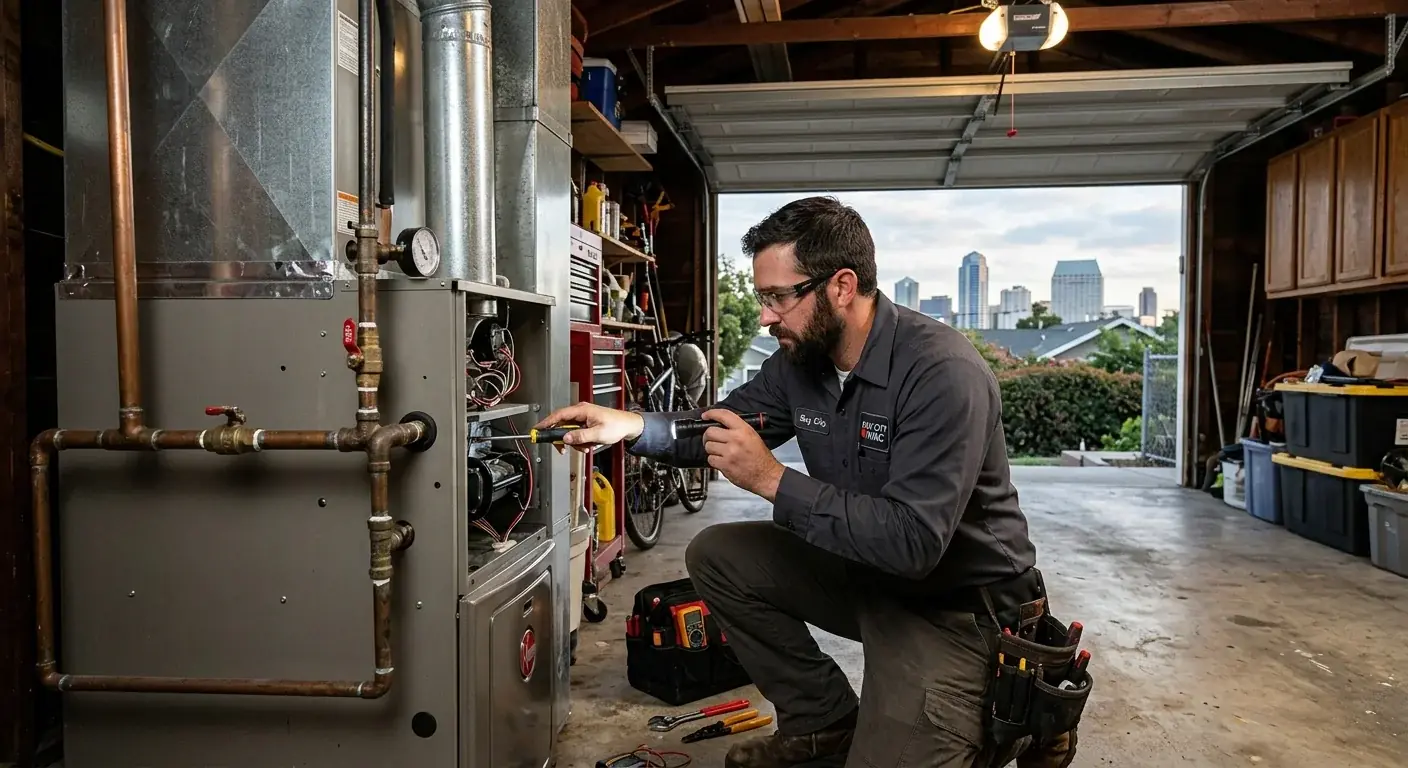
If your furnace clicks but won’t light, the cause is almost always one of seven things, and they happen in a predictable order. Most San Diego homeowners can narrow it down before anyone opens the cabinet. They just need the sequence.
Climate Pros SD matches you with licensed HVAC companies. We do not repair equipment, own trucks, or publish repair prices. The matched company quotes after it tests the system.
The fast answer
| Cause | How common it is | DIY-fixable? |
|---|---|---|
| Dirty flame sensor | Most common no-ignition call | Yes |
| Clogged air filter | Very common after a long cooling season | Yes |
| Failed hot surface igniter | Common wear item | Sometimes |
| Tripped pressure switch / clogged inducer | Common after months idle | No |
| Closed gas valve or low gas supply | Worth checking first | Yes (the valve) |
| Bad thermostat or low batteries | Common and easy to miss | Yes |
| Cracked heat exchanger / safety lockout | Less common, safety-critical | No (replace) |
Read on if you want to know which one is yours.
1. Dirty flame sensor (the single most common cause)
The flame sensor is a thin metal rod that sits in the burner flame and confirms that gas is actually burning. If it’s coated in soot or residue, it stops sensing the flame, and the furnace’s safety logic shuts off the gas within seconds. The furnace tries to ignite, runs for 5-10 seconds, then shuts down. It may retry 2-3 times before going into lockout.
The tell. Furnace ignites briefly, then quits. Repeats a few times, then stops trying. No error code on most older units; modern ones flash a “flame sensed during off cycle” or “flame failure” code.
The fix. Power down the furnace at the switch. Pull the flame sensor (usually one screw and a wire). Buff it gently with very fine steel wool or a Scotch-Brite pad. Don’t sand it; you want a clean surface, not a polished one. Reinstall, restore power. This is a short job that solves a service call most of the time.
In San Diego, dirty flame sensors show up constantly on the first cold morning. The dry inland air plus the long off-season here (April to October the furnace sits idle) lets a film build up that disrupts the flame signal.
2. Clogged air filter
A heavily clogged filter starves the furnace of return air. The system can ignite but the limit switch trips from overheating, or the air-flow logic prevents ignition in the first place. On newer furnaces this throws a high-limit code; on older ones it just won’t light.
The tell. Furnace tries to start but cycles off quickly, or the blower runs but no heat comes through. Filter visibly gray, brown, or matted.
The fix. Replace the filter. Match the size and MERV rating the manufacturer specifies. In San Diego, change 1-inch filters every 60 days and 4-inch media filters every 6 months, even though you only use heat a few months of the year. The cooling season loads them up.
3. Failed hot surface igniter (HSI)
The igniter is a thin silicon carbide or silicon nitride element that glows orange-white to ignite the gas. They are wear items. Most last several years; heavy-cycling systems wear them faster.
The tell. You hear the draft inducer fan come on, then the pressure switch click. Then nothing. No glow visible through the burner inspection port. Some furnaces flash a “no ignition” code; others just go into lockout after three attempts.
The fix. Carefully remove the igniter (usually two screws and a quick-connect). Inspect it. If it’s broken, cracked, or has hairline fractures, it’s done. If it looks intact, test resistance with a multimeter; healthy igniters often read in the tens of ohms depending on the model. Open circuit means it’s failed.
Buy the exact part number for your furnace; universal igniters fit poorly and fail early. Igniters are also brittle. Don’t touch the element with your fingers; skin oils shorten its life. A licensed tech quotes the part and labor after they confirm the reading.
4. Tripped pressure switch or clogged inducer
Before the gas valve opens, a pressure switch confirms that the draft inducer fan is pulling combustion air through the heat exchanger and out the flue. If the switch doesn’t see negative pressure, ignition is locked out as a safety. Common causes include a clogged condensate trap (on high-efficiency units), a blocked or restricted flue, a cracked pressure switch hose, or a failed inducer motor.
The tell. Draft inducer fan comes on but the furnace never proceeds to ignition. Error code points to pressure switch fault.
The fix. This usually needs a tech. Common shop fixes: clear the condensate trap, replace the pressure switch hose, replace the switch itself, or service the inducer motor bearings. If the flue is blocked (animals, debris, slumped insulation), that gets cleared too.
In San Diego, a particular pattern shows up on this one: spiders. Furnaces sit idle most of the year, and spiders love the warmth of the inducer assembly. Pull the inducer cover in October and you’ll occasionally find a full web blocking the pressure switch port.
5. Gas supply or closed gas valve
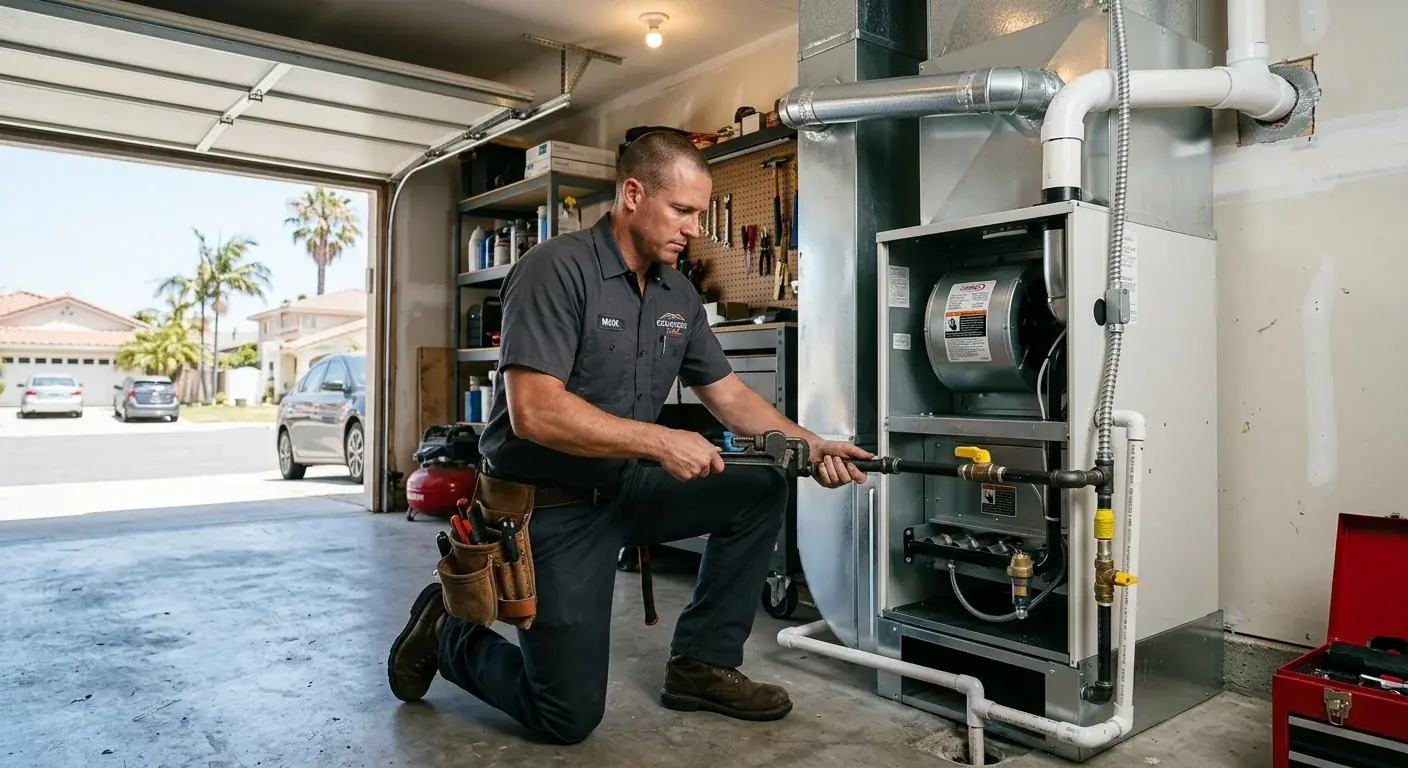
Sounds basic. Worth checking before calling anyone. SDG&E does emergency shutoffs, planned maintenance, and the occasional service interruption. Your home also has shut-off valves at the meter and usually at the furnace itself.
The tell. Igniter glows, gas never appears to enter the burner. Other gas appliances (water heater, range) also not working = supply issue. Just the furnace = local valve.
The fix. Find the gas valve on the supply line at the furnace, usually a yellow handle. When parallel to the pipe, it’s open. When perpendicular, it’s closed. If other appliances also have no gas, call SDG&E at 800-411-7343.
6. Bad thermostat or low batteries
The furnace isn’t getting a call for heat because the thermostat isn’t sending one. Cheap thermostats fail. Even smart thermostats die when their batteries do, especially in homes where the AC blower wire (the C-wire) was never installed and the thermostat trickle-charges off the heat call.
The tell. Furnace silent. Thermostat screen blank, dim, or rebooting. Setting the temperature higher does nothing.
The fix. Replace batteries first (most smart thermostats use AAs). If the screen stays dead, the thermostat itself is the problem. If the screen works but the furnace stays off, check the thermostat’s settings for “Heat” mode rather than “Cool” or “Off.” Then verify the wiring at the thermostat terminals; loose wires are common after homeowner upgrades.
If your thermostat is more than 15 years old, replacing it with a modern model is a reliable upgrade. We cover the decision in our smart thermostat installation guide. The matched licensed contractor installs it; Climate Pros SD does not.
7. Cracked heat exchanger or safety lockout
This is the one you don’t want. A cracked heat exchanger is dangerous (carbon monoxide leaks into the air stream) and modern furnaces have safety logic that locks the system out when CO sensors detect the leak or the system runs hot in ways consistent with a crack.
The tell. Furnace was working, then began running irregularly, soot or rust appearing around the burner area, yellow burner flames instead of blue, CO detectors going off. Then the furnace locks out entirely.
The fix. This requires a tech to confirm and condemn the heat exchanger. If it’s cracked, the furnace is done. A heat-exchanger-only swap often fails the 50 percent heuristic used in the trade (repair cost versus a new furnace). Most cracked-exchanger calls in San Diego turn into replacement decisions. We walk through the framework in our furnace replacement cost guide.
The diagnostic sequence (in order)
If you’re trying to figure out which of these is yours, work through them in this order. It matches what an experienced tech does early on site.
- Check the thermostat. Is the screen alive? Is it set to “Heat” and to a temperature higher than the room? Replace batteries if dead.
- Check the filter. If you can’t see light through it, replace it. Try again.
- Check the gas valve and supply. Other gas appliances working?
- Listen at the furnace during a heat call. Do you hear the inducer fan run for 30-60 seconds before ignition?
- Watch through the burner port. Does the igniter glow? If yes, does gas ignite, then quit after a few seconds? That points to the flame sensor.
- If the inducer runs but ignition never starts, it’s probably the pressure switch or a failed igniter.
- If nothing happens at all, it’s electrical: thermostat wire, control board, or transformer.
When to stop and call
Call a licensed tech when any of these are true:
- You smell gas (call SDG&E first at 800-411-7343, then call us to get matched)
- Carbon monoxide detectors have gone off
- You see soot, rust, or yellow flames at the burners
- The furnace locks out repeatedly even after you’ve cleaned the flame sensor and changed the filter
- You’re not comfortable working with gas appliances
Do not DIY the pressure switch, gas valve, control board, or heat exchanger. Those touch combustion safety.
San Diego-specific patterns
Most furnace ignition calls cluster in two windows: the first cold snap of November and the first real heat-deficit week in January. The reason is the long off-season. From April through October many SD furnaces never run. Dust settles on the flame sensor. Spiders find the inducer. Igniters that were borderline last winter finally give up on the first real call.
The single best move you can make is a fall maintenance visit in October. The company you are matched with clean the flame sensor, test the igniter resistance, clear the inducer, check the pressure switch, and verify draft. Ask what is actually in that visit. See our HVAC maintenance service.
FAQs
Why does my furnace try to start but won’t ignite?
The most common cause is a dirty flame sensor. The furnace ignites for a few seconds, the dirty sensor fails to confirm the flame, and the safety logic shuts off the gas. Pull the sensor, buff it with fine steel wool, reinstall.
Can I clean my flame sensor myself?
Yes. Power down the furnace at the switch first. Remove the sensor (usually one screw). Lightly buff the metal rod with fine steel wool or a Scotch-Brite pad. Don’t use sandpaper. Reinstall and restore power.
How long does a furnace igniter last?
Hot surface igniters typically last several heating seasons. Heavy use or frequent on/off cycling shortens that. In San Diego, where furnaces run a relatively light season, well-maintained igniters often last longer than in cold climates.
Why does my furnace ignite then shut off after a few seconds?
Classic flame sensor failure. The igniter works, gas ignites, but the sensor doesn’t confirm the flame and safety logic kills the gas. Clean the sensor first; replace if cleaning doesn’t fix it.
What does it cost to fix a furnace that won’t ignite in San Diego?
A blog cannot answer that with a county-wide price list. Ask the matched company for the diagnostic fee in dollars, whether it applies toward repair if you approve the work, and a written line for the failed part (flame sensor, igniter, pressure switch, inducer). Climate Pros SD does not set those prices.
Is it safe to keep trying to start a furnace that won’t ignite?
A few attempts, yes. Modern furnaces have lockout logic that prevents unsafe restarts. If your furnace locks out after 3 attempts, stop. Repeated forced cycling can damage the gas valve or pressure switch.
My furnace is brand new and won’t ignite. What gives?
New furnaces fail to ignite most often from install errors: pressure switch hose pinched, gas valve set wrong for natural vs propane, condensate trap not primed on a high-efficiency unit, or thermostat C-wire missed. Call the installing contractor back; this should be warranty work.
Related services: furnace repair and AC repair. Local coverage: HVAC service in Oceanside.
Not sure this is your symptom? Our HVAC symptom finder matches what the system is actually doing to the likely cause.
When to call us
If you’ve worked through the flame sensor, filter, and thermostat and the furnace still won’t light, the next steps need a tech with a multimeter, a manometer, and combustion analysis equipment. Call (442) 777-6440. Climate Pros SD matches you with a licensed pro. Ask for the diagnostic fee in dollars, what they found, and what the repair includes before you authorize work.