This site cannot publish a 2026 HVAC price-drop forecast, a 3 to 8 percent change, or an installed dollar band. Climate Pros SD is a referral service. It does not set equipment prices, labor rates, or contractor quotes. The matched company gives you the price in dollars for your home.
What we can document is the rule and incentive landscape around a 2026 project: new-equipment refrigerant limits, efficiency ratings, and which major programs are closed or fully reserved.

What would a 2026 price drop actually mean?
A lower sticker next year is a prediction about manufacturers, distributors, and local installers. None of those parties publish a verified county-wide 2026 change on this site. Waiting for a drop is speculation, not a measured plan.
Ask for current quotes instead. Compare scope, equipment, permit handling, and timing. Recheck the quote if you wait, because the next number is still that company’s number, not a published market index.
Which equipment rules still apply in 2026?
The EPA Technology Transitions program limits high-GWP HFCs in new residential air conditioning and heat pump equipment. New residential and light commercial systems must meet a GWP limit of 700 beginning January 1, 2025. Existing R-410A systems remain serviceable with R-410A. EPA did not publish a service-refrigerant price forecast here, so do not treat refrigerant rules as a guaranteed install discount or surcharge.
The Department of Energy describes SEER2 as a seasonal cooling-efficiency rating in Btu per watt-hour. DOE’s energy-use examples depend on a stated test method and assumed operating hours. Actual results vary with use. SEER2 helps compare rated efficiency. It does not set a San Diego installed price.
R-22 (HCFC-22) production and import were banned in the United States as of January 1, 2020. Existing R-22 systems may still be serviced with recycled or previously produced refrigerant, per the EPA Class II ODS phaseout. That is a service-supply fact, not a 2026 price chart.
Do 2026 incentives lower the price you pay?
Incentives can change what you pay after a qualifying project. They are not a promise that list prices fall. Current status for the programs we track:
- Federal Section 25C. The IRS says the Energy Efficient Home Improvement Credit covers improvements made through December 31, 2025. Property placed in service after that date does not qualify. Do not promise a current federal credit for a 2026 installation. For qualifying 2025 property, the IRS annual limit for qualified heat pumps and heat pump water heaters was $2,000, the credit is nonrefundable, and the taxpayer must report the product’s QMID. Ask a tax professional about your return.
- TECH Clean California single-family. TECH reports single-family heat pump HVAC and heat pump water heater incentives were fully reserved and stopped accepting new reservations on November 14, 2025. Eligibility, enrollment, reservation, approval, and payment are separate conditions.
- HEEHRA single-family. The California Energy Commission reports single-family rebates were fully reserved statewide as of February 24, 2026, and no new single-family income-verification applications were being accepted. Existing approved reservations may continue. A waitlist or submitted request is not approved funding. Recheck before purchase.
- HEEHRA program caps, when funded. TECH’s HEEHRA rules describe up to $8,000 below 80 percent AMI and up to $4,000 from 80 to 150 percent AMI for qualifying replacement of an existing primary heating source with a heat pump. Reservations must be approved before installation. HEEHRA is not retroactive. Those figures are program caps, not currently available money for a new applicant.
- HEEHRA multifamily. TECH reports multifamily HEEHRA funding is available, while new Multifamily Application Stage 1 submissions are paused during processing of existing applications. Available budget does not mean a new Stage 1 application can be submitted.
- TECH and HEEHRA together. As of July 15, 2025, TECH reports a project cannot receive both a TECH incentive and a HEEHRA rebate. Recheck before anyone claims a stack.
- SDG&E Golden State retail offers. SDG&E says the Golden State Rebates Program’s retail rebate offerings have ended. Do not treat a leftover product table as a current offer.
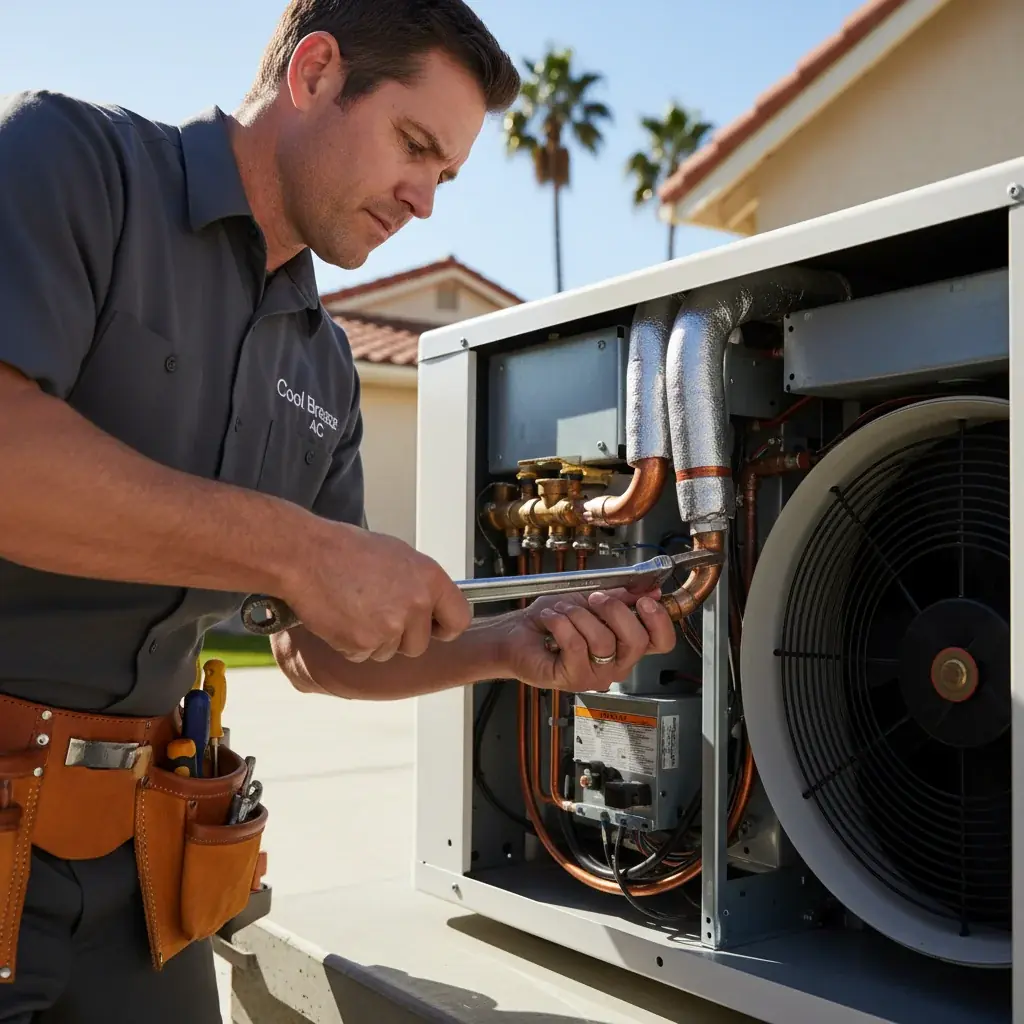
How should you compare quotes without a published price band?
- Ask each licensed company for the installed price in dollars, with equipment, labor, permit, and testing listed.
- Confirm who pulls the permit. The matched licensed contractor handles that work, not this brand.
- Check the contractor license at cslb.ca.gov.
- Treat pending incentives as pending until the program confirms reservation or approval.
- Recheck TECH, HEEHRA, IRS, and SDG&E pages if the job date moves.
Coastal air, inland heat, home size, duct condition, and equipment choice all change a quote. None of those is a license to invent a county-wide installed range.
Frequently asked questions
Will HVAC prices go down in 2026 in San Diego?
This site does not publish a yes-or-no price forecast or a percent change. Ask licensed companies for current quotes in dollars. Recheck those quotes if you wait.
Is it cheaper to buy an HVAC system now or wait?
That depends on your equipment, comfort need, and the company’s current price, not a published drop. A 2026 install does not get the expired Section 25C credit. TECH single-family reservations and HEEHRA single-family applications are not open to new projects under the captured status.
How much does a new HVAC system cost in San Diego in 2026?
Ask the matched company. Climate Pros SD does not publish brand prices or invented installed bands.
Did the refrigerant change raise prices?
EPA’s GWP limit applies to new residential equipment beginning January 1, 2025. Existing R-410A systems remain serviceable. This site does not attach a dollar surcharge to that rule.
Do rebates make up for higher prices?
Only a verified, approved incentive changes what you pay, and several major programs are closed or fully reserved for new single-family work. Confirm status before counting money that is not reserved.
Why do quotes differ from house to house?
Scope, equipment, access, ducts, and the company’s own pricing all differ. Compare written scopes, not a single network average.
The bottom line
A 2026 San Diego HVAC quote is the matched company’s number. It is not a published 3 to 8 percent market call. Use current program status, then ask for fees in dollars.
See the 2026 California rebate status guide, AC installation, and heat pump service. Call (442) 777-6440 to be matched with a licensed independent HVAC professional.
Related service: AC repair.