AC installation in Vista is a bid from the matched licensed contractor, not a published Climate Pros SD menu. Heat pump conversions are a different scope. Vista’s inland location, with summer highs running well above the coastal normals in 92081, 92083, and 92084, means sizing and equipment choice matter more here than they do a few miles west on the coast.
Vista rule of thumb: don’t size a new system based on square footage alone. The national shortcut of one ton per 600 square feet was built around a design temperature closer to 85°F. Vista’s peak summer heat loads run 10 to 15 degrees above that on a normal weekday. A home that calculates to 3 tons by the shortcut often needs 3.5 to 4 tons here. An undersized unit runs continuously through summer, never quite hits the thermostat setting, and wears out several years ahead of schedule.
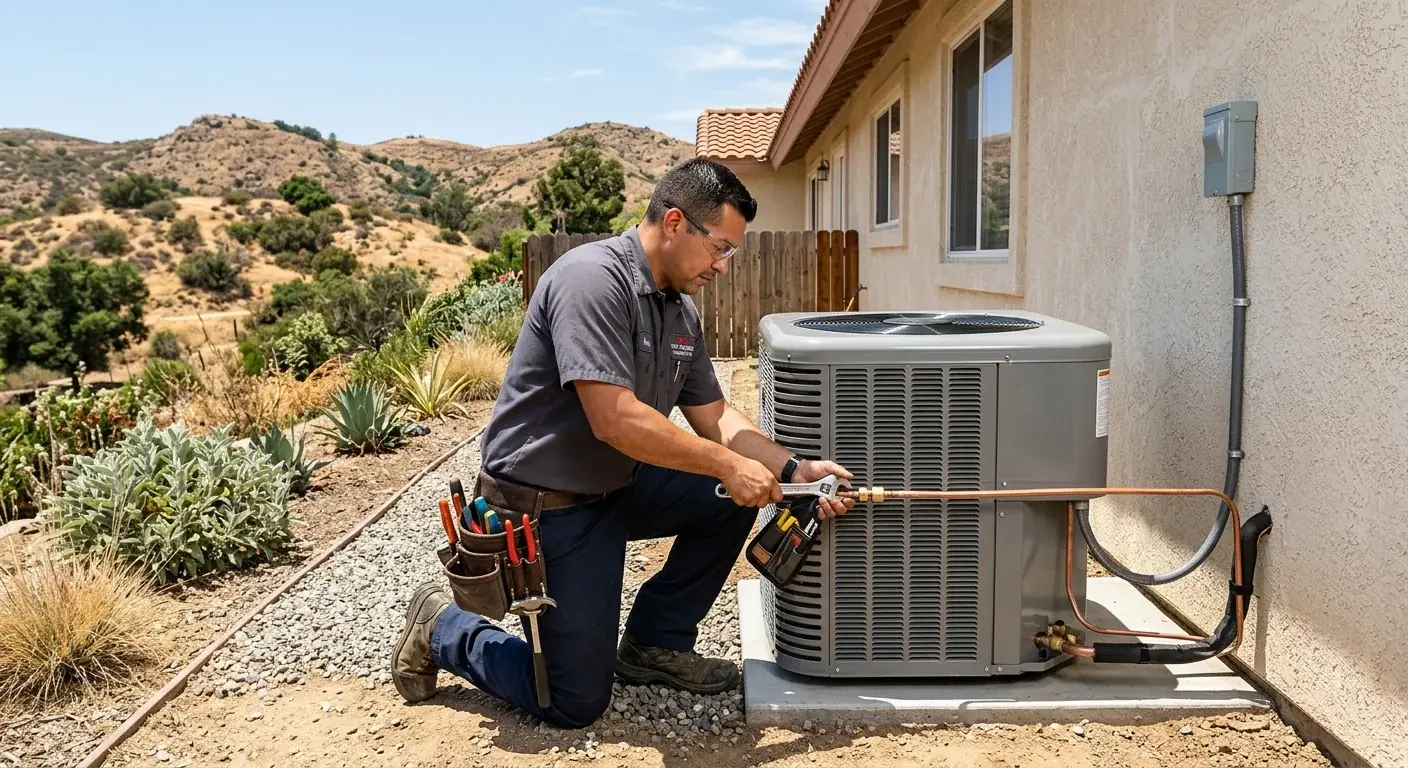
Vista’s housing stock and what it means for your install
Vista’s neighborhoods vary enough that the right installation approach looks different depending on where you live.
Shadowridge, the HOA-governed tract development in western Vista (92081), was built. These homes have better insulation and newer windows than older Vista housing, but exterior equipment changes typically require HOA architectural approval. Condenser placement and screening are common review items. The ductwork in Shadowridge homes is usually in reasonable condition, which keeps install scope tighter. Most Shadowridge installs are straightforward replacements finished in a single day.
Vista Village and central Vista (92084, 92083) include a significant amount of housing built. Original flex ductwork is common in these neighborhoods, and attic access in single-story ranch-style homes can be tight. Many central Vista homes are on their second or third HVAC system, but that doesn’t mean the ductwork has been updated to match. A duct inspection before committing to a system size is worth the time.
Rancho Buena Vista and the hillside neighborhoods off Gopher Canyon Road have more custom and semi-custom construction, often with higher ceilings and more complex floor plans. These homes frequently size up compared to simpler tract construction of the same square footage.
What drives install cost in Vista
Equipment type. A single-stage conventional AC is the lowest upfront cost. Two-stage and variable-speed units cost more but run more efficiently during Vista’s long summer, where a system might run eight to ten hours a day from June through September. A heat pump handles both heating and cooling from a single unit and qualifies for rebates that a conventional AC does not.
Ductwork condition. This is the biggest cost variable in older Vista housing. Original flex duct typically has significant leakage. A duct leakage test that finds more than 15 to 20% loss usually tips the calculation toward duct replacement or sealing before the new system goes in. Installing a new high-efficiency unit on a leaky duct system means paying for capacity you’ll never actually feel.
City of Vista permit. Mechanical permits for HVAC replacement in Vista are published by the city for that scope. Climate Pros SD does not publish a permit-fee table. Any contractor skipping the permit is creating a liability for your homeowner’s insurance coverage and your ability to sell the house.
HOA approval in Shadowridge. Exterior equipment changes in Shadowridge require review. This adds to the timeline, not typically to the cost, but plan for it when scheduling.
Title 24 compliance. California’s current energy code applies to HVAC replacements in Vista. Any system installed must meet minimum efficiency standards for San Diego County’s climate zone.
What belongs on a Vista install quote
Ask for installed price in dollars, including equipment, labor, refrigerant, and permit, with ductwork called out separately:
- Central AC replacement (single-stage)
- Central AC replacement (two-stage or variable-speed)
- Heat pump (full replacement of AC and furnace)
- Mini-split, single zone (ductless)
If ductwork needs full replacement, that is a separate line. Older central Vista housing with original flex duct and tight attic access sits higher.
Climate Pros SD does not publish those bands.
Furnace installation in Vista
A gas furnace on its own, swapped into an existing system with the AC staying put, is the smaller job. More if the flue has to be relined or the unit moves. Vista’s inland nights genuinely get cold enough to run a furnace through December and January, unlike the coastal cities, so heating is not an afterthought here.
The question worth asking before you buy one: if the AC is also near the end of its life, replacing both separately costs more than one heat pump doing both jobs. A furnace-only swap makes sense when the AC has real life left, when the gas line and flue are already in good shape, or when the electrical panel cannot carry a heat pump without an upgrade.
Heat pump installation in Vista
A heat pump replacing both the AC and the furnace is usually the best value in Vista because it is the option that qualifies for electrification incentives and it replaces two aging systems in one visit. Vista’s climate is close to ideal for one: it never gets cold enough here to push a modern heat pump into the inefficient part of its range, so the backup heat strips rarely run.
If ductwork needs full replacement, ask for that add-on in dollars. Older central Vista housing with original flex duct and tight attic access sits at the higher end.
Heat pump vs. central AC for Vista homes
Vista is one of the better-positioned cities in San Diego County for heat pump economics, for two reasons. First, the summer heat is real, so the cooling side of a heat pump runs hard and earns its keep. Second, the winter is genuinely cold enough that the heating side gets used regularly. A heat pump that handles both seasons is replacing two separate systems.
Two 2026 incentives may apply:
- SDG&E heat pump rebates: Confirm current amounts on sdge.com/rebates. Availability depends on funding allocation and contractor enrollment.
- Federal 25C Energy Efficient Home Improvement Credit: The IRS says the credit covers improvements made through December 31, 2025. For qualifying 2025 property, the IRS annual limit for qualified heat pumps was $2,000. Confirm current status with a tax professional before counting on it.
A standard central AC carries no heat pump rebate. The gap between AC and heat pump after incentives is often narrower than the sticker prices suggest. Ask the matched installer for the live stack on your equipment.
The TECH rebate requires a contractor enrolled in the program. See our San Diego heat pump rebate stack guide for 2026 for current eligibility details.
Decision table: AC vs. heat pump in Vista
| Situation | Better choice | Why |
|---|---|---|
| Gas furnace is 5 years old or newer and works fine | AC-only replacement | No reason to replace a functioning furnace; AC alone is the lower upfront path |
| Furnace and AC are both 15+ years old | Heat pump | One system replaces both; rebate stack often tips the math |
| Older Vista Village home with original ductwork needing replacement | Heat pump | If you’re already replacing ductwork, full electrification qualifies for top TECH tier |
| Shadowridge HOA property, straightforward replacement | Either | HOA approval adds timeline but not cost; choose based on age of furnace |
| Solar PV already installed on roof | Heat pump | All-electric heating runs on your solar production during winter |
| Tight budget, limited rebate eligibility | AC-only replacement | If TECH rebate doesn’t apply to your situation, AC has the lower sticker price |
Permitting and what to expect on install day
A changeout in the City of Vista normally needs a mechanical permit. The matched company confirms the current requirement with the building department. The permit covers refrigerant handling, electrical connections to the condenser, and a final inspection. The permit inspection happens after installation, usually within a week. A properly licensed contractor handles the paperwork. Ask for the permit number before the crew starts work.
Most standard Vista replacements finish in one to two days. Ductwork repairs or replacements add a day. Full heat pump conversions that include removing the gas furnace typically run two to three days.
Before signing any contract, verify the contractor on the CSLB website. For a full overview of HVAC services available to Vista residents, see our Vista HVAC service area page.
Frequently asked questions
How much does AC installation cost in Vista in 2026?
Ask the matched installer. Climate Pros SD does not publish central AC, heat-pump, or furnace install bands. Confirm current SDG&E rebate status at quote time. The federal 25C credit expired for systems placed in service after 2025. Confirm current status with a tax professional.
What does furnace installation cost in Vista?
Ask the matched installer for a furnace-only swap versus a heat pump that replaces both. Relining the flue or relocating the unit pushes it higher. If your AC is also near end of life, price a heat pump against replacing both separately before you decide.
Do older Vista homes need ductwork replacement when installing new AC?
Not always, but it’s common in pre-1990 construction. Original flex duct typically has significant leakage. A duct leakage test before committing to equipment size is worth doing. If leakage is above 15 to 20%, replacing or resealing ductwork alongside the new equipment usually pays for itself in efficiency gains within a few years.
Does Shadowridge HOA require approval for a new condenser?
Most Shadowridge HOA agreements require architectural review for exterior equipment changes, which includes condenser placement and screening. The review adds to your planning timeline, usually one to two weeks, but doesn’t typically add cost. Your contractor should be familiar with the process.
What SEER2 rating do I need in Vista?
California’s current minimum is 14.3 SEER2 for split-system central air conditioners installed in San Diego County. Most Vista installs now spec 15.2 to 17 SEER2 to balance upfront cost against savings over a long cooling season. Higher efficiency tiers also unlock better SDG&E rebate tiers on heat pump systems.
How long does AC installation take in Vista?
Standard replacements finish in one to two days. Ductwork repairs add a day. Full heat pump conversions including furnace removal run two to three days. The permit inspection is a separate visit after the install, usually within a week.
When to call us
If your Vista home is running a system that’s 15 or more years old, or you’re dealing with a unit that can’t keep the house comfortable through July, it’s worth getting a sizing assessment and current cost estimate before peak season demand hits. Call us at (442) 777-6440 for an estimate. For full pricing details and the rebate stack math on a heat pump conversion, see our AC installation in Vista service page.