A commercial rooftop unit replacement in San Diego runs $9,000 to $16,000 for a single 5-ton package unit. Larger multi-zone systems climb toward $25,000 to $60,000 or more. Small packaged units start around $8,000 before add-ons. Here’s what actually drives that range and how to budget for it before you get a quote.
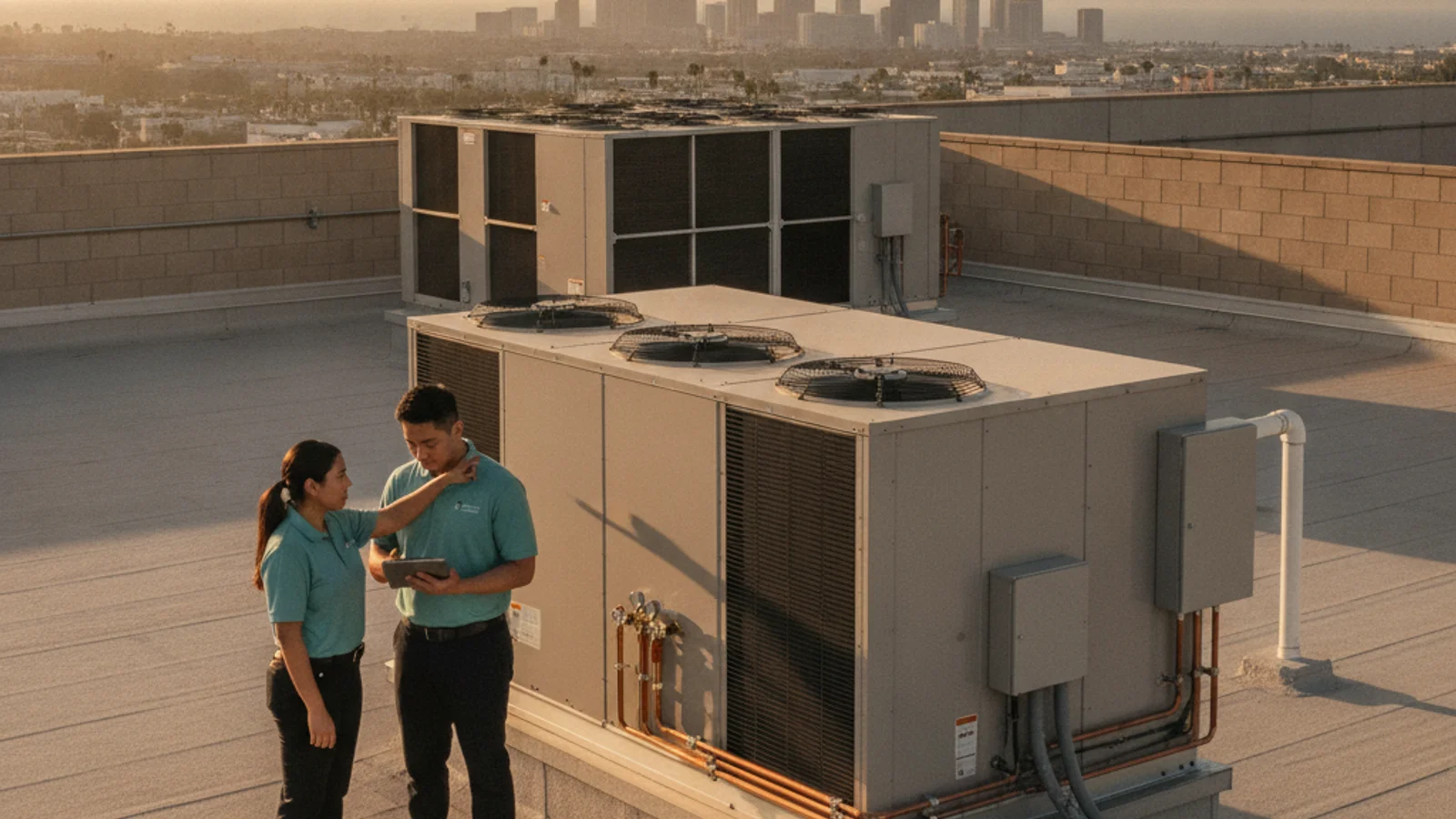
The fast answer
| Unit size | Equipment + install (national) | Realistic San Diego all-in |
|---|---|---|
| Small packaged unit (2-3 ton) | From about $8,000 | $8,500-$11,000 |
| Mid-size 5-ton | $10,000-$15,000 | $9,000-$16,000 |
| Large multi-zone / above 10 ton | $25,000-$60,000+ | $27,000-$65,000+ |
Crane rental adds $1,500 to $4,500 on top of those numbers for any unit above 10 tons. Most single-tenant retail and small office buildings in San Diego County run one to three units in the 3 to 7.5 ton range, which is why the 5-ton figure is the most common quote a business owner actually sees.
What’s included in a commercial RTU replacement
A proper packaged rooftop replacement covers more than just the box on the roof:
- The new unit, sized to your building’s actual load, not just a swap of the old tonnage
- A curb adapter if the new unit’s footprint doesn’t match the old curb exactly
- Electrical disconnect work and any wiring the new unit requires
- Rigging or crane service if the roof access makes a straight lift impractical
- Startup and commissioning, including airflow and refrigerant charge verification
- Title 24 compliance documentation and the commercial permit filing itself
Skipping any of these to save money upfront almost always costs more later, especially the curb adapter step. A unit set on a mismatched curb leaks conditioned air and water into the roof deck, which turns into a much more expensive repair.
What pushes the price up
Six factors move a commercial RTU quote from the low end to the high end:
1. Tonnage and unit count. A building running three 5-ton units on separate curbs costs close to three times a single-unit job, since each has its own electrical and startup work.
2. Crane requirement. Units above 10 tons are heavy enough that almost every San Diego job needs a crane. That’s $1,500 to $4,500 depending on building height and street access.
3. Curb mismatch. If the new unit’s footprint differs from the old one, a curb adapter or custom curb work adds labor and sometimes roofing repair.
4. Electrical service upgrades. Older commercial buildings sometimes need panel or breaker upgrades to handle a more efficient unit’s electrical requirements.
5. Permit and Title 24 complexity. California’s Title 24 energy code applies to every commercial HVAC replacement. Straightforward like-for-like swaps process fast. Load changes or efficiency upgrades add engineering time.
6. Roof access and logistics. Downtown buildings with limited street parking, tight loading zones, or restricted crane staging pay more in mobilization time than a single-story building in a business park with open access.
Repair vs replace for a commercial unit
Three questions decide it, in order:
How old is the unit? Commercial packaged units typically last 15 to 20 years. Past 15, most repairs are a stopgap, not a fix.
What failed? Compressor or heat exchanger failure on a unit over 10 years old rarely justifies the repair cost. A failed capacitor or contactor on a younger unit almost always does.
What’s the repair quote relative to replacement? If a repair runs 40 to 50 percent or more of what a new unit costs installed, replacement is the better long-term math, especially with a business that can’t tolerate repeat downtime.
San Diego-specific factors that affect commercial RTU cost
Coastal commercial buildings, especially along the I-5 corridor from La Jolla down to Chula Vista, see faster coil corrosion from salt air than inland properties. That shortens realistic unit life on beachfront and near-coast retail and office buildings, which changes the repair-vs-replace math earlier than it would inland.
Inland commercial properties in areas like Santee, El Cajon, and Escondido run their units harder through longer, hotter cooling seasons. Units there log more compressor cycles per year, which is worth factoring into how aggressively you plan for replacement versus stretching a repair.
Every commercial HVAC replacement in San Diego County needs Title 24 compliance and a city or county commercial permit, regardless of building type. Budget for that paperwork time in your project timeline, not just the equipment cost.
For buildings trying to stretch equipment life and avoid an unplanned rooftop replacement altogether, a documented maintenance plan is the cheapest insurance available. Our commercial HVAC maintenance service covers the seasonal checks that catch failing components before they force an emergency swap.
Getting a real number for your building
Every commercial rooftop quote should start with a load calculation, not a guess based on the old unit’s nameplate. Buildings get retrofitted, insulation changes, occupancy shifts, and equipment that was correctly sized 15 years ago is sometimes oversized or undersized today. For a broader look at how commercial HVAC costs break down for smaller San Diego businesses, see our commercial HVAC guide for small business owners.
FAQs
How much does it cost to replace a commercial rooftop HVAC unit in San Diego?
A single 5-ton package unit runs $9,000 to $16,000 installed. Small units start around $8,000. Large multi-zone systems above 10 tons run $25,000 to $60,000 or more, largely driven by crane costs and unit count.
Why do commercial rooftop units need a crane?
Units above 10 tons are too heavy and bulky to lift by hand or with a standard boom truck in most cases. A crane lift adds $1,500 to $4,500 depending on building height, roof access, and street staging room.
Does a commercial RTU replacement need a permit in San Diego?
Yes. Every commercial HVAC replacement requires Title 24 compliance documentation and a city or county commercial permit, regardless of building type or unit size.
How long does a commercial rooftop unit last?
Most commercial packaged units last 15 to 20 years with regular maintenance. Coastal buildings often see coil corrosion shorten that timeline. Inland buildings with heavy summer runtime log more compressor cycles per year.
Should I repair or replace an aging commercial RTU?
If the unit is past 15 years, if the compressor or heat exchanger failed, or if the repair quote runs 40 to 50 percent or more of a new unit installed, replacement is usually the better long-term decision.
What’s included in a commercial rooftop replacement quote?
A complete quote covers the unit itself, curb adapter work if needed, electrical connections, crane or rigging if required, startup and commissioning, and Title 24 paperwork with the permit filing.
When to call us
If a rooftop unit at your San Diego commercial property is aging out or already down, we’ll run a load calculation and give you a real installed number, not a nameplate guess. We handle the crane logistics, the curb work, and the Title 24 paperwork as part of the job. Call (442) 777-6440 to schedule a site visit.