It’s a common scenario in San Diego: the sun beats down, you turn on the AC, and you hear it humming away. But hours later, your house still feels uncomfortably warm, and the thermostat shows a temperature several degrees above your setting. Your air conditioner is running, but it just can’t seem to keep up.
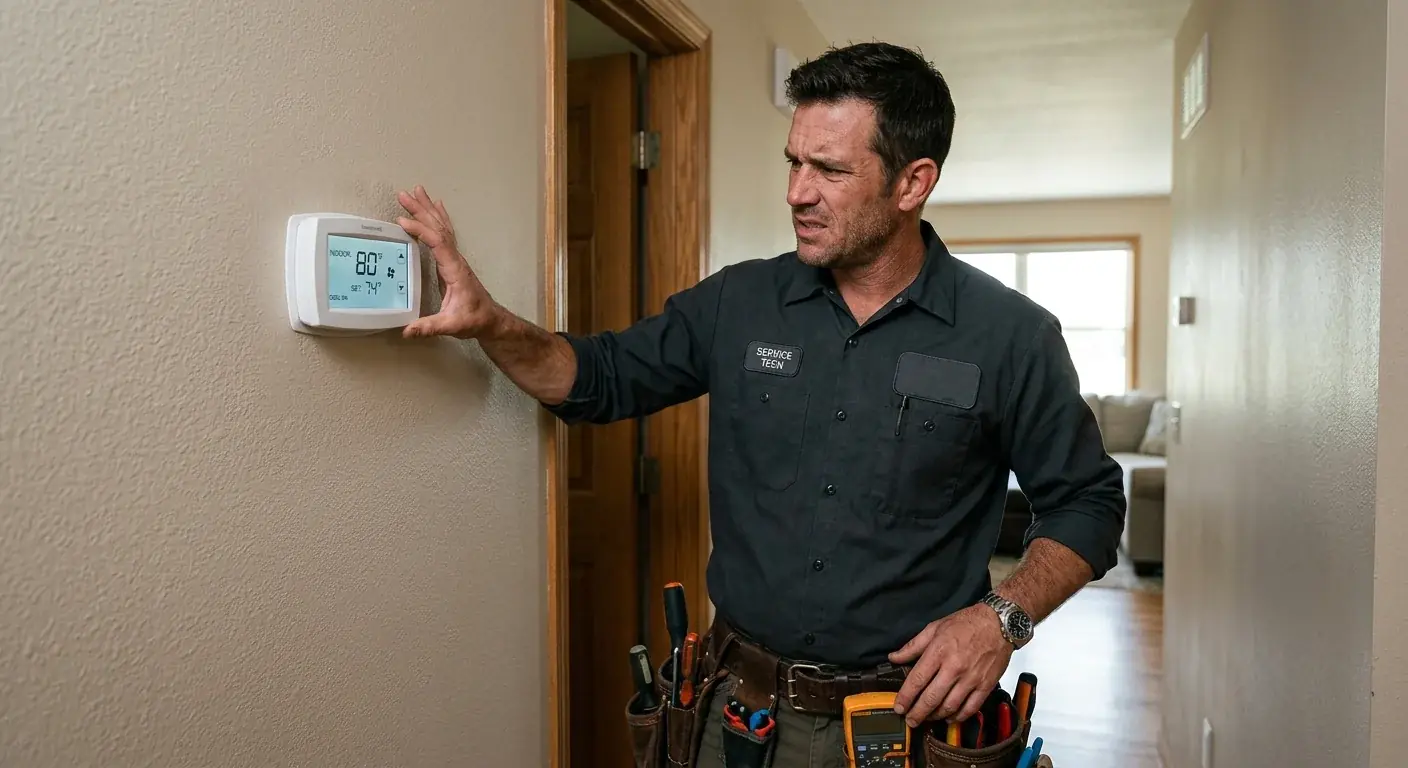
This isn’t just frustrating; it’s a clear sign your system is struggling, wasting energy, and likely costing you more money. While it might feel like a mystery, there are several common reasons why your AC is running but not effectively cooling your home. Identifying the cause can help you decide if it’s a quick fix or time to call for professional help.
It’s running, but is it running right?
When your AC runs constantly but fails to reach the set temperature, it’s short of a complete breakdown. Instead, it suggests a significant dip in efficiency or a major imbalance in its cooling capacity. Your unit might be technically “on,” moving air, but that air isn’t delivering the cooling power your home needs. This situation often leads to what we call “short cycling” or, more commonly, continuous running without relief.
The constant operation puts immense stress on your system’s components, leading to accelerated wear and tear. You’ll likely see higher utility bills as your unit works overtime to achieve a goal it can’t meet. Beyond the financial impact, the lack of proper cooling can also fail to adequately dehumidify your home, making it feel even muggier and less comfortable, especially during San Diego’s humid spells. This kind of problem isn’t always obvious; it can be subtle, starting with just a few degrees difference and worsening over time. Paying attention to these early warning signs can save you from more extensive and costly AC repairs down the line.
Dirty filters and coils: the most common culprits
Many of the most frequent reasons an AC struggles to cool effectively boil down to poor airflow and heat transfer. These issues are often preventable and can sometimes be addressed with simple maintenance.
Clogged air filters
Your AC system relies on a steady flow of air to function correctly. The most basic and often overlooked component is the air filter. When this filter becomes clogged with dust, dirt, and pet dander, it restricts airflow significantly. The AC unit then has to work much harder to pull air through the system, reducing its efficiency and cooling capacity. If not enough air moves across the evaporator coil (the indoor coil), it can’t absorb heat effectively from your home’s air.
It’s a simple fix: check your filter monthly, especially during peak cooling season here in San Diego, and replace it every 1-3 months. A clean filter ensures proper airflow, keeping your system running smoothly and your energy bills lower. For optimal filtration and efficiency, consider the appropriate MERV rating for your home.
Dirty evaporator and condenser coils
Beyond the air filter, the coils themselves can become dirty.
- Evaporator Coil (indoor unit): This coil is responsible for absorbing heat from your indoor air. Over time, a layer of grime, dust, and even mold can build up on its surface. This “insulating” layer prevents the coil from effectively absorbing heat, severely impacting its ability to cool your home. It’s like trying to drink through a clogged straw; the system is trying, but it just can’t get enough “drink” (heat) out of the air.
- Condenser Coil (outdoor unit): Located in your outdoor unit, the condenser coil releases the heat absorbed from your home into the outside air. If this coil is covered in dirt, leaves, grass clippings, or other debris, it can’t efficiently dissipate heat. When heat gets trapped, the system runs hotter, works harder, and cooling efficiency drops drastically. You’ll notice your AC running longer and longer trying to cool your house, often without success.
Cleaning these coils requires careful handling and specialized tools, especially the evaporator coil which is less accessible. While you can often hose down the outdoor condenser coil gently, deep cleaning of both coils is best left to a professional during a routine AC tune-up. Regular maintenance can identify and address these issues before they turn into major problems, ensuring your system runs at peak performance.
Ductwork leaks: the hidden energy thief
Your HVAC ductwork acts like the circulatory system of your home’s air conditioning, delivering conditioned air from your AC unit to every room. If this system has leaks, gaps, or is poorly insulated, it can drastically reduce your cooling effectiveness, making your AC run constantly without achieving a comfortable indoor temperature.
Think about it: your AC works hard to cool the air, but then a significant portion of that cool air escapes into unconditioned spaces like your attic, crawl space, or within walls before it ever reaches your living room. In San Diego, where attic temperatures can soar, losing conditioned air to these hot spaces is particularly wasteful. These leaks can account for 20-30% of your HVAC system’s energy consumption. You’re essentially paying to cool your attic instead of your home.
Signs of leaky ductwork include:
- Uneven cooling: Some rooms feel significantly warmer or colder than others.
- High energy bills: Your AC is running much more than it should for the level of comfort you’re receiving.
- Dusty rooms: Leaky ducts can pull in unfiltered air from attics and wall cavities, distributing dust and allergens throughout your home.
- AC constantly running: The system can’t satisfy the thermostat because it’s constantly losing conditioned air.
Addressing ductwork issues often requires professional assessment. Technicians can perform a duct pressure test to pinpoint leaks and then seal them with mastic sealant or specialized tape. In some cases, duct insulation might need an upgrade. Investing in proper duct sealing and insulation isn’t just about comfort; it’s a critical step toward improving your home’s overall energy efficiency and reducing your cooling costs.
Is your AC unit too small for your home?
Imagine trying to cool a large banquet hall with a small window AC unit. It would run all day, struggle immensely, and never truly get the job done. The same principle applies to your central air conditioning system. If your AC unit is undersized for your home’s square footage and specific characteristics, it will constantly run in an attempt to reach your desired temperature, but it will fall short.
An undersized AC unit struggles for several reasons:
- Insufficient cooling capacity: It simply doesn’t have enough power (measured in tons) to remove the amount of heat generated by your home, the San Diego sunshine, and your daily activities.
- Inability to dehumidify: Beyond cooling, AC units also remove humidity from the air. An undersized unit that runs constantly but can’t cool effectively will also struggle to dehumidify, leaving your home feeling clammy and uncomfortable even if the temperature drops a bit.
- Increased wear and tear: Continuous operation puts immense strain on all components, leading to premature breakdowns and a shorter lifespan for the entire system.
Determining the correct size for an AC unit isn’t as simple as matching square footage. Professional HVAC contractors use a “Manual J” load calculation, a detailed process that considers many factors. These include your home’s square footage, ceiling heights, insulation levels, window types and sizes, local climate (like San Diego’s specific heating and cooling days), and even the number of occupants and heat-generating appliances.
An accurate AC sizing calculation using Manual J ensures that your new or replacement unit is perfectly matched to your home’s specific cooling demands. This prevents the problems of an undersized unit and avoids the inefficiencies and potential short-cycling of an oversized one. If your AC has always struggled to keep up, even when new, an undersized unit could be the fundamental problem, suggesting a replacement might be needed for true comfort and efficiency.
When it’s a sign of a bigger problem (low refrigerant or failing compressor)
While some AC problems are simple DIY fixes, others point to more serious mechanical issues that require the expertise of a licensed HVAC professional. These are often the reasons your AC is running but still can’t cool your San Diego home, despite your best efforts.
Low refrigerant (a leak)
Refrigerant is the chemical compound that absorbs heat from your indoor air and releases it outside. Unlike fuel in a car, refrigerant is not “consumed” by your AC system. If your refrigerant levels are low, it means there’s a leak somewhere in the system. When refrigerant is low, the AC unit loses its ability to absorb heat efficiently, causing it to run continuously without truly cooling your home.
Signs of low refrigerant include:
- Warm air coming from vents
- Hissing sounds from the outdoor unit
- Ice forming on the evaporator coil or refrigerant lines
- Higher energy bills
- The AC running constantly but not keeping up
A refrigerant leak is not something you can fix yourself. It requires a professional to detect the leak, repair it, and then properly recharge the system with the correct type and amount of refrigerant. It’s crucial to address leaks promptly, not just for your comfort but also because refrigerants are potent greenhouse gases. You can learn more about the specifics of AC refrigerant leaks, their signs, and repair costs.
Failing compressor
The compressor is often called the “heart” of your AC system. It’s responsible for circulating the refrigerant and compressing it, which is a critical step in the heat exchange process. If the compressor is failing or has failed, your AC unit might turn on and fan might spin, but it won’t be able to cool the air because the refrigerant isn’t being properly circulated or pressurized.
Symptoms of a failing compressor can include:
- Loud grinding, rattling, or clanking noises coming from the outdoor unit.
- The outdoor unit attempting to start but immediately shutting off (short cycling).
- Warm air blowing from your vents, even though the unit is running.
- The outdoor unit’s fan spinning, but the compressor itself not engaging.
- Tripped circuit breakers related to the AC.
A failing compressor is a serious problem and typically one of the most expensive AC repair issues. Depending on the age and overall condition of your unit, a compressor replacement might be feasible, but often, especially for older systems, it can signal that it’s time to consider a full AC unit replacement. A certified technician can diagnose compressor issues accurately and provide recommendations for the most cost-effective solution.
Local coverage: all 67 cities we cover in San Diego County.
Not sure this is your symptom? Our HVAC symptom finder matches what the system is actually doing to the likely cause.
When to call us
When your AC is running but simply can’t keep your San Diego home cool, it’s often a sign that professional intervention is needed. While changing a filter is a simple DIY task, issues like refrigerant leaks, ductwork problems, improper sizing, or a failing compressor require specialized tools, training, and knowledge. Attempting these repairs yourself can lead to further damage, void warranties, or even pose safety risks. A licensed HVAC technician can diagnose the problem. Climate Pros SD does not employ techs. Call us at (442) 777-6440 and we will match you with a licensed local pro.