Evaporator coil replacement in San Diego runs $1,000 to $2,500 if the coil is still under warranty, and $2,500 to $4,500 or more once it’s out of warranty. The part itself usually isn’t the expensive line item. Getting to the coil and recovering, then recharging, the refrigerant is what drives the bill.
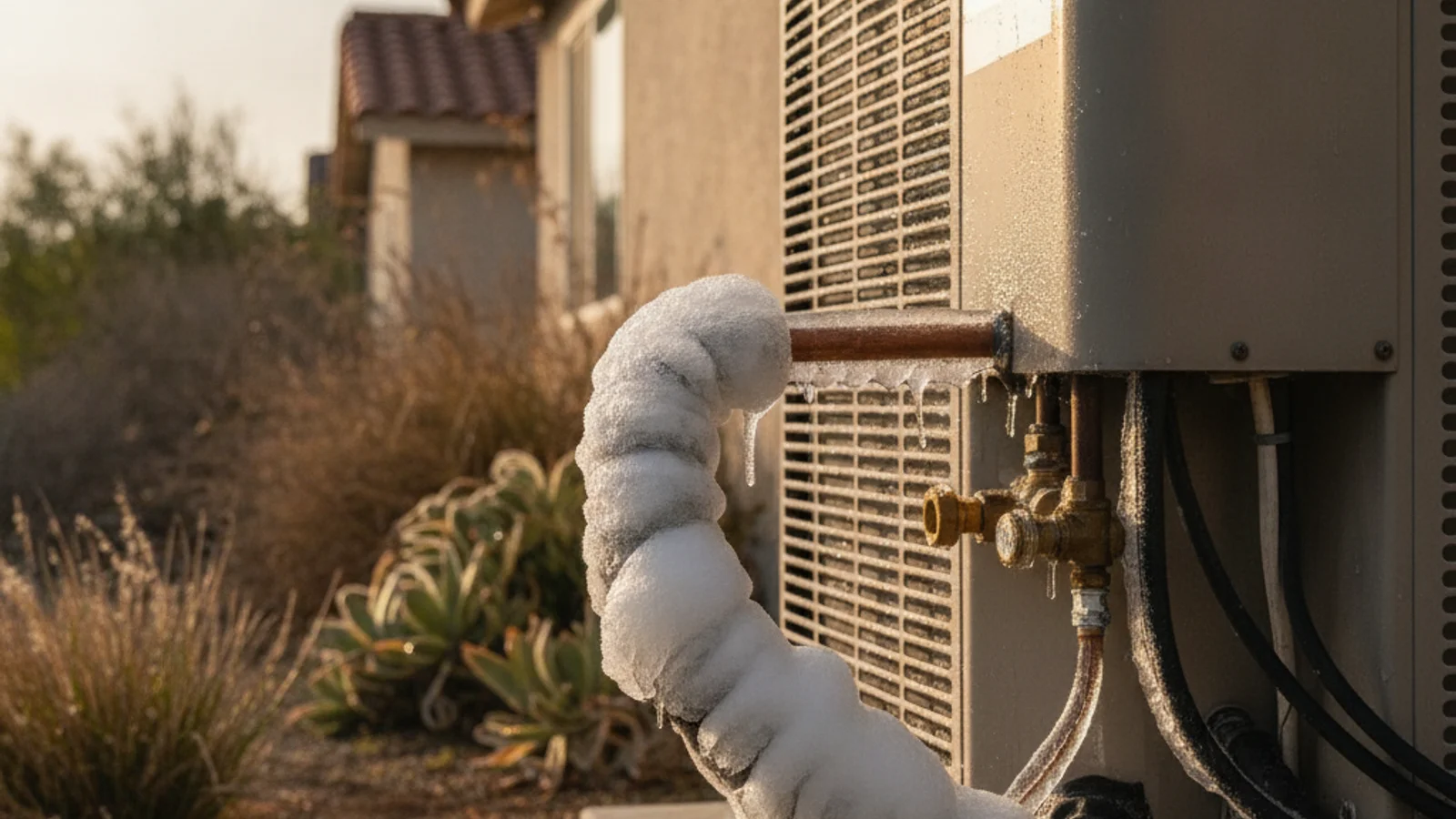
The fast answer
| Scenario | Typical cost |
|---|---|
| Coil under manufacturer warranty | $1,000-$2,500 |
| Coil out of warranty | $2,500-$4,500+ |
| Labor only (coil already sourced) | $400-$1,000 |
| Package-unit coil (rooftop or ground-mounted) | $2,200-$3,000 |
These are San Diego installed ranges for a standard residential split system. Package units, common on some single-story and coastal homes, run their own separate cost because the coil sits inside the cabinet with the compressor rather than in a separate indoor air handler.
Why the coil costs what it costs
A failed evaporator coil rarely means just swapping a part. The coil sits inside your air handler or furnace cabinet, usually in a spot that wasn’t built for easy access. A technician has to recover the existing refrigerant, cut the old coil free, fit the new one into a cabinet it wasn’t originally sized for, braze new connections, pressure test the system, pull a vacuum, and recharge it with refrigerant. That sequence is most of the labor hours on the job, and it’s why coil-only work can still run $400 to $1,000 in labor even when the part is free.
Refrigerant cost is the other half of the equation, and it’s changed a lot recently. R-410A production was capped starting in 2025 under the federal phasedown schedule, and recharge pricing has roughly tripled since. On an older R-410A system, that recharge cost alone can push a coil repair close to what a full system replacement costs, which is exactly why more San Diego homeowners are choosing to replace rather than repair a coil on a system past the 10 year mark.
What’s included in the job
A standard coil replacement covers:
- The new coil, matched to your existing system’s tonnage and refrigerant type
- Refrigerant recovery from the old coil and lines
- Removal and disposal of the failed coil
- Fitting and brazing the new coil into the cabinet
- A full system evacuation and vacuum test to confirm no leaks
- New refrigerant charge, weighed to the system’s specified amount
- A cooling performance check after startup
Most jobs run 4 to 8 hours depending on cabinet access and whether the coil is a standard size or needs custom fitting.
R-410A and R-454B: why refrigerant type changes the math
If your system runs on R-410A (most systems installed 2010 through 2024), you’re paying current market rates for recharge, and those rates have climbed steadily since the 2025 production cap. Newer systems installed under the EPA’s transition are shifting to R-454B, a lower global-warming-potential refrigerant that’s cheaper to produce and, for now, cheaper to recharge.
If you’re replacing a coil on an older R-410A system, ask your technician directly what recharge is going to cost at today’s pricing before you commit to repair over replacement. On a system already past 10 years old, that number by itself can tip the decision toward a full system swap instead of a coil-only fix. For the older R-22 systems still running in some San Diego homes, coil repair almost never makes financial sense; see our R-22 vs R-410A vs R-454B guide for the full breakdown.
What pushes the price up
Four factors move the number:
1. Warranty status. Most major brands cover the coil itself for 10 years with a registered warranty. That eliminates the part cost but not the labor, recovery, and recharge cost, which is why even a warrantied job still runs $1,000 to $2,500.
2. Refrigerant type and current pricing. R-410A recharge costs have roughly tripled since the 2025 phasedown began. A larger system needing a full recharge can add well over $1,000 to the bill on its own.
3. Cabinet access. Coils in tight attic air handlers, closets, or garages take longer to reach than coils in an easily accessible utility room. Difficult access adds to labor hours directly.
4. Coil condition history. If the coil failed from a slow refrigerant leak rather than age, a technician needs to find and address the leak source, not just swap the coil, or the new one fails the same way.
Repair vs replace: how to decide
Three checkpoints we use with San Diego homeowners:
1. System age. Under 8 years old, coil replacement almost always makes sense on its own. Past 12 years, other components are aging too, and a full system replacement often pencils out better over the next several years.
2. The 50% rule. If your coil quote runs past half of what a new AC system costs installed ($5,500-$9,500 in San Diego), replacement is usually the smarter call. See our AC replacement vs repair guide for the full framework.
3. Refrigerant type. R-22 systems should be replaced outright. R-410A systems past 10 years old are borderline and depend heavily on current recharge pricing at the time of the repair.
San Diego-specific pattern worth knowing
Coastal San Diego homes see evaporator coils fail earlier than the compressor, often in the 8 to 12 year range, largely from the combination of salt air and coastal humidity accelerating corrosion on aluminum fin surfaces. Inland homes (Escondido, El Cajon, Santee) put more runtime hours on the whole system from longer, hotter cooling seasons, so coil wear tends to track closer to overall system age rather than showing up early. If you’re on the coast and your coil is failing before year 10, that’s a known pattern here, not a defective unit.
Transparent diagnostic pricing
Before any coil work starts, a technician needs to confirm the coil is actually the problem and not a symptom of something else, like a refrigerant leak elsewhere in the line set or a failing blower restricting airflow across the coil. Our diagnostic fee is a flat, upfront number, and it’s credited toward the repair when you move forward with us. No surprise trip charge stacked on top of the repair quote.
For general repair pricing across the most common AC issues, see our AC repair cost guide for San Diego. If your system’s compressor is also aging or already failed, our compressor replacement cost guide walks through that decision separately, since a coil and a compressor rarely fail at the exact same time.
FAQs
How much does evaporator coil replacement cost in San Diego?
$1,000-$2,500 under warranty, $2,500-$4,500 or more out of warranty. Package-unit coils run $2,200-$3,000. Labor alone, when the part is covered, runs $400-$1,000.
Why is refrigerant recharge so expensive right now?
R-410A production was capped starting in 2025 under the federal phasedown schedule, and recharge pricing has roughly tripled since. That cost applies on top of the coil itself and the labor to install it.
Is it worth replacing just the coil on an older system?
Depends on age and refrigerant type. Under 8 years old, usually yes. Past 12 years, or on an R-22 system, a full system replacement usually makes more financial sense once you account for recharge costs and remaining system life.
Does homeowner’s insurance ever cover coil replacement?
Rarely, unless the failure was tied to a covered event like storm damage or a documented manufacturing defect claim through the warranty. Normal wear and corrosion aren’t typically covered.
How long does coil replacement take?
4 to 8 hours for most residential jobs, depending on cabinet access. Package-unit coils can run longer since the compressor and coil share one cabinet.
Will my coil be covered under warranty?
Most major brands cover the coil for 10 years with a registered warranty and, in some cases, documented annual maintenance. Bring your install paperwork so your technician can confirm coverage before quoting.
When to call us
If your system is freezing up, blowing warm air, or a technician has flagged the coil, we’ll diagnose it properly before quoting anything. You get one honest number and, if it makes sense, both the coil-only and full-replacement quotes side by side. Call (442) 777-6440 and we’ll walk you through it.