4S Ranch and Del Sur homes were mostly built decades ago, which puts the original AC systems in the danger zone right now. Most are 12-15 years old, past warranty, and starting to throw the failures that high-efficiency systems throw at end of life. The repair-or-replace math is also different here than older neighborhoods because of the high solar adoption rate. Below is what’s actually breaking in 92127 and 92130, what belongs on a quote, and the NEM 2.0 vs NEM 3.0 calculation you need to run before you swap a system.
Climate Pros SD matches you with licensed HVAC companies. We do not publish a 4S Ranch parts menu.
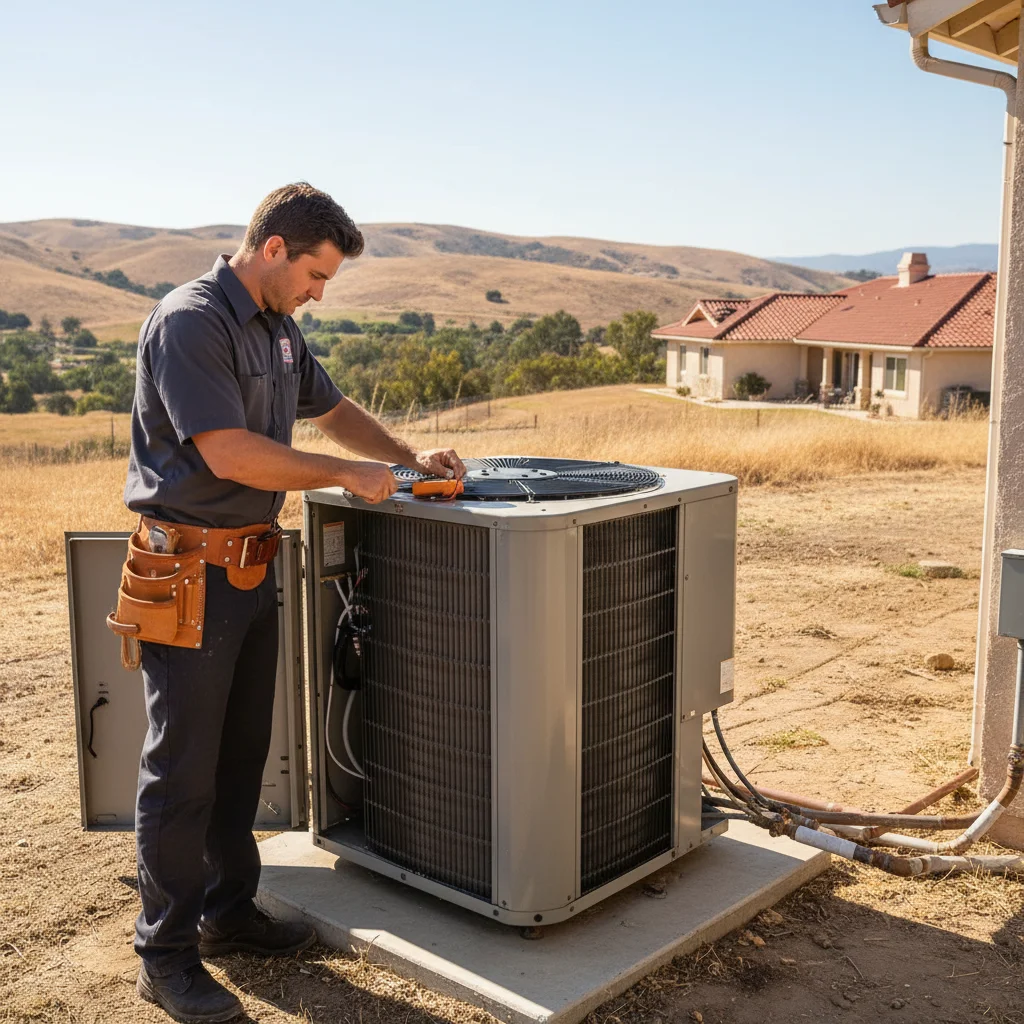
Why 4S Ranch and Del Sur ACs are failing now
The master-planned build-out hit its peak between 2003 and 2010. Most original equipment was 13-14 SEER R-410A in 4S Ranch, with the newer Del Sur (Black Mountain Ranch) phases going to 14-16 SEER. The systems were higher efficiency than the older tract stock down the hill in Rancho Bernardo, but high-efficiency systems are not the same as long-lived systems.
Variable-speed compressors and ECM blower motors have more failure points than the simple single-stage equipment in older homes. Control boards, communicating thermostats, and inverter-driven compressors can fail in expensive ways. A 13-year-old high-efficiency system isn’t broken because it’s worn out the way an older system would be. It’s broken because a communicating board failed. Ask for that part named on the quote.
The summer load also matters. 92127 runs well above the coastal normals in July and August, and the larger floor plans (most homes are 2,800-4,500 square feet) put real demand on equipment that was sometimes installed slightly undersized to hit a price point.
Failures we see by system age
Year 8-10: Capacitors, contactors, refrigerant leaks at flare fittings. Standard wear items. Repair almost always makes sense at this age.
Year 10-12: Condenser fan motors, blower motors (especially ECM motors), control boards. Replacement isn’t quite on the table yet. Ask for the named part.
Year 12-15: Inverter-driven compressors, communicating control boards, variable-speed blower assemblies. This is when you start running the replacement math on the quotes in your hand.
Year 15-plus: Compressor failure, full coil replacement, refrigerant migration issues. Replacement is almost always the right call.
Most 4S Ranch homes are now in the year 12-15 band, which is why we’re seeing a wave of replacement quotes in 92127 right now.
What belongs on a 4S Ranch and Del Sur quote
Climate Pros SD does not publish diagnostic, capacitor, ECM, board, or replacement bands. Variable-speed and communicating systems cost more to repair because parts are proprietary and most independent techs don’t stock them. If your original installer was a builder-grade contractor that no longer services the area, finding parts can delay repairs 5-10 days during summer.
| Line to insist on | Why it matters |
|---|---|
| Diagnostic / service call, in dollars | Often credited to repair |
| Named electrical part | Capacitor, contactor, fan motor, ECM blower |
| Control board type | Single-stage versus communicating |
| Leak search vs recharge | R-410A |
| Coil or inverter compressor | Often the replace conversation |
| Full system replacement | Separate bid if year 12-15 |
| Warranty | Part versus labor |
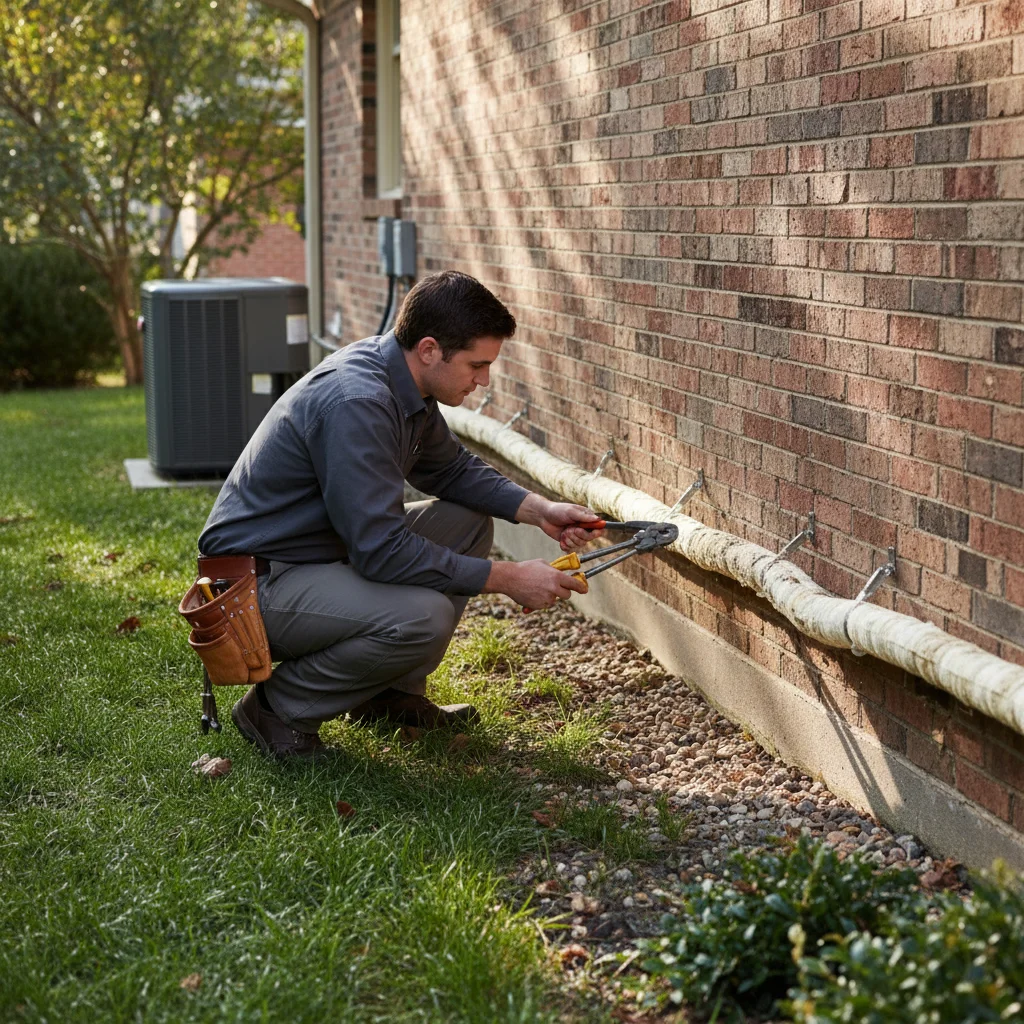
The solar NEM math nobody runs before replacing
This is where 4S Ranch and Del Sur replacement decisions differ from the rest of San Diego. Solar adoption in 92127 is one of the highest in SDG&E territory, and the rules for new vs. existing solar are now very different.
If your solar was interconnected before April 15, 2023: You’re on NEM 2.0. Your existing solar credits export at full retail rate, and replacing your AC with a high-efficiency model is a clear win. You produce excess solar, the heat pump runs cheaper, and your true-up bill drops.
If your solar was interconnected on or after April 15, 2023: You’re on NEM 3.0 (now NBT, the Net Billing Tariff). Export credits are roughly 75% lower than NEM 2.0. The economics now strongly favor self-consumption, which means running your AC during the day when solar is producing, not at night. A variable-speed heat pump that can run efficiently mid-day off your solar pencils very differently than a single-stage system that mostly runs evenings.
If you don’t have solar yet: Pairing a heat pump replacement with new solar in 4S Ranch is sometimes financeable as a single package and qualifies for both SDG&E rebates and the residential solar 30% credit. The federal 25C tax credit expired for systems installed after December 31, 2025, so it no longer applies to a 2026 install. Run the math before you sign separate contracts. See our full SDG&E solar AC analysis for the breakdown.
If you’re locked into NEM 2.0 and trying to extend that lock by repairing rather than replacing, note that NEM 2.0 status follows the system for 20 years from interconnection. You can replace your AC, your roof, even your inverter without losing NEM 2.0 grandfathering. Replacing the solar panels themselves with significantly more capacity is the only common move that bumps you to NBT.
Decision framework for year 12-15 systems
Repair if all of these are true:
- Single repair is a modest share of replacement on the quotes in your hand
- System has had zero major repairs to date
- Communicating thermostat and board are working
- You’re planning to sell within 3 years
Replace if any two of these are true:
- Repair quote is a large share of replacement on the same visit
- This is the second major repair in 2 years
- Compressor or coil work is on the table
- You’re staying in the home 5-plus years
- You have or plan to add solar (high-efficiency variable-speed pays back on NEM 2.0; even faster as self-consumption on NBT)
- SDG&E bills are high relative to similar homes on your block (check your actual bill, not a blog average)
Most 4S Ranch homeowners we see in the year 12-15 band end up replacing rather than repairing once they run the numbers, especially if they’re on NEM 2.0 and want to maximize the remaining lock-in years.
Related services: AC repair and AC installation.
When to call
If your high-efficiency system is throwing fault codes, short-cycling, or producing weak airflow, get a diagnostic before you keep running it. Inverter-driven compressors can self-destruct in a single day if they’re operated through a refrigerant or control fault.
For North County 92127 pricing and neighborhood-specific HVAC notes, see our HVAC service in Rancho Peñasquitos city page. Call (442) 777-6440 to get on the schedule for 4S Ranch and Del Sur. Also helpful: our Manual J sizing guide for replacement decisions and the HVAC warranty page for what’s likely still covered if your system is in year 10-12.
FAQs
My 4S Ranch AC is 13 years old and just had a control board fail. Repair or replace?
Depends on the rest of the system. A board on a 13-year-old variable-speed system that’s otherwise running well is a defensible repair if you’re staying short term. But if the system has had any prior compressor, coil, or motor work, replacement is usually smarter. At year 13, you’re statistically inside 24 months of a major failure. Get a replacement quote alongside the repair quote and compare 10-year cost of ownership, not just today’s bill.
Does replacing my AC affect my NEM 2.0 solar grandfathering?
No. NEM 2.0 status is tied to the solar interconnection, not the AC. You can replace your AC, your roof, your inverter, even your panels (up to a small percentage capacity increase) without losing NEM 2.0. The only common move that flips you to NBT is increasing your solar system size by more than 10% (rules vary). Always confirm with SDG&E before any change.
Are high-efficiency variable-speed systems worth it in 4S Ranch?
Yes, especially with solar. Variable-speed runs at 30-70% capacity most of the time, which means smoother humidity control, quieter operation, and far better daytime efficiency when paired with solar. The downside is repair cost: when they break, parts are proprietary and 2-3x the cost of single-stage equivalents. For a 4S Ranch home with 12-15 year run patterns, the energy savings over the system’s life typically cover the higher repair exposure.
Why is my upstairs in Del Sur so much hotter than downstairs?
Common in 2-story 4S Ranch and Del Sur homes. Most builders installed single-zone systems even on homes that really needed two zones. The thermostat downstairs satisfies before the upstairs catches up, and the ducted return on the second floor is often undersized. Solutions: add a second return, install bypass dampers and a second thermostat for zoning, or for major comfort upgrades, add a small ductless mini-split for the master bedroom. Ask for those scopes in dollars.
What’s the typical lifespan of the original builder-grade AC in these neighborhoods?
12-16 years for single-stage 13-14 SEER systems. 13-17 years for the higher-efficiency variable-speed systems installed in later Del Sur phases. Lifespans depend heavily on maintenance history, but most 2003-2010 4S Ranch original equipment is now at or past expected end of life. If yours is still running clean at year 14, great. Plan and budget for replacement within 24-36 months.
Can I replace just my outdoor unit and keep the indoor coil?
Usually not. SEER ratings are calculated as a matched pair (outdoor condenser plus indoor coil and air handler). Replacing just the condenser with a higher-efficiency unit while keeping a 13-year-old coil voids most manufacturer warranties and rarely delivers the rated efficiency. It also wouldn’t have qualified for the federal 25C tax credit, which required matched-pair AHRI certification back when the credit was still available. The 25C credit expired for systems installed after December 31, 2025, so it doesn’t apply to a 2026 install either way. Replace the matched system or wait until you can replace both.
We cover 4S Ranch and Del Sur, and no-cool and no-heat calls are flagged as urgent when we make the match. For variable-speed system notes and the solar NEM math, see our AC repair in Rancho Peñasquitos service page. Call (442) 777-6440 to schedule.