Climate Pros SD covers HVAC referrals throughout San Diego County, including Julian, Ramona, Campo, Palomar Mountain, Mount Laguna, and Borrego Springs. For a backcountry home, choose a cold climate heat pump through model-specific performance data, not a product label alone. The equipment, controls, and backup plan must fit the home and its location.
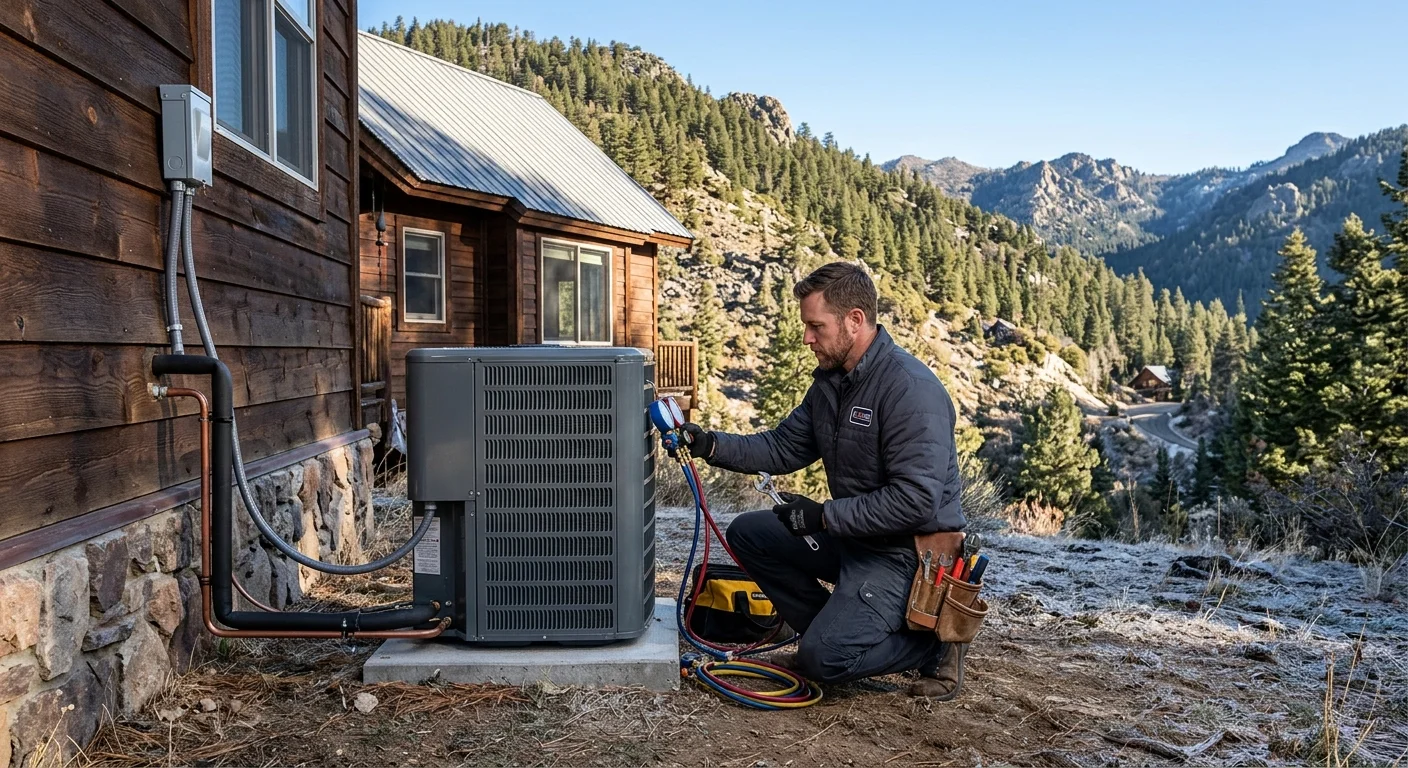
Backcountry heat pumps need published capacity at your design temperature
A cold-climate label is not enough. Ask for capacity and efficiency at the outdoor temperature your Julian, Ramona, Palomar, or desert site actually sees, including heating. Coastal San Diego averages do not size a mountain or desert house. Overnight lows and elevation change the heating load even when summer still needs cooling.
Checklist
- Write elevation and typical winter overnight lows you actually record.
- Ask for the manufacturer’s capacity table at that temperature.
- Note whether backup heat is electric strips or existing propane.
- Do not budget new single-family TECH or 25C money for a 2026 install unless a live program page says otherwise.
- See heat pump vs AC.
Related: Heat pump service and Ramona HVAC.
What makes a heat pump a cold-climate model?
For this buying decision, treat “cold-climate” as a performance question. The manufacturer should publish heating data for outdoor conditions relevant to your property. The contractor should then compare that data with the home’s calculated heating needs.
Start with the exact outdoor and indoor equipment model numbers. Ask for the manufacturer’s matching-system data, not a brochure covering an entire product family. A useful comparison should show heating output and electrical demand as outdoor conditions change. It should also identify any accessories needed to reach the quoted performance.
Efficiency ratings still matter, but they don’t answer every cold-weather question. The verified ENERGY STAR heating and cooling guidance lists minimum ratings of SEER2 15.2 and HSPF2 7.8 for certified air-source heat pumps. Those seasonal ratings provide a comparison point. They don’t replace the model’s low-temperature capacity information.
Ask the contractor to connect three pieces of information:
- The home’s documented heating and cooling load
- The selected system’s published performance data
- The proposed controls and backup configuration
That comparison matters more than marketing language. A cold weather heat pump should be selected as a complete system, including the outdoor unit, indoor equipment, thermostat, and related controls.
Climate Pros SD can connect you with a licensed, independent pro for heat pump service in San Diego County. The homeowner contracts with and pays that professional directly.
How do backcountry winters change system selection?
San Diego County’s backcountry doesn’t share one winter profile. Conditions differ between mountain communities, inland valleys, and the desert. A proposal based on coastal assumptions may miss what matters at a specific home.
The NOAA NCEI 1991-2020 climate normals, retrieved in August 2026, give useful local reference points. Julian’s January normal low is 38.8°F. The Julian station recorded an average of 22.7 nights at or below freezing per winter during the ten winters studied. Its published annual snowfall normal is 6.4 inches.
Palomar Mountain’s January normal low is 37.1°F. Its station averaged 40.1 freezing nights per winter. The published annual snowfall normal is 26.2 inches.
Mount Laguna’s January normal low is 33.2°F. Its station averaged 55.2 freezing nights per winter. NOAA didn’t publish an annual snowfall normal for that station in the referenced dataset. Ten winters of observations averaged 37.8 inches, with wide year-to-year variation.
Other backcountry locations show why address-level selection matters. Campo’s January normal low is 34.7°F, while Borrego Springs has a 45.5°F normal. Ramona’s is 36.5°F. Elevation alone doesn’t describe every home’s heating load or exposure.
The contractor should also document the home itself. Ask about insulation, windows, air leakage, ceiling height, duct location, and additions. A small mountain cabin and a larger year-round home can require different solutions at the same location. Our Julian and mountain HVAC guide covers more questions specific to this part of the county.
What should homeowners ask about low-temperature performance?
Bring a written checklist to each proposal. It keeps the discussion tied to the actual equipment and house. It also makes competing recommendations easier to compare.
Ask these questions:
- Which outdoor condition did you use for the heating-load calculation?
- What heating output does this exact equipment combination provide there?
- Does the published output cover the calculated load?
- Which indoor unit, thermostat, and controls are included?
- Does the quoted performance require supplemental heat?
- How does the system manage defrost?
- Where will the outdoor unit drain during defrost?
- How will its placement account for snow, roof runoff, and service access?
- What electrical changes does the proposal include?
- Which manufacturer documents support these answers?
Don’t accept a general statement that a system “works in cold weather.” Ask what that means for your selected model and your home. The useful answer is a comparison between published equipment data and a documented load calculation.
The proposal should also identify every major component. Model matching matters because performance data applies to specific combinations. If a substitute appears later, ask for updated documents before approving it.
Every HVAC pro in the Climate Pros SD network is licensed and insured. You can also confirm a contractor’s current status through the California Contractors State License Board license check.
Price should be evaluated against the same written scope. Our San Diego heat pump installation cost guide explains which proposal details to compare. The final amount comes from the independent contractor. Ask what their diagnostic fee is, what equipment is included, and how they handle changes to the agreed scope.
How do defrost cycles affect comfort?
A heat pump’s outdoor coil may collect frost while the system heats the house. A manufacturer-defined defrost cycle temporarily changes operation to clear that frost. The system’s sound, airflow, or supply-air temperature may change during that sequence.
That temporary change doesn’t establish a problem by itself. The better question is whether the complete system maintains acceptable indoor comfort through its normal defrost behavior. Controls, equipment pairing, duct conditions, and any supplemental heat can all shape what occupants notice.
Ask the contractor to explain the selected model’s sequence before installation. The explanation should cover what starts defrost, how the indoor equipment responds, and how backup heat interacts with the process. Request the relevant manufacturer document so you can keep it with the equipment records.
Outdoor placement deserves attention too. Ask where defrost water will go and whether nearby surfaces could be affected. Mountain sites may also need a plan for snow, runoff, vegetation, and routine service access. The contractor should base that plan on the property and the manufacturer’s installation instructions.
A brief change during defrost and a system that remains encased in ice aren’t the same observation. Persistent ice, falling indoor comfort, unusual noise, or repeated shutdowns should be inspected by a licensed HVAC professional. Don’t assume the cause from a photograph. Several equipment, drainage, airflow, and control conditions can look similar without an on-site diagnosis.
When should backup heat enter the discussion?
Backup heat belongs in the proposal whenever the contractor’s load calculation and equipment data show a possible heating shortfall. It should also be discussed when a homeowner wants a separate contingency plan. The answer depends on the equipment combination, home, electrical system, fuel access, and comfort priorities.
Ask whether the proposal includes electric supplemental heat, retains an existing furnace, or relies on the heat pump alone. Then ask the contractor to explain that choice using the calculated load and manufacturer data. Our heat pump versus furnace guide can help organize that comparison.
No verified county-wide rule in the approved sources sets one temperature for backup heat to activate. A universal trigger couldn’t be confirmed. The selected equipment manufacturer and licensed contractor should provide the operating sequence for the actual installation.
Controls deserve their own explanation. Ask what happens when the thermostat calls for supplemental heat, whether you can see that status, and which settings homeowners should avoid changing. Get those instructions in writing with the final equipment documents.
Don’t accept an operating-cost prediction without its assumptions. Ask which utility rate, fuel price, weather data, thermostat settings, and equipment performance figures were used. Current rates should be confirmed directly with the utility before treating any estimate as a planning figure.
The goal isn’t to add backup heat automatically. It’s to make the decision explicit. You should know which heat source operates under each condition, how the controls choose it, and which published data supports the plan.
When to call us
A licensed HVAC pro should evaluate the home when you’re replacing equipment, comparing cold-weather models, or investigating weak heating and persistent outdoor-unit ice. Call us at (442) 777-6440 and we will match you with a licensed local pro.