For the full San Diego HVAC picture (system types, rebate status, when a heat pump wins, contractor vetting), see our complete guide to San Diego HVAC in 2026. This post is the heat-pump quote checklist.
Climate Pros SD is a referral service. It does not set equipment prices, labor rates, or contractor quotes. The matched licensed company gives you the installed price in dollars for your house.
Do not subtract Section 25C for a 2026 install. Do not treat TECH single-family HVAC or HEEHRA single-family funds as open money. Recheck SDG&E for your account.
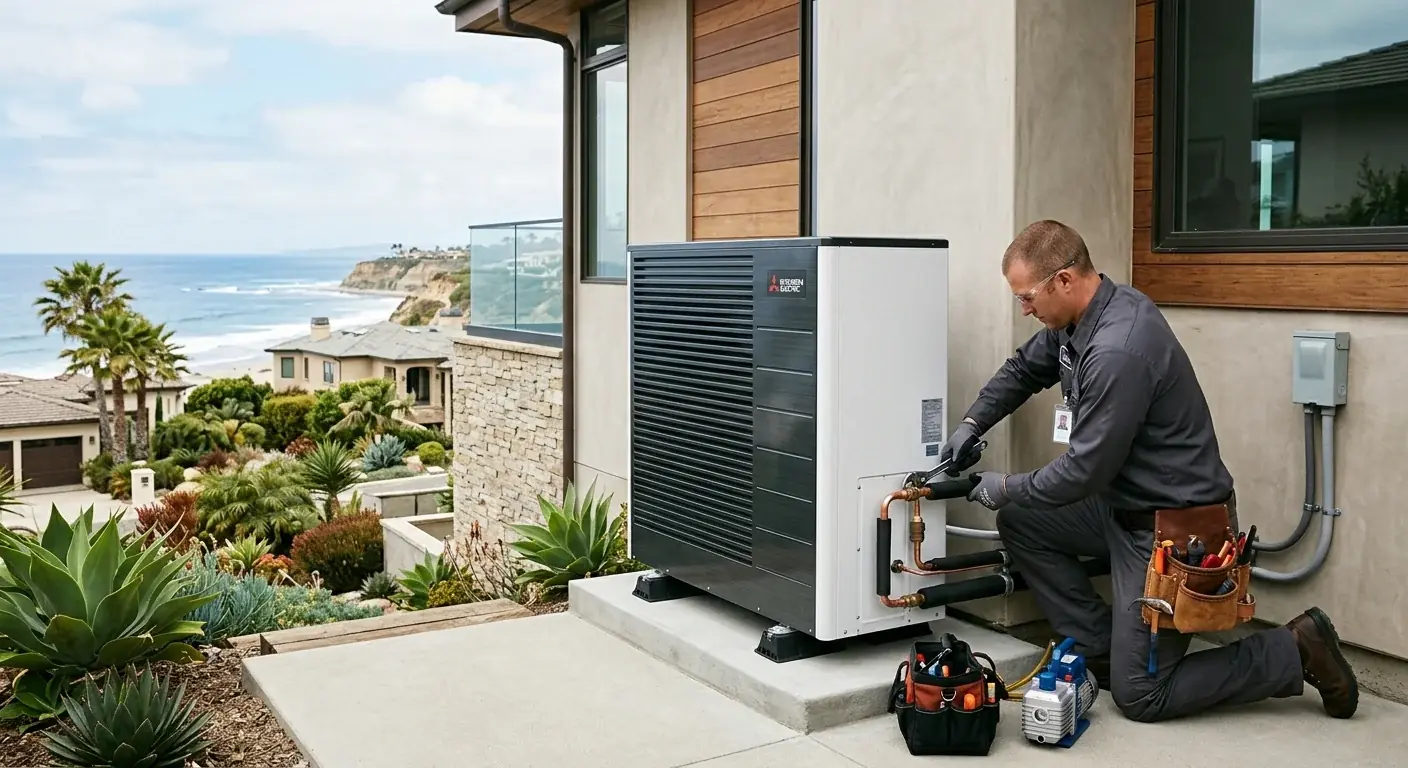
What actually moves the bid
| What changes the quote | Why it matters |
|---|---|
| Load and tonnage | Guessing from square footage oversizes or undersizes the outdoor unit |
| Ducted vs ductless | Heads, line sets, and drains are a different job than a changeout on existing ducts |
| Duct repairs | Leakage and collapsed runs can cost more than the condenser |
| Electrical service | Full panels, disconnects, and 240-volt circuits show up on older homes |
| Dual-fuel | Keeps a furnace for cold design days; extra controls and gas work |
| Access and coastal hardware | Roof, hillside, and salt-air cabinets change labor and materials |
| Permits and commissioning | City rules and startup readings belong in the written scope |
There is no honest after-rebate column for 2026. The IRS says the Energy Efficient Home Improvement Credit covers improvements made through December 31, 2025. Property placed in service after that date does not qualify. For qualifying 2025 property, the taxpayer must report the product’s QMID. The IRS annual limit for qualified heat pumps and heat pump water heaters was $2,000 and the credit is nonrefundable. Ask a tax professional about your return.
TECH reports single-family heat pump HVAC and heat pump water heater incentives were fully reserved and stopped accepting new reservations on November 14, 2025. Eligibility, enrollment, reservation, approval, and payment are separate conditions.
The California Energy Commission reports HEEHRA single-family rebates were fully reserved statewide as of February 24, 2026, and no new single-family income-verification applications were being accepted. Existing approved reservations may continue. A waitlist or submitted request is not approved funding.
TECH’s HEEHRA rules describe program caps of up to $8,000 below 80 percent AMI and up to $4,000 from 80 to 150 percent AMI for qualifying replacement of an existing primary heating source with a heat pump. Reservations must be approved before installation. Those figures are program caps, not currently available money for a new applicant. As of July 15, 2025, TECH reports a project cannot receive both a TECH incentive and a HEEHRA rebate.
SDG&E says the Golden State Rebates Program’s retail rebate offerings have ended. Do not treat a leftover product table as a current offer.
Efficiency rating is one line item, not the whole job
The Department of Energy describes SEER2 as a seasonal cooling-efficiency rating in Btu per watt-hour. DOE energy-use examples depend on a stated test method and assumed operating hours. Actual results vary with use. SEER2 helps compare rated efficiency. It does not set a San Diego installed price.
Ask the matched company to price the model they would actually install. Inland East County run hours are not the same as a marine-layer house. NWS describes ocean moderation near San Diego and warmer summer days in nearby valleys.
For heat pump versus AC plus furnace, see heat pump vs AC in San Diego.
What belongs in a complete install quote
- Ask for equipment, indoor unit, line set, electrical, permit, labor, thermostat, and disposal on separate lines.
- Confirm who pulls the permit. The matched licensed contractor handles that work, not this brand.
- Check the contractor license at cslb.ca.gov. California requires a C-20 license for HVAC work that exceeds the B&P §7048 threshold or that needs a permit.
- In the City of San Diego, a mechanical permit is required to install, alter, replace, or repair heating, ventilating, air conditioning, or refrigeration. Other cities and the county have their own rules.
- California Title 24 requires field verification when systems are altered or replaced. Testing is done by a CEC-certified rater under the current Energy Code Compliance (ECC) program. Do not treat a blog leakage percentage as the legal test.
- Treat pending incentives as pending until the program confirms reservation or approval.
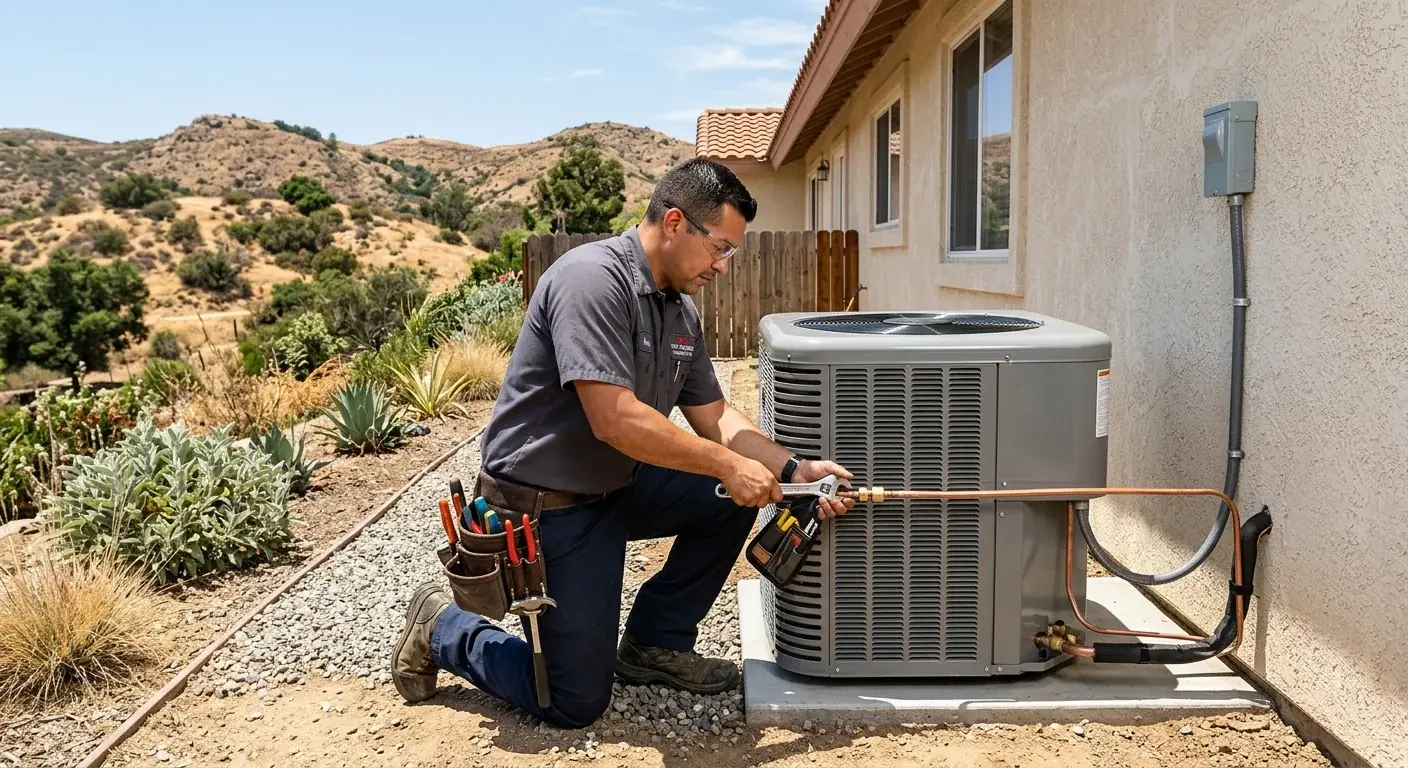
What drives the price up or down
Cold-climate hardware. San Diego winters are mild compared with mountain or northern markets. Ask whether a cold-climate model is actually specified for your load, or whether a standard heat pump meets the design day. The company quotes the difference in dollars.
Panel work. Heat pumps often need dedicated 240-volt circuits. If the panel is full, that is electrician scope. Ask for that line before you treat the HVAC bid as complete.
Ducts. ENERGY STAR says a typical forced-air house can lose about 20% to 30% of the air moving through ducts because of leaks, holes, and poorly connected ducts. That is a national typical-house statement, not a measured result for your attic. Sealing addresses leakage. Cleaning addresses contamination when EPA conditions apply. Neither supports a guaranteed bill cut.
Access and salt air. Hillside pads, tight side yards, second-story air handlers, and coastal cabinets change labor. Ask for coastal coil coatings as a named option if you live near the ocean. This page does not attach a dollar add-on.
Dual-fuel. If the gas furnace is relatively new and working, ask whether a heat-pump-plus-furnace setup is cheaper than replacing both. The matched company writes that number.
Ductless instead of new ducts. Homes without usable ducts often price as heads and line sets, not a full duct build. Compare written scopes, not a network average.
When a heat pump may not be the first move
- The existing gas furnace is young and working. Dual-fuel may fit better than a full changeout.
- Electrical service cannot support the load without work you are not ready to fund. Price the electrical first.
- You were counting on 2026 Section 25C, TECH single-family, or HEEHRA single-family money that is not open to new projects under the captured status.
How to get an honest quote
- A Manual J load calculation in writing. Not “same size as the old unit.”
- Itemized pricing. Equipment, refrigerant line set, electrical, permits, labor, thermostat, removal. Lump-sum quotes hide scope gaps.
- Live program pages. Reputable installers show current TECH, HEEHRA, IRS, and SDG&E status. They do not subtract closed programs.
We walk through quote evaluation in our AC installation cost guide. Recheck the SDG&E heat pump rebate article before you buy.
Frequently asked questions
How much does a heat pump cost installed in San Diego?
Ask the matched company. Climate Pros SD does not publish installed bands or after-rebate nets.
Are heat pumps eligible for the federal tax credit?
Not for a 2026 install. Qualifying 2025 property may still sit in the Section 25C period. Report QMID. The IRS annual limit for qualified heat pumps and heat pump water heaters was $2,000. The credit is nonrefundable.
How much can I get back in SDG&E rebates?
This site does not publish a current SDG&E dollar band. Confirm the live page for your account. Golden State retail rebate offerings have ended.
What SEER2 rating should I buy in San Diego?
Compare rated SEER2, then ask for operating cost in your rate plan. SDG&E residential plans can price electricity by time of use. Current listed plans have a 4 p.m. to 9 p.m. on-peak period. Confirm your plan and rates on sdge.com. DOE says actual savings vary with usage.
Is a heat pump cheaper to run than a gas furnace in San Diego?
It depends on the old equipment, insulation, usage, solar, and your rate plan. This page does not publish a bill comparison.
How long does a heat pump installation take?
Job duration is the matched company’s estimate. A generic residential install is often measured in days, not minutes of arrival. The brand does not promise same-day work.
Do I need to replace my ductwork for a heat pump?
Sometimes. If existing ducts are well sized, sealed, and intact, they may stay. Leaky or undersized ducts limit performance. Ask for a duct test if the company recommends replacement.
What size heat pump do I need?
A Manual J load calculation. Do not trust a square-footage rule of thumb for the actual install.
Related services: heat pump service, AC repair and AC installation.
When to call us
If you want a written heat-pump bid for your house, call (442) 777-6440. Climate Pros SD matches you with a licensed independent HVAC professional. Ask for the diagnostic or estimate fee in dollars before anyone visits. See the 2026 heat pump rebate guide for current program status.